


Mental Health Disorders in Children and Youth
It estimated that nearly 1 in 5 Ontario children under the age of 19 experiences a mental, emotional or behavioural disorder that is severe enough to seriously affect their daily functioning at home, school or within the community1. The good news is that early diagnosis and treatment lead to better outcomes for children later in life.
Some of the more common mental health disorders affecting children and youth are listed below. Click on a disorder to learn more.
- Anxiety Disorders
- Attention Deficit/Hyperactivity Disorder (AD/HD)
- Autism Spectrum Disorder (ASD)
- Behaviour Disorders (including Oppositional Defiant Disorder (ODD), Conduct Disorder (CD))
- Mood Disorders (including Depression, Bipolar Disorder (Manic-Depression))
- Eating Disorders
- Schizophrenia
- Substance Abuse
- Tourette Syndrome
Identifying the Signs
Recognizing symptoms is key! Family awareness and early identification are often the first steps to effective treatment for children and youth with mental health disorders.
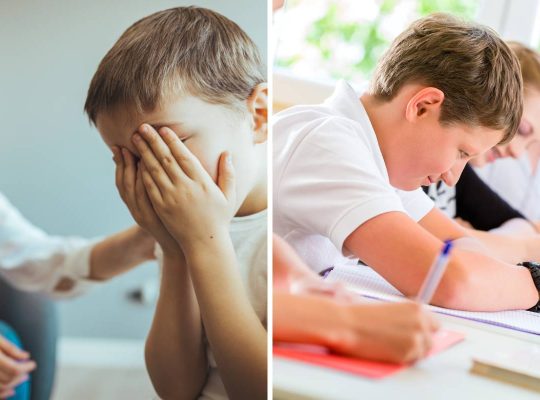
It's easy to recognize when a child has a fever. How to respond is well documented and medical help is readily available if the fever spikes. But a child's mental health is different. It can be difficult to distinguish between 'normal' problems that all children and adolescents experience from time to time, and behaviour that may be indicative of a mental heath disorder.
Many children and youth will exhibit some of the following characteristics and behaviours at various times during normal childhood development.
- getting significantly lower marks in school
- avoiding friends and family
- having frequent outbursts of anger and rage
- losing his or her appetite
- having difficulty sleeping
- rebelling against authority
- drinking a lot and/or using drugs
- not doing the things he or she used to enjoy
- damaging other people's property
- worrying constantly
- experiencing frequent mood swings
- not concerned with his or her appearance
- obsessed with his or her weight
- lacking energy or motivation
- hitting or bullying other children
- attempting to injure him or her self
But these characteristics and behaviours may be signs of an underlying mental health disorder if they are:
- intense;
- persist over long periods of time;
- inappropriate for the child's age; and
- interfere with the child's life.
Children and youth with the most serious mental health disorders (e.g., severe psychosis or schizophrenia) may exhibit:
- distorted thinking
- excessive anxiety
- odd body movements
- abnormal mood swings
- acting overly suspicious of others
- seeing or hearing things that others don’t see or hear
| Learn more about child and youth mental health disorders and their signs. |
1 Ontario Child Health Study: Six-Month Prevalence of Disorder and Rates of Service Utilization Co-authored with Boyle, M.H., Szatmari, P., Rae-Grant, N.I., Links, P.S., Cadman, D.T., Byles, J.A., Crawford, J.W., Munroe Blum, H., Byrne, C., Thomas, H. and Woodward, C.A. in Archives of General Psychiatry, 44:832-836, 1987.