Showing 4 Result(s)
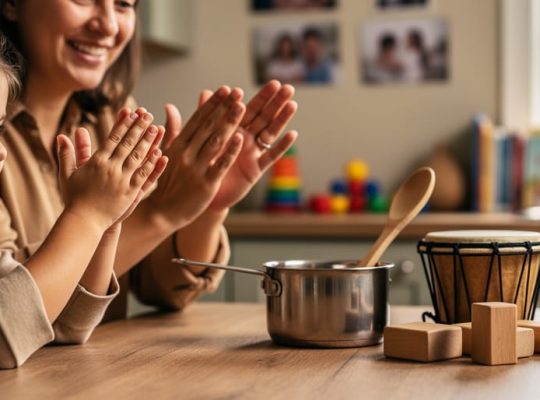
A parent and child clap in rhythm at a kitchen table with simple percussion props like a wooden spoon and pot nearby.

How to Teach Music Rhythm to Children: A Step-by-Step Approach for Parents and Educators

Teaching rhythm to children requires nothing more than consistent practice with simple clapping games, body percussion, and everyday objects that make sound. Most children can grasp basic beat patterns within two to three weeks of regular five- to ten-minute sessions, and you don’t need any formal music training to guide them through it.
The connection between rhythm and emotional well-being runs deeper than many parents realize. When children learn to feel and express rhythm, they’re developing more than musical skill. They’re building self-regulation tools that help them manage anxiety, process emotions, and find…
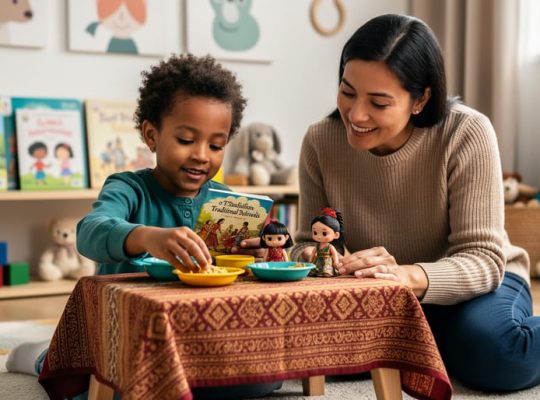
A diverse child and caregiver in a playroom engaged in pretend cultural play with toy dishes, a traditional textile, and story props.

What Is Cultural Play (and How Does It Support Children’s Development)?

Cultural play is when children incorporate their heritage, traditions, languages, and cultural identity into their everyday play activities. This type of play might look like a child preparing imaginary meals from their family’s country of origin, speaking their home language with dolls, recreating cultural celebrations, or weaving traditional stories into their pretend scenarios.
For parents and educators working with children from diverse backgrounds, understanding cultural play matters deeply. It’s not simply playtime with a cultural twist. Cultural play serves as a bridge between a child’s home life and the …

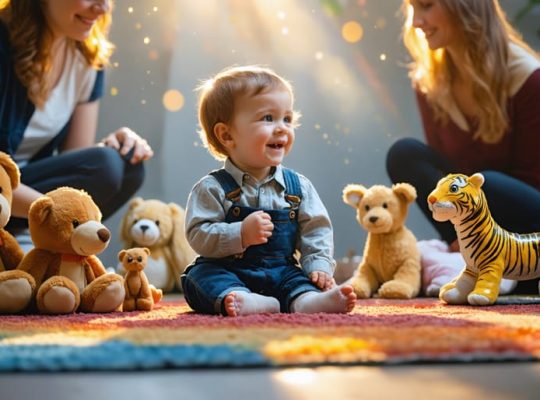
A young child enthusiastically engaged in storytelling play with stuffed animals and toys, exploring imaginative scenarios with parental support.

How Storytelling Play Transforms Your Child’s Mental Growth

Imagine your child sitting cross-legged on the floor, weaving tales of brave knights and magical kingdoms using nothing but their favorite stuffed animals and boundless imagination. This natural form of creative development through play does more than entertain—it builds essential life skills that shape their emotional and cognitive growth.
Storytelling play serves as a powerful tool for children to process their experiences, express complex emotions, and develop crucial social skills. When children create and act…

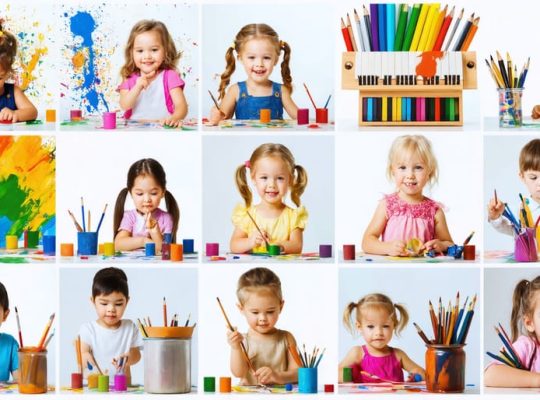
A dynamic collage of children engaging in painting, sculpting, and playing musical instruments, representing art as a bridge to learning across academic subjects.

How Art Integration Transforms Your Child’s Learning and Play Experience

Art integration transforms how children learn, creating bridges between creativity and core academic subjects that unlock deeper understanding and engagement. When we weave artistic expression into daily learning, whether through music in math class or drama in history lessons, we tap into children’s natural curiosity and imagination, making complex concepts more accessible and memorable.
Research consistently shows that integrated arts education enhances critical thinking, improves emotional regulation, and boosts academic performance across all subjects. Children who experience art-integrated learning demonstrate stronger …