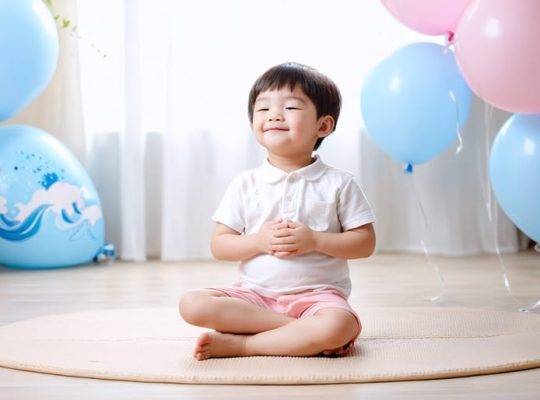

Notice when your child’s shoulders tense during homework or their breathing becomes shallow before bedtime. These physical signals reveal emotional states that children often can’t articulate with words. Mindful body movement teaches children to recognize these connections between what they feel physically and emotionally, giving them practical tools to manage stress, anxiety, and overwhelming feelings.
Place one hand on your child’s belly and ask them to breathe so deeply that your hand moves. This simple exercise transforms abstract concepts like “calm down” into concrete, repeatable actions. Children as young as three can learn to use their bodies as anchors during difficult moments, whether that’s stretching like a cat when frustrated or shaking out their arms before a test.
Research shows that children who develop body awareness demonstrate better emotional regulation, improved focus, and stronger resilience. Dr. Sarah Mitchell, a pediatric psychologist, explains that “when children understand the language their bodies speak, they gain agency over their emotional experiences rather than feeling controlled by them.” A parent from Minneapolis shares: “My eight-year-old used to have daily meltdowns. Now she asks for ‘movement breaks’ when she notices tension building. It’s changed our entire household.”
This isn’t about adding another item to your already overwhelming to-do list. Mindful body movement happens in transition moments you already have: the walk to school, waiting in the carpool line, or those three minutes before dinner. You don’t need special equipment, training, or dedicated time blocks. You simply need awareness and the willingness to help your child tune into the wisdom their body already holds.
What Is Mindful Body Movement?
Mindful body movement is simply paying attention to what your body feels like while you move. It’s about noticing the sensations in your muscles, the rhythm of your breath, or how your feet feel on the ground—all while doing everyday activities like stretching, walking, or dancing. Unlike regular exercise where the goal might be to get stronger or faster, mindful body movement focuses on the experience itself, creating a bridge between physical sensations and emotional awareness.
For children, this approach offers something truly special. While sitting still for mindful breathing exercises can feel challenging or boring to young, active bodies, movement-based practices meet kids where they naturally are. Children are wired to move, explore, and learn through their bodies. When we add mindfulness to that natural impulse, we’re not asking them to fight their nature—we’re working with it.
What makes this different from traditional meditation? Traditional mindfulness often asks us to sit quietly and observe our thoughts. That can be really hard for children whose developing brains crave stimulation and whose bodies need regular movement. Research on meditation techniques for children shows that movement-based approaches can be more engaging and effective for young people, helping them develop body awareness while keeping their attention engaged.
Think of it this way: when your child stomps like a dinosaur and you ask them to notice how their feet feel hitting the floor, that’s mindful body movement. When they stretch like a cat and pause to notice which muscles feel tight or loose, that’s mindfulness in action. It’s not about perfection or doing it “right”—it’s about creating moments of connection between what they’re doing and how they’re feeling, building a foundation for lifelong emotional awareness and self-regulation.
How Body Awareness Supports Children’s Mental Health
The Mind-Body Connection in Young Brains
Children’s brains are remarkable learning machines, constantly building connections between what they feel in their bodies and what they experience emotionally. When a child’s heart races before a test, feels butterflies before a performance, or notices their shoulders tightening during an argument, their brain is actively creating links between physical sensations and emotional states. This isn’t just coincidence—it’s how developing brains are wired to understand feelings.
Research shows that interoception shapes emotional awareness, meaning children who can recognize what’s happening inside their bodies develop stronger emotional intelligence. Think of body awareness as the foundation upon which all other emotional skills are built. Before children can name their feelings or manage big emotions, they need to notice the physical signals their bodies are sending.
This mind-body connection is particularly powerful during childhood because young brains are incredibly plastic—constantly forming and strengthening neural pathways. When we help children tune into their bodies through movement and awareness practices, we’re essentially giving them a roadmap for understanding themselves. A nine-year-old who learns to recognize tension in their jaw when frustrated has gained valuable information that helps them respond thoughtfully rather than react impulsively.
By teaching children to pay attention to physical sensations without judgment, we equip them with lifelong tools for emotional regulation, self-understanding, and resilience. Body awareness isn’t separate from emotional health—it’s where emotional health begins.
Building Emotional Vocabulary Through Movement
Before children can put words to their emotions, they often experience feelings as physical sensations. A nervous stomach before school, tight shoulders when frustrated, or a racing heart during excitement—these bodily cues are the foundation of emotional awareness.
Mindful body movement creates a bridge between physical sensations and emotional understanding. When a child stretches their arms wide and notices their chest feels more open, they’re beginning to recognize how emotions live in their body. This physical awareness becomes the vocabulary they need for processing big feelings.
As pediatric occupational therapist Dr. Maria Santos explains, “Children who learn to identify ‘my shoulders are up by my ears’ can eventually connect that sensation to ‘I feel worried.’ The body teaches them the language of emotions.”
Through regular movement practice, children build a personal dictionary of physical-emotional connections. They learn that heaviness might mean sadness, tension could signal anger, and lightness often accompanies joy. This embodied knowledge gives them concrete ways to communicate their inner experiences, transforming vague discomfort into nameable feelings they can share with caring adults.
Simple Mindful Movement Activities for Different Ages
For Preschoolers (Ages 3-5)
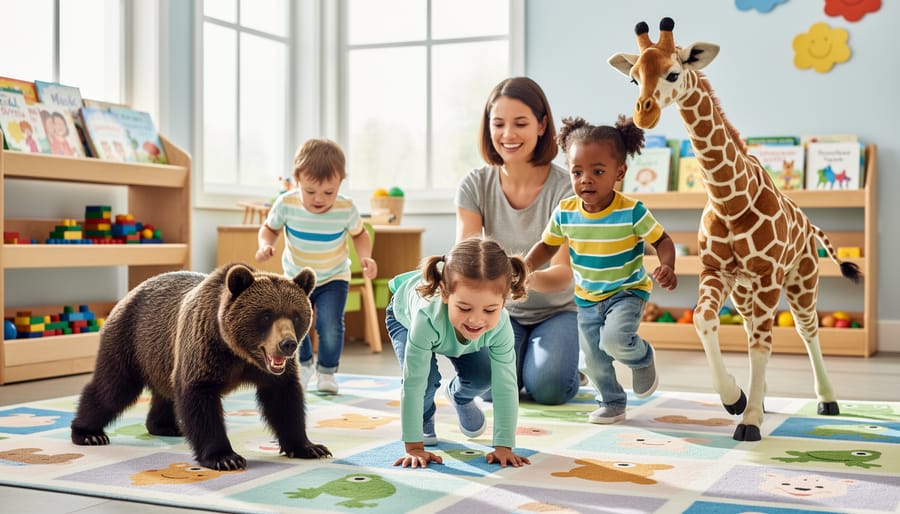
Preschoolers thrive on imagination, making this the perfect age to introduce mindful movement through play. Animal walks are wonderfully engaging—try slithering like snakes, hopping like bunnies, or stomping like elephants. As children embody different creatures, they naturally tune into how their bodies feel while moving. You might say, “How does your tummy feel when you’re a stretching cat?” This gentle questioning builds body awareness without pressure.
Pretend activities work beautifully too. Invite your child to be a tree swaying in the wind, noticing how their arms move and their feet stay rooted. Or become melting ice cream on a hot day, slowly lowering to the ground while paying attention to each body part relaxing.
Simple body scans disguise mindfulness as adventure. Guide a “body treasure hunt” where children search for tension or relaxation: “Let’s check if your shoulders are holding anything heavy today!” One parent shared how her daughter called this “checking in with my body parts,” transforming it into a daily ritual.
Keep sessions brief—three to five minutes is plenty. The goal isn’t perfection; it’s helping little ones develop a friendly, curious relationship with their bodies while having fun together.
For Elementary Age (Ages 6-10)
As children enter elementary school, they’re ready for slightly more intentional body awareness practices. These activities build on natural curiosity while developing self-regulation skills.
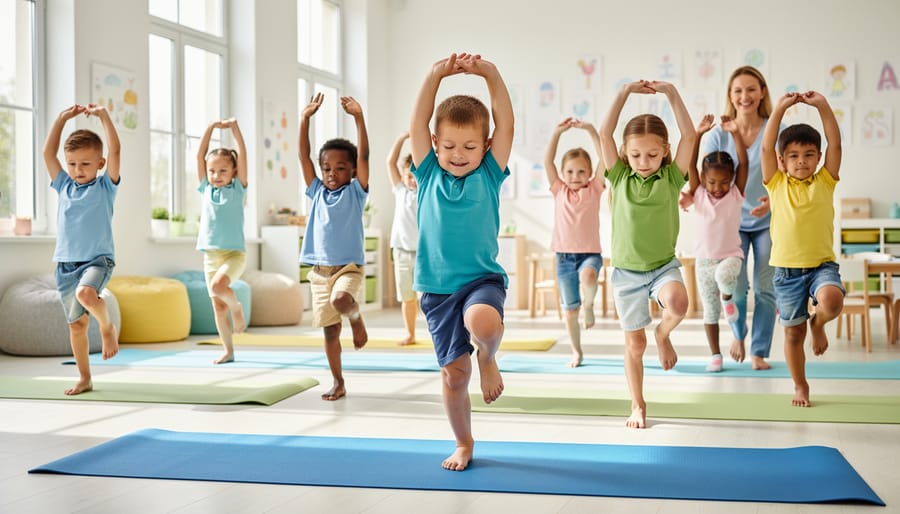
Start with mindful stretching routines. Have children reach their arms overhead like growing trees, then slowly bend to touch their toes, noticing how their muscles feel as they stretch. Ask guiding questions: “What do you notice in your legs? Does anything feel tight or loose?” This simple awareness helps children tune into physical sensations without judgment.
Combine breathing with movement for deeper engagement. The 4-7-8 breathing technique works beautifully when paired with arm movements—raising arms on the inhale, holding them up, then lowering on the exhale. Children can also try “balloon breathing,” imagining their belly expanding and deflating with each breath.
Noticing games make practice playful. Try “body scan bingo,” where children check in with different body parts (Are your shoulders relaxed? Is your jaw tight?). During walks, play “five senses treasure hunt,” identifying what they see, hear, smell, feel, and taste.
These structured activities typically work best in 5-10 minute sessions. The goal isn’t perfection but rather building friendly awareness of the mind-body connection that will serve them throughout life.
For Tweens and Teens (Ages 11+)
As tweens and teens navigate increasing independence and self-awareness, mindful body movement offers a valuable tool for managing stress, building confidence, and staying grounded during a time of significant physical and emotional changes. At this age, young people often appreciate practices they can do on their own terms, without feeling like they’re being treated like children.
Gentle yoga sequences work particularly well for this age group because they combine physical activity with mental focus. Simple flows like sun salutations or seated stretches give teens something concrete to do while also creating space for self-reflection. The beauty of yoga is that it meets them where they are—no competition, no judgment, just their body and breath working together.
Walking meditation is another excellent option that feels less formal and more accessible to teens who might resist traditional sitting meditation. Encourage them to take a mindful walk around the neighborhood or even just back and forth in their room, paying attention to how their feet connect with the ground, how their arms swing naturally, and what sensations arise with each step.
Here are some practices that resonate well with this age group:
- Body scan check-ins before bed to release tension from the day
- Dance breaks with favorite music to express emotions through movement
- Progressive muscle relaxation for test anxiety or performance stress
- Mindful stretching while watching TV or listening to podcasts
- Journaling about body sensations after physical activity to deepen awareness
The key is offering options rather than mandates. Let them experiment and discover what feels right for their unique needs and preferences, creating a foundation for lifelong self-care.
When Mindful Movement Helps Most
Mindful body movement becomes especially valuable during times when children face particular emotional or developmental challenges. Recognizing these moments can help you offer this supportive practice exactly when your child needs it most.
Children experiencing anxiety often benefit tremendously from mindful movement. When worries spiral, bringing attention back to physical sensations—the feeling of feet on the ground, the rhythm of breathing during stretching—provides an anchor to the present moment. One mother shared how simple yoga poses before school helped her son manage his test anxiety: “He learned he could calm his racing thoughts by focusing on balancing on one foot. It gave him something concrete to do with all that nervous energy.”
Transitions and major life changes represent another key opportunity. Whether starting a new school, moving to a different home, or adjusting to family changes, mindful movement offers stability when everything else feels uncertain. Dr. Rachel Martinez, a child psychologist, notes: “During upheaval, children’s bodies hold tremendous tension. Gentle, mindful stretching or walking helps release that physical stress while reconnecting them to what feels safe—their own body.”
Children struggling with big emotions—anger, frustration, sadness—often lack healthy outlets for expression. Mindful movement creates a safe channel. Stomping feet mindfully, pushing against a wall with full attention, or flowing through dance movements allows children to process feelings physically without suppression or explosion.
Kids dealing with attention challenges or hyperactivity frequently find mindful movement particularly grounding. Rather than demanding stillness, it meets them where they are, channeling their natural need for motion into focused awareness. Brief movement breaks throughout the day can dramatically improve concentration and emotional regulation.
Finally, any child experiencing stress-related physical symptoms—headaches, stomachaches, tension—may discover relief through reconnecting mind and body. When we teach children to listen to their bodies with kindness and respond with gentle movement, we’re giving them a lifelong tool for managing stress and supporting their mental health.
Making It Work in Real Life: Tips for Parents and Caregivers
Creating Low-Pressure Opportunities
The key to introducing mindful movement is keeping things light and optional. Think of it as planting seeds rather than demanding immediate results. You might simply say, “I’m doing some stretches—want to join?” or incorporate movement into existing routines like morning wake-ups or bedtime wind-downs.
Make it playful rather than prescriptive. Instead of calling it “mindfulness practice,” frame activities as games: “Let’s pretend we’re cats stretching after a nap” or “Can you show me five different ways to shake your whole body?” This removes pressure and invites curiosity.
Dr. Sarah Mitchell, a child psychologist, suggests modeling rather than instructing: “When children see you pausing to take deep breaths or rolling your shoulders after sitting, they naturally become curious. You’re showing them tools, not imposing requirements.”
Consider environmental cues too. Create a cozy corner with soft mats or cushions where movement naturally happens, but never designate it as a “calm down space” tied to discipline. One parent shared how leaving a yoga ball in the living room led her daughter to spontaneously use it during homework breaks—no prompting needed.
Remember, participation should always feel like a choice, not an obligation. Some children will embrace these practices immediately; others need time to observe before joining in.
Modeling Body Awareness Yourself
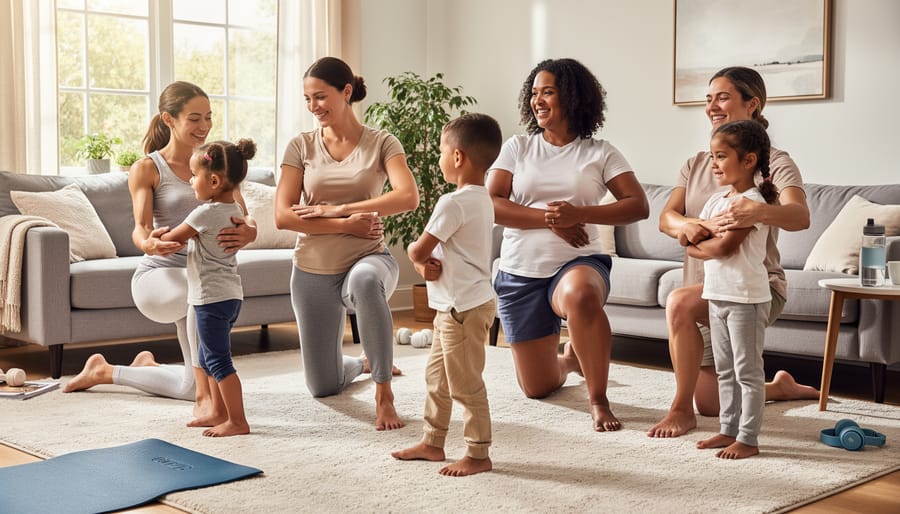
Children are remarkably perceptive observers who learn more from what we do than what we say. When you practice body awareness alongside your child, you’re showing them that noticing physical sensations is normal, valuable, and something adults do too.
You don’t need to be an expert or have perfect awareness yourself. In fact, sharing your genuine experience makes the practice more accessible. Try narrating your own observations in simple terms: “I’m noticing my shoulders feel tight right now, so I’m going to roll them back a few times” or “My breath feels shallow today. I’m going to take some slow, deep breaths.”
Dr. Sarah Thompson, a child psychologist specializing in mindfulness, notes that “when parents model body awareness without judgment, children learn it’s safe to explore their own physical experiences. They see it’s not about being perfect, but about paying attention.”
Keep your language straightforward and honest. If you’re feeling stressed and notice tension in your jaw, you might say, “I can feel my teeth clenched together. That tells me I need to relax.” This teaches children that body sensations provide helpful information about our emotional state.
Remember, modeling isn’t performing. Your child benefits most when they see your authentic practice, complete with distractions, fidgeting, and the simple act of gently returning attention to your body.
What Parents Often Wonder
You’re not alone if you feel uncertain about bringing mindful movement into your family’s routine. Many parents wonder if they’re “doing it right” or whether their child will even cooperate. The good news is that mindful body movement doesn’t require perfection, special equipment, or advanced training. It’s simply about helping children tune into what their bodies are telling them.
What if my child won’t participate?
Start small and make it playful rather than mandatory. Even 30 seconds of stretching like a cat or noticing how their feet feel on the ground counts as mindful movement.
How long should sessions be?
For younger children, 3-5 minutes is plenty, while older kids might enjoy 10-15 minutes. Follow their lead and keep it fun rather than forcing a specific duration.
Is this the same as therapy?
Mindful movement is a wellness practice that can complement therapy but doesn’t replace professional mental health support when a child needs it.
Can it help with behavior issues?
While it supports emotional regulation and body awareness, which may reduce some challenging behaviors, it’s one tool among many and works best as part of a holistic approach to a child’s well-being.
Do I need special training?
No certification is required to practice simple mindful movements at home. Your genuine presence and willingness to explore alongside your child matter more than expertise.
Some parents worry about adding one more thing to already packed schedules. Consider that mindful movement doesn’t need to be a separate activity. It can happen while waiting for dinner to cook, during a homework break, or as part of your bedtime routine. Even transitional moments, like shaking out wiggles before getting in the car, become opportunities for body awareness.
It’s also natural to question whether you’re qualified to guide these practices. Remember that you’re not trying to be a yoga instructor or therapist. You’re simply creating space for your child to notice sensations, movements, and feelings without judgment. Your own curiosity and openness teach more than technical skill ever could. When you model checking in with your own body, taking deep breaths when frustrated, or stretching when tense, children absorb these habits naturally.
You’re doing important work simply by being here, learning about ways to support your child’s mental health. That matters more than you might realize. Mindful body movement is just one of many tools for emotional regulation available to help your child, and it doesn’t need to be perfect or complicated to be helpful.
Some days, these activities will feel natural and joyful. Other days, they won’t happen at all, and that’s completely okay. You’re not looking for perfection. You’re simply offering your child opportunities to notice and connect with their body in gentle, supportive ways. Even two minutes of mindful stretching or one belly-breathing exercise before bed counts as success.
Remember that children learn best through consistency and connection, not intensity. A brief daily practice often creates more lasting benefits than occasional longer sessions. The goal isn’t to add pressure to your already full schedule, but to weave small moments of body awareness into the rhythms you already have.
This week, try just one simple activity from this article. Maybe it’s a quick body scan at bedtime, a few animal stretches in the morning, or noticing five things you can see and touch together. Start small, stay curious, and trust that you’re giving your child valuable skills they’ll carry forward. You’ve got this.