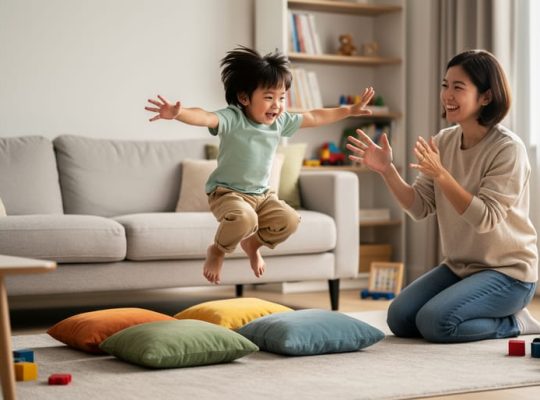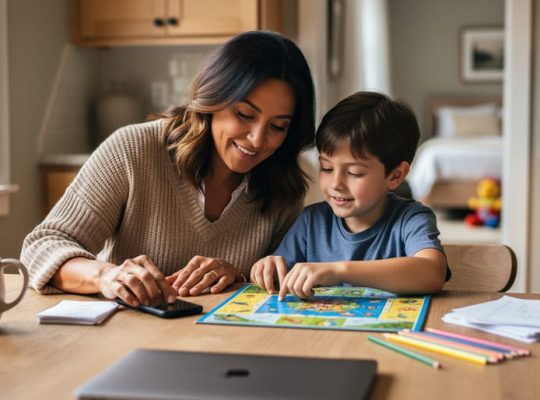
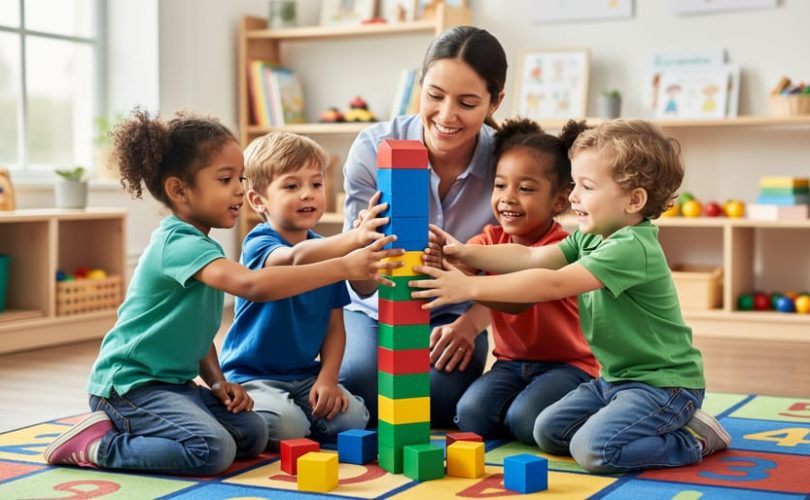
Cooperative games are play activities where participants work together toward a shared goal rather than competing against one another. Instead of winners and losers, everyone succeeds or struggles as a team, creating an environment where collaboration, communication, and mutual support become the path to enjoyment.
These games matter because they reshape how children learn to interact with others. When a group of five-year-olds huddles together to build a tower before a timer runs out, or when siblings work side-by-side to help cartoon characters escape danger, something fundamental shifts. They’re practicing empathy in real time, learning to listen to different ideas, and discovering that their friend’s success doesn’t diminish their own.
For parents and educators, cooperative games offer a practical tool that addresses several developmental needs at once. Children build social skills naturally through play rather than through direct instruction. They learn to manage frustration when plans don’t work, celebrate group achievements, and understand that different people bring different strengths to a challenge.
The beauty of cooperative games lies in their flexibility. A simple card game at the kitchen table teaches the same collaborative principles as an elaborate outdoor adventure. Preschoolers and teenagers can both benefit, though the complexity and themes will differ dramatically.
This article breaks down how cooperative games actually function, explores the main categories you’ll encounter, and shows you how to integrate them into everyday life, whether you’re a parent looking for screen-free activities, a teacher building classroom community, or a professional supporting children’s social-emotional growth.
What Cooperative Games Mean for Children
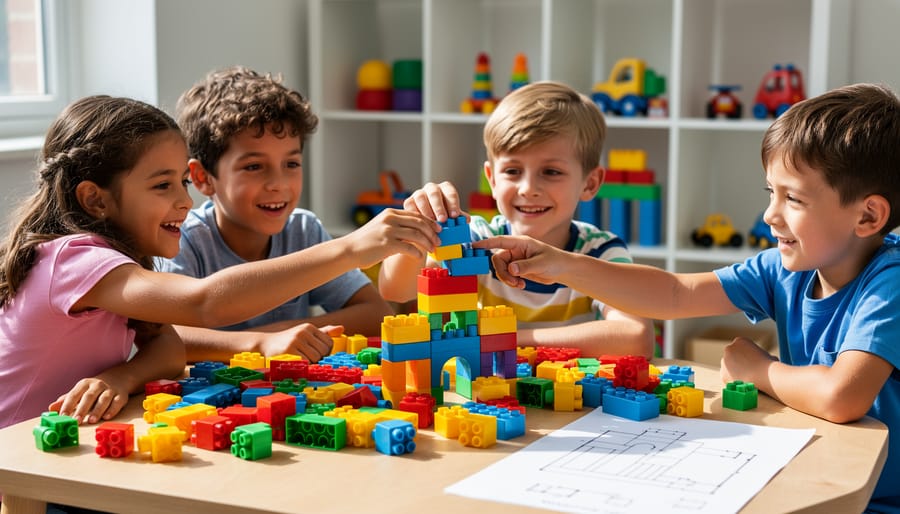
Cooperative games are activities where children work together toward a shared goal rather than competing against each other. Instead of winners and losers, everyone succeeds or faces challenges as a team. The central principle is collective achievement: players combine their efforts, share resources, and support one another to reach an outcome that benefits the whole group.
This structure fundamentally differs from traditional competitive games. In a typical race or tournament, one child’s success means another child’s defeat. In cooperative play, children learn that helping their peers directly contributes to their own success. A puzzle completed together, a challenge solved as a group, or an imaginary world built collectively all reward collaboration over individual triumph.
- Cooperative Games
- Activities designed so that all participants work together toward a common objective, with success or failure shared by the entire group.
- Shared Goals
- Objectives that require combined effort from all players, making individual achievement impossible without group participation and coordination.
- Collective Success
- The outcome where either everyone wins together or the group faces the challenge as a unit, eliminating individual winners and losers.
- Team-Based Play
- Play structures where children take on interdependent roles, each contributing unique strengths to achieve what no single player could accomplish alone.
The shift from “me versus you” to “us versus the challenge” changes how children experience play. They learn to celebrate each other’s contributions rather than viewing peers as obstacles. A child who struggles with one skill might excel at another, and the group learns to value these different strengths equally.
This doesn’t mean cooperative games lack challenge or excitement. The difficulty comes from the task itself, whether that’s building the tallest tower before it falls, solving a mystery together, or creating something imaginative as a team. Children still experience tension, strategy, and the thrill of achievement, but these feelings unite rather than divide the group.
How Cooperative Games Work in Practice
The Building Blocks of Cooperative Play

Every cooperative game rests on a few core principles that shift play from individual achievement to group success. These elements work together to create experiences where children must genuinely rely on each other rather than simply play alongside one another.
The foundation includes:
- A shared goal that all players work toward together, where no one succeeds unless everyone does
- Equal participation where each child’s contribution matters to the outcome
- Built-in communication needs that require players to talk, listen, and plan as a group
- Collective decision-making where choices affect everyone and must be made together
- Wins and losses experienced as a group, removing individual winners and losers
What makes these elements powerful is how they connect. When a game presents a shared objective, children immediately face a choice: work together or fail together. That shared stake creates natural opportunities for communication. A group trying to build the tallest tower with limited blocks, for example, must discuss strategy, negotiate roles, and adjust plans when something topples.
Interdependence becomes real when children discover their individual strengths serve the group. One child might excel at spotting patterns while another thinks spatially. In well-designed cooperative games, these different abilities complement each other rather than compete. The quiet child who notices details becomes as valuable as the enthusiastic organizer.
This structure reshapes how children experience challenge. Instead of anxiety about losing to peers, they face problems they can only solve together. That shift from “me against you” to “us against the challenge” changes the emotional texture of play entirely.
Different Forms of Cooperative Games
Physical and Outdoor Cooperative Activities
Physical and outdoor cooperative activities turn movement into teamwork. Parachute play is a classic example: children hold the edges of a large parachute and must coordinate their lifting, lowering, and shaking to make balls bounce or create waves together. No single child can make it work alone.
Group obstacle courses designed for cooperation require children to help each other through challenges, perhaps holding a rope steady while others climb, or forming a human chain to cross a designated space. Trust-building exercises like partner walks, where one child guides another who has their eyes closed, develop physical coordination alongside reliance on teammates.
These activities work across age groups because the physical challenge is visible and immediate. Children see that success depends on everyone timing their movements, communicating clearly, and adjusting to each other’s pace and abilities.
Tabletop and Board-Based Cooperative Games
Tabletop cooperative games bring children together around a shared surface where they can see each other’s faces and read the game state as one. These might involve matching cards before a timer runs out, building a structure that meets certain requirements, or creating a story where each player contributes a piece. The close proximity encourages natural conversation and eye contact that screens can’t replicate.
What makes these games particularly valuable is the visible feedback loop: children watch their collective decisions play out immediately on the board. A card played, a token moved, or a piece placed becomes a shared reference point for the next choice. This tangible progress helps younger children grasp abstract ideas like strategy and consequence while keeping everyone literally on the same page.
Creative and Imaginative Cooperative Play
Creative and imaginative cooperative play thrives when children share ownership of the outcome rather than following rigid instructions. Art integration activities like group murals or collaborative sculptures let each child contribute unique ideas while building toward a collective vision. Similarly, storytelling play scenarios where children develop characters together or act out shared narratives require them to negotiate roles and extend each other’s creative contributions.
Building challenges work the same way. When children construct a fort, design a marble run, or create an imaginary world with blocks, they practice proposing ideas, accepting modifications, and celebrating what they’ve made together. These open-ended formats remove the pressure of right answers, allowing creativity to emerge through genuine collaboration rather than competition for the best individual result.
How Cooperative Games Support Creative Learning

When children work together toward a shared goal, they enter a problem-solving space that demands creativity in ways solo or competitive play rarely does. Cooperative games require players to pool different ideas, negotiate approaches, and adapt strategies as a group. This collective thinking process pushes children beyond their individual perspectives and encourages them to consider possibilities they might never have imagined alone.
The absence of winners and losers creates psychological safety for experimentation. Children feel freer to suggest unconventional solutions, try approaches that might fail, and build on each other’s ideas without the anxiety of being judged as the one who lost. A child who hesitates to share creative thoughts in competitive settings often becomes more vocal when the group’s success depends on everyone contributing.
Collaborative play also introduces constraints that spark creative thinking. When a group must achieve something together, children negotiate how to use limited resources, assign roles based on different strengths, and invent new ways to overcome obstacles that block the whole team. These challenges require imaginative solutions because no single child can succeed alone. A building project might need one child’s spatial reasoning combined with another’s storytelling ability to create something neither could accomplish independently.
The give-and-take of cooperative play teaches children to refine and expand ideas through dialogue. One child’s suggestion becomes the foundation for another’s improvement, which sparks a third child’s variation. This iterative process mirrors how creative professionals actually work, where collaboration generates stronger outcomes than individual effort. Children learn that creativity isn’t a solitary flash of genius but a social process of sharing, listening, adapting, and building together.
Mental Health and Developmental Benefits
When children play cooperative games regularly, they develop emotional skills that extend far beyond the game itself. These activities create natural opportunities for emotion regulation as children navigate the ups and downs of group challenges without the pressure of individual winners and losers.
The collaborative structure reduces performance anxiety that many children experience in competitive settings. Instead of worrying about losing or being judged against peers, children can focus on contributing their unique strengths to the group effort. This shift matters especially for children who struggle with self-esteem or who have previously avoided group activities because they feared not measuring up.
Cooperative games build empathy through shared experience. Children learn to recognize when a teammate needs help, celebrate each other’s contributions, and understand that different approaches can all be valuable. They practice perspective-taking as they consider how their actions affect the group’s progress and how their peers might be feeling during challenging moments.
These games also create genuinely inclusive environments where children of varying abilities can participate meaningfully. A quieter child might excel at noticing details the group needs, while a more active child handles physical tasks. Nobody sits on the sidelines because they aren’t the fastest or strongest.
The peer relationships that form through cooperative play tend to be more supportive and less hierarchical than those built through competitive activities. Children who regularly work together toward shared goals develop trust and mutual respect. They learn that helping a friend succeed doesn’t diminish their own value, and that collective celebration feels different from individual triumph.
When and Where to Use Cooperative Games
Cooperative games fit naturally into almost any environment where children gather, and the best moments to introduce them often emerge organically. Classrooms benefit from cooperative activities during morning meetings, transitions between lessons, or as brain breaks that reset the group’s energy. At home, cooperative games work well on rainy afternoons, during family game nights, or when siblings need help moving from conflict toward connection. Play-based learning environments like preschools and after-school programs naturally accommodate cooperative play throughout the day.
Cooperative games prove especially valuable in:
- Mixed-ability groups where competitive games might exclude some children
- Conflict resolution moments when children need practice working together
- Building classroom community at the start of the school year
- Therapeutic settings addressing social skills or anxiety
- Inclusive play environments welcoming children with different needs
- Creative learning sessions focused on imagination and problem-solving
For children accustomed to competitive play, start small. Introduce a five-minute cooperative warm-up before a favorite competitive game, or choose hybrid activities that blend both elements. Frame cooperation as a skill to practice rather than a replacement for all competition. Acknowledge that working together feels different and that frustration is normal. Most children adapt quickly once they experience the relief of shared success and realize that everyone gets to contribute rather than watching from the sidelines.
Common Questions Parents and Educators Ask
Parents and educators often wonder whether cooperative games eliminate healthy competition entirely. The short answer is no. Cooperative games complement rather than replace competitive experiences. Children benefit from both types of play, cooperation teaches empathy and teamwork, while age-appropriate competition helps them learn resilience and gracious winning or losing. The key is balance. A classroom or home that offers mostly cooperative play with occasional competitive games gives children a fuller range of social experiences than either extreme alone.
How do I choose cooperative games that match my child’s age?
Look for games with clear, simple rules for younger children (ages 3-6) and more complex problem-solving challenges for older ones (7+). Most cooperative games list recommended ages, but you know your child best, consider their attention span and frustration tolerance alongside the stated age range.
What if my child strongly prefers competitive games?
Start with hybrid games that blend cooperation and competition, or frame cooperative games as a team challenge against the game itself rather than against other players. Some children need time to discover that working together can be just as exciting as winning individually.
How often should we include cooperative play?
Aim for cooperative games two to three times per week in structured settings like classrooms, or whenever natural opportunities arise at home. Frequency matters less than consistency, regular cooperative experiences help children internalize collaborative skills over time.
Can cooperative games work for children with different abilities?
Yes, and they often work better than competitive games for mixed-ability groups. Choose games where children can contribute in different ways, and adjust rules as needed so everyone participates meaningfully without feeling patronized or left behind.
Another common question centres on what to do when collaboration breaks down. Children sometimes argue during cooperative games, especially when learning to share decision-making. This is normal and actually valuable. Guide them through conflicts by asking questions rather than solving problems for them: “What does your team need right now?” or “How can you help each other succeed?” These moments teach negotiation and perspective-taking, skills that matter far beyond game time. If frustration runs high, it’s fine to pause, take a breath together, and revisit the shared goal before continuing. The struggle to cooperate is part of the learning, not a sign the game has failed.
Cooperative games offer children something valuable that goes beyond winning or losing. When kids work together toward a shared goal, they practice creative problem-solving, build empathy, and develop social skills that serve them throughout life. These aren’t abilities children are born with; they’re learned through experience and practice.
If you’re a parent wondering whether cooperative play has a place alongside competitive activities, or a teacher looking for ways to build a more inclusive classroom, the answer is simple: start small. Choose one cooperative game that matches your children’s ages and interests. Watch how they communicate, negotiate, and support each other. Notice the child who struggles in competitive settings but shines when the group needs their particular strength.
Cooperation is a skill worth nurturing, especially in a world that already teaches children plenty about competition. By creating space for collaborative play, you’re giving children tools for creative thinking and emotional resilience that extend far beyond the game itself. That’s time well spent.