
Showing 27 Result(s)
Teen seated in a clinical room receiving transcranial magnetic stimulation with a device positioned above the head, shown in a calm, reassuring setting.

TMS for Anxiety: A Promising New Option When Traditional Treatments Fall Short

Transcranial Magnetic Stimulation (TMS) is a non-invasive brain stimulation therapy that uses magnetic pulses to target specific areas of the brain involved in mood regulation, and emerging research suggests it may offer hope for treatment-resistant anxiety disorders when traditional approaches like therapy and medication haven’t provided relief. Originally FDA-approved for depression in adults, TMS is now being studied for anxiety applications, though it’s important to understand that its use for anxiety in…


Child sitting at a kitchen table with school supplies, looking worried, while a parent stands nearby in a softly blurred background.

What Are Chronic Anxiety Symptoms (and How Do They Affect Children)?

Chronic anxiety symptoms are persistent, excessive worry and physical tension that last for six months or longer and interfere with daily life, relationships, and a child’s ability to learn and grow. Unlike the occasional nervousness before a test or a new social situation, chronic anxiety doesn’t fade when the stressor passes. It lingers, reshapes how a child sees the world, and can show up as stomachaches before school, constant “what if” questions, or refusal to try new things.
If you’re reading this, you’ve likely noticed something that worries you. Maybe your child melts down every morning …

A parent and child sit together at a table with a picture book, with a small sensory fidget in the child’s hands, shown in a calm, supportive home setting.

How to Explain Autism to Kids: Mental Health Disorder or Neurodevelopmental Difference?

Autism is not a mental health disorder. It’s a neurodevelopmental condition, meaning differences in brain development that affect how a person processes information, communicates, and experiences the world from birth. The distinction matters enormously for families navigating support systems, schools developing accommodations, and anyone working to reduce the stigma that comes from misclassification.
The Diagnostic and Statistical Manual of Mental Disorders, Fifth Edition (DSM-5) places autism spectrum disorder squarely in the neurodevelopmental category alongside conditions like …

Diverse children and teens sitting in a circle with a caring adult in a bright school library, engaging in a mental health check-in conversation.

How to Use Creative Methods to Spread Mental Health Awareness in Your Community

Creating meaningful mental health awareness initiatives for children and youth takes more than posting a few posters or hosting a single assembly. The most effective approach combines education, open conversation, and sustained programming throughout the year, creating safe spaces where young people feel comfortable discussing their emotional wellbeing. Research from 2026 shows that schools and communities implementing year-round mental health initiatives see up to 40% more students seeking support when they need it.
Parents and teachers often worry they lack the expertise to address mental health topics with children. That …

Parent sitting with a child on a couch in a calm home setting, offering supportive care for the child’s mental well-being.

How the Canadian Mental Health Association Is Reshaping Support for Kids (And What Parents Need to Know)

The Canadian Mental Health Association (CMHA) is the country’s most established community mental health organization, delivering direct support, education, and advocacy programs to children, youth, and families across more than 75 communities since 1918. If you’re a parent worried about your child’s anxiety, depression, or behavioral challenges, or a professional seeking evidence-based frameworks for young people, CMHA offers a comprehensive network of local branches providing counseling, peer support groups, school-based interventions, and crisis services tailored specifically to the developmental needs of kids and …

A diverse group of young children engaged in playful activities with attentive adults, highlighting a supportive environment for emotional and social development.

Building Strong Minds: How Early Childhood Shapes Mental Health

Every child’s mental health journey begins in their earliest years, shaping not just their emotional well-being but their entire future. Recent research reveals that up to 20% of preschool-aged children experience mental health challenges, yet many go unrecognized during these crucial developmental stages.
As parents and educators, we hold the key to nurturing resilient minds during these formative years. The foundations of mental health – from emotional regulation to social connections – are built alongside first steps and first words, making early intervention not just beneficial, but essential.

A conceptual illustration showing a parent and a healthcare professional collaboratively assembling puzzle pieces, symbolizing the process of understanding and diagnosing a child's mental health condition.

Making Sense of Your Child’s Mental Health Diagnosis: What Happens Next

When your child receives a mental health diagnosis, understanding the steps after diagnosis becomes crucial for their wellbeing and your peace of mind. Differential diagnosis, a systematic method healthcare providers use to identify the most accurate condition, involves six critical steps that ensure your child receives the right care and support.
Think of differential diagnosis as putting together a complex puzzle – each piece represents valuable information about your child’s symptoms, behaviors, and experiences…

Diverse community members, including children and adults, painting a mental health awareness mural that symbolizes hope, resilience, and open dialogue, using vibrant colors and expressive faces.

Creative Ways to Break the Mental Health Stigma (That Actually Work)

Breaking down mental health barriers starts with bold, personal conversations that break the stigma around mental health. Share authentic stories of recovery and resilience in school assemblies, community gatherings, and social media platforms to normalize mental health discussions. Launch peer support groups where children and teens can openly express their feelings without judgment, fostering a safe environment for emotional growth. Partner with local mental health professionals to organize workshops that equip …

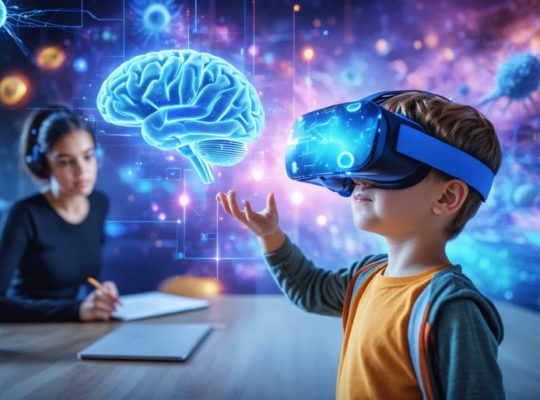
Child wearing a virtual reality headset in a classroom, exploring digital representations of brain neurons and emotions, guided by a teacher.

Virtual Reality: The New Tool Transforming Mental Health Education for Children

Virtual reality is revolutionizing education by creating immersive learning experiences that were previously impossible in traditional classrooms. As digital mental health tools continue to evolve, VR technology stands at the forefront of educational innovation, offering students the ability to step inside historical events, explore complex scientific concepts, and develop practical skills in risk-free environments.
Imagine students walking through ancient Rome, conducting virtual chemistry …

A young child using a colorful and interactive mental health education app on a tablet, surrounded by playful animated emotion characters, promoting emotional wellness learning in a digital environment.

Digital Mental Health Tools: Transforming How Children Learn About Emotional Wellness

Digital intervention has transformed how we approach children’s mental health education, offering powerful new tools for support and healing. As technology becomes increasingly integrated into our daily lives, mental health treatment options have expanded to include innovative digital solutions that meet young people where they are most comfortable.
Recent studies show that 87% of youth turn to digital platforms first when seeking emotional support, making digital intervention not just an option, but a crucial …