
Talk openly with young people about why they vape—research shows Canadian teens often turn to products from a Canadian vape shop to cope with anxiety, depression, or social pressure, making it essential to address underlying emotional needs rather than simply forbidding the behavior.
Monitor changes in mood, sleep patterns, and concentration, as nicotine dependence can intensify existing mental health challenges and create new ones, with studies indicating vaping teens experience depression rates 2-3 times higher than non-vaping peers.
Connect with school counselors or family doctors at the first sign of concern, since early intervention dramatically improves outcomes when addressing both vaping and mental health together rather than treating them as separate issues.
Create a judgment-free environment where youth feel safe discussing their experiences, remembering that shame and punishment often drive secretive behavior and worsen mental health, while compassionate curiosity opens pathways to genuine support and change.
The intersection of youth vaping and mental health has become one of Canada’s most pressing public health concerns. While vaping rates among Canadian teenagers have surged over the past five years, mental health professionals are discovering troubling connections between nicotine use and psychological wellbeing in young people. This isn’t about creating panic—it’s about equipping caring adults with the knowledge and tools needed to support youth through these interconnected challenges. Understanding why young Canadians vape, recognizing the mental health implications, and knowing how to respond with empathy can make the difference between a temporary struggle and a lasting impact on a young person’s wellbeing.
The State of Youth Vaping in Canada Right Now
What the Numbers Tell Us
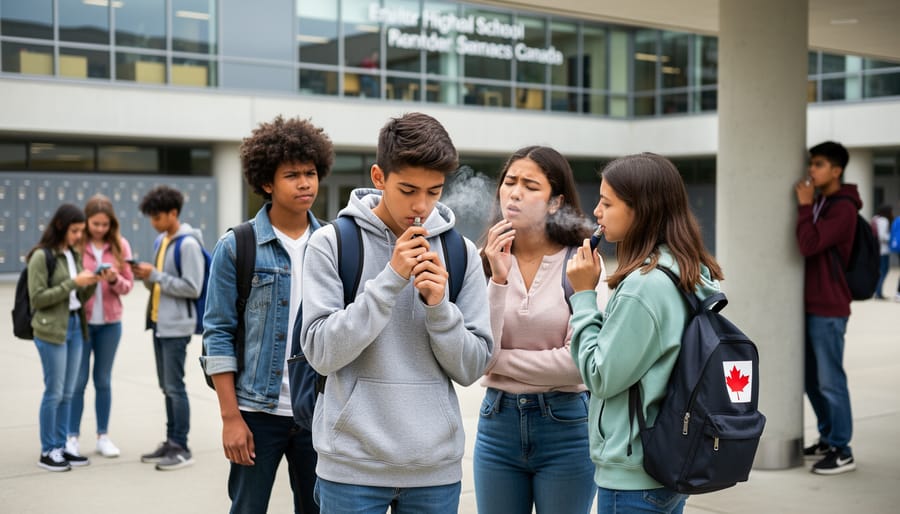
The numbers paint a picture that many parents find surprising. Recent Canadian data shows that approximately 1 in 5 students in grades 7 through 12 have tried vaping, with rates climbing significantly over the past five years. Among high school students specifically, usage rates have more than doubled since 2017, making vaping more common than traditional cigarette smoking in this age group.
What’s particularly concerning is the demographic pattern emerging. Youth who report symptoms of anxiety or depression are nearly twice as likely to vape compared to their peers without these concerns. This relationship works both ways—we’re seeing that young people who start vaping are also more likely to develop mental health challenges later.
The good news is that awareness is growing. More Canadian youth are now recognizing vaping as a genuine health concern rather than a harmless activity. However, many still underestimate the nicotine content in vaping products, with some devices delivering as much nicotine as an entire pack of cigarettes.
These statistics aren’t meant to alarm you, but rather to help you understand the scope of what today’s youth are navigating. Knowledge empowers us to have meaningful conversations and provide the support our young people need.
Why Vaping Appeals to Young People
Understanding what draws young people to vaping helps us address teen vaping concerns with greater compassion and effectiveness.
Flavors play a significant role in vaping’s appeal. With options ranging from fruit punch to cotton candy, these products seem less intimidating than traditional tobacco. Many young people don’t realize they’re still inhaling harmful substances, regardless of the appealing taste.
Social media and influencer marketing have normalized vaping among youth. Sleek devices and trendy images make it appear sophisticated rather than harmful. As one Toronto high school counselor shared, “Kids see their favorite personalities vaping online and think it’s just part of being cool.”
Peer pressure remains powerful. When friends vape, young people often feel pressured to join in to fit in or avoid feeling left out. The misconception that vaping is safe or “just water vapor” further lowers perceived risks.
Many youth also turn to vaping as a coping mechanism for stress, anxiety, or social discomfort, not understanding they may be creating additional mental health challenges. Recognizing these factors allows us to have more meaningful conversations with young people about healthier choices.
The Mental Health Connection You Need to Know About
How Nicotine Affects the Developing Brain
Understanding how nicotine affects young brains helps us appreciate why vaping poses such serious risks for adolescents. The teenage brain is still developing, particularly in areas that won’t fully mature until the mid-twenties. This ongoing development makes young people especially vulnerable to nicotine’s influence.
When adolescents use nicotine, it directly impacts the prefrontal cortex—the brain region responsible for decision-making, impulse control, and emotional regulation. Dr. Sarah Chen, a pediatric neurologist in Vancouver, explains: “Nicotine essentially hijacks the developing brain’s reward system. It interferes with the formation of synapses, which are critical connections that affect how teens learn to manage emotions and make thoughtful choices.”
The consequences extend beyond immediate effects. Research shows that nicotine exposure during adolescence can increase anxiety and depression risk, alter mood stability, and make it harder for young people to concentrate. One parent from Toronto shared: “We couldn’t understand why our daughter seemed increasingly irritable and unfocused. Once we learned about her vaping, the pieces fell together.”
Young brains are also more susceptible to addiction. The rapidly developing reward pathways mean that adolescents can become dependent on nicotine faster than adults, often without realizing it’s happening. This creates a challenging cycle where teens may vape to cope with stress or difficult emotions, but the nicotine actually worsens their emotional regulation over time.
The good news? Young brains are also remarkably resilient, and early intervention can make a significant difference in supporting healthy development.
Anxiety, Depression, and the Vaping Cycle
The relationship between vaping and mental health in Canadian teens works in both directions, creating a challenging cycle that many young people find difficult to break.
Research shows that adolescents experiencing anxiety or depression are significantly more likely to start vaping. Many teens turn to nicotine seeking relief from overwhelming emotions, stress, or social pressures. They may believe vaping helps them relax or cope with difficult feelings. Unfortunately, while nicotine provides a temporary sense of calm, it actually intensifies mental health struggles over time.
Dr. Sarah Chen, a youth mental health specialist in Vancouver, explains: “Teens often don’t realize that nicotine is altering their brain chemistry. What feels like relief is actually creating dependency, and withdrawal between vaping sessions can increase irritability, mood swings, and anxiety.”
The science supports this concern. Nicotine affects developing brains differently than adult brains, disrupting neurotransmitters that regulate mood and stress responses. Studies have found that young people who vape regularly report higher rates of depression and anxiety compared to non-users.
Emma, a 17-year-old from Toronto, shares her experience: “I started vaping when I was stressed about school. At first, it seemed to help, but then I noticed I felt more anxious when I couldn’t vape. I was trapped in this loop.”
Breaking this cycle requires support in both managing anxiety symptoms and addressing vaping dependence. Understanding this connection helps parents and professionals approach the issue with compassion rather than judgment, recognizing that many teens are struggling with underlying challenges.

The Addiction Factor
Nicotine addiction can develop remarkably quickly in young people, often faster than many parents realize. Because adolescent brains are still developing, they’re more vulnerable to addiction than adult brains. Some youth report feeling dependent after just a few vaping sessions, finding themselves reaching for their device multiple times throughout the day.
Dr. Sarah Chen, a youth addiction specialist in Vancouver, explains: “We’re seeing teenagers who genuinely want to quit but struggle intensely with withdrawal. Their brains have adapted to expect regular nicotine doses, and without it, they experience real physical and psychological distress.”
Withdrawal symptoms in youth can include irritability, difficulty concentrating, anxiety, restlessness, and mood swings. For students, this often means struggling to focus in class or becoming unusually short-tempered with friends and family. Many young people describe feeling constantly on edge or experiencing persistent cravings that interfere with daily activities.
The psychological burden of dependency extends beyond withdrawal. Teens often feel ashamed about their inability to quit, especially when they initially believed vaping was harmless or easily controllable. This shame can prevent them from seeking help, creating a painful cycle of secrecy and continued use.
Emma, now 17, shares her experience: “I felt trapped. I knew it was affecting my mood and my relationships, but admitting I couldn’t stop felt like failure. I wish I’d understood earlier that addiction isn’t a personal weakness—it’s how nicotine affects developing brains.”
Understanding this connection helps us approach youth with compassion rather than judgment, creating space for honest conversations and support.
Warning Signs Your Child Might Be Vaping
Physical and Behavioral Indicators
Recognizing the physical and behavioral signs of vaping can help you identify when a young person might need support. While these indicators don’t necessarily confirm vaping, being aware of them allows for earlier, more compassionate conversations.
Physical signs often appear first. You might notice unfamiliar devices that look like USB drives, pens, or sleek pods among their belongings. Many teens don’t realize these are vaping devices. Sweet or fruity smells on clothing, in backpacks, or lingering in their room can indicate flavored vape use. Watch for increased thirst or dry mouth, as vaping affects hydration. Frequent coughing, throat clearing, or nosebleeds may also emerge, particularly in youth who’ve never smoked before.
Behavioral changes can be equally telling. Sudden secretiveness about possessions, increased time spent alone or in bathrooms, and defensive reactions when asked about certain items warrant gentle attention. Some young people become more anxious or irritable between vaping sessions due to nicotine dependence developing quickly in adolescent brains.
Dr. Sarah Chen, a Toronto-based adolescent medicine specialist, notes: “Parents often miss early signs because vaping devices are designed to be discreet. Trust your instincts—if something feels different about your child’s behavior or health, it’s worth a caring conversation.”
Approaching these observations with curiosity rather than accusation opens doorways for honest dialogue and support.
Mental Health Red Flags
Recognizing mental health changes in young people who vape isn’t always straightforward, but certain patterns deserve attention. Dr. Sarah Chen, an adolescent psychiatrist in Toronto, notes that “nicotine’s impact on the developing brain can amplify existing mental health vulnerabilities, creating a cycle that’s difficult to break.”
Watch for noticeable mood swings that seem more intense than typical teenage behaviour. Youth experiencing nicotine dependence often display increased irritability, particularly when they haven’t vaped recently. This crankiness isn’t defiance, it’s withdrawal.
Anxiety symptoms may emerge or worsen, including restlessness, difficulty concentrating, or excessive worry. Some young people report that vaping initially seemed to calm their nerves, but over time, their baseline anxiety actually increased.
Sleep disruptions are another significant red flag. Nicotine is a stimulant, and teens who vape, especially in the evening, may struggle to fall asleep or experience fragmented rest. You might notice them appearing exhausted despite spending adequate time in bed.
Social withdrawal can signal distress too. If a previously engaged teen begins isolating themselves, losing interest in activities they once enjoyed, or only socializing with peers who vape, it’s worth a gentle conversation.
Remember, these changes don’t automatically confirm a vaping-related mental health issue, but they do suggest it’s time to check in with compassion and curiosity rather than confrontation.
What Experts Say About Youth Vaping and Mental Wellness
Mental health professionals across Canada are increasingly concerned about the intersection of vaping and youth psychological wellness. Dr. Nicholas Chadi, a pediatrician and adolescent addiction specialist at CHU Sainte-Justine in Montreal, notes that many young people turn to vaping during times of stress or anxiety, creating a troubling cycle. “What we’re seeing is that teens often start vaping to cope with difficult emotions, but nicotine dependence can actually worsen their anxiety and mood over time,” he explains.
Research from the Centre for Addiction and Mental Health (CAMH) reveals that young people who vape are more likely to experience symptoms of depression and anxiety compared to non-vaping peers. While it’s not always clear whether vaping leads to mental health challenges or vice versa, experts agree the relationship is significant and deserves attention.
Dr. Karen Bremner, a clinical psychologist specializing in adolescent mental health, emphasizes that nicotine’s impact on the developing brain goes beyond addiction. “The teenage brain is still forming critical connections, particularly in areas responsible for mood regulation and impulse control. Introducing nicotine during this crucial period can disrupt these processes and contribute to emotional difficulties.”
Pediatricians are also noticing behavioral changes in young patients who vape regularly. Increased irritability, difficulty concentrating, and mood swings are common withdrawal symptoms when teens can’t access their devices, particularly during school hours.
Importantly, experts stress the need for compassionate responses rather than punishment. “Young people aren’t vaping to rebel or cause problems. They’re often struggling with genuine emotional pain and need our support, not judgment,” says Dr. Chadi. This perspective helps parents and educators approach conversations with understanding, opening doors for honest dialogue about healthier coping strategies.
Real Stories from Canadian Families
When Sarah, a mother from Toronto, noticed her 15-year-old son becoming increasingly withdrawn, she never imagined vaping could be connected to his shifting mood. “He’d always been such a happy kid,” she shares. “But over several months, he became anxious, irritable, and struggled to sleep. I thought it was just teenage stress.” It wasn’t until she found a vape device hidden in his backpack that she started connecting the dots. “His guidance counsellor helped me understand that nicotine addiction was affecting his brain chemistry. Once we got him support and he stopped vaping, we slowly saw glimpses of our son coming back.”
For 17-year-old Emma from Vancouver, vaping started as something social at school. “Everyone was doing it, and I thought it helped me manage my anxiety,” she explains. “But I didn’t realize I was creating a worse problem. I became dependent on it, and my panic attacks actually got more frequent.” With support from her family and a youth counsellor, Emma has been vape-free for eight months. “I wish I’d known earlier that vaping doesn’t fix anxiety—it makes it worse over time.”
Michael, a father in Halifax, describes the challenging journey with his daughter. “She started vaping at 14, and by 16, she was dealing with depression and had trouble concentrating at school. As parents, we felt helpless and didn’t know where to turn.” He emphasizes the importance of approaching the situation with compassion rather than punishment. “We focused on understanding why she started vaping and got her connected with a therapist who specializes in youth mental health. It wasn’t a quick fix, but keeping communication open made all the difference.”
These families remind us that behind every statistic is a real young person struggling, and recovery is possible with understanding, support, and appropriate resources.

How to Talk to Your Child About Vaping
Creating a Safe Space for Honest Conversation
When you discover your teen is vaping, your initial reaction matters deeply. Instead of leading with anger or punishment, take a breath and choose curiosity. Dr. Sarah Chen, a youth mental health specialist in Toronto, explains: “Teens are far more likely to open up when they feel heard rather than judged. Ask questions like ‘What drew you to vaping?’ or ‘How does it make you feel?’ rather than immediately lecturing.”
Create a judgment-free environment where your teen feels safe sharing their struggles. Active listening means putting away your phone, making eye contact, and truly absorbing what they’re saying without planning your response. Acknowledge their feelings, even if you don’t agree with their choices.
One parent shared: “When I found my daughter’s vape, I told her we’d talk later when I was calmer. That pause helped me approach her with empathy instead of fear.”
Maintain open family communication by establishing regular check-ins where conversations about vaping, stress, and mental health feel natural rather than confrontational. Reassure your teen that seeking help together isn’t about punishment but supporting their wellbeing. Trust builds gradually, and your consistent, compassionate presence shows them they’re not alone in navigating these challenges.
Questions to Ask and How to Listen
Start conversations from a place of curiosity rather than confrontation. Try open-ended questions like “I’ve noticed vaping is pretty common at school—what do you think about it?” or “Help me understand what appeals to you about vaping.” These invitations create space for honest dialogue without triggering defensiveness.
Dr. Sarah Chen, a Toronto-based adolescent psychologist, suggests asking “What does vaping do for you?” This question helps uncover whether your child is using it to manage stress, fit in socially, or cope with anxiety or depression.
When listening, resist the urge to immediately problem-solve or lecture. Practice reflective listening by summarizing what you hear: “It sounds like you’re feeling really overwhelmed with schoolwork.” This validates their feelings and encourages them to share more.
Pay attention to what isn’t being said too. If your teen seems reluctant to discuss their emotions or appears withdrawn, these may signal underlying mental health concerns that vaping is masking. Remember, one conversation rarely solves everything. Consistency and patience matter more than perfect words.
When They’re Already Vaping
If you discover your teen is already vaping, take a breath. This isn’t a moment for punishment—it’s an opportunity for connection and support.
Dr. Sarah Chen, an adolescent psychiatrist in Toronto, emphasizes approaching the conversation with curiosity rather than anger. “Ask open-ended questions like, ‘What do you enjoy about vaping?’ or ‘How does it make you feel?’ This helps you understand what need it’s meeting—whether that’s stress relief, social belonging, or something else.”
Understanding the why behind the behaviour helps you address the root cause together. If vaping serves as a coping mechanism for anxiety or low mood, you can explore healthier alternatives like exercise, creative outlets, or speaking with a counsellor.
Create a collaborative plan rather than issuing ultimatums. One parent from Vancouver shared, “Instead of demanding my daughter quit immediately, we set small goals together. She appreciated being treated as part of the solution, not just the problem.”
Remember that nicotine addiction is real and quitting can be challenging. Celebrate small wins, expect setbacks, and keep communication lines open. Professional support from healthcare providers familiar with youth substance use can make a significant difference in the journey toward healthier choices.
Resources and Support Available in Canada
If you’re concerned about a young person struggling with vaping or related mental health challenges, please know that help is available across Canada. You don’t have to navigate this alone.
For immediate support, Kids Help Phone offers 24/7 confidential counseling at 1-800-668-6868 or by texting CONNECT to 686868. Their trained counselors understand the pressures young people face and provide judgment-free support for mental health concerns, including substance use.
Health Canada’s Tobacco and Vaping Products Program provides evidence-based information specifically for parents and educators. Their website offers practical resources on talking to youth about vaping and understanding nicotine addiction.
Many communities offer specialized programs through local public health units. These often include group support sessions, one-on-one counseling, and family education workshops designed specifically for youth vaping cessation. Contact your regional health authority to learn what’s available in your area.
School-based support is another valuable avenue. Most Canadian schools have guidance counselors or mental health professionals who can connect students with appropriate treatment options and ongoing support.
Dr. Sarah Chen, a youth addiction specialist in Toronto, shares: “We’ve seen tremendous success when families access support early. The right combination of counseling, peer support, and family involvement makes a real difference in helping young people break free from vaping.”
Provincial mental health services also provide assessments and referrals. In Ontario, ConnexOntario (1-866-531-2600) offers free, confidential information about mental health and addiction services. Similar services exist in other provinces through 211 helplines.
Remember, reaching out for help is a sign of strength, not weakness. These resources exist to support young people and their families through challenging times with compassion and expertise.
Prevention Strategies That Actually Work
Building Resilience at Home
Creating a supportive home environment is one of the most powerful tools parents have to protect their children from vaping and support their mental health. Start by fostering open communication where your child feels safe sharing their feelings without fear of judgment. When teens know they can talk about stress, peer pressure, or anxiety, they’re less likely to turn to vaping as a coping mechanism.
Help your child develop healthy coping skills by modeling them yourself. This might include regular physical activity, creative outlets like art or music, mindfulness practices, or simply talking through difficult emotions together. Dr. Sarah Mitchell, a child psychologist in Toronto, notes that “teens who have multiple healthy ways to manage stress are significantly less resilient against substance use.”
Building self-esteem is equally important. Celebrate your child’s strengths, encourage their interests, and help them develop a sense of purpose beyond peer approval. When young people feel confident in who they are, they’re better equipped to resist social pressures.
Consider exploring comprehensive prevention strategies that address multiple protective factors. Remember, strengthening your child’s emotional toolkit takes time and patience, but these foundations will serve them throughout their life.

What Schools and Communities Can Do
Schools and communities play a vital role in supporting young people and preventing vaping-related harms. Evidence-based education programs that go beyond scare tactics work best. When students learn about how nicotine affects their developing brains and mental health in age-appropriate ways, they can make more informed choices.
Peer support initiatives create safe spaces where youth can discuss pressures around vaping without judgment. Teen-led awareness campaigns often resonate more powerfully than adult-delivered messages because young people speak the same language and understand each other’s realities.
Dr. Sarah Chen, a school mental health specialist in Toronto, notes: “We’ve seen tremendous success when schools partner with mental health professionals to offer coping skills workshops. When teens learn healthier ways to manage stress and anxiety, vaping becomes less appealing.”
Community-wide approaches matter too. Recreation centers offering free activities, mental health drop-in clinics, and youth mentorship programs provide alternatives and support networks. Parents and educators working together to establish consistent messaging and expectations creates protective boundaries.
Consider organizing parent education evenings where families can learn recognition signs and communication strategies together. When entire communities rally around youth wellbeing rather than punishment, young people feel supported in making healthier choices and seeking help when they need it most.
If you’re reading this because you’re concerned about your child’s vaping and mental health, please know that you’re not facing this alone. Thousands of Canadian families are navigating these same challenges right now, and there is genuine reason for hope.
Change is absolutely possible. Young people have remarkable resilience, and with the right support, they can overcome both vaping and the mental health struggles that often accompany it. Whether your child is just starting to experiment with vaping or has been struggling for some time, reaching out for help today can make all the difference.
Remember that addressing vaping isn’t just about stopping a behaviour—it’s about understanding and supporting your child’s overall wellbeing. When we approach this challenge with compassion rather than judgment, we create space for honest conversations and meaningful healing.
You don’t need to have all the answers. What matters most is showing up with love, staying connected, and being willing to seek support when you need it. Healthcare professionals, counsellors, and support groups across Canada are ready to help guide both you and your child through this journey.
Your child’s physical and mental health are equally important, and both deserve attention and care. By prioritizing open communication, seeking appropriate resources, and maintaining hope even during difficult moments, you’re already taking important steps forward. Trust that with patience, support, and the right interventions, better days are ahead for your family.