

Your twelve-year-old daughter receives a harsh comment on her TikTok video. Your son screenshots a classmate’s embarrassing moment and shares it in a group chat. A teen posts something they regret, only to discover it’s been shared hundreds of times. These aren’t hypothetical scenarios—they’re daily realities shaping our children’s mental health, relationships, and futures.
Digital etiquette isn’t simply about teaching kids to be polite online. It’s a protective factor that directly impacts their emotional wellbeing, physical safety, and opportunities. When children lack understanding of appropriate online behavior, they’re more vulnerable to cyberbullying, both as victims and perpetrators. They risk damaging their reputation before they’re old enough to understand lasting consequences. They develop communication patterns that can strain friendships and limit future educational or career prospects.
The stakes extend beyond social embarrassment. Research consistently links poor digital behavior to increased anxiety, depression, and social isolation among young people. A single impulsive post can lead to school disciplinary action, legal consequences, or permanent digital footprints that follow them into adulthood. Meanwhile, children who practice thoughtful online behavior build stronger relationships, develop emotional intelligence, and navigate digital spaces with confidence.
Teaching Digital Citizenship isn’t optional anymore—it’s as essential as teaching children to look both ways before crossing the street. The good news? These skills are learnable, and it’s never too late to start conversations that will protect and empower your child in an increasingly connected world.
What Digital Etiquette Really Means for Kids
Digital etiquette might sound formal, but it’s really just teaching children how to be kind, thoughtful people in online spaces—the same way we teach them to say “please” and “thank you” in person. For kids, this means understanding that real people with real feelings sit behind every screen name, profile picture, and comment section.
When we talk about responsible online behavior, we’re covering much more than just knowing how to navigate apps or post photos. Dr. Sarah Chen, a child psychologist specializing in technology use, explains: “Many children are incredibly tech-savvy but haven’t learned the human side of digital interaction. They can troubleshoot a frozen tablet but might not pause before sharing an embarrassing photo of a classmate.”
Digital etiquette includes three core areas. First, respectful communication—understanding that words typed quickly can hurt just as much as words spoken aloud, and that tone doesn’t always translate through screens. Second, privacy awareness—recognizing what information belongs to them alone and what belongs to others, plus knowing when sharing crosses boundaries. Third, empathy—developing the ability to consider how their online actions might affect someone else’s day, reputation, or wellbeing.
One parent shared: “My daughter could code a simple game at age nine, but she didn’t understand why forwarding a private message could damage a friendship. Technical skill and social wisdom are completely different things.”
This distinction matters because children need both to thrive online. Knowing how technology works doesn’t automatically teach them how to use it in ways that protect themselves and others.
The Mental Health Connection You Can’t Ignore
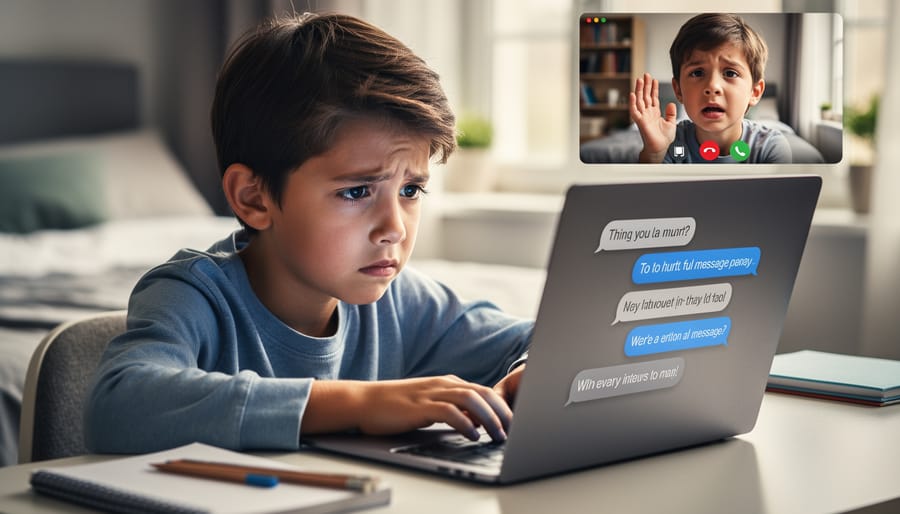
When Words on Screens Hurt Real Feelings
Behind the screen’s protective glow, children often feel invisible. They type words they’d never say face-to-face, forgetting that real people with real feelings read those messages. This disconnect, known as the online disinhibition effect, means kids may not grasp that their digital words land with the same weight as spoken ones.
Sarah, a middle school counselor with 15 years of experience, shares a common scenario: “I’ve watched children break down in my office over a group chat message sent weeks earlier. What the sender thought was a joke became a painful memory the recipient replays daily.”
The permanence of digital communication makes this especially challenging. Unlike playground conflicts that fade from memory, hurtful texts and posts remain accessible, creating opportunities for repeated harm. Screenshots circulate. Messages resurface. What happened in a moment of thoughtlessness can follow a child for months or years.
Research consistently shows that negative online interactions contribute to anxiety, depression, and declining self-esteem in young people. When children receive unkind messages, their brains process the hurt just as intensely as in-person cruelty, sometimes more so because they revisit the words repeatedly.
Teaching digital etiquette helps children understand this fundamental truth: there’s always a person on the receiving end. Every emoji, comment, and message affects someone’s day, confidence, and mental wellbeing. When kids recognize this connection, they become more thoughtful communicators who consider the human impact before hitting send.
Building Empathy in a Digital World
When children communicate through screens, it’s easy for them to forget there’s a real person on the other side. Teaching digital etiquette helps bridge this gap, nurturing empathy even in virtual spaces.
Dr. Sarah Chen, a child psychologist specializing in digital wellbeing, shares this insight: “When kids learn to pause before posting or consider how their words might land, they’re developing crucial emotional intelligence skills. These translate directly into their face-to-face relationships.”
One mother recounted how her 11-year-old daughter participated in a classroom discussion about online comments. After learning to ask herself, “Would I say this to someone’s face?” her daughter began thinking more carefully about her texts to friends. Within weeks, the mother noticed her daughter showing more consideration in everyday conversations at home too.
Digital etiquette lessons create opportunities to discuss perspective-taking and emotional awareness. When children practice kindness online, thanking someone for sharing or offering supportive comments instead of criticism, they’re building habits that strengthen all their relationships. This foundation helps them navigate conflicts more gracefully, recognize others’ feelings more readily, and develop the compassion that leads to genuine, healthier friendships both online and off.
Protecting Your Child’s Online Reputation and Future
Every parent wants to protect their child’s future, but many don’t realize that a single thoughtless post today can echo into their teenager’s college applications or first job interview years from now. The reality is that our children are growing up in the first generation where their entire childhood can be documented and searchable online—and what seems harmless or funny at age twelve might tell a very different story at age twenty-two.
Dr. Sarah Mitchell, a school counselor with fifteen years of experience, shares a sobering story: “I worked with a bright student who lost a scholarship opportunity because admissions officers found old social media posts with inappropriate language from when he was fourteen. He’d completely forgotten about them, but the internet hadn’t.” This isn’t an isolated incident. Studies show that over 35% of college admissions officers review applicants’ social media profiles, and one in ten has rejected candidates based on what they found.
The consequences of poor digital etiquette extend far beyond college admissions. A child’s digital footprint can impact multiple areas of their future:
- College applications may be affected when admissions committees review social media profiles
- Job opportunities can vanish when employers discover inappropriate posts, photos, or comments
- Personal relationships may suffer when peers or romantic interests find offensive or embarrassing content
- Self-image and confidence can deteriorate when children see their past mistakes permanently preserved online
What makes this particularly challenging is that children’s brains are still developing, especially the prefrontal cortex responsible for impulse control and long-term thinking. They genuinely struggle to connect today’s actions with tomorrow’s consequences. That’s why teaching digital etiquette isn’t about perfection—it’s about building awareness and developing healthier habits before mistakes become permanent.
The good news? When we teach children to pause before posting, consider their digital legacy, and treat online spaces with respect, we’re giving them tools that protect both their present wellbeing and future opportunities. Think of digital etiquette as an investment in your child’s future self—one that pays dividends for years to come.
Creating Safer Online Spaces for Everyone
The Bystander Effect Goes Digital
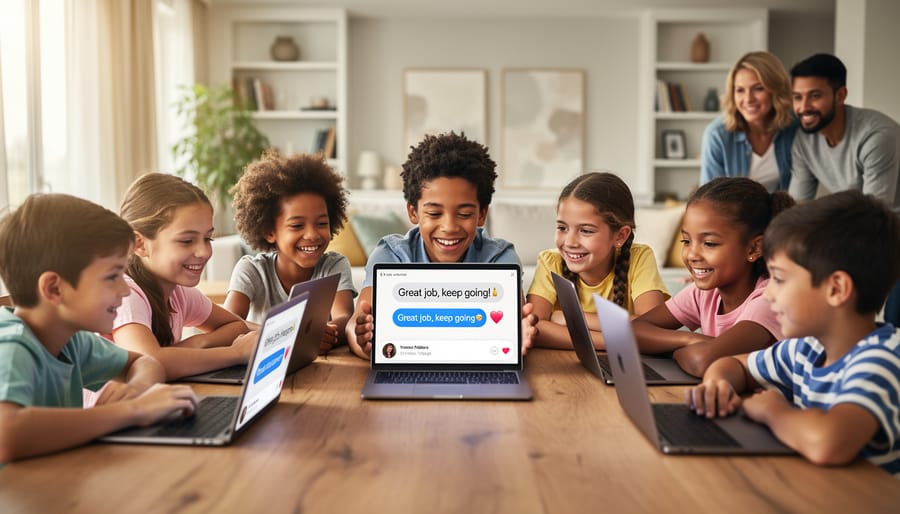
Just as children learn not to walk past someone being hurt in a playground, they need to understand their role when witnessing online cruelty. Research shows that children with strong digital etiquette skills are significantly more likely to become “upstanders” rather than bystanders when they see cyberbullying.
Dr. Sarah Martinez, a child psychologist specializing in digital behavior, explains: “When kids understand digital etiquette, they recognize that silence in the face of online harassment is a choice. They learn that a simple ‘that’s not okay’ or privately reaching out to the targeted peer can make a tremendous difference.”
Children who practice good online manners develop the confidence to intervene safely. They might report harmful content, refuse to share mean messages, or offer support to someone being targeted. One parent shared how her daughter, after learning about digital citizenship, started a group chat specifically to include a classmate who had been excluded from another one.
Teaching digital etiquette transforms passive observers into active allies. When raising responsible kids online, we empower them to create the supportive digital communities they deserve, protecting both others and themselves from the psychological harm of online cruelty.
Real-World Skills That Start With a Screen
When your child learns to think before posting a comment or considers how their words might affect someone online, they’re developing crucial abilities that extend far beyond the screen. Digital etiquette isn’t just about being nice on the internet—it’s a training ground for the communication skills, emotional intelligence, and professional behaviors they’ll need throughout their lives.
Consider Maya, a middle school teacher who noticed something remarkable. The students who practiced thoughtful online communication were consistently better at resolving face-to-face conflicts. “They’d pause before reacting, consider the other person’s perspective, and choose their words more carefully,” she explains. “The skills transferred seamlessly from their phones to the classroom.”
The connection between digital behavior and real-world success becomes clearer when we look at specific skills:
| Digital Etiquette Skill | Real-World Application |
|---|---|
| Thinking before posting | Impulse control and thoughtful decision-making in all situations |
| Respectful disagreement online | Professional conflict resolution and negotiation abilities |
| Protecting personal information | Boundary-setting and self-advocacy in relationships |
| Giving constructive feedback | Effective workplace communication and collaboration |
| Recognizing tone in messages | Enhanced empathy and emotional intelligence |
These aren’t separate skill sets—they’re the same abilities expressed in different contexts. When your teenager learns to set boundaries about what they share online, they’re practicing the same self-advocacy they’ll need when negotiating a salary or standing up for themselves in any relationship.
Dr. James Chen, a career counselor, emphasizes this connection: “Employers consistently tell me they value candidates who communicate professionally, show respect for diverse perspectives, and navigate disagreements constructively. These are exactly the skills we’re teaching when we guide children toward better digital behavior.”
The digital world offers something unique—a low-stakes practice environment where children can experiment with communication, make mistakes, receive feedback, and try again. Each online interaction becomes an opportunity to build the competence and confidence they’ll carry into job interviews, college applications, and meaningful relationships throughout their lives.
What Happens When Digital Etiquette Is Missing
When children navigate the digital world without proper guidance, the consequences can ripple through every aspect of their lives—and yours too.
Without understanding digital etiquette, kids become more vulnerable to online predators who often exploit a child’s naivety about oversharing personal information. A child who hasn’t learned about appropriate boundaries might readily share their location, school name, or daily routines with strangers, not recognizing the potential danger.
Many parents don’t realize that poor digital etiquette can lead children to unintentionally participate in harmful behaviors. Sharing embarrassing photos of classmates, forwarding hurtful messages, or commenting thoughtlessly can make your child the bully—even when they don’t understand the impact of their actions. One mother shared how her daughter forwarded a private message as a joke, not realizing it would spiral into a cyberbullying situation that affected multiple families.
Relationships suffer significantly too. Friendships can crumble over misunderstood texts, inappropriate comments, or boundary violations that could have been avoided with proper digital guidance. Children who constantly interrupt face-to-face conversations to check their devices struggle to develop deep, meaningful connections with family and peers.
The stress extends beyond your child. Parents often experience heightened anxiety when they’re uncertain about what their kids are doing online, who they’re talking to, or whether they’re making safe choices. Dr. Sarah Martinez, a child psychologist, notes that “families without established digital norms often report increased conflict, with constant battles over screen time and online activities creating tension that permeates the entire household.”
Protecting your child’s digital life becomes far more challenging when foundational etiquette principles aren’t in place. The good news? These consequences are preventable with proactive guidance and open communication about digital citizenship.

Starting the Conversation at Home
Starting conversations about digital etiquette doesn’t require a formal sit-down or a serious tone that might make your child shut down before you even begin. Think of it more like planting seeds through natural, everyday moments rather than delivering a lecture.
Dr. Sarah Chen, a child psychologist specializing in digital wellness, shares this insight: “The most effective conversations happen organically. When you’re watching a show together and someone posts something mean online, that’s your opening. Simply ask, ‘What do you think about how they handled that?’ You’re inviting dialogue, not interrogating.”
Here’s a gentle approach to get started:
- Begin with curiosity, not criticism. Ask open-ended questions about what they enjoy online, who they follow, or what’s happening in their digital world. Listen without immediate judgment.
- Share your own experiences. Talk about a time you misread a text message or regretted posting something. Vulnerability creates connection and shows that everyone is learning.
- Use current events or media as conversation starters. A news story about cyberbullying or a character’s online behavior in their favorite show provides neutral ground for discussion.
- Set expectations together. Rather than imposing rules, collaborate on family digital guidelines. When children have input, they’re more invested in following through.
- Check in regularly. Make digital etiquette part of your ongoing conversations, like discussing their day at school. Brief, frequent touchpoints work better than annual lectures.
Remember that one parent’s story illustrates this beautifully: “I stopped trying to be the internet police and started being genuinely curious about my daughter’s TikTok videos. Our relationship changed completely. Now she actually tells me when something feels off online.”
The goal isn’t perfection but creating a safe space where your child feels comfortable coming to you when digital situations get complicated, confusing, or uncomfortable.
Teaching digital etiquette isn’t just another item on your parenting to-do list—it’s a meaningful investment in your child’s wellbeing, safety, and future opportunities. The skills they learn today about respectful communication, privacy awareness, and critical thinking online will serve them throughout their lives, protecting their mental health and opening doors rather than closing them.
You don’t need to be a technology expert to guide your children through the digital world. What matters most is your willingness to stay engaged, ask questions, and model the behavior you want to see. Start small: have one conversation about online kindness this week. Set one boundary around screen time. Review one privacy setting together. These seemingly simple actions create ripples of positive change.
Dr. Amanda Chen, a child psychologist specializing in digital wellness, reminds parents: “Children who learn digital etiquette early develop stronger emotional regulation and healthier relationships both online and offline. You’re not just teaching them how to behave online—you’re building their character.”
Remember, every parent is navigating this landscape for the first time. There’s no perfect approach, and mistakes are part of the learning process for both you and your child. What counts is showing up, staying curious, and keeping the conversation going. Your involvement makes all the difference. By prioritizing digital etiquette today, you’re giving your child tools they’ll use for a lifetime—and that’s something truly worth your time and attention.