
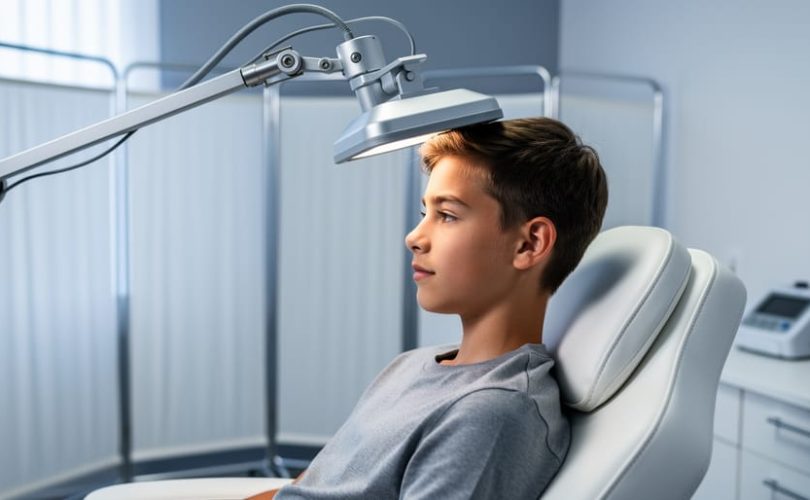
Transcranial Magnetic Stimulation (TMS) is a non-invasive brain stimulation therapy that uses magnetic pulses to target specific areas of the brain involved in mood regulation, and emerging research suggests it may offer hope for treatment-resistant anxiety disorders when traditional approaches like therapy and medication haven’t provided relief. Originally FDA-approved for depression in adults, TMS is now being studied for anxiety applications, though it’s important to understand that its use for anxiety in children and adolescents remains largely investigational rather than standard practice.
If your child has tried multiple treatments without success, you’re probably feeling a mix of exhaustion and desperate hope. Dr. Sarah Chen, a pediatric psychiatrist specializing in treatment-resistant anxiety, often hears parents ask whether TMS could be “the answer” for their struggling teen. “Parents need to know both the promise and the limitations,” she explains. “TMS isn’t a magic bullet, but for some patients, it opens doors when other treatments have closed.”
The reality is that TMS for anxiety exists in a complex space between cutting-edge neuroscience and practical availability. While adult studies show encouraging results for generalized anxiety disorder, panic disorder, and obsessive-compulsive disorder, pediatric applications require careful consideration of developing brains, limited research data, and questions of access and insurance coverage.
This article will help you understand what TMS actually involves, what current research tells us about its effectiveness for anxiety, whether it might be appropriate for your child, and how to have informed conversations with your healthcare team about this emerging option.
What Is TMS and How Does It Work?
The Science Behind the Magnetic Pulses
The magnetic pulses used in TMS work much like a gentle knock on a door. When the device delivers these pulses to specific areas of the brain, particularly the dorsolateral prefrontal cortex (DLPFC) on the left side, they create tiny electrical currents that encourage neurons to fire. Think of it as giving sluggish brain cells a gentle nudge to wake up and communicate more effectively.
The left DLPFC is like a control center for emotional regulation and mood. In people with anxiety and depression, this area often shows reduced activity, as if the lights are dimmed. By using high-frequency magnetic pulses, TMS helps turn up the volume in this region, strengthening the neural pathways that help regulate anxious thoughts and feelings.
Deep TMS technology uses a specially designed coil that reaches deeper brain structures than standard TMS, allowing the magnetic field to stimulate broader areas associated with anxious depression. The treatment doesn’t require surgery or sedation. Instead, the magnetic pulses pass harmlessly through the skull to reach the targeted brain regions, similar to how an MRI machine uses magnetic fields without affecting other parts of the body.
Over repeated daily sessions, these gentle stimulations help the brain reestablish healthier patterns of activity. The goal is to help the prefrontal cortex regain its ability to manage anxiety symptoms more effectively, potentially offering relief when other treatments haven’t worked.
Deep TMS vs. Standard TMS
You’ve probably heard the term TMS, but there are actually different types of magnetic stimulation treatments, and understanding the distinction can help you have more informed conversations with your child’s healthcare team.
Standard TMS uses a figure-eight shaped coil placed on the scalp to deliver magnetic pulses to specific brain regions. The high-frequency, left prefrontal treatment targets the dorsolateral prefrontal cortex, the brain area involved in regulating mood and emotional responses. It’s highly focused, reaching about 1.5 to 2 centimeters into the brain.
Deep TMS, developed by BrainsWay, uses a different technology. Its patented H1 Coil is designed to reach deeper brain structures and stimulate a broader area of neural networks. This matters because anxiety and depression involve multiple interconnected brain regions, not just a single spot. The FDA OKs Deep TMS for anxiety symptoms that occur alongside depression in adults, a significant milestone because it’s the first TMS system cleared specifically for reducing comorbid anxiety.
| Feature | Standard TMS | Deep TMS |
|---|---|---|
| Coil Technology | Figure-eight coil | H1 Coil (BrainsWay) |
| Brain Regions Reached | Focused surface areas, primarily left DLPFC | Deeper and broader brain structures including DLPFC |
| FDA Clearance | Depression, OCD (various protocols) | Depression and comorbid anxiety symptoms in adults |
| Typical Session Length | 20-40 minutes | 20 minutes |
Both approaches are noninvasive and typically applied daily for several weeks. What matters most for your child isn’t which technology sounds more advanced, but which protocol a qualified provider determines is appropriate based on current research and your child’s specific needs. Since the FDA clearance for anxiety applies to adults, any use in younger populations would be through carefully supervised research studies like the Brain STAND project at the University of Calgary.
What the Research Shows: TMS for Anxiety in Young People
Who Might Benefit from TMS?
The young people currently being studied for TMS treatment share a particular journey: they’ve already tried multiple approaches to managing their anxiety and depression without finding enough relief. In research like the Brain STAND project at the University of Calgary, participants are typically adolescents who haven’t responded adequately to previous treatments, including therapy and medication.
What does “treatment-resistant” actually mean? It’s not a label of failure, either for the child or the family. Think of it this way: some people need glasses because their eyes process light differently, and some brains respond differently to standard treatments. Treatment-resistant simply means that the anxiety hasn’t improved enough despite genuine, sustained efforts with evidence-based approaches. Maybe your daughter completed twelve weeks of cognitive behavioral therapy with a skilled therapist but still experiences daily panic attacks. Perhaps your son has tried three different medications with careful monitoring, yet the overwhelming worry persists.
These are the young people researchers are focusing on because they represent a real gap in our current treatment toolkit. They’ve done everything “right,” worked hard in therapy, taken medication as prescribed, and their families have supported them fully. Yet the anxiety remains debilitating enough to interfere with school, friendships, or daily life.
If this describes your child, TMS is being explored as a potential next step, not a replacement for everything that came before, but an addition to the treatment plan when conventional options haven’t been enough.
What Does TMS Treatment Actually Look Like?
Is TMS Painful or Scary for Kids?
One of the first questions parents ask is whether their child will experience pain or fear during TMS treatment. The good news: TMS is completely noninvasive, meaning nothing enters the body and there are no needles, surgery, or anesthesia involved.
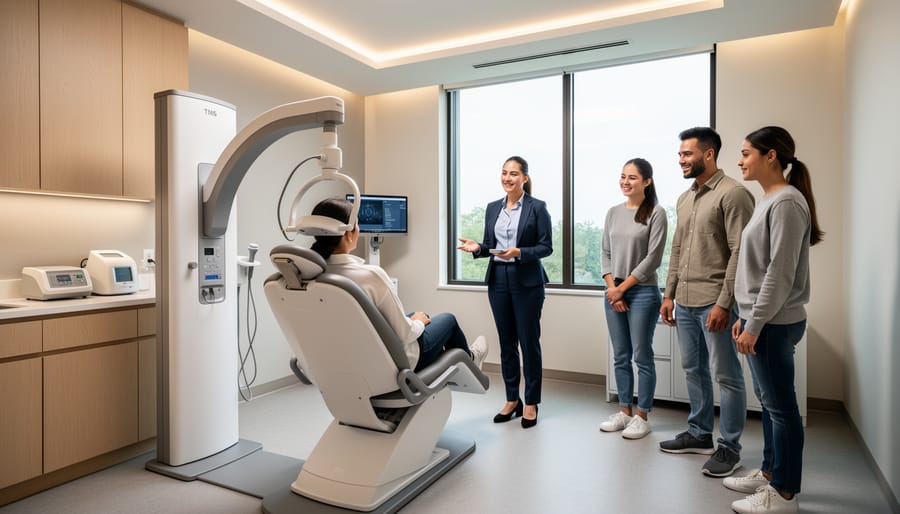
During the 20-minute treatment session, your child will sit comfortably in a chair while a specialized coil is positioned against their scalp. When the magnetic pulses are delivered, most young people describe a tapping or clicking sensation on the scalp. Some compare it to a gentle woodpecker tapping or a mild tingling feeling. The machine also makes clicking sounds during treatment, which can be surprising at first but becomes familiar quickly.
The most common side effect is temporary scalp discomfort or a mild headache during or shortly after treatment, usually described as feeling similar to tension you might get from wearing a tight hat. These sensations typically fade within hours and often decrease as treatment continues.
There’s no drowsiness afterward, no recovery time needed, and your child can return to school or normal activities immediately. Unlike some other treatments for anxiety and depression, TMS doesn’t affect memory, concentration, or personality.
Many treatment centers allow parents to stay in the room during the first few sessions, which helps anxious kids feel more comfortable. Some young people listen to music or podcasts during treatment to help the time pass. Once they understand what to expect, most find the sessions routine rather than frightening.
Current Availability and Access Considerations
If you’re exploring TMS as a treatment option for your child’s anxiety, understanding the current landscape is crucial. Right now, the picture is evolving.
Deep TMS holds FDA clearance for reducing comorbid anxiety symptoms in adults with depression, a significant milestone that reflects growing recognition of TMS for anxiety treatment. However, this clearance applies specifically to adults, not children or adolescents. The research supporting pediatric use is still emerging.
Studies like the Brain STAND project at the University of Calgary are actively investigating how TMS works for anxiety and depression in young people. These research efforts are promising, but they also highlight an important reality: TMS for youth anxiety remains largely in the investigational stage. Most clinical trials are still recruiting participants and gathering data.
What does this mean for families? Access may be limited. While some specialized academic medical centers or research institutions offer TMS through clinical trials, these opportunities typically require specific enrollment criteria. Your child would need a thorough evaluation to determine eligibility, and participation might involve travel if your local area doesn’t host a study site.
Outside of research settings, finding a provider who offers TMS for pediatric anxiety can be challenging. Many TMS clinics focus exclusively on adult patients with FDA-approved indications like depression or OCD. Even when providers are willing to consider treating youth, insurance coverage becomes another hurdle since most policies cover only FDA-approved uses.
This doesn’t mean TMS is out of reach forever. The field is advancing rapidly, and what’s investigational today may become standard practice tomorrow. If you’re interested in exploring TMS for your child, discuss it openly with their psychiatrist or mental health team. They can help you navigate current options, including potential clinical trial opportunities, and determine whether pursuing TMS makes sense given your child’s specific situation and location.
Questions to Ask Your Child’s Healthcare Provider
When you’re considering any new treatment for your child, being prepared with the right questions helps you make the best decision together with your healthcare team. Here are essential conversations to have:
Start by asking whether your child’s current symptoms and treatment history make them a potential candidate for TMS. Specifically, ask: “Has my child tried enough first-line treatments to be considered treatment-resistant?” and “What other options should we explore before considering TMS?” Understanding where TMS fits in the treatment pathway matters, especially since it’s typically reserved for cases where standard therapies haven’t provided relief.
Inquire about the healthcare provider’s familiarity with TMS for young people. Ask: “Are you aware of current research studies examining TMS for anxiety and depression in youth?” and “Would you be comfortable collaborating with specialists who administer TMS, or can you provide a referral?” Not every mental health professional has direct experience with this emerging treatment, but a good provider will be honest about their knowledge and willing to learn alongside you.
Question the evaluation process. Ask: “What assessments would you recommend before pursuing TMS?” and “How would we measure whether treatment is working?” Thorough evaluation includes looking at the signs to watch for improvement or worsening symptoms throughout any treatment journey.
Finally, discuss practical considerations: “If TMS seems appropriate, how would we access it?” and “Are there clinical trials currently enrolling that might be relevant for my child?” Being direct about availability, costs, and logistics helps set realistic expectations from the start.
Remember, your questions demonstrate advocacy, not doubt. The best outcomes happen when parents and providers work as partners.
Other Treatment Options to Consider Alongside or Before TMS
While TMS represents an exciting frontier in treating anxiety, it’s important to remember that most children benefit from well-established approaches before considering more specialized interventions. A comprehensive treatment plan often combines multiple treatment options tailored to your child’s unique needs.
Cognitive Behavioral Therapy (CBT) remains the gold standard first-line treatment for pediatric anxiety disorders. This structured approach teaches children to recognize anxious thoughts, challenge unhelpful thinking patterns, and develop concrete coping skills. Many families see significant improvement within 12-16 sessions when working with a trained therapist.
- Cognitive Behavioral Therapy (CBT)
- A structured, evidence-based talk therapy that helps children identify anxious thoughts, challenge unhelpful thinking patterns, and develop practical coping skills. CBT is considered the first-line treatment for most childhood anxiety disorders.
- Exposure Therapy
- A specific technique, often used within CBT, where children gradually face feared situations in a safe, controlled way to reduce anxiety over time. This approach has strong research support for treating specific phobias, social anxiety, and panic disorder.
- SSRIs (Selective Serotonin Reuptake Inhibitors)
- Antidepressant medications that can help regulate brain chemistry associated with anxiety and depression. Several SSRIs are FDA-approved for treating anxiety disorders in children and adolescents when therapy alone isn’t sufficient.
- Family-Based Interventions
- Treatment approaches that involve parents and siblings in the therapeutic process, addressing how family dynamics might contribute to or help reduce a child’s anxiety. These interventions teach the whole family behavior strategies to support recovery.
Medication can be helpful when anxiety significantly interferes with daily functioning. SSRIs have decades of research supporting their use in children, though they work best when combined with therapy rather than used alone.
Don’t overlook foundational wellness practices that support mental health: consistent sleep schedules, regular physical activity, balanced nutrition, and reduced screen time. These proven anxiety strategies create a stable foundation that makes other interventions more effective.
The most successful treatment plans often involve multiple approaches working together. Your child’s mental health team can help determine which combination makes sense as a starting point, reserving more specialized options like TMS for situations where standard treatments haven’t provided adequate relief.

When your child has been struggling with anxiety despite trying therapy, medication, and other interventions, the weight of that search for answers can feel overwhelming. You’re not alone in wanting more options, and you’re not wrong to keep looking. The emerging research into TMS for anxiety represents one more possibility in what we hope becomes an expanding toolkit for treating young people with treatment-resistant mental health challenges.
Right now, we’re at an encouraging but early stage. Deep TMS has shown promise for adults with anxiety symptoms alongside depression, and studies like the University of Calgary’s Brain STAND project are carefully exploring whether these benefits extend to younger populations. That’s genuinely hopeful news, but it also means families need to approach TMS with informed patience rather than expecting immediate widespread availability.
What matters most is staying engaged with your child’s care team, asking thoughtful questions about all evidence-based treatments, and remembering that finding the right approach often takes time and persistence. TMS may become part of your child’s treatment journey, or it may not, but either way, you’re doing the hard, important work of advocating for their wellbeing.
As research continues to evolve, we’ll keep sharing what we learn. Our mission has always been to help families understand mental health treatments without stigma or shame, and to remind you that seeking help, asking questions, and exploring options are signs of strength, not failure.