

Building a network of supportive parents requires showing up to in-person gatherings with openness and a willingness to start genuine conversations. The process takes about three to six months to develop meaningful connections, and the difficulty level is moderate because it asks you to step outside your comfort zone while managing the vulnerability of discussing your child’s wellbeing.
Most parents feel isolated at some point, especially when facing challenges with their child’s mental health or behavior. You might worry that other parents won’t understand, or that sharing your struggles will invite judgment. But here’s what research on parent support systems consistently shows: the parents who build strong networks report lower stress levels, better problem-solving abilities, and improved outcomes for their children. The connection you’re seeking exists, and other parents are looking for it too.
The shift happens when you move from passive attendance at school events or activities to intentional relationship-building. This means moving beyond surface-level small talk about sports schedules and homework to conversations about real parenting experiences. You don’t need to overshare immediately or violate your family’s privacy. You simply need to be present, ask thoughtful questions, and respond with honesty when someone asks how you’re really doing.
Parent networking isn’t about collecting contacts or building a resume. It’s about creating a circle of people who understand the specific joys and challenges of raising children in 2026, who can offer perspective when you’re stuck, and who remind you that struggling doesn’t mean failing. What follows is a practical framework for making those connections happen.
What You’ll Need to Get Started
You don’t need much to start building parent connections, but what you do need matters more than you might think. The essentials fall into two categories: practical items you can carry and the internal preparation that makes real connection possible.
Practical Items to Bring
- Your phone with contact app ready or a small notebook for jotting down names and numbers
- A few business cards if you have them, or slips of paper with your name and preferred contact method written clearly
- A one-sentence introduction about yourself and your family situation that feels authentic to you
- Two or three conversation starters or questions you genuinely want to ask other parents
If you don’t have business cards, don’t let that stop you. Most parents simply exchange phone numbers directly or connect through group messaging apps. The point is having a way to stay in touch that doesn’t rely on memory alone.
The Mindset Shift That Actually Matters
The emotional preparation is harder but more crucial. You’re shifting from “I’m the only one struggling with this” to “Other parents understand because they’re living similar challenges.” That doesn’t mean forcing positivity or pretending you’re not anxious. It means recognizing that the isolation you feel isn’t serving you, and that opening up even slightly is worth the discomfort.
Prepare a brief personal story you’re comfortable sharing, maybe 30 seconds about why you’re attending or what you’re navigating with your child. This isn’t about oversharing or performing vulnerability. It’s about having something real to offer when someone asks, “What brings you here?” Practice it once or twice so you won’t freeze up.
Set realistic expectations too. You probably won’t leave with five best friends. You might connect with one person, or simply feel less alone. That’s enough for a first event.
Important Boundaries and Safety Considerations
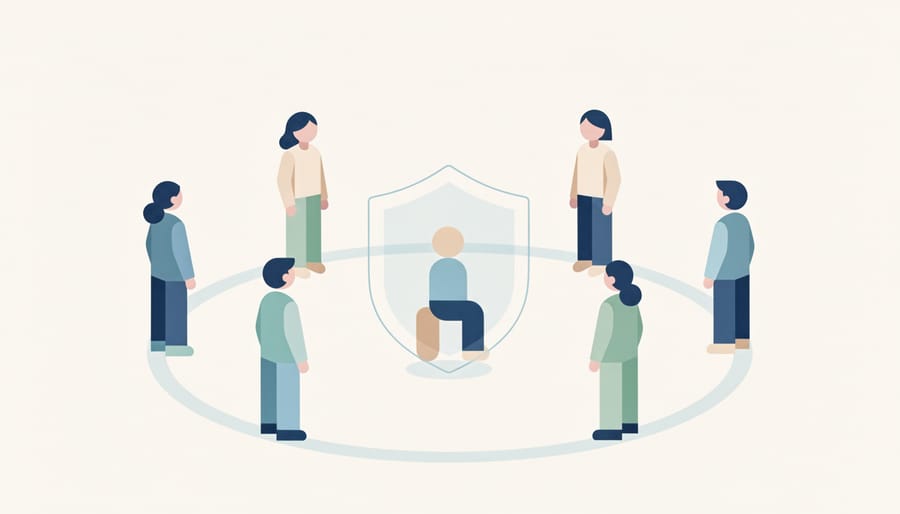
Sharing your experiences with other parents can be deeply validating, but it requires thoughtful boundaries to protect both you and your children. Before attending any networking event, decide what you’re comfortable discussing. You might share that your child sees a therapist without detailing specific diagnoses, or mention school struggles without naming teachers or administrators. Your child’s story is theirs, and revealing too much at first meetings can’t be undone.
Watch for groups where one or two parents dominate every conversation, turning support meetings into platforms for their own grievances. Healthy parent networks encourage balanced sharing and multiple perspectives. If you feel pressured to adopt specific parenting philosophies, share detailed medical information before you’re ready, or ignore professional recommendations, trust that discomfort. Genuine support groups respect individual family choices and professional guidance.
Protect identifying details when sharing stories. Use your child’s first name only, avoid mentioning your pediatrician’s practice by name, and don’t share photos without considering future implications. Other parents may have different privacy standards, so don’t assume everything discussed stays confidential.
Recognize the difference between mutual support and crisis intervention. If another parent describes immediate safety concerns, suicidal thoughts in their child, severe self-harm, acute psychiatric symptoms, acknowledge their courage in sharing but gently suggest they need professional help right away. You’re not equipped to manage psychiatric emergencies, and attempting to do so could delay critical care.
Some boundaries protect your emotional energy. It’s acceptable to step back from relationships that feel one-sided, where you’re always giving support but rarely receiving it. You can leave groups that increase your anxiety rather than easing it. Building a support network means finding people who reciprocate care, not collecting every available connection.
Finding the Right In-Person Events for Your Needs

Start by asking yourself what you actually need from a parent network. Are you looking for emotional support around a mental health diagnosis? Practical childcare swaps? General camaraderie with other parents in your neighbourhood? Your answer determines which events will feel genuinely helpful rather than like another obligation.
School-based parent groups offer the advantage of built-in common ground, your kids share teachers, playgrounds, and daily routines. Check your school’s website or contact the front office to learn about PTA meetings, classroom parent gatherings, or specialty groups like those for parents of gifted learners. These groups naturally focus on academic concerns and school navigation.
Mental health support circles provide a more specialized space. If your child has anxiety, ADHD, or other mental health challenges, look for groups through local therapy practices, children’s hospitals, or mental health organizations. These gatherings create room for honest conversations that might feel too vulnerable in general parent settings. Many communities also have special needs support groups that address both medical and developmental concerns.
Community centers, libraries, and religious organizations often host parent meetups that range from playgroups to parenting workshops. These tend to be less structured and can work well if you want low-pressure connections without a specific focus area.
To research and evaluate events systematically, follow this process:
- Search your local library website, community center bulletin boards, and parenting Facebook groups for upcoming gatherings. Many therapy practices and pediatric offices also maintain lists of parent resources.
- Contact the organizer or attend a meeting as an observer first. Ask about the group’s focus, typical attendance, and meeting format, some are facilitated by professionals while others are peer-led.
- Attend one meeting without committing. Notice whether conversations feel supportive or competitive, whether members listen actively, and whether the focus matches what you need right now.
- Trust your gut about group fit. If you leave feeling drained or judged rather than supported, that group isn’t serving you, even if it works beautifully for others.
Remember that free online support can complement in-person networking when local options feel limited. Some parents find they need different networks for different needs, school friends for carpools, a mental health circle for deeper support, and online communities for middle-of-the-night reassurance.
How to Navigate Your First Event
Walking through the door of your first parent networking event can feel overwhelming, but having a clear plan helps turn anxiety into productive action. The key is treating this as a learning experience rather than expecting instant best friendships.
Timing Your Arrival
Arriving 5-10 minutes after the official start time works well for most events. This gives organizers time to set up and a few early attendees to break the ice, so you’re walking into conversation rather than awkward silence. If you’re extremely nervous, arriving right on time lets you help with setup tasks, which gives your hands something to do and provides natural conversation starters.
Your Step-by-Step Approach
- Introduce yourself with just your first name and one relevant detail: “Hi, I’m Maria. My daughter just started kindergarten and I’m learning about the school community.” This opens the door without oversharing immediately.
- Ask open-ended questions that invite real conversation: “What brought you here today?” or “How did you first hear about this group?” These questions feel natural and help you learn what others are navigating.
- Listen more than you speak initially. Pay attention to who shares experiences similar to yours, who asks thoughtful questions, and who creates space for others to talk. These observations help you identify potential connections.
- Share your story when it feels organic, not forced. If someone asks about your situation, offer an honest but brief version: “We’re working through some anxiety challenges with our son” rather than a detailed medical history.
- Exchange contact information before leaving with 1-2 people who felt like genuine potential connections. A simple “I’d love to continue this conversation sometime, can I get your number?” works perfectly.
- Follow up within 48 hours with a brief text: “Really enjoyed talking with you Thursday. Would you want to grab coffee next week?” This shows genuine interest without pressure.
If the Event Doesn’t Feel Right
Not every group will match your needs, and that’s completely normal. If the conversation feels judgmental, the focus doesn’t align with your situation, or you simply don’t connect with anyone, that’s valuable information. Thank the organizer on your way out and try a different group. Some parents find their support network from home works better initially before attempting in-person events.
Remember that most parents at these events felt nervous at their first meeting too. You’re all there for the same reason, seeking connection and support.
Building Meaningful Connections That Last

Not every parent you meet will become a close friend, and that’s perfectly normal. The goal is finding a few reliable people who genuinely understand your family’s journey.
Look for parents who listen as much as they share, respect your boundaries when you say you’re not ready to discuss something, and remember details from previous conversations. These small signals show they’re invested in a real connection, not just looking for an audience.
After your first conversation, exchange numbers and suggest something specific: “Would you want to grab coffee next Tuesday while the kids are at school?” Vague promises of “we should get together sometime” rarely happen. If coordinating schedules feels impossible, try apps for parent connection or a quick group text to share resources and stay in touch between meetings.
Real support networks develop rhythms over time. Maybe you text each other before difficult IEP meetings, take turns watching each other’s kids during therapy appointments, or meet monthly for coffee. One mother I know found her core group by organizing a rotating playdate schedule, seeing the same families regularly let deeper friendships form naturally.
Pay attention to how you feel after spending time with someone. Healthy connections leave you feeling understood and less alone, even when you’ve discussed hard topics. If you consistently feel judged, drained, or pressured to handle your child’s needs a certain way, it’s okay to step back. Not every connection serves you well, and protecting your energy isn’t selfish.
The strongest networks are built on reciprocity. You don’t need to match support hour-for-hour, but relationships work best when both people give and receive over time.
How to Know If Your Network Is Working
A working parent network changes how you experience daily challenges. You’ll notice the shift not in dramatic moments, but in small reassurances: a text from another parent who just gets it, practical help materializing when you need it, or the relief of not googling alone at midnight.
Look for tangible indicators. You have at least two or three parents you’d feel comfortable texting about a rough day without overthinking it. When your child’s therapist recommends a specialist, you have someone who can share a real referral instead of searching blindly. School issues feel less overwhelming because you can compare notes with parents who’ve navigated similar situations. Someone offers to pick up your kid when you’re stuck at work, and you’ve done the same for them.
Emotional markers matter just as much. You feel genuinely heard when sharing struggles, not judged or dismissed. Conversations include laughter alongside hard topics. You’ve stopped prefacing every vulnerable admission with excessive apologies. You look forward to seeing these parents, not out of obligation but because the connection energizes rather than drains you.
If you’re still feeling consistently isolated after several months of effort, or if interactions leave you anxious rather than supported, it’s time to explore different groups. Not every network fits every need. Some parents thrive in structured support groups; others prefer informal coffee meetups. The right network makes parenting feel less lonely, and you deserve connections that actually lighten the load rather than add to it.
Common Questions About Parent Networking
What if I’m introverted and find networking exhausting?
Being introverted doesn’t disqualify you from building meaningful parent connections. Choose smaller, structured events where conversations happen naturally, arrive with a goal of talking to just one or two people, and give yourself permission to leave early if you’re drained.
How much should I share at my first event?
Start with the basics: your child’s age, the general challenge you’re navigating, and what you’re hoping to learn. You can always share more as relationships develop and trust builds over time.
What if I don’t connect with anyone right away?
Not every event will be the right fit, and that’s completely normal. Try at least two or three different gatherings before deciding a particular group isn’t for you, and remember that building genuine connections often takes several meetings.
Can I bring my children to parent networking events?
It depends on the event format. Some groups welcome kids and provide childcare or activities, while others are designed for adults only so parents can speak freely. Check the event description or contact the organizer beforehand to clarify.
When conflicts or disagreements emerge in parent groups, handle them the same way you’d address any relationship tension: directly but kindly. If someone’s comment bothers you in the moment, you can politely change the subject or step away. If it’s a pattern, consider whether the group still serves your needs. It’s okay to outgrow a network or realize certain parents aren’t your people.
If another parent gives advice about mental health treatment that concerns you, particularly if they’re discouraging professional help or promoting unproven therapies, trust your instincts. You don’t need to confront them publicly, but you can mentally note that they’re not a reliable source for this topic. Seek out parents who respect evidence-based treatment and understand that therapy, medication, and other professional interventions are valid tools. The right network supports your family’s decisions rather than undermining them.
Finally, remember that awkward moments happen to everyone. You’ll forget someone’s name, misread a social cue, or accidentally overshare. These small missteps don’t define your networking success. What matters is showing up authentically and being willing to try again.
Building a parent support network doesn’t happen overnight, and that’s completely okay. The parent you exchange numbers with at a school meeting might become the person you call when you’re worried about your child’s anxiety. The mom who shares her struggles at a mental health support group could become your go-to for honest conversations about therapy and medication decisions. These connections grow gradually, through repeated interactions and shared experiences.
You don’t need to attend every event or connect with everyone you meet. Start with one gathering that matches your needs. Show up authentically. Listen to other parents’ stories. Share what feels comfortable. Follow up with the people who resonate with you. Some connections will deepen naturally while others remain casual acquaintances, both have value.
Remember that reaching out for community support is an act of courage, not a sign that you’re failing as a parent. Every parent deserves people who understand their specific challenges, whether that’s navigating special education services, supporting a child through mental health treatment, or simply finding others who get what daily life looks like in your household. The isolation you feel right now can shift when you take that first step toward connection.