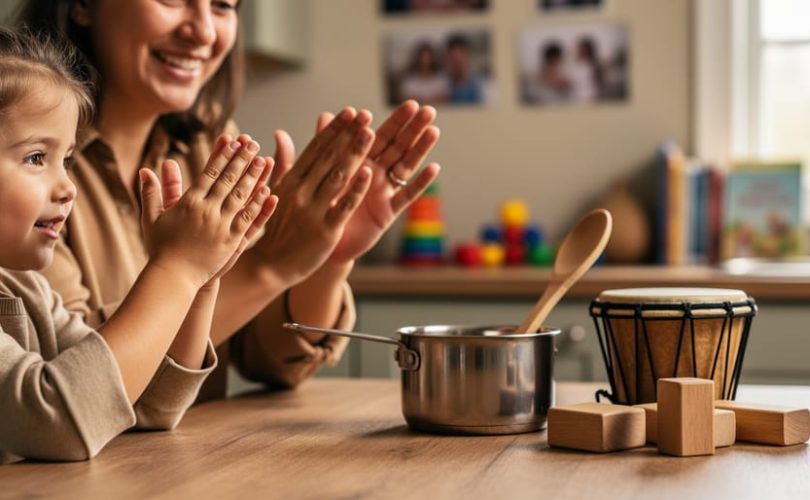
Teaching rhythm to children requires nothing more than consistent practice with simple clapping games, body percussion, and everyday objects that make sound. Most children can grasp basic beat patterns within two to three weeks of regular five- to ten-minute sessions, and you don’t need any formal music training to guide them through it.
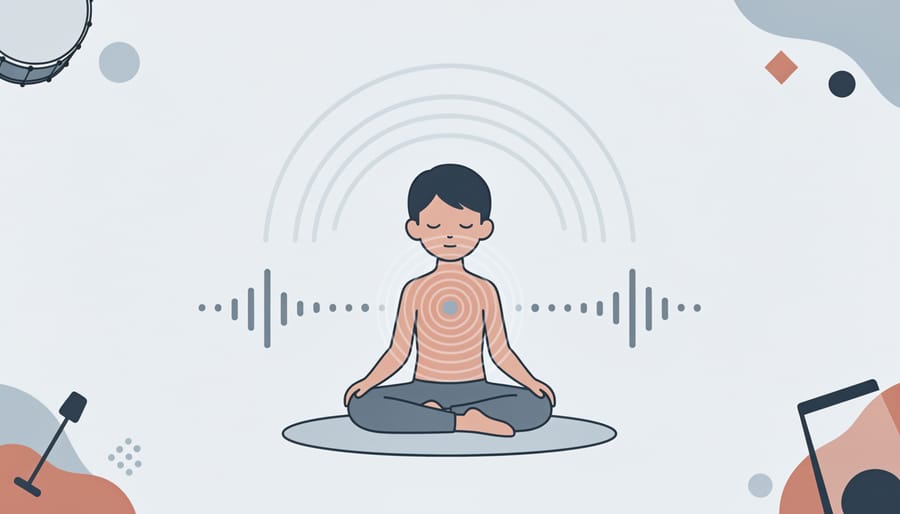
The connection between rhythm and emotional well-being runs deeper than many parents realize. When children learn to feel and express rhythm, they’re developing more than musical skill. They’re building self-regulation tools that help them manage anxiety, process emotions, and find a sense of control in their bodies. A child who struggles to sit still during homework might find calm through drumming. Another who feels overwhelmed by big feelings can channel that energy into a steady beat.
Research shows rhythm activities activate multiple brain regions at once, strengthening the neural pathways that support attention, memory, and emotional processing. But here’s what matters most for parents and teachers: you don’t need a piano or expensive equipment. A wooden spoon and a pot work beautifully. So do your hands, feet, and voice.
The approach outlined in this guide focuses on meeting children exactly where they are. Whether you’re working with a three-year-old who’s just learning to clap on beat or a ten-year-old exploring complex patterns, the steps remain the same. Start with the pulse they already carry in their bodies. Build slowly. Celebrate the wobbly attempts alongside the perfect ones. Create a space where making rhythm feels joyful rather than pressured, because that’s where real learning happens.
What You’ll Need to Get Started
You don’t need to spend a fortune or visit specialty music stores to begin teaching rhythm. Most families already have everything necessary sitting in their kitchen drawers and cupboards. The goal isn’t to create a professional percussion section, it’s to help children feel and explore rhythm in ways that spark curiosity rather than intimidation.
Start by gathering items you’ll use regularly:
- Basic percussion: wooden spoons, metal pots and pans, plastic containers with lids, dried beans or rice in sealed bottles for shakers
- Simple instruments: hand drums, tambourines, rhythm sticks, maracas, egg shakers (choose age-appropriate sizes)
- Recorded music: streaming services, CDs, or downloaded songs with clear, steady beats across various genres
- Movement props: scarves, ribbons, bells worn on ankles or wrists, soft balls for tossing to the beat
- Optional technology: metronome apps, rhythm game programs, video tutorials for visual learners
The beauty of rhythm work is its flexibility. A wooden spoon tapping a pot creates the same learning opportunity as an expensive djembe. Children often respond more enthusiastically to homemade instruments because they feel ownership and creativity in the process.
If you do purchase instruments, prioritize quality over quantity. One well-made hand drum will serve you better than five cheap plastic tambourines that break after a week. Look for instruments that produce clear, pleasant tones rather than tinny or harsh sounds. Many music education suppliers offer classroom packs at reasonable prices, and secondhand stores frequently stock perfectly functional rhythm instruments.
For families on tight budgets, creativity goes far. Cardboard boxes become drums. Two sticks tapped together create rhythm patterns. Your own hands and feet are free, versatile instruments. The most important tool costs nothing: your willingness to explore sound alongside your child, mistakes and all.
Safety and Developmental Considerations
Before your first rhythm activity, take time to create a physically and emotionally safe space. Check instruments for small parts that could pose choking risks, especially for children under three. Maracas with loose beads, small bells, and rhythm egg shakers should be avoided with toddlers, or used only under direct supervision. Drums and tambourines are generally safer starting points.
Sound levels matter more than many parents realize. Prolonged exposure to loud sounds can damage young ears, so keep music and instrument playing at a volume where you can still have a conversation comfortably. If you notice a child covering their ears or moving away from the sound source, that’s a clear signal to turn it down or take a break.
Emotional safety deserves equal attention. Some children feel intense pressure to perform correctly, which can turn joyful exploration into anxiety. Watch for signs of overwhelm: a child who suddenly goes quiet, becomes teary, or starts to withdraw may need reassurance that there’s no “wrong” way to make rhythm. Children with sensory sensitivities might find certain sounds or textures uncomfortable. Offering choices, like using soft mallets instead of hard ones or letting them control the volume, helps them stay engaged without distress.
Create a judgment-free zone where experimentation matters more than perfection. When children know they won’t be corrected or compared to others, they relax into genuine learning and creative expression.
Step-by-Step: Teaching Rhythm at Every Stage
Start with the Heartbeat: Establishing Steady Beat
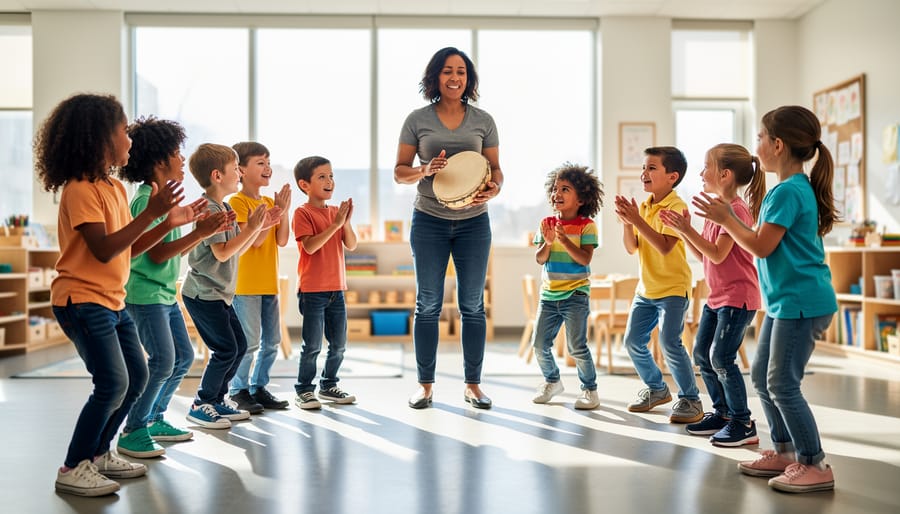
The steadiest rhythm your child already knows is their own heartbeat. Place your hand gently over your child’s chest while they sit quietly, or have them place their own hand there. Count aloud together: “Boom, boom, boom, boom.” This simple moment transforms an abstract musical concept into something they can literally feel inside their body.
Once they’ve connected to their heartbeat, transfer that pulse to clapping. Clap slowly and steadily, like a ticking clock, and invite your child to join. Keep it simple, just a steady beat, nothing fancy. If they speed up or slow down, that’s completely normal. Gently guide them back by saying, “Let’s match the clock” or “Feel it in your chest again.”
Marching works beautifully because children naturally synchronize their steps to a steady beat. Walk around the room together, stomping in time. Count aloud: “One, two, one, two.” Add simple variations: march in place, tiptoe quietly, stomp loudly. The physical movement anchors the beat in their bodies in ways that sitting still never could.
For children who need more support, try patting your knees in rhythm while sitting together, or gently rock side to side. Some children grasp the concept immediately through movement; others need weeks of practice. Both paths are normal. The goal isn’t perfection, it’s helping your child feel the pulse underneath music, the foundation every other rhythm skill builds upon.
Add Simple Patterns and Repetition
Once your child can feel and move to a steady beat, you’re ready to introduce patterns. Think of patterns as short, memorable combinations of sounds that repeat. Start with two-beat patterns: clap-clap, stomp-stomp, or tap-tap. Keep it simple and repeat it several times before moving on.
Call-and-response works beautifully at this stage. You clap a short pattern, then your child echoes it back. Begin with just two or three sounds. If they struggle, repeat the same pattern without correction or comment, children learn through multiple exposures, not through being told they got it wrong. Gradually add complexity as they gain confidence.
Familiar songs provide natural scaffolding for pattern work. “Twinkle, Twinkle” and “Row, Row, Row Your Boat” have clear, repetitive rhythms children already know. Clap along to these songs, emphasizing the rhythm rather than the melody. Children absorb patterns more readily when they’re embedded in something they recognize and enjoy.
The key to effective repetition is variation within consistency. Practice the same pattern, but change how you express it: clap it, stomp it, whisper it, play it on a drum. This keeps things fresh while reinforcing the core learning. If your child seems restless, switch activities rather than pushing through. Five minutes of engaged practice beats fifteen minutes of forced repetition.
Watch for that moment when your child starts creating their own patterns or deliberately changing the ones you’ve taught. That’s when you know the concept has taken hold.
Connect Rhythm to Movement and Expression
Movement transforms rhythm from an abstract concept into a physical experience children can feel in their bodies. When kids march, sway, jump, or spin to music, they’re not just having fun, they’re building neural pathways that connect sound to motion, strengthening their understanding of tempo and pattern in ways clapping alone cannot achieve.
Start by inviting children to move however the music makes them feel. Play different styles, a slow waltz, upbeat pop, marching band music, and watch what happens naturally. Some children will bounce, others will twirl, and some might just rock gently. There’s no wrong response. This freedom matters especially for kids who find sitting still challenging; movement becomes their learning strength rather than a barrier.
Once they’re comfortable, guide them toward more structured movement-rhythm connections. Stomp heavy beats, tiptoe to light ones. Reach high on long notes, crouch low on short ones. Create simple dance sequences that match rhythmic patterns: step-step-clap, step-step-clap. Let children suggest their own movements for different rhythm patterns.
This approach supports emotional development too. Moving to music offers a safe outlet for big feelings, frustration can become energetic drumming with feet, happiness transforms into spinning. Children learn their bodies can express what words sometimes can’t.
For kids with anxiety or sensory sensitivities, let them observe first. They might prefer smaller movements, finger tapping, gentle head nodding, before full-body engagement. That’s perfectly valid. The goal is connection to rhythm, not performance.
When movement and rhythm unite, learning sticks because it lives in muscle memory, not just memory.
Introduce Instruments and Sound Exploration
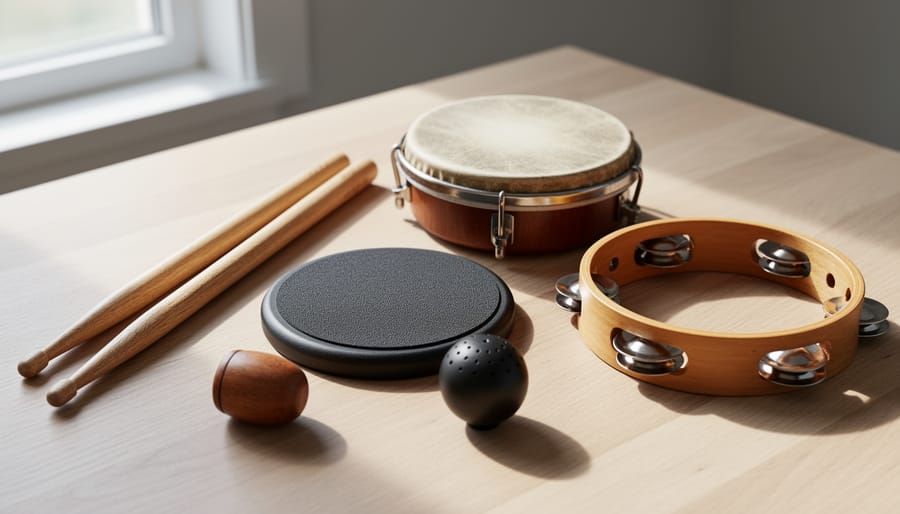
Once your child confidently moves to a beat and echoes simple patterns, they’re ready to explore real instruments. Typically, children around three to four years old have the fine motor control to handle basic percussion like shakers, tambourines, and small hand drums, though every child develops differently.
Start with just one or two instruments in a session. Let them experiment freely for a few minutes before introducing structure, this exploration phase honors their curiosity and prevents instruments from becoming sources of stress. Ask open questions: “What sounds can you make?” or “Can you make this drum sound angry? Gentle?”
Gradually guide this exploration into rhythm learning. Play a simple pattern on your instrument and invite them to copy it, or take turns creating short rhythms for each other to echo. This call-and-response builds both listening skills and the social joy of making music together.
When multiple children play simultaneously, expect noise. This isn’t chaos to eliminate, it’s experimentation. Set gentle boundaries like “Let’s try playing soft as whispers” or “Everyone freeze when I ring this bell,” then practice stopping and starting together. These games teach impulse control and group awareness while keeping the atmosphere playful.
Watch for signs of overwhelm: a child covering their ears, withdrawing, or becoming frustrated. Some children, particularly those with sensory sensitivities, need quieter instruments or shorter sessions. Always validate their experience rather than pushing through discomfort. The goal isn’t polished performance but confident, joyful exploration where every sound they make matters.
How to Know It’s Working: Verification and Next Steps
You’ll notice progress in moments you might not expect. A child who’s internalizing rhythm will start bouncing or swaying naturally when music plays, without prompting. Watch for spontaneous movement that matches the beat, like tapping a foot during dinner or nodding along to a song in the car. These unconscious responses signal that rhythm has moved from effortful attention to embodied understanding.
Look for anticipation during familiar songs. Children developing rhythm awareness often lean forward or prepare their bodies just before a pattern repeats or a big moment arrives. They might fill in the missing beat when you pause during call-and-response games, or laugh with recognition when a rhythm changes unexpectedly. This predictive ability shows they’re hearing structure, not just random sounds.
Creating original rhythms marks another milestone. A child who invents their own clapping pattern, experiments with different speeds on a drum, or combines movements in new ways is applying what they’ve learned. Don’t worry if these creations seem simple or repetitive. The act of composing, however basic, demonstrates ownership and creative confidence.
Increased participation signals comfort and growing skill. A child who initially watched from the sidelines but now joins cooperative rhythm games or storytelling play with rhythmic elements shows emotional safety alongside technical growth. Notice willingness to try in front of others, laugh at mistakes, or ask to repeat activities.
When you see consistent signs of progress, gently increase complexity. Add syncopation to familiar patterns, introduce instruments with different timbres, or explore art integration by drawing rhythm patterns. Try outdoor rhythm practice where natural sounds inspire new patterns.
If a child struggles consistently despite regular practice, check whether the activities match their developmental stage. Some children need more time with foundational beats before patterns make sense. Others benefit from different sensory approaches, like visual cues alongside auditory input. Persistent difficulty with basic steady beat after extended, developmentally appropriate practice might warrant conversation with a pediatrician or occupational therapist, especially if accompanied by other motor coordination concerns. But remember that rhythm develops on individual timelines, and enjoying the process matters far more than reaching milestones quickly.
Common Questions Parents and Educators Ask
Most parents worry they’re not “musical enough” to teach rhythm, but here’s what matters: consistency, playfulness, and letting go of perfection. Children learn rhythm through repetition and exploration, not through flawless technique from their grown-ups.
What if my child seems constantly off-beat or struggles to keep time?
This is completely normal, especially before age seven. Young children’s brains are still developing the neural pathways for timing and coordination. Keep sessions playful, slow down the tempo, and let them feel success at their own pace rather than forcing them to match an external beat perfectly.
How much practice time do children actually need?
Short, frequent sessions work best: five to ten minutes daily beats a weekly half-hour. Young attention spans tire quickly, and ending while they still want more builds positive associations with rhythm activities.
Can children with developmental differences or sensory sensitivities learn rhythm?
Absolutely. Adapt the approach to their needs: softer sounds for auditory sensitivity, visual cues for those who process better through sight, and movement-based activities for kinesthetic learners. Rhythm can be particularly supportive for children with ADHD or autism, offering structure and a nonverbal way to connect.
How does rhythm learning support mental health and emotional regulation?
Rhythmic activities activate the body’s natural calming systems. Steady beats can slow heart rate and breathing, while drumming or clapping provides a physical outlet for big emotions. Creating patterns gives children a sense of control and mastery, building confidence that extends beyond music.
Starting age matters less than you’d think. Infants respond to rhythm instinctively, swaying to music before they can walk. Toddlers benefit from simple clapping games, while school-age children can grasp more complex patterns. The key is matching activities to where your child is right now, not where a curriculum says they should be.
If your child consistently resists rhythm activities after several attempts with different approaches, that’s useful information. They might need a break, a different entry point, or they may simply have other strengths to celebrate. Forcing it creates negative associations that undermine both learning and mental well-being. Trust your knowledge of your child, and remember that rhythm learning should feel like play, not a test they need to pass.
Teaching rhythm to children isn’t about producing perfect performances or identifying musical prodigies. It’s about offering every child, regardless of background or ability, a joyful pathway to self-expression, connection, and emotional well-being. When you create a space free from judgment and pressure, rhythm becomes a natural language children can use to understand themselves and the world around them.
The skills children develop through rhythm, listening, coordinating, expressing feelings through sound and movement, extend far beyond music itself. These abilities support emotional regulation, social connection, and creative thinking throughout life. A child who learns to feel a steady beat gains more than musical knowledge; they gain a tool for calming themselves, connecting with others, and finding their own voice.
Celebrate the small moments: the first time your child claps along to a song, the confident stomp-stomp-clap they create on their own, the way their face lights up when they recognize a familiar pattern. Progress looks different for every child, and that’s exactly as it should be. Your patience, encouragement, and willingness to make rhythm exploration a pressure-free joy are the greatest gifts you can offer.