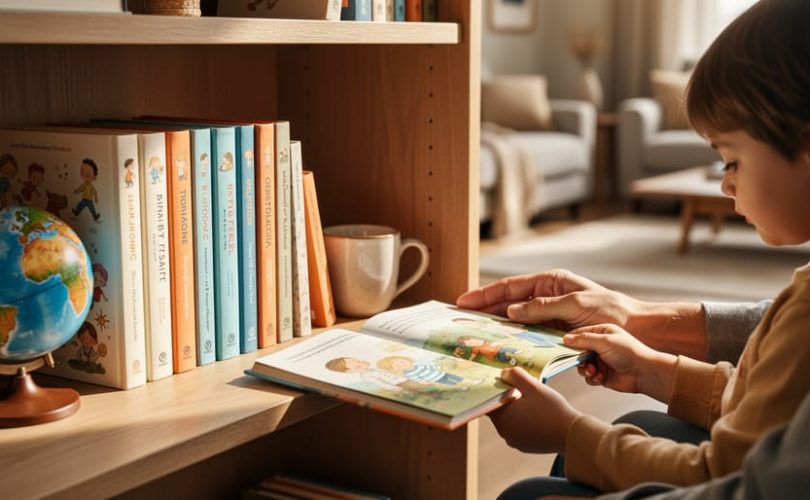
An anxiety bookshelf is a thoughtfully curated collection of children’s books designed to help kids understand, name, and manage their worried feelings through stories that normalize anxiety and model healthy coping strategies. For parents and educators watching children struggle with anxious thoughts, building this resource offers a tangible, screen-free tool that meets kids in a format they find safe and engaging.
Books work differently than apps or videos when it comes to processing emotions. The slower pace of reading allows children to pause, reflect, and return to comforting passages whenever worries resurface. Unlike screen time which can sometimes amplify anxiety through overstimulation, printed stories create calm moments for discussion and connection.
Dr. Sarah Chen, a child psychologist who specializes in anxiety disorders, explains that bibliotherapy has been part of her practice for over fifteen years. “When children see characters experiencing the same racing hearts or worried thoughts they feel, it breaks their isolation,” she notes. “The right book becomes a conversation starter that bypasses some of the defensiveness kids show when adults ask directly about feelings.”
The books you choose matter as much as having them available. Age-appropriate language, relatable scenarios, and practical strategies embedded in engaging narratives make the difference between a book that sits unread and one your child requests repeatedly. This guide walks you through eight carefully selected titles across different age ranges, each chosen for specific therapeutic elements that address common childhood anxiety patterns.
Why Books Still Matter in a Digital World
In a world where screens dominate children’s attention, physical books offer something screens can’t: a deliberate pause. When a child sits with a book, especially one that addresses their worries, they enter a slower, quieter space that allows emotions to surface and settle. Unlike the rapid-fire stimulation of digital content, with its notifications, autoplay features, and endless scrolling, a book has clear boundaries. It has a beginning, middle, and end. This containment provides structure that anxious minds often crave.
The tactile experience matters too. Holding a book, turning pages, and having a physical object to return to creates a sense of control and comfort. Many children find reassurance in revisiting the same story multiple times, something that feels different from rewatching a video. The book sits on their shelf as a tangible reminder that their feelings are valid and manageable.
Bibliotherapy, using books as a therapeutic tool, has gained recognition among child psychologists as an accessible first step in addressing anxiety. Dr. practices often recommend carefully chosen stories because they normalize difficult feelings without making children feel singled out or broken. When a character in a book experiences worry, children recognize they’re not alone in their struggles.
Stories also provide emotional vocabulary. Many anxious children lack the words to describe the knot in their stomach or racing thoughts. Seeing these experiences named and illustrated in a book gives them language to express what’s happening inside, opening doors to conversations that might otherwise stay closed.
How We Selected These Books
We built this collection by evaluating books against six core criteria to ensure each recommendation earns its place on your anxiety bookshelf.
First, we considered age appropriatenessnot just reading level, but emotional readiness. A book that works for a third-grader navigating friendship worries won’t suit a preschooler anxious about bedtime.
We prioritized mental health messaging that validates feelings without catastrophizing. The best anxiety books normalize worry while teaching practical coping tools, not just abstract reassurance.
Expert recommendations from child psychologists and bibliotherapy research guided our selections, alongside real-world feedback from parents, teachers, and school counselors who’ve used these books with anxious children.
We sought diverse representation in characters, family structures, and anxiety triggers so more children see themselves reflected in these stories.
Finally, we looked for relevance to today’s pressuresbooks that address not just timeless childhood fears but modern stressors like digital overwhelm, social comparison, and the pace of contemporary life.
This list spans picture books through teen guides, covering separation anxiety, persistent worry, social fears, and clinical anxiety disorders. Whatever your child’s age or specific struggles, you’ll find starting points here.
1. ‘The Invisible String’ by Patrice Karst, For Separation Anxiety (Ages 4-7)
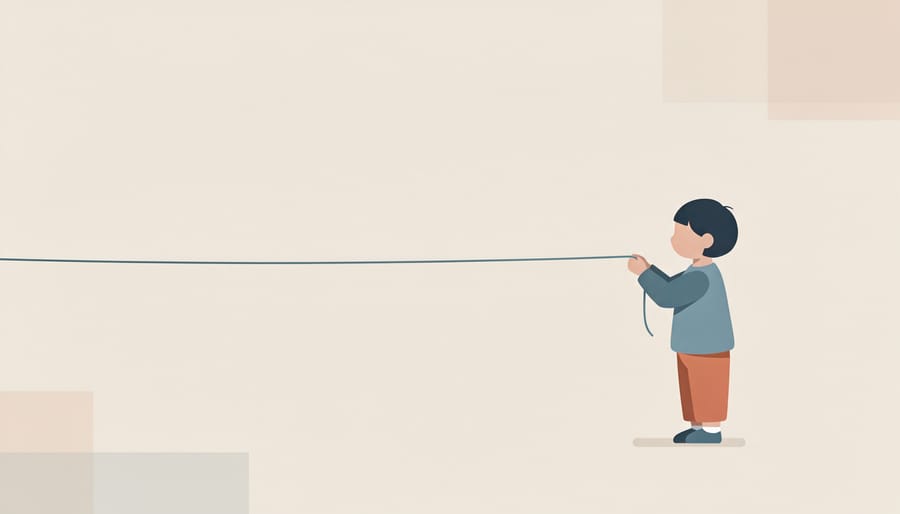
“The Invisible String” uses a simple yet powerful metaphor that resonates deeply with young children experiencing separation anxiety. The story introduces twins who wake during a thunderstorm and discover from their mother that an invisible string connects them to everyone they love, no matter the distance. This tangible image helps four to seven-year-olds grasp the abstract concept that emotional bonds remain intact even when they can’t see their parents or caregivers.
The book’s strength lies in how it reframes separation. Instead of dismissing a child’s fears about drop-off at school or bedtime, it validates the emotion while offering a comforting mental tool. Kids learn they can “tug” on their invisible string to feel connected during difficult moments, whether dealing with classroom anxiety or missing a parent who travels for work.
To maximize the book’s impact, read it together during calm moments first, then revisit it before anticipated separations. Ask your child who else might be connected to their string, or suggest they draw their invisible strings. Some families create a ritual of “tugging” the string during goodbyes, transforming an anxious moment into a shared, reassuring routine that acknowledges the feeling without letting it overwhelm.
2. ‘What to Do When You Worry Too Much’ by Dawn Huebner, For Persistent Worry (Ages 6-12)
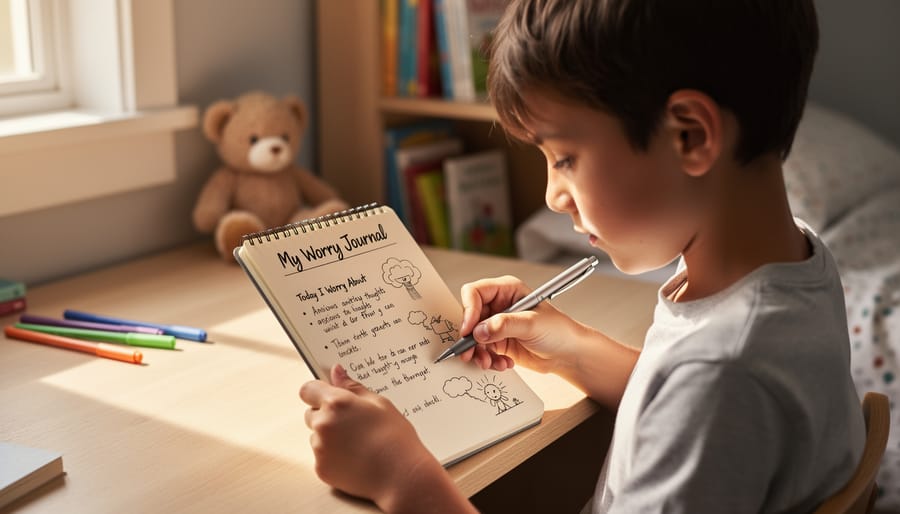
Dawn Huebner’s “What to Do When You Worry Too Much” stands out as one of the most practical tools on any anxiety bookshelf because it doesn’t just explain worry, it actively teaches children how to manage it. Part of the “What to Do” series, this book reads like a conversation with a trusted therapist, breaking down cognitive-behavioral therapy principles into language that makes sense to elementary and middle-school kids.
The book starts by helping children recognize when worry has gotten too big, identifying the physical sensations and thought patterns that signal excessive anxiety. Through colorful illustrations and relatable scenarios, kids learn to externalize their worries, seeing them as separate from themselves rather than a core part of who they are. This shift alone can be powerful for a child who feels defined by their anxious thoughts.
What makes this resource especially valuable are the interactive exercises woven throughout. Children practice talking back to worry, testing their fears against reality, and gradually facing situations they’ve been avoiding. The activities feel like games rather than therapy homework, which keeps kids engaged.
Parents get their own guide at the end, with specific strategies for supporting the work without accidentally reinforcing avoidance behaviors. It’s basically bibliotherapy and skills training combined, giving families concrete steps to tackle persistent worry together rather than feeling helpless against it.
3. ‘Hey Warrior’ by Karen Young, For Understanding Anxiety (Ages 5-10)
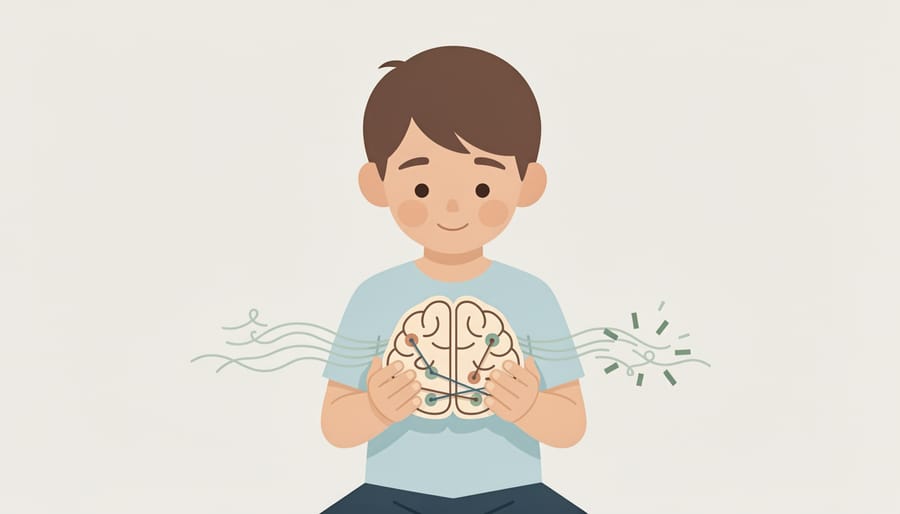
Karen Young’s “Hey Warrior” stands out for its brilliant approach to demystifying anxiety. Rather than simply telling children not to worry, this picture book walks them through what’s actually happening inside their bodies when anxiety strikes. Young uses bright, kid-friendly illustrations and straightforward language to explain the amygdala’s role as a protective “warrior” that sometimes sounds false alarms.
The book’s real strength lies in helping children understand that racing hearts, butterflies in the stomach, and sweaty palms aren’t signs that something is wrong with them. Instead, these physical sensations mean their brains are trying to keep them safe, even when there’s no real danger. This reframing can be incredibly powerful for children who’ve become frightened by their own anxiety symptoms, creating a secondary layer of worry about the worry itself.
What parents and educators appreciate most is the book’s validating tone. Young never suggests anxiety is something to be ashamed of or simply overcome through willpower. She treats it as a normal part of being human while giving children concrete understanding and a sense of control. The book works particularly well for children who respond to logical explanations and those who feel reassured by knowing the “why” behind their experiences. Many families report reading it repeatedly during calm moments to build a shared vocabulary for discussing anxious feelings when they arise.
4. ‘The Pigeon HAS to Go to School!’ by Mo Willems, For School-Related Anxiety (Ages 4-7)

Mo Willems’ beloved Pigeon brings his signature dramatics to the first-day-of-school experience, and anxious children immediately recognize themselves in his over-the-top protests. The book opens with the Pigeon listing every possible reason he shouldn’t have to attend school, from not knowing the alphabet to lacking the proper attire. His escalating objections mirror the catastrophic thinking patterns young children often employ when facing new situations, making the character feel like a friend who truly understands their fears.
What makes this book particularly effective is how it validates anxiety while simultaneously diffusing it through humor. Children laugh at the Pigeon’s exaggerated worries because they’re both absurd and deeply familiar. That laughter creates emotional distance from their own concerns, helping kids see that worries often feel bigger than they actually are. By the story’s end, when the Pigeon discovers school isn’t scary after all, young readers receive gentle reassurance without feeling lectured or dismissed.
The simple illustrations and conversational tone make this an accessible entry point for discussing school anxiety, separation worries, or resistance to new experiences. It’s especially valuable in today’s context, where children face not just traditional classroom fears but also concerns about social media comparisons and performance pressure that can begin even in early elementary years.
5. ‘Starfish’ by Lisa Fipps, For Social Anxiety and Body Image (Ages 8-12)
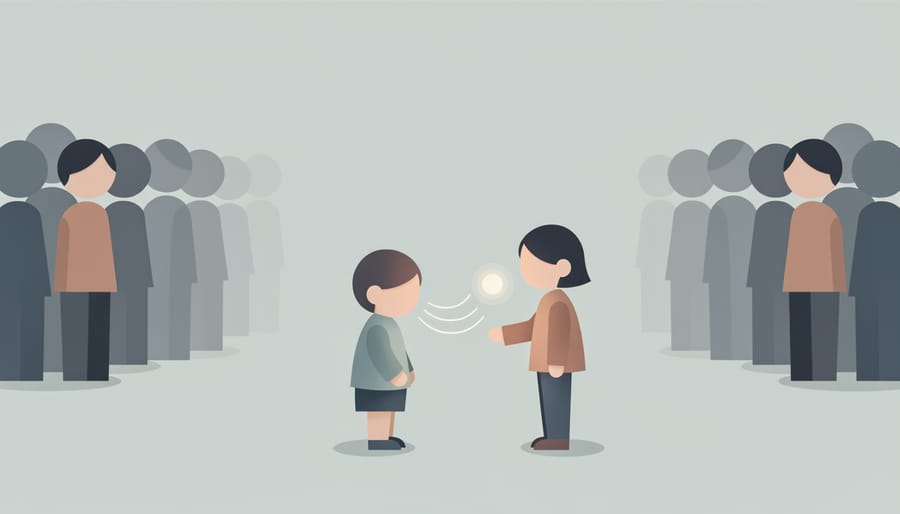
Lisa Fipps’s Starfish tackles the painful intersection of body image, bullying, and social anxiety through Ellie, a middle-schooler constantly shamed for her weight by family members and classmates. Written in verse, the novel creates an intimate, accessible reading experience that mirrors how anxious thoughts actually feel, fragmented, repetitive, sometimes overwhelming.
What makes this book particularly valuable for today’s children is its honest portrayal of how external judgment becomes internalized anxiety. Ellie’s story addresses the performance pressure many kids feel, especially girls navigating social media’s curated perfection and comment-section cruelty. She learns to distinguish between the voices telling her she’s wrong and her own emerging sense of self-worth, a crucial skill when peers can carry their judgment into group chats and online spaces.
The novel doesn’t shy away from the physical manifestations of social anxiety: the stomach-churning dread before school, the hyperawareness of being watched, the exhausting work of trying to become invisible. But it also models resistance. Ellie’s journey toward finding “her people,” setting boundaries with toxic family members, and claiming space in a swimming pool she loves becomes genuinely empowering without feeling preachy.
Parents appreciate the book’s authenticity, Fipps draws from personal experience, and its realistic acknowledgment that not everyone changes their behavior, but you can change your response. It opens conversations about whose opinions actually matter and how to build resilience when anxiety whispers that everyone’s judging you.
6. ‘Ruby Finds a Worry’ by Tom Percival, For Young Children New to Anxiety (Ages 3-6)

Tom Percival’s Ruby Finds a Worry stands out as perhaps the most accessible entry point for very young children just beginning to experience anxiety. The book introduces Ruby, a happy child who discovers a small yellow worry one day. As she keeps it to herself, the worry grows larger and larger until it affects everything she does.
What makes this book particularly effective for the 3-6 age group is its visual simplicity. The worry appears as a soft, amorphous yellow shape that young children can easily point to and identify. When my colleague’s preschooler first read it, she began calling her own anxious feelings “my yellow worry,” giving her parents a concrete way to check in during stressful moments.
The turning point comes when Ruby shares her worry with another child who has one too. The act of talking about it makes the worry shrink and eventually disappear. This straightforward message teaches toddlers and preschoolers that feelings grow when hidden but become manageable when shared with trusted adults.
The illustrations shift from muted grays when Ruby’s worry is large to vibrant colors once she opens up. This visual storytelling works beautifully for pre-readers who may not yet have the vocabulary to describe anxiety but can recognize the emotional shift in the pictures. It creates a foundation for emotional literacy that parents can build on as children grow.
7. ‘Be Calm on Ahway Island’ by Soundprints, For Bedtime Anxiety and Relaxation (Ages 3-8)

“Be Calm on Ahway Island” stands out as a sleep-friendly book that weaves mindfulness directly into its storytelling. Rather than lecturing about calming down, author Soundprints invites children on a gentle journey where the main character learns simple yoga poses and breathing techniques from island friends. Each page integrates a specific exercise, child’s pose, butterfly breaths, tree pose, presented as natural parts of the adventure rather than formal instruction.
This approach makes the book particularly valuable for the chaotic hour before bed, when screens have just been turned off and children’s nervous systems need help downshifting. The illustrated poses give restless bodies something constructive to do with that leftover energy, while the rhythmic storytelling naturally slows racing thoughts. Parents report that the repetitive structure becomes a comforting ritual itself, with children eventually requesting specific poses or breathing patterns from memory.
The book works equally well as a midday reset tool when anxiety spikes during homework or after conflicts with siblings. Its target age range of 3 to 8 captures that developmental sweet spot where children are physically capable of simple yoga movements but still engaged by picture-book narratives. The island setting creates emotional distance from daily stressors, allowing kids to practice self-regulation skills without feeling directly confronted about their worries.
8. ‘My Anxious Mind’ by Michael A. Tompkins and Katherine A. Martinez, For Teens Understanding Clinical Anxiety (Ages 13+)
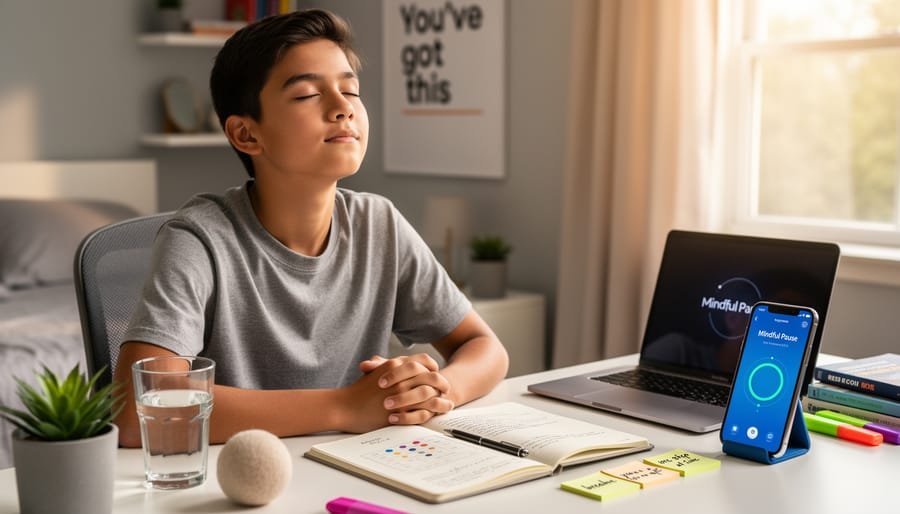
As children enter their teenage years, anxiety often intensifies and becomes more complex, particularly with the constant presence of social media feeds, group chats, and the pressure to curate a perfect online identity. “My Anxious Mind: A Teen’s Guide to Managing Anxiety and Panic” meets adolescents where they are, offering real psychological tools without talking down to them.
What sets this book apart is its hybrid approach. Rather than simplified picture-book explanations or dense clinical language, it presents cognitive-behavioral therapy techniques through the voices of actual teens who’ve experienced panic attacks, social phobias, and generalized anxiety. These personal narratives help anxious teens feel less isolated while demonstrating that recovery is possible.
The book covers territory that’s increasingly relevant in 2026: how avoidance patterns develop when teens skip events to avoid anxiety, why checking phones constantly feeds worry loops, and how catastrophic thinking spirals out of control. Each chapter includes worksheets that guide readers through identifying their specific triggers, challenging distorted thoughts, and building practical coping mechanisms they can use in real time.
Parents will appreciate the dedicated sections explaining how to support an anxious teen without enabling avoidance behaviors. The book encourages open conversations about when anxiety crosses into clinical territory requiring professional help, making it an honest bridge resource that prepares both teens and their families for more intensive treatment if needed.
Making the Most of Your Anxiety Bookshelf
Building an anxiety bookshelf is just the first step. The real magic happens in how you share these books with your child. Reading together creates connection and signals that you’re a safe person to talk to about difficult feelings. Sit side by side rather than handing the book over for independent reading, especially during the first few read-throughs. Your presence matters as much as the story itself.
As you read, pause to ask open-ended questions that invite reflection rather than yes-or-no answers. Try “What do you think this character is feeling?” or “Have you ever felt something like that?” These gentle prompts help children connect the story to their own experiences without pressure to confess specific worries. Listen more than you talk during these moments.
- Revisit favorite anxiety books during both calm and anxious periods to reinforce coping strategies
- Create a dedicated reading nook with soft blankets, good lighting, and minimal distractions where anxious feelings feel safe
- Share your own childhood worries when appropriate to model that anxiety is normal and manageable
- Keep books accessible on low shelves so children can reach for them independently when they need comfort
- Read before transitions like bedtime or school mornings when anxiety tends to spike
Remember that books work best as part of a broader support system. If your child’s anxiety persists despite your efforts, interferes with daily activities, or causes significant distress, reach out for professional guidance. Many communities offer crisis help and mental health resources specifically for children. Books are powerful tools, but they’re meant to complement professional care when needed, not replace it.
When Books Aren’t Enough
Books are powerful tools for helping children understand and manage anxiety, but they work best as part of a broader support system. If your child’s anxiety consistently interferes with daily life, professional help can make a meaningful difference.
Watch for signs that anxiety has moved beyond what books and home support can address. These include persistent physical symptoms like frequent stomachaches or headaches with no medical cause, refusal to attend school or participate in previously enjoyed activities, panic attacks, sleep disturbances lasting more than a few weeks, or obsessive thoughts and behaviors. When anxiety stops your child from doing things they need or want to do, it’s time to reach out.
Many families find that therapy works best alongside continued reading and discussion. A child psychologist or licensed counselor trained in childhood anxiety can teach cognitive-behavioral techniques, exposure therapy, or other evidence-based approaches tailored to your child’s specific needs. They can also help you distinguish between normal developmental worries and clinical anxiety disorders requiring targeted treatment.
Reaching out doesn’t mean you stop reading together or abandon what’s already helping. Think of professional support as adding another expert to your child’s team, someone who can guide both you and your child with specialized tools while you continue providing the love, validation, and comfort that books on your anxiety bookshelf facilitate every day.
Frequently Asked Questions
How often should I read anxiety books with my child?
There’s no magic formula, but regular reading during calm moments works best. Many families find that bedtime or a weekend afternoon creates natural opportunities, while keeping anxiety books accessible for moments when worries arise unexpectedly.
Will reading about anxiety make my child more anxious?
Research consistently shows that naming and understanding emotions actually reduces their power. Books give children language for what they’re feeling and reassurance that they’re not alone, which typically decreases anxiety rather than amplifying it.
How do I choose books when my kids have different anxiety triggers?
Start with books that address universal themes like worry management or emotional regulation, then add titles specific to each child’s needs. You can read shared books together and individual selections one-on-one.
Do e-books and audiobooks work as well as physical books for anxiety?
Physical books offer tactile comfort and remove screens from the equation, which can be valuable when digital overwhelm contributes to anxiety. That said, audiobooks work well for some children, especially during transitions or when cuddling with a device-free parent.
These questions reflect what parents genuinely wonder when building an anxiety bookshelf. The hesitation about whether books might backfire is especially common among caregivers who worry about “planting ideas” in their children’s minds. In reality, children already experience these feelings. Books simply give them tools and vocabulary.
If you’re just starting out, pick one or two titles that match your child’s age and current struggles. You don’t need a complete library overnight. Watch how your child responds, notice which books they return to, and let their interest guide your selections. Some children will want to talk through every page, while others prefer quiet processing. Both approaches are perfectly valid, and you’ll learn your child’s style as you read together.