
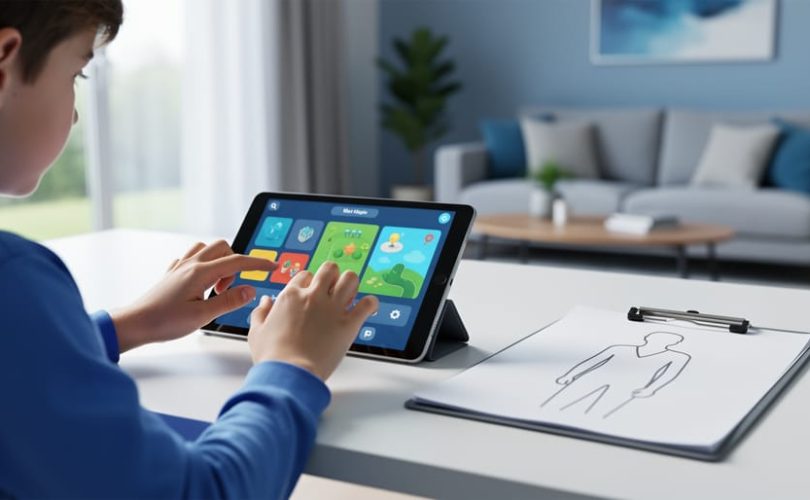
Digital therapeutics for ADHD are prescription medical treatments delivered through technology like video games or wearable devices that have been cleared or authorized by the FDA to treat specific symptoms of attention-deficit/hyperactivity disorder. Unlike regular apps, brain-training games, or wellness tools you can download on your own, these are actual regulated medical devices that doctors prescribe, backed by clinical trials demonstrating they can improve attention and reduce impulsivity.
If you’re exploring treatment options for your child, you’ve probably noticed the explosion of apps and games claiming to help with focus and attention. Digital therapeutics are different. They’ve undergone rigorous testing and regulatory review. EndeavorRx, for example, became the first FDA-authorized prescription video game in 2020 for children ages 8-17 with inattention. As of October 2026, the FDA has authorized four ADHD digital therapy products, including EndeavorOTC and Prismira. These aren’t meant to replace traditional treatments but can work alongside medication, therapy, and school accommodations.
The promise is compelling: treatment that looks like play, delivered at home, without side effects. But the reality requires nuance. Not every child will respond the same way, insurance coverage remains inconsistent, and these tools work best as part of a comprehensive treatment plan.
This article walks you through what digital therapeutics actually are, how they differ from standard apps, which products are currently available, what the research shows about effectiveness, and how to decide if this approach makes sense for your family. You deserve clear answers during what can feel like an overwhelming decision.
What Digital Therapeutics for ADHD Actually Are
Digital therapeutics for ADHD are FDA-authorized medical devices that deliver clinical treatment through digital experiences like video games or wearable devices. Unlike the hundreds of brain-training apps and wellness tools in app stores, PDTs are FDA-regulated devices that have undergone clinical trials to demonstrate safety and effectiveness for treating ADHD symptoms. They require a prescription from a healthcare provider, just like medication.
- FDA-authorized vs FDA-approved
- FDA authorization (510(k) clearance) means a device is substantially equivalent to existing products and meets safety standards, while FDA approval requires more extensive clinical trials. Most digital therapeutics receive authorization rather than full approval.
- Prescription digital therapeutic
- A software-based medical treatment that can only be accessed with a healthcare provider’s prescription, distinguishing it from over-the-counter wellness apps or games.
- Medical device software
- Software classified by the FDA as a medical device because it is intended to diagnose, treat, or manage a medical condition. These tools must meet regulatory standards for safety and effectiveness.
What sets these tools apart from standard apps is their clinical validation. Products like EndeavorRx, the first FDA-authorized prescription video game for ADHD, went through rigorous testing with hundreds of children before authorization. The FDA has authorized four digital therapeutics in the ADHD category as of October 2026: EndeavorRx (authorized in 2020 and 2023), EndeavorOTC (2024), and Prismira (2025). Each targets specific mechanisms in the brain related to attention and impulse control.
These aren’t replacements for traditional medication, nor are they simple games dressed up as treatment. They represent a distinct category, evidence-based interventions delivered through engaging digital formats designed specifically to address ADHD symptoms in children and adolescents.
How Digital ADHD Therapeutics Work
The Science Behind Game-Based Treatment
Game-based digital therapeutics like EndeavorRx target specific brain areas involved in attention and impulse control. The games present simultaneous challenges: children navigate an avatar through a stream while tapping targets that appear on screen. This dual-task design forces the brain to filter out distractions and maintain focus on multiple elements at once.
The sensory stimuli, bright colors, movement, sounds, are precisely calibrated to engage without overwhelming. As children play, they’re essentially exercising the neural pathways that regulate attention. Think of it like physical therapy for attention networks: repeated, structured practice that strengthens specific cognitive skills.
The games adapt in real time based on how well a child performs. When attention wavers, the difficulty adjusts to keep the challenge manageable but not frustrating. This personalized approach targets each child’s specific attention weaknesses. Research on attention networks as treatment has shown that engaging these pathways can improve focus over time.
Parents report that it looks like regular gaming to their kids, which reduces treatment resistance. The therapeutic elements are built into gameplay mechanics rather than feeling like medical exercises.
How Nerve Stimulation Devices Work
The nerve stimulation approach works quite differently from video games. Devices like Monarch eTNS use a small adhesive patch placed on the forehead during sleep, delivering gentle electrical pulses to branches of the trigeminal nerve. This nerve has pathways to brain regions involved in attention and impulse control. The stimulation is so mild that most children don’t feel it at all once they fall asleep.
Parents set up the device each night before bed, and it runs for about eight hours. There’s no active participation required from the child, no screens, no gameplay, no effort. Treatment happens passively while they sleep, which can be appealing for families who want to avoid adding screen time or prefer not to rely on daily medication.
The experience differs dramatically from game-based options. Instead of engaging attention networks through challenging gameplay, nerve stimulation takes a physiological route, potentially influencing brain activity through repeated electrical signaling over weeks and months. For children ages 7-12 who aren’t on ADHD medication, this hands-off approach offers an alternative path that doesn’t require learning new skills or completing daily tasks. The trade-off is patience, effects build gradually, and there’s nothing for the child to “do” or master along the way.
FDA-Authorized Options Available in 2026

As of 2026, only a handful of digital therapeutics have earned FDA authorization specifically for pediatric ADHD. Understanding what’s actually available helps you navigate conversations with your child’s healthcare provider more confidently.
FDA authorization means these products went through rigorous clinical trials demonstrating both safety and measurable effectiveness for specific uses. They’re classified as medical devices, not just wellness apps, which is why most require a prescription. This regulatory oversight offers parents an important layer of reassurance, though it also means you can’t simply download these tools from an app store.
EndeavorRx stands as the first prescription video game cleared by the FDA to treat attention function. It’s designed for children ages 8 through 17 with primarily inattentive or combined-type ADHD. Players guide a character through various worlds, collecting targets and avoiding obstacles while the game continuously adapts to challenge their attention networks. Clinical trials showed improvements in objective attention measures, though parents should know it’s meant to address attention specifically rather than all ADHD symptoms.
In 2024, the same company introduced EndeavorOTC, an over-the-counter version that doesn’t require a prescription. While it uses similar game mechanics, it’s positioned differently from the prescription version in terms of intended use and regulatory classification.
Monarch eTNS takes a completely different approach. This prescription device delivers external trigeminal nerve stimulation through a small patch worn on the forehead during sleep. It’s authorized for children ages 7 through 12 who are not currently taking ADHD medication. The overnight treatment schedule appeals to some families who prefer not to manage daily medication routines.
Prismira joined the list of FDA authorized ADHD therapeutics in 2025, expanding options available to families, though specific details about its approach and target age group vary.
These authorized options represent just one piece of the broader digital health landscape. Other technologies, including VR therapy for various mental health conditions, continue to evolve, though they currently serve different purposes than ADHD-specific digital therapeutics.
Your child’s healthcare provider can help determine whether any FDA-authorized option fits your family’s specific situation and treatment goals.
When and How Digital Therapeutics Are Used for ADHD

Who Might Benefit Most
Digital therapeutics aren’t right for everyone, and that’s perfectly okay. These treatments tend to work best for children aged 7-17 who fall within the FDA-authorized age ranges for specific products. Kids who struggle primarily with attention and focus, rather than hyperactivity alone, often see the clearest benefits, since most authorized treatments target inattentive symptoms.
Families who’ve had mixed results with medication might find digital therapeutics valuable, whether as an alternative or complement to their current approach. They’re particularly worth considering if your child experiences significant medication side effects, or if you’ve been hesitant to start medication and want to try something different first. Some parents appreciate having a treatment option that doesn’t involve daily pills.
Children who engage well with technology and games may be more motivated to stick with game-based treatments like EndeavorRx. For kids ages 7-12 not currently on medication, the Monarch eTNS device offers a completely different approach through gentle nerve stimulation.
What matters most is your family’s unique situation, your child’s age, specific ADHD presentation, what you’ve already tried, and what feels right to you. There’s no single “best” path, and choosing digital therapeutics doesn’t mean rejecting other options. Many families use them alongside behavioral strategies, school support, or medication.
Integrating Digital Therapeutics Into Your Child’s Treatment Plan
Starting digital therapeutics is something you do with your child’s care team, not instead of them. Begin the conversation by sharing what you’re hoping the treatment will help with, whether that’s completing homework more independently, fewer meltdowns over transitions, or better focus during class, so your provider can explain what’s realistic and what timescales to expect.
Once your child starts, track changes you notice in specific situations rather than vague “better” or “worse” observations. Keep brief notes: did they finish their math worksheet without reminders this week? Did they need fewer check-ins to get ready for school? These concrete examples help everyone see what’s actually shifting.
Digital therapeutics work best alongside what you’re already doing. If your child uses behavioral strategies like visual schedules or token systems, keep those, the treatments enhance each other. Same with school accommodations: the 504 plan or IEP stays in place, and you might notice your child needs the supports less often as attention improves, but don’t pull scaffolding too soon.
Most families find digital therapeutics become one tool in a broader approach that includes structure at home, collaboration with teachers, and often other interventions. The goal isn’t to replace everything else, it’s to give your child one more way to build the skills they need.

What Parents Need to Know
Starting digital therapeutics for your child may feel overwhelming at first, but understanding the practical details can make the process more manageable.
Getting started requires a prescription from your child’s doctor or mental health provider, just as you would for medication. During your appointment, be prepared to discuss your child’s ADHD presentation, current treatments, and what you hope to accomplish. This conversation often happens alongside discussions about mental health screening results and overall treatment goals.
The time commitment varies by product. EndeavorRx typically requires about 25 minutes per day, five days a week. Monarch eTNS involves 20-minute sessions during sleep. Most families find these schedules manageable once they establish a routine, similar to homework or bedtime reading.
Cost depends on your insurance coverage. Some plans cover FDA-authorized digital therapeutics, while others don’t. Contact your insurance provider directly to ask about coverage for specific products. If you face barriers to access, ask your provider about payment plans or patient assistance programs.
Managing expectations matters tremendously. Digital therapeutics aren’t magic solutions, and improvements typically emerge gradually over weeks rather than days. Think of them as tools that support your child’s attention skills through practice and engagement, much like QEEG training or other neurofeedback approaches. They work best alongside other interventions, behavioral strategies at home, school accommodations, and open communication with teachers.
When talking to your child, keep it simple and positive. You might say the game or device helps train their brain to focus better, similar to how practice improves sports skills. Many children respond well to the technology-based format, which can feel less clinical than traditional treatments.
Real Families, Real Experiences

The Johnsons started EndeavorRx with their nine-year-old daughter Maya after years of trying different approaches. Her inattention made homework a nightly struggle, and traditional medication caused sleep problems they couldn’t manage. Maya plays the game four times a week, her parents describe it as “the one treatment she doesn’t resist.” After three months, her teacher noticed she was staying focused longer during independent work. The change wasn’t dramatic overnight, but Maya’s parents appreciate having an option that fits their family’s preferences. They still use behavioral strategies at home and school accommodations, viewing the game as one helpful piece rather than a complete solution.
Eleven-year-old James tried Monarch eTNS for six months. His parents chose the nerve stimulation device because they wanted to avoid medication if possible. James wore it while sleeping, which avoided any daytime routine disruption. His father notes that they saw modest improvements in his ability to start tasks without multiple reminders, though social challenges at school remained unchanged. The family eventually added behavioral therapy and decided to try medication alongside it. His mother emphasizes that the device “wasn’t magic, but it gave us a starting point and helped James feel like he had some control over his treatment.”
Twelve-year-old Aiden’s experience with EndeavorRx didn’t match his family’s hopes. He enjoyed the game initially but lost interest after a few weeks, making consistent use difficult. His parents found the time commitment hard to maintain with two working schedules and other children’s activities. After two months, they switched focus back to optimizing his medication and working more intensively with his school. His mother shares this not as a failure but as a reminder that “what works beautifully for one family might not fit another, and that’s okay.”
Types of Digital Therapeutics for Adhd
Digital therapeutics for ADHD fall into two main categories, each working through different mechanisms to target attention and impulse control.
Game-based treatments use interactive video experiences designed to strengthen attention networks in the brain. EndeavorRx, the first FDA-authorized prescription video game for ADHD, falls into this category. Children play what looks like a regular video game, but the experience is specifically engineered to activate and challenge the neural pathways involved in focus and attention. These treatments typically require daily sessions over several weeks, with progress tracked through the game itself. Some research has explored combining game-based approaches with neurofeedback techniques, though these combinations haven’t yet received FDA authorization for ADHD.
Device-based treatments use external trigeminal nerve stimulation to influence brain activity. Monarch eTNS is the FDA-authorized option in this category. Children wear a small device on their forehead during sleep that delivers gentle electrical stimulation to nerves connected to brain regions involved in ADHD symptoms. Unlike games, these devices work passively while the child sleeps, requiring no active participation but consistent nightly use.
Both types require a prescription and are designed as medical treatments, not wellness tools or general brain-training apps.
Common Questions About Digital Therapeutics for ADHD
Which digital therapeutics are FDA-authorized for children with ADHD?
As of October 2026, the FDA has authorized EndeavorRx (prescription video game), EndeavorOTC (over-the-counter version), Monarch eTNS (prescription nerve stimulation device), and Prismira. Each has specific age ranges and clinical indications, so they’re not interchangeable.
What ages can use EndeavorRx and Monarch eTNS?
EndeavorRx is prescribed for children ages 8-17 with inattentive or combined-type ADHD. Monarch eTNS is prescribed for ages 7-12 who aren’t currently taking ADHD medication.
What does FDA-authorized actually mean?
FDA authorization means the product has gone through clinical trials and been reviewed for safety and effectiveness as a medical device. It’s not the same as a wellness app or game you download on your own, these require medical oversight.
How do I know if my child is a good candidate?
Your child’s healthcare provider will assess whether digital therapeutics fit their specific ADHD presentation, age, treatment history, and family circumstances. Similar to how AI in diagnosis is helping clinicians make more informed decisions, these tools work best when integrated thoughtfully into a broader treatment approach tailored to your child.
Many parents wonder about the time commitment involved. Most game-based therapeutics require daily sessions of 20-30 minutes, typically five days per week. Nerve stimulation devices are often used at bedtime. The treatment period usually lasts several weeks to months, with progress monitored by your provider.
Effectiveness varies from child to child. Clinical trials showed meaningful improvements in attention for many participants, but no treatment works for everyone. Some children respond quickly, while others need several weeks to show progress. Your provider can help you set realistic timelines and decide whether to continue based on your child’s response.
Digital therapeutics for ADHD aren’t a silver bullet, and they’re not right for every child. But they do represent something genuinely new in how we can approach ADHD treatment, an option that might work beautifully for your family, or might not fit at all, and both outcomes are completely okay.
What matters most is that you now have more information to bring to your next conversation with your child’s healthcare provider. You know your child better than anyone, their preferences, their challenges, what motivates them, what shuts them down. That expertise is irreplaceable, and it deserves equal weight alongside clinical recommendations as you explore what might help.
Finding the right ADHD management approach is rarely a straight line. It’s often a process of trying, adjusting, combining different strategies, and staying flexible as your child grows and their needs change. Digital therapeutics might become part of that journey, or they might not. Either way, you’re asking the right questions and advocating thoughtfully for your child.
Trust yourself. Keep the conversation going with your healthcare team. And remember that effective ADHD support looks different for every family, there’s no single “right” answer, only what works best for your unique child.