
Showing 237 Result(s)
A diverse group of preschool-aged children playing safely on playground equipment, with attentive caregivers ensuring a secure and nurturing environment.

How Community Safety Shapes Your Preschooler’s Mental Well-being

Protecting our youngest children requires vigilance, understanding, and proactive planning – especially during the critical developmental years between ages 3-5. During this period of intense curiosity and limited risk awareness, children face unique safety challenges both at home and in their expanding social worlds.
As parents and caregivers, we often walk a delicate balance between nurturing independence and ensuring protection. Research shows that children this age are particularly vulnerable to household accidents, playground injuries, and safety issues related to their growing mobility and desire to explore. Yet they&#…

Diverse group of young individuals and adults using digital devices in a supportive environment, symbolizing connectivity and empowerment through digital mental health advocacy.

Digital Tools That Give Children’s Mental Health a Powerful Voice

Digital advocacy transforms how we support children’s mental health in today’s connected world. Through strategic use of social media, online communities, and digital platforms, we’re creating powerful networks that amplify the voices of young people struggling with mental health challenges. This revolution in advocacy isn’t just about raising awareness—it’s about building real-time support systems, connecting families with resources, and dismantling stigma through authentic digital storytelling.
As parents, educators, and healthcare providers, we’ve …

A parent guiding their 8-year-old child through a deep breathing exercise, with the child lying down and a small stuffed animal on their tummy. The background is adorned with colorful drawings, representing the child's artistic expression of emotions.

Help Your 8-Year-Old Build Emotional Strength (Simple Strategies That Work)

Teaching our children essential coping skills at age eight builds the foundation for lifelong emotional resilience. At this pivotal age, children face new academic challenges, evolving friendships, and complex emotions they’re just beginning to understand. While every child develops differently, most eight-year-olds are ready to learn practical strategies for managing stress, anxiety, and daily frustrations. Through age-appropriate techniques like deep breathing exercises, creative expression through art, and simple mindfulness …
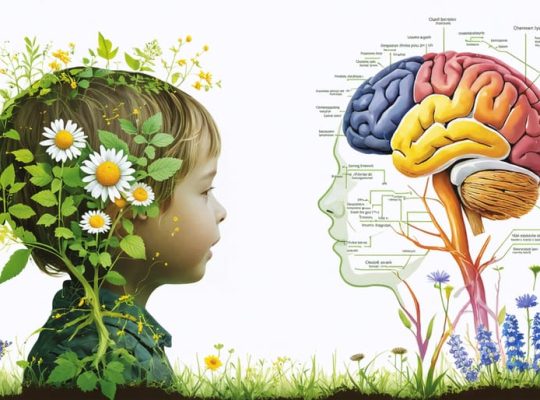

Conceptual illustration showing the interaction between herbal compounds such as chamomile, lemon balm, and passionflower with neurotransmitter receptors in a child's developing brain.

Natural Mental Health Support for Children: What Parents Need to Know About Herbal Remedies

Herbal remedies have supported mental wellness for thousands of years, offering natural approaches to mood, anxiety, and cognitive function. As parents and healthcare providers increasingly explore complementary treatment options, understanding the science behind herbal psychopharmacology becomes essential for making informed decisions about mental health care.
Modern research is uncovering how plant compounds interact with brain chemistry, validating many traditional uses while highlighting important safety considerations. Herbs like chamomile, passionflower, and lemon balm demonstrate measurable effects on neurotransmitter systems…

A child immersed in a virtual reality educational game, wearing a VR headset and surrounded by vibrant 3D elements representing learning and creativity.

Virtual Reality Games That Help Your Child Thrive (A Parent’s Perspective)

Virtual reality gaming opens up extraordinary possibilities for learning, connection, and creative expression – transforming how our children play and develop in the digital age. As VR technology becomes more accessible and refined, parents increasingly recognize its potential to enhance problem-solving skills, spatial awareness, and social interaction when used thoughtfully. Research shows that interactive VR experiences can improve focus, hand-eye coordination, and emotional intelligence in children aged 7-15, while providing engaging ways to explore subjects from science to art in immersive 3D environments.
Yet many parents…

A family enjoying a board game together in a cozy, warm setting, symbolizing breaking free from phone addiction and achieving digital balance.

Break Free From Phone Addiction: A Parent’s Path to Digital Balance

Take back control of your family’s digital life without guilt or shame. In today’s hyper-connected world, our phones have become both invaluable tools and subtle disruptors of meaningful family connections. As a parent and family therapist, I’ve witnessed countless families transform their relationships by implementing a structured phone detox plan – and yours can too.
The constant notifications, endless scrolling, and digital distractions affect more than just our time; they impact our children’s developing minds, our family dynamics, and our overall well-being. Studies show that excessive screen time …

Parent and child practicing mindfulness together in a cozy room with soft lighting, plants, and meditation cushions, highlighting a peaceful and supportive environment for managing depression.

Helping Your Child Find Peace: Simple Mindfulness Practices for Managing Depression

Depression doesn’t have to control your child’s life – or yours. Mindfulness offers a scientifically-proven path to help young minds find peace and emotional balance, even during their darkest moments. As both a parent and a mental health advocate, I understand the urgent need for practical solutions that work in real family situations.
Research shows that age-appropriate mindfulness techniques can reduce depressive symptoms in children by up to 40% when practiced consistently. These gentle yet powerful tools help young people recognize and process difficult emotions while building resilience for future challenges…

"Family members sitting together in a living room, sharing a warm and supportive moment, with elements suggesting medical challenges subtly present in the background."

When a Child’s Illness Changes Everything: A Family’s Journey Together

Family dynamics shape every aspect of our emotional and psychological well-being, influencing how we connect, communicate, and help children thrive within the complex web of relationships that define our home life. Like a delicate ecosystem, each family member’s actions, emotions, and needs create ripple effects that touch everyone in the household. Understanding these intricate patterns isn’t just academic—it’s essential for building stronger relationships, fostering emotional resilience, and creating a …

Group of diverse children playing and exploring in an urban park with natural playground elements, showcasing the benefits of green spaces for child development.

Green Spaces Transform How Children Learn and Grow: A Parent’s Essential Guide

Step into a bustling city park, and you’ll immediately notice the transformative power of green spaces in cities. Beyond their aesthetic appeal, these vital urban oases deliver profound benefits that ripple through our communities, improving physical health, mental wellbeing, and social connections in ways that modern science is only beginning to fully understand.
Recent studies by environmental health researchers reveal that children growing up near urban parks and gardens demonstrate stronger immune systems, better cognitive development, and lower stress levels compared to those with limited…

Child enthusiastically engaged in a colorful educational game on a tablet, with visible game elements displaying progress and achievements.

Make Learning Fun Again: How E-Learning Games Transform Your Child’s Education

Transform your child’s screen time into valuable learning experiences through the power of gamified education. In recent years, e-learning gamification has revolutionized how children engage with educational content, combining the natural appeal of games with structured learning objectives to create an immersive and effective educational environment.
Research shows that gamified learning platforms increase student engagement by up to 60% while improving knowledge retention by 40% compared to traditional methods. By incorporating elements like points, badges, leaderboards, and interactive challenges, these platforms tap into …