Showing 3 Result(s)
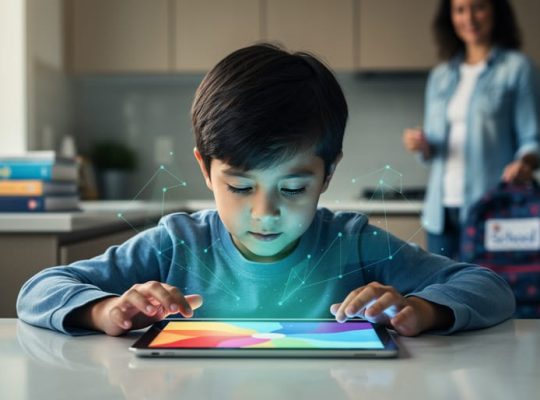
Parent and elementary-age child at a kitchen table using a tablet for a collaborative online lesson; child wearing headphones, parent holding a sand timer; soft natural light with a blurred wall clock, books, and plants in the background.

How Social Media Can Actually Help Your Child Learn Better (When Used Right)

Set clear time boundaries before handing your child a device—starting with just 20-30 minutes daily for children under 12 allows them to explore educational content while protecting developing minds from overexposure. Research shows that structured, limited engagement with platforms like Khan Academy Kids or Duolingo creates learning opportunities without triggering the anxiety and sleep disruption associated with unlimited scrolling.
Choose platforms designed for collaboration rather than passive consumption. Educational YouTube channels, virtual study groups, and subject-specific communities help children develop critical …

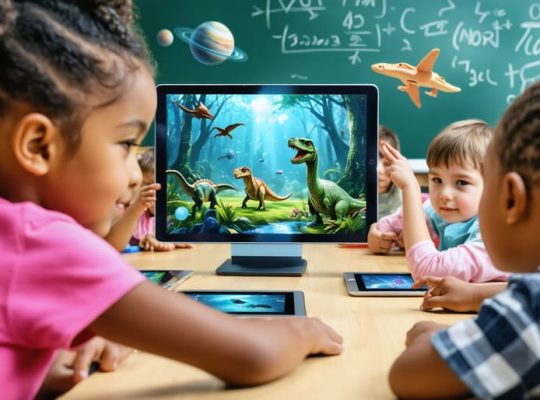
Children in a classroom excitedly observing augmented reality with 3D models of dinosaurs and planets appearing above their tablets, showcasing the intersection of technology and education.

How AR Effects Transform Learning: Making Education More Engaging for Kids

Imagine stepping into a world where your child’s textbooks come alive, dinosaurs roam the classroom, and complex mathematical concepts transform into interactive 3D models right before their eyes. Augmented reality (AR) effects aren’t just changing how children learn – they’re revolutionizing the entire educational experience to transform your child’s education in ways we never thought possible.
As both a learning tool and a source of creative expression, AR technology bridges the …

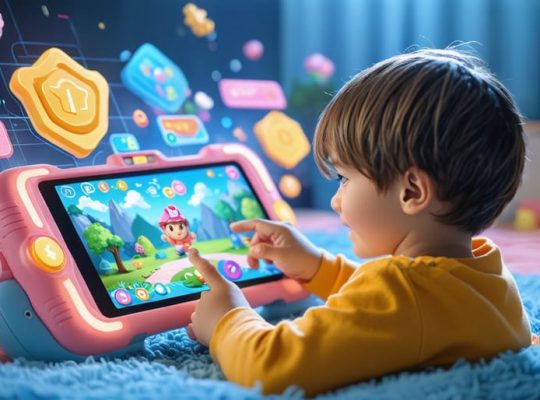
Child enthusiastically engaged in a colorful educational game on a tablet, with visible game elements displaying progress and achievements.

Make Learning Fun Again: How E-Learning Games Transform Your Child’s Education

Transform your child’s screen time into valuable learning experiences through the power of gamified education. In recent years, e-learning gamification has revolutionized how children engage with educational content, combining the natural appeal of games with structured learning objectives to create an immersive and effective educational environment.
Research shows that gamified learning platforms increase student engagement by up to 60% while improving knowledge retention by 40% compared to traditional methods. By incorporating elements like points, badges, leaderboards, and interactive challenges, these platforms tap into …