You’re watching your child’s shoulders tense during homework, their breath quicken before bedtime, or their hands fidget constantly during what should be quiet moments. You want to help, and you’ve heard that music might offer relief. You’re right to explore this option.
Music has a measurable physiological effect on the anxious brain. When children listen to specific types of calming music, their heart rate slows, cortisol levels drop, and their nervous system shifts from fight-or-flight mode into a more regulated state. This isn’t just anecdotal comfort. Research consistently shows that certain musical elements like slow tempo (60-80 beats per minute), predictable patterns, and minimal lyrics directly influence the body’s stress response.
But not all calming music works the same way for every child. A preschooler might relax with gentle lullabies, while a teenager may find those same songs patronizing. The key is matching the music to your child’s developmental stage, personal preferences, and the specific anxiety situation you’re addressing.
As a parent, you’re likely wondering what to actually play, when to use it, and whether you need professional help or if home solutions will work. The good news is that strategic use of music at home can become a practical tool in your family’s daily routine. However, understanding the difference between helpful background music and therapeutic intervention matters, especially if your child’s anxiety is severe or persistent.
This article walks you through the science behind why music calms anxiety, what musical characteristics to look for, and how to implement music-based strategies at different ages and in different situations. You’ll also learn when it makes sense to consider working with a board-certified music therapist.
Why Music Reaches Your Child’s Brain Differently
When your child hears music, something remarkable happens in their brain that doesn’t occur with words alone. While you might talk them through their worries or try reasoning with anxious thoughts, music takes a different route entirely, one that reaches parts of the brain your words simply can’t access.
Music activates multiple brain regions at once. The auditory cortex processes the sounds, the motor cortex responds to rhythm, the limbic system (your child’s emotional center) reacts to melody and harmony, and the prefrontal cortex helps predict what comes next in the song. This widespread activation creates what neuroscientists call a “whole-brain experience.” For an anxious child whose thoughts are stuck in worry loops, this broad engagement can interrupt those patterns and redirect their brain’s attention.
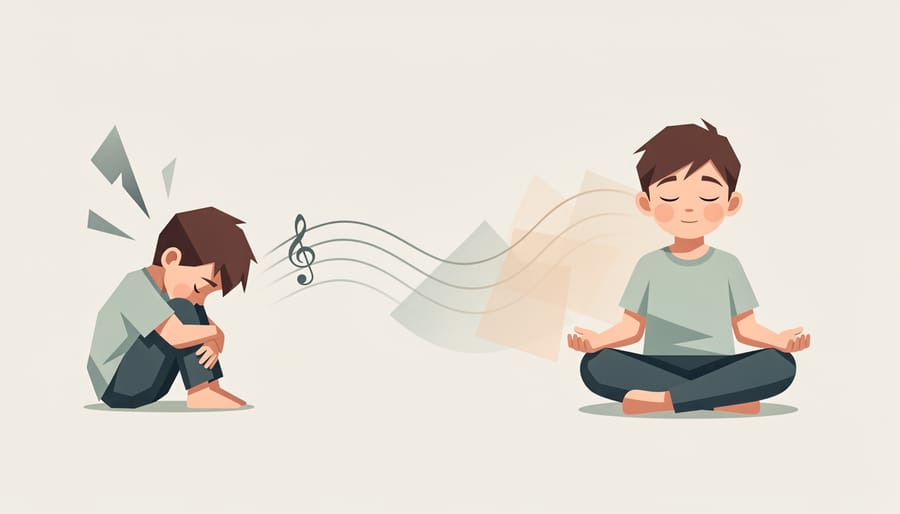
Here’s what matters most for anxiety: music directly influences the autonomic nervous system, the part of your child’s body that controls automatic responses like heart rate, breathing, and stress hormone release. When anxiety hits, their sympathetic nervous system kicks into fight-or-flight mode, heart racing, breathing shallow, muscles tense. Calming music activates the parasympathetic nervous system instead, which tells the body it’s safe to rest and digest. You might notice your child’s breathing slow down, their shoulders drop, or their fidgeting ease as the music works its way through their system.
What makes music especially powerful is that it bypasses the cognitive barriers anxiety creates. When your child is caught in anxious thoughts, rational explanations often bounce off, their thinking brain is essentially offline. But music doesn’t require cognitive processing to work. It reaches the emotional and physiological systems directly, creating a felt sense of calm before your child even realizes what’s happening.
The predictable patterns in calming music give an anxious brain something safe to follow. Your child’s brain starts anticipating the next note, the next chord, creating a sense of order and control when internal chaos feels overwhelming. This predictability is soothing in itself, offering structure without demanding anything in return.
You’re not replacing therapy or dismissing real concerns when you turn on calming music. You’re giving your child’s overwhelmed nervous system a gentle pathway back to baseline, using a tool their brain is already wired to respond to.
What Makes Music ‘Calming’ for Anxious Kids
Not all music soothes an anxious mind. A track can be quiet, slow, even labeled “relaxing,” but still leave your child feeling unsettled. The difference lies in specific musical characteristics that researchers have identified as genuinely calming to the nervous system.
Tempo matters more than you might think. Music with 60 to 80 beats per minute mirrors a resting heart rate, which can actually help slow your child’s racing pulse during anxious moments. Think of it as the musical equivalent of a deep breath. Faster tempos, even at moderate volume, keep the nervous system alert rather than settled.
Key and mode create emotional atmosphere. Major keys tend to sound brighter and more uplifting, while minor keys often feel contemplative or melancholic. For anxiety relief, research suggests that simple major key pieces work best for most children, though some kids find certain minor key music soothing because it validates their emotional state without pushing false cheerfulness.
Instrumentation shapes the listening experience significantly. Certain sounds naturally calm:
- Piano and acoustic guitar for gentle, predictable tones
- String instruments like violin or cello for warm, sustained notes
- Nature sounds such as rain, ocean waves, or birdsong that ground attention
- Soft woodwinds like flute for airy, non-intrusive melody
- Minimal or no percussion to avoid startling the nervous system
Heavy bass, sudden cymbal crashes, or distorted electric guitars typically work against calming goals, even in otherwise slow songs.
Predictability versus complexity is a delicate balance. Music that’s too repetitive becomes background noise your child’s brain ignores. Music that’s too complex, with sudden key changes or unpredictable melodies, keeps the brain in alert mode trying to anticipate what’s next. The sweet spot is gentle variation within a consistent structure, like classical pieces by composers such as Debussy or Satie.
Lyrics present a surprising complication. Words engage the language-processing parts of the brain, which means your child is thinking about the content rather than simply experiencing the soothing qualities of sound. For many anxious kids, instrumental music works better because it doesn’t compete with their already-busy thoughts. That said, some children find familiar, positive lyrics comforting, so this remains individual.
The goal isn’t finding music that you find relaxing. It’s identifying tracks with these specific characteristics, then noticing how your child’s body responds: slower breathing, relaxed shoulders, decreased fidgeting, or simply the ability to focus on something other than worry.
Real-World Ways to Use Calming Music with Your Child
Knowing when and how to use calming music matters as much as choosing the right tracks. The key is integrating music naturally into your child’s daily routine rather than treating it as a last-resort intervention when anxiety peaks.
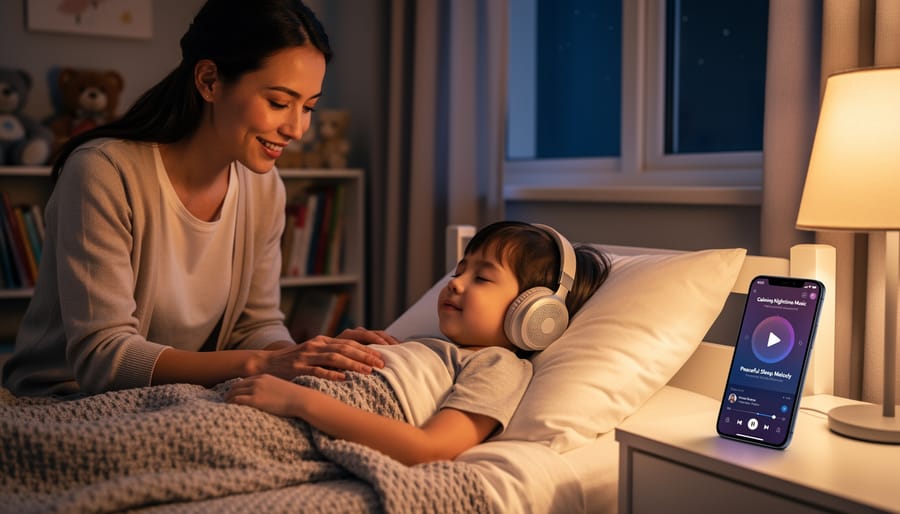
Bedtime routines offer the most straightforward entry point. Start the music 20 to 30 minutes before sleep, keeping volume low enough that conversation is still possible. This timing allows the music to signal the transition toward rest without becoming a rigid requirement. Many parents find that pairing calming music with dimmed lights and a consistent sequence of activities strengthens the connection between sleep and anxiety relief. Let the music continue into sleep if it helps, using a sleep timer set for 45 to 60 minutes so it fades naturally rather than playing all night.
Morning transitions present different challenges. Some anxious children wake already tense about the day ahead. Playing gentle music during breakfast or while getting dressed can establish a calmer baseline before school. Keep morning music slightly more upbeat than bedtime selections, around 70 to 80 BPM, to support alertness while still soothing nerves.
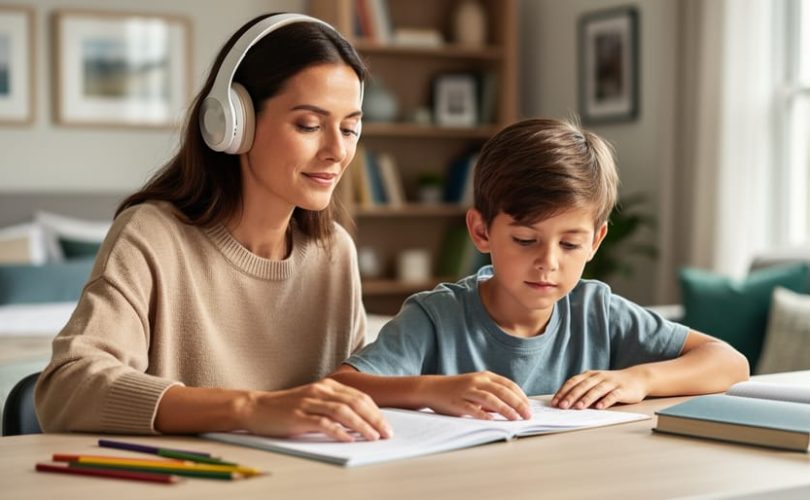
For homework and study time, music without lyrics typically works best. The predictable patterns help some children focus while reducing background mental chatter that anxiety creates. Set reasonable time limits, though. A 25-minute study block with music, followed by a five-minute break, prevents the brain from tuning out the calming effect entirely.
During acute anxiety episodes, music becomes a grounding tool. Have a go-to playlist ready rather than scrambling to find something when your child is distressed. Sit with them, breathe together, and let the music fill the silence without forcing conversation. Duration here varies, anywhere from five minutes to half an hour, depending on what your child needs.
Car rides trap anxious children in a space they cannot escape, making them prime opportunities for calming music. Create a vehicle-specific playlist that everyone can tolerate. The music provides a focal point that is not the destination or the anxiety itself.
Medical appointments rank high on the anxiety scale for many kids. Ask if you can play calming music on your phone through earbuds during waiting room time or even during the appointment itself, with provider permission. This gives your child something familiar in an unfamiliar environment.
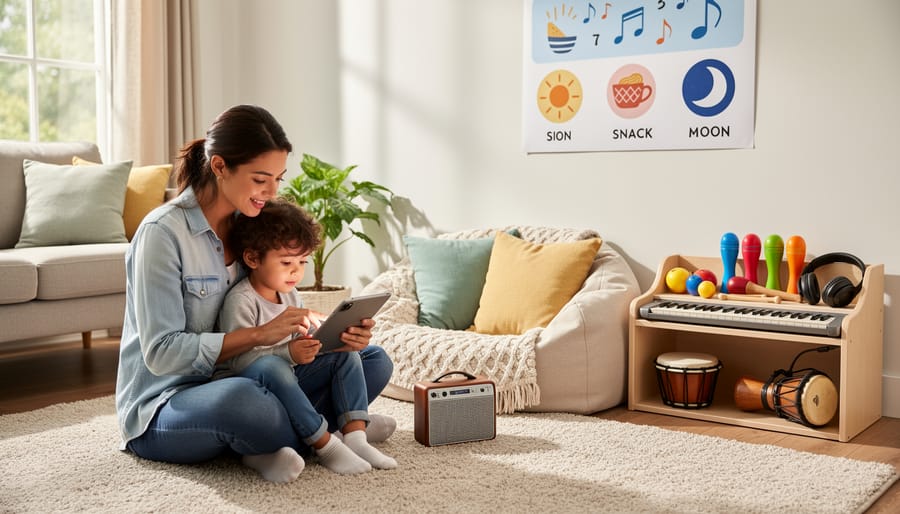
Creating a calm-down corner at home makes calming music accessible when your child needs it. This dedicated space might include cushions, a small speaker or headphones, and simple controls your child can operate independently. The autonomy matters. When children can choose to use music themselves, it shifts from something done to them into a coping skill they own.
Volume should always allow for easy conversation, around 50 to 60 decibels. Duration depends on context, but 15 to 30 minutes covers most situations. Most importantly, involve your child in playlist creation. Their buy-in transforms music from your idea into their tool, which makes all the difference in whether they will actually use it when anxiety strikes.
Age-Appropriate Approaches: From Toddlers to Teens
What works beautifully for a three-year-old won’t resonate with a teenager, and that’s exactly why your approach to calming music needs to grow with your child. Each developmental stage comes with different needs, preferences, and levels of autonomy that should shape how you introduce and use music for anxiety relief.
| Age Group | Music Characteristics | Implementation Tips |
|---|---|---|
| Toddlers (2-4) | Simple melodies, repetitive lullabies, gentle vocals, familiar songs | Parent singing is powerful; use consistent songs for routines; keep sessions short (5-10 minutes) |
| School-Age (5-10) | Instrumental pieces with predictable patterns, nature sounds, orchestral music | Let them help choose from pre-screened options; create visual associations (this is our “calm song”) |
| Tweens (11-13) | More varied genres, lo-fi beats, acoustic versions of favorite songs | Give ownership of playlist creation; teach them how music affects mood; respect their emerging taste |
| Teens (14-18) | Binaural beats, ambient electronic, genre variety, meditation tracks with music | Introduce apps and tools they control; discuss the science; honor their privacy around music choices |
For your youngest children, nothing beats the sound of your own voice. Toddlers respond powerfully to parent-sung lullabies because they associate that voice with safety and comfort. You don’t need perfect pitch. Humming “Twinkle, Twinkle” while rocking an anxious toddler creates a multisensory calming experience that recorded music can’t fully replicate. At this stage, consistency matters more than variety. The same three or four songs used at naptime, during car meltdowns, or when your toddler is overwhelmed help them recognize music as a cue that calm is coming.
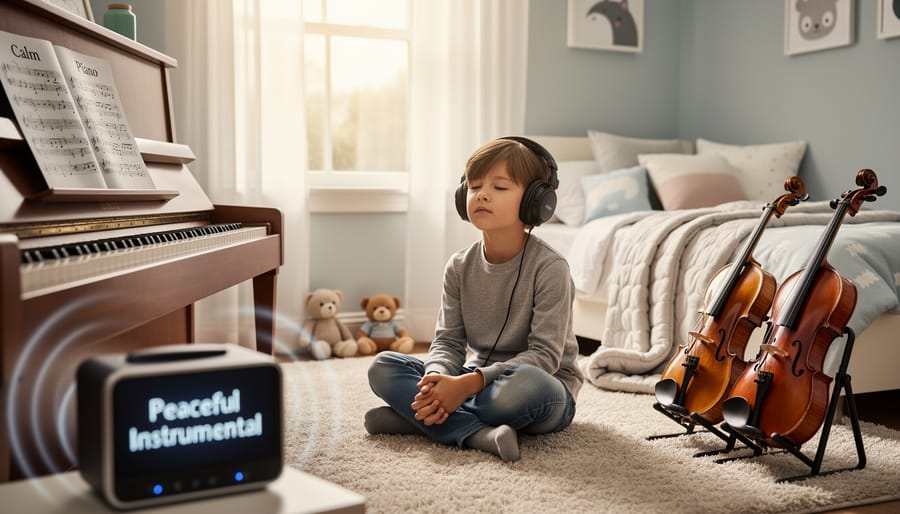
School-age children can start participating in the selection process, but they still need guidance. This is the stage where predictable instrumental pieces work particularly well. Think gentle piano compositions, acoustic guitar, or orchestral music without dramatic crescendos. Your seven-year-old might enjoy creating a “feelings playlist” with you, picking different songs for different emotions. Give them two or three options you’ve already vetted, letting them feel some control while you maintain appropriate boundaries around content.
Tweens are developing their musical identity, and respecting that matters for buy-in. An 11-year-old who feels forced to listen to “baby music” will resist, even if it would help. Instead, explore calming versions of music they already like. Many popular songs have acoustic or instrumental covers that maintain the melody while stripping away intense production. Let your tween build their own calming playlist on a streaming service, checking in occasionally rather than micromanaging every selection. This age group often responds well to lo-fi hip-hop beats, which have become popular study music precisely because of their calming, repetitive nature.
Teenagers need the most autonomy and the least visible parental involvement. Introduce tools like binaural beats apps or guided meditation tracks with background music, then step back. Share an article or mention what you’ve learned about music and anxiety, but let them take it from there. Many teens prefer earbuds and privacy around their coping strategies, and that’s developmentally appropriate. If your 16-year-old discovers that a particular ambient electronic artist helps them manage test anxiety, resist the urge to ask them to play it aloud or turn it into a family thing. Sometimes the most supportive thing you can do is simply notice it’s helping and say nothing more than, “I’m glad you found something that works.”
When to Consider Music Therapy Beyond Home Use
Playing calming music at home is a wonderful start, but sometimes a child’s anxiety needs a more structured, personalized approach. That’s where music therapy comes in. Unlike simply listening to soothing playlists, music therapy involves working with a board-certified therapist who uses music interventions designed specifically for your child’s needs.
So how do you know when it’s time to seek professional help? If your child’s anxiety interferes significantly with daily functioning, school attendance, social relationships, or sleep despite trying home strategies, music therapy might offer additional support. Other signs include trauma history, co-occurring conditions like autism or ADHD, severe panic attacks, or when your child seems to respond positively to music but needs more intensive guidance than you can provide at home.
In actual music therapy sessions, a trained therapist doesn’t just press play. They might guide your child in creating their own music, use specific drumming patterns to regulate breathing, teach songs that express difficult emotions, or incorporate movement with rhythm. The therapist tailors each session to your child’s developmental stage, anxiety triggers, and goals. It’s active, responsive, and clinical in ways that home listening cannot replicate.
The field is gaining significant momentum in 2026. The Special Music Education and Music Therapy conference taking place July 21-24 at the University of Ottawa brings together researchers and practitioners advancing evidence-based approaches. This growing professional recognition means more therapists are available and more insurance plans are beginning to cover sessions.
Music therapy works alongside other treatments, not instead of them. Think of it as another tool in your child’s support system. If you’re curious, ask your pediatrician or school counselor for a referral to a certified music therapist. Many offer initial consultations to determine if it’s the right fit for your family’s needs.
Building Your Child’s Calming Music Toolkit
Creating a calming music toolkit isn’t about finding one perfect playlist and calling it done. It’s about building a collection of resources that grow with your child’s needs and preferences. Start small and adjust as you learn what actually helps.
Begin by testing different music types together. Set aside 15 minutes when your child is calm, not in crisis. Play short samples from various genres: classical piano, nature sounds with gentle music, ambient instrumentals, binaural beats. Watch their body language. Do their shoulders drop? Does their breathing slow? Ask them to rate each option on a simple scale. Some children respond to predictable patterns while others need more variation.
Once you’ve identified a few winners, create dedicated playlists with your child. Involve them in naming the playlists. A seven-year-old might call one “Bedtime Dragons” while a teenager might prefer “Late Night Chill.” Most streaming services let you organize by situation: morning routine, homework focus, wind-down time, emergency calm-down. Keep playlists short at first, around 20-30 minutes, so they don’t become background noise your child tunes out.
- Choose 3-5 songs or tracks that your child responds to positively during calm testing periods
- Create situation-specific playlists together, letting your child help name and organize them
- Test each playlist in its intended context for one week, noting what works and what doesn’t
- Rotate or refresh one playlist every two weeks to prevent habituation and maintain effectiveness
- Build in quarterly reviews where you and your child evaluate the toolkit and make updates together
Consider live music experiences as part of your toolkit. Research shows that communal music experiences can deepen the calming effects. Events like the Mind Over Music Mental Health Festival, scheduled for September 26, 2026, blend live performances with mental health education, creating opportunities for families to experience music’s therapeutic power together in a supportive community setting.
Maintain variety by introducing one new element monthly. This might be a different artist, a meditation app with guided musical elements, or even encouraging your child to create their own calming sounds. Some children discover that humming or playing a simple instrument becomes their personal anxiety tool.
Keep the toolkit accessible but not overwhelming. Three good playlists beat thirty mediocre ones. Store everything in one easy-to-find location, whether that’s a dedicated folder on a device or a specific streaming account. Teach your child how to access their calming music independently so it becomes a self-soothing skill they own.
What Parents Need to Know About Music and Anxiety Relief
Music can be a powerful comfort for anxious children, but it’s natural to have questions about how it fits into your family’s overall approach to managing anxiety. Let’s address the most common concerns parents bring up.
First, calming music is not a replacement for professional treatment. If your child has been diagnosed with anxiety disorders or is working with a therapist, music works alongside those interventions, not instead of them. Think of it as one tool in a larger toolkit to help your child anxiety. It can enhance coping skills they’re learning in therapy and provide immediate comfort between sessions.
Timeline expectations matter. Some children respond quickly, feeling noticeably calmer within minutes of hearing their chosen music. For others, the benefits build gradually over weeks as music becomes associated with safety and relaxation. If you see no difference after a month of consistent use, that’s feedback worth noting, not a failure.
What if your child refuses? Forcing music rarely works. Try offering it without pressure during neutral moments first, not only during high-anxiety situations. Let them choose from options you’ve pre-selected. Some kids resist headphones but accept background music, or prefer making music themselves over listening.
Can music make things worse? Occasionally, yes. Music that’s too stimulating, reminds them of a stressful event, or feels imposed can increase agitation. Pay attention to their reactions and adjust quickly.
Screen time is a legitimate concern when using music apps. Consider downloading playlists for offline listening, using dedicated music players instead of phones, or setting clear boundaries about when devices are for music only. Managing this balance contributes to overall parent stress so find what works practically for your household.
Finally, be realistic. Music can reduce anxiety symptoms and provide comfort, but it won’t eliminate the underlying causes of your child’s worries or cure an anxiety disorder. It’s a supportive strategy that works best when combined with other approaches.
Sarah’s Story: How One Family Found Peace Through Music
Sarah remembers the exact moment she knew something had to change. It was 10:47 PM on a Tuesday in March 2025, and her daughter Emma was crying in bed for the third time that night, her small body rigid with worry about things that might happen at school the next day. Sarah had tried everything: logical reassurance, breathing exercises, staying in the room, leaving the room. Nothing seemed to break the cycle.
A colleague mentioned that her son’s therapist had suggested calming music. Sarah was skeptical. How could background noise compete with the storm in Emma’s mind? But desperation has a way of opening doors that doubt keeps closed.
They started small. Sarah found a playlist labeled “Peaceful Piano for Sleep” and played it softly while reading Emma’s bedtime story. Emma barely noticed it that first night, still tense and vigilant. Sarah kept it going for a week anyway, the same predictable instrumental pieces filtering through a small speaker on Emma’s dresser.
The shift wasn’t dramatic. Around night eight or nine, Sarah realized Emma’s body was softer during their goodnight hug. The anxious questions came a bit later each evening. By week three, Emma asked if they could “keep the piano music on longer.”
They expanded carefully. Emma discovered she loved “Weightless” by Marconi Union, a piece specifically composed to reduce anxiety. She called it her “calm-down song” and would sometimes request it during homework meltdowns, not just at bedtime. Sarah added nature sounds, mixing rain and soft strings. They tested Celtic harp music. Some pieces Emma rejected immediately; others became fixtures.
The transformation took months, not days. Emma still has anxious nights, but now she has a tool she controls. She’ll ask to change the music or turn it up slightly when worry creeps in. Last month, she created her own playlist on Sarah’s phone, carefully selecting songs that “make my brain feel slower.”
Sarah won’t claim music cured Emma’s anxiety. They still see a therapist. But music gave them a bridge between panic and peace, something Emma could reach for independently. On good nights now, Sarah checks on Emma around 9:30 and finds her daughter breathing slowly, eyes closed, piano notes filling the darkened room. Those moments feel like grace.
Calming music is not a cure for childhood anxiety, but it is a powerful, accessible tool that fits naturally into your family’s daily life. You have likely already seen how a familiar song can shift your child’s mood or how silence sometimes feels more overwhelming than gentle sound. That intuitive understanding is backed by solid research and by families who have watched their anxious children gradually find steadier ground with music as part of their support system.
Starting small matters more than doing everything at once. Choose one moment in your day when anxiety typically shows up, whether that is bedtime, the morning rush, or homework time, and introduce calming music there. Let your child help pick what feels soothing to them. Some kids respond to piano instrumentals while others need nature sounds or specific songs tied to happy memories. Their input makes the strategy theirs, not something imposed on them.
Be patient with the process. Music works through repeated, consistent exposure rather than instant transformation. Your child is learning to associate certain sounds with safety and calm, and that neural pathway strengthens over weeks and months, not overnight. There will be days when music helps immediately and days when it does not seem to make a difference. Both are normal.
What you are really building is a coping skill your child can take anywhere. The playlist you create together today becomes a resource they can access as teenagers facing exam stress, as young adults navigating new environments, and throughout their lives when anxiety surfaces. You are teaching them that they have some control over their internal state and that reaching for healthy tools is strength, not weakness.
Your willingness to try something as simple as calming music shows your child that their anxiety matters, that relief is possible, and that you are figuring this out together. That message alone builds the resilience they need to face whatever comes next.