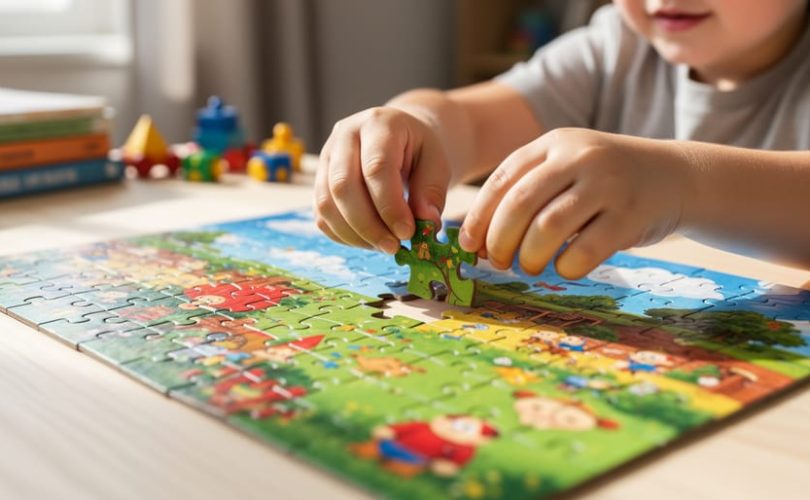
Cognitive benefits of jigsaw puzzles refer to the measurable improvements in mental abilities that occur when children and adults regularly engage with these hands-on spatial challenges. This includes sharper visual-spatial reasoning, stronger short-term memory, better problem-solving skills, and improved attention span.
If you’ve watched a child hunched over a puzzle, quietly sorting edge pieces or testing where a tricky sky fragment belongs, you’ve witnessed active brain development in real time. The appeal of jigsaw puzzles lies in their deceptive simplicity: they look like mere entertainment, yet neuroscience confirms they activate multiple cognitive systems simultaneously. The child scanning for matching colors exercises visual discrimination. The one rotating a piece to test its fit practices mental rotation. The teen who remembers where the red barn pieces cluster strengthens working memory.
Parents often ask whether screen-free activities still hold value for developing minds. The evidence says yes, particularly for puzzles. Unlike passive entertainment, jigsaw puzzles demand active engagement. Children must form hypotheses about where pieces belong, test those theories, adjust when wrong, and persist through frustration. These aren’t abstract skills. They’re the same cognitive processes children need for reading comprehension, math problem-solving, and navigating social situations.
This article explains how jigsaw puzzles work on the brain, which specific cognitive abilities improve with regular puzzle play, and how to choose age-appropriate puzzles that challenge without overwhelming. Whether you’re a parent seeking screen-free activities, a teacher building classroom learning centers, or a healthcare professional recommending developmental tools, understanding the science behind these cardboard rectangles helps you use them intentionally.
What Cognitive Benefits Actually Mean for Your Child
When parents hear about “cognitive benefits,” it can sound clinical and distant from everyday life. But these skills are simply the mental tools your child uses to learn, solve problems, and make sense of the world around them. When your five-year-old remembers where they left their shoes, figures out how to build a taller block tower, or concentrates on tying their shoelaces, they’re using cognitive skills in action.
These abilities develop naturally through play and exploration, and jigsaw puzzles happen to engage several of them at once. Understanding what these skills actually are helps you recognize the small moments of growth happening at your kitchen table.
Here are the key cognitive skills that jigsaw puzzles help develop:
- Working Memory
- The ability to hold information in mind while using it, like remembering what the puzzle picture looks like while searching for a specific piece, or keeping track of which colors go in which section.
- Spatial Reasoning
- Understanding how objects relate to each other in space, such as recognizing that a puzzle piece needs to be rotated to fit or visualizing where a section belongs in the larger picture.
- Visual Perception
- The skill of interpreting what the eyes see, including distinguishing subtle differences in color, shape, and pattern to match puzzle pieces correctly.
- Executive Function
- The brain’s ability to plan, focus attention, switch strategies when something isn’t working, and resist the urge to give up when frustrated.
- Fine Motor Coordination
- The precise hand movements needed to grasp small pieces, rotate them, and fit them into place, which also supports handwriting and other detailed tasks.
You see these skills at work when your child sorts pieces by color before starting, tests a piece in different spots, or asks for help only after trying several approaches themselves. These aren’t abstract concepts measured only in a lab. They’re the foundation for reading comprehension, math problem-solving, following multi-step instructions, and managing emotions when things get difficult.
How Jigsaw Puzzles Work to Build Brain Power
The Problem-Solving Process in Action
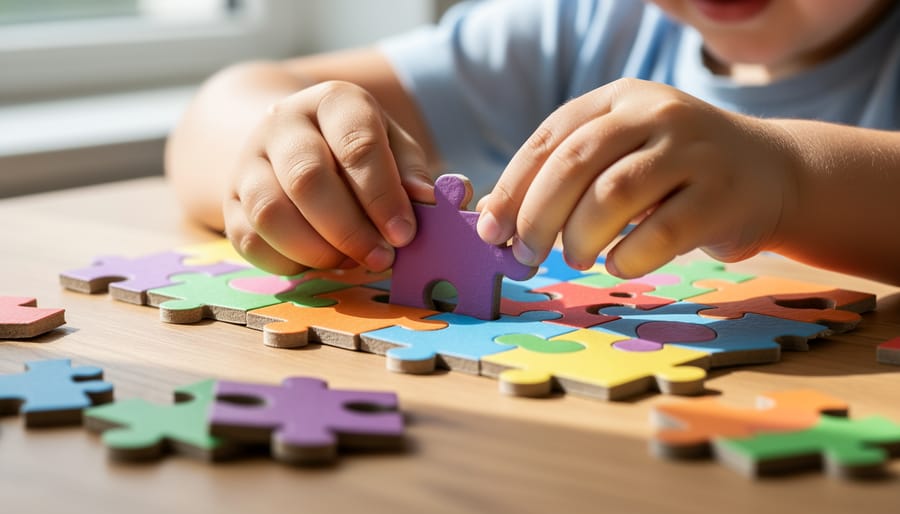
Watch a child pick up a puzzle piece and you’ll see their brain working through a remarkably sophisticated sequence. First comes visual scanning: their eyes sweep across the remaining pieces and the growing puzzle, searching for matches by color, pattern, or edge type. They’re not randomly grabbing pieces. They’re gathering visual information and comparing it to what they need.
Next is hypothesis testing. Your child picks up a promising piece and mentally asks, “Could this fit here?” They’re making a prediction based on visual cues. Maybe the blue matches, or the curved edge looks right. They rotate the piece, try different angles, test their theory against reality.
Then comes the crucial moment of error correction. The piece doesn’t fit. Instead of giving up, their brain immediately starts analyzing why. Was the color similar but not quite right? Did they misjudge the shape? This feedback loop teaches them to refine their approach, to notice subtler differences, to adjust their search criteria.
Throughout this process, persistence holds everything together. When the first five pieces they try don’t work, they keep going. They return to visual scanning with new information. They test another hypothesis. They learn that temporary failure isn’t the end; it’s just part of finding the solution.
This cycle repeats dozens or hundreds of times during a single puzzle session, strengthening these cognitive pathways with each iteration. The brain gets better at the whole sequence through practice.
Six Ways Jigsaw Puzzles Support Your Child’s Cognitive Development
Visual-Spatial Reasoning and Mental Rotation
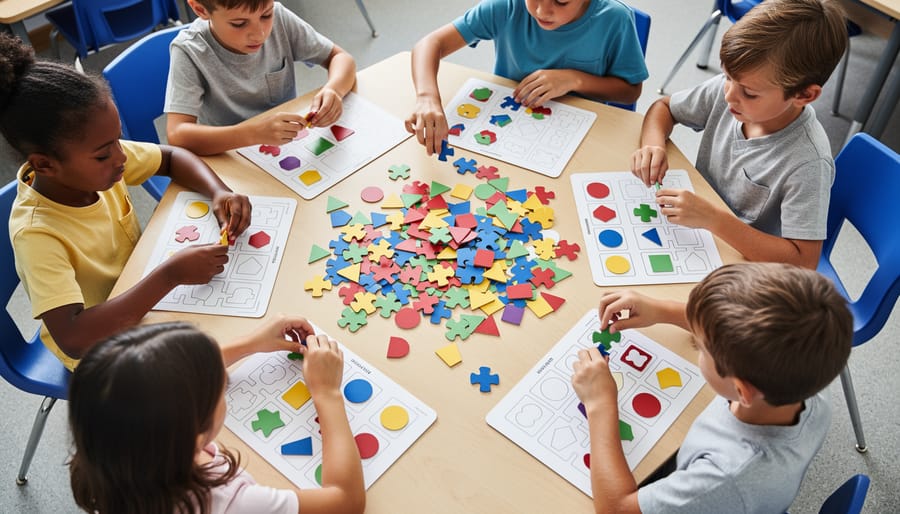
When your child picks up a puzzle piece and rotates it in their hand, trying to figure out which way it fits, they’re building visual-spatial reasoning. This is the ability to understand how objects relate to each other in space and to mentally flip or turn shapes before physically moving them.
As children work puzzles, they learn to recognize that the same piece looks different from various angles. They develop the skill of mentally rotating an image to match what they see in the puzzle box or on the partially completed picture. This constant practice of visualizing, predicting, and testing spatial relationships strengthens the brain’s ability to think in three dimensions.
These skills transfer directly to everyday learning. Visual-spatial reasoning helps children understand that ‘b’ and ‘d’ are the same shape facing different directions, a crucial reading skill. In math, it supports understanding of shapes, symmetry, fractions, and eventually geometry. Children who regularly work puzzles often find it easier to pack a backpack efficiently, follow maps, or imagine how furniture might fit in a room.
Working Memory and Short-Term Recall
Working memory is your child’s mental workspace, the ability to hold information in mind while using it. When your child sorts puzzle pieces by color, they’re remembering what they’re looking for while simultaneously scanning new pieces. When they recall that a blue piece with a curved edge belongs in the sky section, they’re actively holding multiple details in mind at once.
This constant mental juggling strengthens the brain’s capacity to retain and manipulate information. Your child practices remembering the overall picture, recalling which areas still need pieces, and keeping track of what they’ve already tried. These same skills transfer directly to classroom tasks like following multi-step directions, solving math problems, or remembering the beginning of a sentence while writing the end.
The beauty of puzzles is that they make this brain training feel like play, not work.
Attention Span and Focus
Puzzles require children to stay with a single task for an extended period, building sustained attention in ways that quick-tap games and social media feeds do not. When a child commits to completing a 50-piece puzzle, they practice holding focus through multiple attempts, dead ends, and small victories. This sustained engagement strengthens the brain’s ability to resist distractions and return attention to the task at hand when something pulls it away.
Typical focused puzzle time varies by age. Toddlers might work for 5-10 minutes before needing a break. Five- to seven-year-olds often sustain 15-20 minutes of concentrated effort. By ages 8-10, many children can work for 30-45 minutes when genuinely engaged. These aren’t rigid standards, just general patterns to help you gauge what’s developmentally reasonable.
The value extends beyond puzzle time itself. Children who regularly practice this kind of focused, screen-free activity often find it easier to concentrate during homework and reading. In a world where notifications constantly fragment attention, puzzles offer a low-stakes way to practice the mental discipline of sticking with something until it’s done. Supporting your child’s digital balance through activities like puzzles helps build the concentration muscles they’ll need throughout their lives.
Problem-Solving and Strategic Thinking
When your child reaches for a puzzle piece and tries to fit it in the wrong spot, something valuable happens. They notice it doesn’t work, pull it back, and try a different approach. This simple sequence builds the foundation for systematic problem-solving.
Puzzles create a natural laboratory for testing ideas. Children develop hypotheses about where pieces might go based on color, shape, or pattern, then test those theories. When their first guess fails, they adjust their strategy rather than giving up. Maybe they sort by edge pieces first, or group similar colors together, or work on distinct sections of the image. Each child discovers their own methods through experience.
This trial-and-error process teaches flexibility in thinking. Unlike many activities with rigid right answers, puzzles reward persistence and creative approaches. A child who methodically works from corners might succeed just as well as one who tackles the most interesting section first. They learn that multiple strategies can solve the same problem, and that switching tactics when stuck is smart, not failure. These lessons transfer directly to math challenges, reading comprehension, and social conflicts where flexible thinking matters most.
Fine Motor Skills and Hand-Eye Coordination
When your child picks up a puzzle piece, examines it, rotates it to find the right orientation, and carefully maneuvers it into place, they’re building essential physical skills alongside cognitive ones. This seemingly simple action requires precise finger control to grasp pieces of varying sizes, wrist stability to rotate them smoothly, and careful hand-eye coordination to align edges and guide the piece into its spot without forcing.
These fine motor movements strengthen the small muscles in children’s hands and fingers, improving the dexterity they need for writing, buttoning clothes, using utensils, and countless other daily tasks. The repetitive nature of puzzle work, grasping, adjusting, placing hundreds of times in a single session, provides exactly the kind of practice young hands need to develop control and precision that will serve them throughout childhood and beyond.
Emotional Regulation and Patience
Working on a jigsaw puzzle requires children to sit with uncertainty and mild frustration, valuable experiences many kids rarely get in an age of instant digital rewards. When a piece doesn’t fit where they expected, or when they can’t immediately find the right piece, children practice staying with discomfort rather than abandoning the task. This builds frustration tolerance in a low-stakes environment where mistakes have no real consequences.
The delayed gratification of slowly completing a puzzle also strengthens self-regulation skills. Children learn that some satisfying experiences require patience and persistence rather than immediate results. Each small success, finding the right piece, completing a section, releases a gentle reward that reinforces the value of sticking with challenging tasks.
For children who struggle with anxiety or emotional dysregulation, puzzles offer a calming, predictable activity where they control the pace. The focused attention required naturally quiets racing thoughts, while the tactile engagement with pieces provides sensory grounding. Over time, these experiences contribute to broader emotional intelligence as children learn to recognize and manage their feelings during both frustrating moments and eventual successes.
Different Types of Puzzles for Different Developmental Stages
Toddlers and Preschoolers (Ages 2-5)
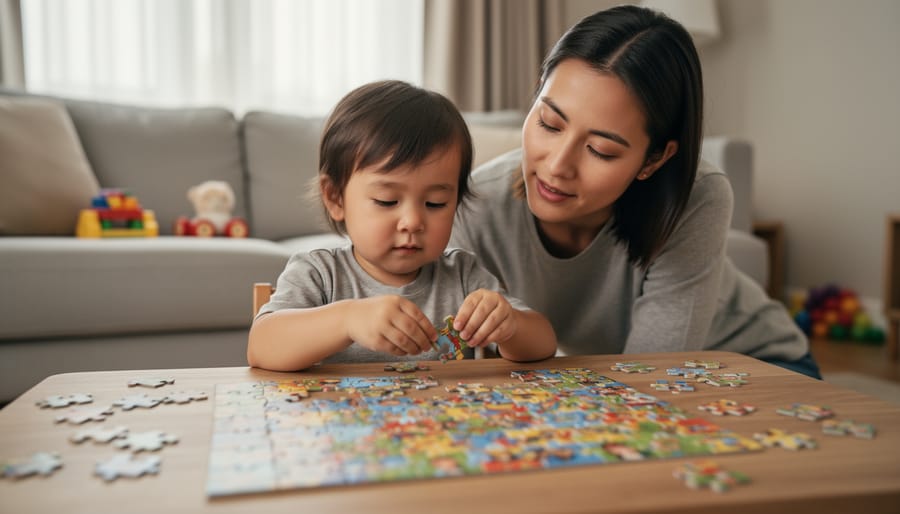
For your youngest puzzle-solvers, start with wooden puzzles that have large knobs or pegs on each piece. These chunky designs are easy for small hands to grasp and manipulate, building the hand-eye coordination that underlies later writing and drawing skills. Look for simple 4-8 piece puzzles featuring familiar objects, animals, vehicles, or everyday items your child already recognizes from books and daily life.
As your toddler approaches preschool age, gradually introduce flat puzzles with 12-24 pieces. At this stage, puzzles teach basic shape recognition and spatial awareness: which piece fits where, how to rotate a piece to make it work, and how edges differ from middle pieces. These early puzzle experiences lay groundwork for math concepts like geometry and spatial reasoning that children will encounter in school.
Keep sessions short and playful. Ten to fifteen minutes is plenty for this age group, and stopping while your child is still interested prevents frustration. Consider puzzles part of a digital detox toolkit, screen-free activities that engage growing minds without overstimulation.
Early Elementary (Ages 5-8)
By kindergarten and early elementary school, children are ready for puzzles with 50 to 100 pieces featuring recognizable scenes from their favorite stories, animals, or everyday activities. At this stage, your child develops more systematic approaches rather than random trial and error. You might notice them sorting pieces by color or edge pieces first, grouping similar sections, or starting with a distinctive part of the image like a character’s face.
These mid-complexity puzzles build sustained attention in 20 to 30 minute sessions, teaching children to stick with a challenging task across multiple sittings. The familiar imagery provides just enough scaffolding to prevent frustration while the increased piece count demands genuine strategic thinking. This age range marks a shift from puzzles as shape-matching exercises to puzzles as genuine problem-solving activities that require planning ahead and remembering what you tried before.
Older Children (Ages 8+)
By age eight, most children are ready for puzzles of 200 pieces or more, where the real cognitive challenge begins. Complex puzzles with subtle color variations or intricate patterns push children to develop systematic sorting strategies rather than relying on trial and error. They might organize pieces by edge versus interior, group by color families, or work section by section. This strategic planning strengthens executive function skills they’ll use for homework, projects, and long-term goals.
Three-dimensional puzzles introduce an entirely new spatial challenge, requiring children to visualize how flat pieces connect to form curves and structures. The shift from two-dimensional thinking to three-dimensional assembly activates different neural pathways and builds mental rotation abilities that translate directly to geometry, engineering concepts, and even reading maps.
At this age, persistence becomes the most valuable cognitive benefit. A 500-piece puzzle might take several sessions across multiple days, teaching children to return to an unfinished task, remember their strategy, and push through the frustrating middle phase when progress slows. This capacity to sustain effort toward a distant goal, tolerate setbacks, and trust the process builds resilience that extends far beyond puzzle play.
When and How to Use Jigsaw Puzzles for Maximum Cognitive Benefit
You don’t need to overthink the schedule. Even a 10-minute puzzle session twice a week can support cognitive growth. The key is consistency and creating an environment where your child feels comfortable working at their own pace.
For younger children (ages 2-5), keep sessions brief, five to ten minutes when they’re engaged, and always stop before frustration sets in. Older children can work for 20 to 30 minutes or longer if they’re absorbed, but watch for signs they need a break. Quality trumps duration every time.
Solo puzzle work builds independent problem-solving and self-confidence. Your child learns to trust their own thinking, try strategies, and push through temporary confusion without immediately asking for help. Set up a quiet spot with good lighting where their in-progress puzzle can stay undisturbed. Let them return to it whenever they want.
Collaborative puzzles offer different benefits. Working alongside a sibling or parent creates opportunities for cooperative play negotiating who works which section, sharing observations about colors or patterns, and celebrating together when a difficult area comes together. A weekly family puzzle night can become a cherished routine that builds both brains and relationships.
Here’s how to make puzzles work in your family’s daily life:
- Create a dedicated puzzle space where work-in-progress can stay out safely
- Use puzzles as a calming transition activity after school or before bed
- Choose difficulty levels where your child succeeds about 80% of the time, challenged but not overwhelmed
- Offer help only when asked, or gently (“Want to work on this together for a few minutes?”)
- Rotate puzzles every few weeks to maintain interest and challenge
When you do work together, resist the urge to take over. Sit alongside rather than hovering. Point out strategies (“I’m looking for all the edge pieces first”) rather than solving sections for them. Ask questions that guide their thinking: “What do you notice about this piece?” or “Where have you seen that color before?”
If your child loses interest quickly, the puzzle might be too hard, too easy, or simply not engaging. That’s valuable information, not failure. Try a different image, complexity level, or puzzle type. Some children never warm to jigsaws but love tangrams or pattern blocks, and that’s perfectly fine.
What Parents Often Wonder About Puzzles and Brain Development
How long should puzzle sessions last?
For most children, 15 to 30 minutes is enough to build concentration without leading to frustration. Toddlers might focus for just 5 to 10 minutes, and that’s perfectly normal. Follow your child’s interest rather than a timer. If they want to keep going, great. If they’re done after ten minutes, that’s fine too. The cognitive benefits come from engagement, not duration.
Can my child do too many puzzles?
Not really, as long as puzzles are one activity among many. If your child loves puzzles and wants to work on them daily, they’re building valuable skills. Just make sure they also get physical activity, social play, and other forms of learning. Balance matters more than limiting something they enjoy and benefit from.
What if my child gets frustrated easily with puzzles?
Frustration is normal and actually part of the learning process. Start with puzzles that are slightly easier than you think they need, building confidence before increasing difficulty. Sit nearby and offer gentle hints rather than solving pieces for them. Phrases like “I wonder if that piece might fit over here” work better than taking over. Some children need to walk away and come back later, and that’s a valuable skill in itself.
Do digital puzzles offer the same cognitive benefits?
Digital puzzles engage problem-solving and visual-spatial skills, but they miss the tactile and fine motor components of physical puzzles. Children can’t rotate pieces in their hands or experience the physical satisfaction of snapping a piece into place. Screen-based puzzles can supplement but shouldn’t fully replace hands-on puzzle work, especially for younger children still developing motor skills.
Are puzzles helpful for children with ADHD or autism?
Many children with ADHD or autism enjoy puzzles because they offer clear structure, predictable outcomes, and a focused task without social demands. Puzzles can support executive function skills and provide calming sensory input. That said, every child is different. Some find puzzles soothing and engaging, while others don’t connect with them, and both responses are okay.
When should I help versus let them struggle?
Let your child work independently first, stepping in only when frustration threatens to overwhelm genuine problem-solving. If they’re trying different approaches and staying engaged, even if progress is slow, they’re learning. Offer help when you see signs of shutdown: throwing pieces, crying, or giving up entirely. Your role is to provide just enough support to keep the challenge manageable, not to make it easy.
Supporting Your Child’s Puzzle Journey
The real value of puzzles comes from how they make your child feel, not from forcing a cognitive workout. When you approach puzzle time with gentle encouragement rather than expectations, you create space for genuine engagement and the natural brain benefits that follow.
Start by setting up an inviting puzzle area where pieces won’t get lost or disturbed. Good lighting matters more than you might think, eye strain turns an enjoyable activity into a frustrating one. Keep several puzzles available at your child’s current skill level, plus one slightly more challenging option for when they feel ambitious. Some children work better at a table, while others prefer spreading out on the floor. Let them choose what feels comfortable.
Your role is to be available without hovering. Resist the urge to jump in with solutions or point out obvious pieces. When your child feels stuck, try asking open questions: “What part are you working on now?” or “What do you notice about this piece?” These prompts support their thinking without stealing their sense of accomplishment. Celebrate their strategies and persistence more than completion, “I noticed you tried that piece three different ways before finding where it fit” teaches them that problem-solving itself is valuable.
If your child shows little interest in traditional jigsaw puzzles after genuine exposure, that’s perfectly fine. Some children thrive with tangram puzzles, matching games, or even pattern-building with blocks, all offering similar cognitive benefits through different formats. Others might prefer word puzzles, mazes, or logic games. The broader family of puzzle activities provides many paths to the same developmental gains.
What matters most is creating regular opportunities for focused, screen-free play where your child directs their own learning. Puzzle time becomes meaningful when it feels like choice rather than assignment, and when you trust the process enough to let them struggle productively without rescue.
Jigsaw puzzles offer real cognitive benefits for children, but they’re just one of many ways to support your child’s developing brain. The skills they build, spatial reasoning, problem-solving, attention, memory, fine motor coordination, and emotional resilience, emerge through regular practice, not perfection. What matters most isn’t the complexity of the puzzle or how quickly your child completes it, but the sustained engagement and the safe space to work through challenges at their own pace.
Remember that these benefits extend beyond test scores or developmental milestones. When your child works on a puzzle, they’re learning to persist through frustration, celebrate small victories, and enjoy focused, screen-free time. These moments of quiet concentration contribute to overall mental wellness alongside cognitive growth.
If your child doesn’t gravitate toward jigsaw puzzles, that’s completely fine. Tangram puzzles, building blocks, pattern games, and other hands-on activities offer similar cognitive advantages. The goal isn’t to make every child a puzzle enthusiast, but to find activities they genuinely enjoy that happen to strengthen their thinking skills along the way.
Small, consistent opportunities for problem-solving make a meaningful difference over time. Whether it’s a ten-minute puzzle session before bed or a weekend project you tackle together, you’re supporting your child’s brain development simply by making space for this kind of play.