Yes, breathing exercises work for childhood anxiety, and you can start teaching them to your child today. These simple techniques, which take just a few minutes and require no special equipment, help children as young as three regain a sense of calm when worry feels overwhelming. According to NHS guidance, focused breathing patterns practiced for at least five minutes can ease stress, anxiety, and panic by activating the body’s natural relaxation response.
As a parent, you’ve likely felt helpless watching your child struggle with anxious thoughts, whether it’s separation worries at preschool, test nerves in primary school, or social anxiety during the teenage years. The good news? You don’t need to be a therapist to make a real difference. Breathing exercises are one of the most accessible, evidence-backed tools you can offer your child, and they’re safe to practice at home without professional supervision.
What makes breathing techniques particularly powerful for children is their portability. Unlike other coping strategies that require privacy or props, your child can use these methods anywhere: in the classroom before a presentation, on the bus to school, or lying in bed when nighttime worries creep in. The key is matching the technique to your child’s age and developmental stage so it feels natural rather than forced.
Throughout this guide, you’ll find specific breathing exercises organized by age group, from playful animal-themed breathing for toddlers to more sophisticated techniques for teens. We’ve also included safety considerations, troubleshooting tips for when exercises don’t seem to work, and clear signs that help you measure whether the techniques are making a difference. Many parents report seeing calmer bedtimes and fewer anxiety episodes within just a few weeks of regular practice.
Why Breathing Exercises Help Children with Anxiety
When your child feels anxious, their body shifts into fight-or-flight mode. Their heart races, breathing speeds up, and muscles tense, all automatic responses designed to protect them from danger. The brilliant thing about breathing to reduce anxiety is that it’s the one part of this automatic system children can actually control, and controlling it sends a powerful message back to the brain: we’re safe.
Here’s how it works. When we breathe slowly and deeply, we activate something called the parasympathetic nervous system, think of it as the body’s natural brake pedal. This tells the heart to slow down, muscles to relax, and that racing, panicky feeling to ease. For kids, understanding anxiety means recognizing these physical sensations and knowing they have a tool to manage them.
What makes breathing exercises particularly effective for children is how well they integrate with activities already part of their day. The same deep breathing that calms anxiety before a test also helps them settle after active play, focus during challenging tasks, or wind down at bedtime. This connection between physical activity and emotional regulation is natural for kids, they’re already learning to control their bodies through play, sports, and movement.
Teaching children breathing exercises gives them agency. Instead of feeling helpless when anxiety strikes, they discover they can do something about it. The technique becomes play-based calming for younger children and a portable coping skill for older ones, something they carry with them everywhere, requiring nothing but a few quiet minutes and their own breath.
What You’ll Need to Get Started
The best part about teaching breathing exercises? You probably have everything you need already. These techniques are wonderfully accessible precisely because they require almost no equipment or special setup.
Here’s what you’ll gather:
- A comfortable space where your child can sit, lie down, or stand, a chair with back support, bed, yoga mat on the floor, or just a clear standing area works perfectly
- Loose, comfortable clothing that doesn’t restrict breathing around the chest or belly
- A quiet spot where you won’t be interrupted for 5-10 minutes
- Optional: a timer or clock to track the 5-minute minimum practice time
- Optional: visual aids like bubbles, pinwheels, or simple drawings for younger children to make the exercises more engaging
That’s genuinely it. No apps, no expensive gadgets, no special training required. The simplicity is part of what makes breathing exercises so powerful, your child can use them anywhere, from the car before a sports match to their bedroom at night to the school corridor before a test.
The key preparation is choosing a time when both you and your child feel relatively calm. You’re teaching a skill, so pick a moment when anxiety isn’t already high. Think of it like learning to swim, you practice in calm water first, then apply those skills when the waves come.
Creating a Safe and Comfortable Environment
Positioning Options for Different Ages
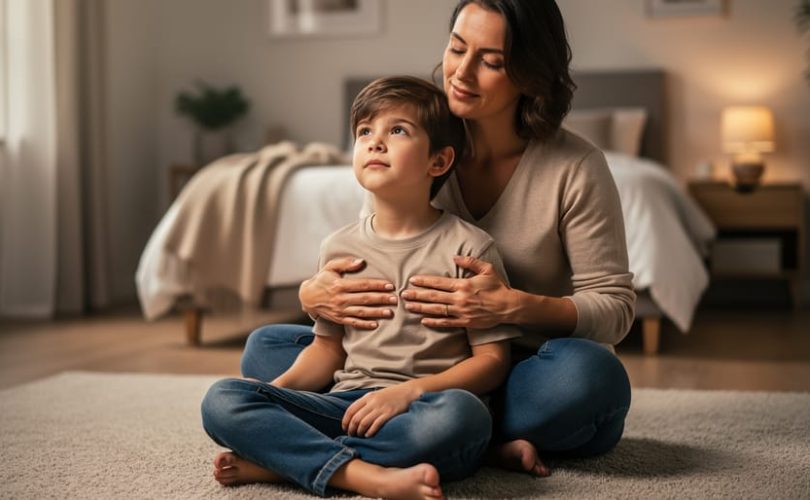
Children of different ages need different levels of guidance to find a comfortable position. For younger children (ages 4-7), lying down often works best because it helps them settle and feel secure. Guide them to lie on their back on a soft surface like a bed or play mat, with arms resting gently a little bit away from their sides and palms facing up. This open position helps their belly rise and fall freely.
Older children (ages 8-11) might prefer to sit with back support in a sturdy chair. Show them how to rest their arms comfortably on the chair arms and place both feet flat on the floor, about hip-width apart. This grounded position gives them stability while keeping them alert and focused.
Teens (ages 12+) benefit from knowing they can practice standing up when needed, before an exam or social event. Whether standing or sitting, the key is feet flat and hip-width apart for balance. Let your child experiment with positions to find what feels most natural. Some children switch between lying and sitting as they grow more confident. The goal is comfort without slouching, so their breath can flow naturally down into their belly.
Removing Physical Restrictions
Before starting any breathing exercise, check that your child isn’t wearing anything that might make deep breathing difficult or uncomfortable. Tight waistbands, belts, or snug clothing around the chest and belly can physically restrict breathing and make it harder for children to feel their breath moving deeply. Ask them to loosen or remove these items, undoing a button, pulling up a loose jumper, or simply letting them change into comfier clothes if needed.
This isn’t about perfection; it’s about removing unnecessary obstacles. A child who feels physically constricted will struggle to focus on their breath and may become frustrated with the exercise itself. Taking thirty seconds to sort out clothing creates a more relaxed starting point and helps children notice the sensations of breathing more easily. The goal is comfort, not rigidity, if your child feels better keeping their shoes on or prefers a cardigan zipped, that’s fine as long as their breathing isn’t restricted.
Age-Appropriate Breathing Techniques: Step-by-Step
For Younger Children (Ages 4-7): Playful Breathing
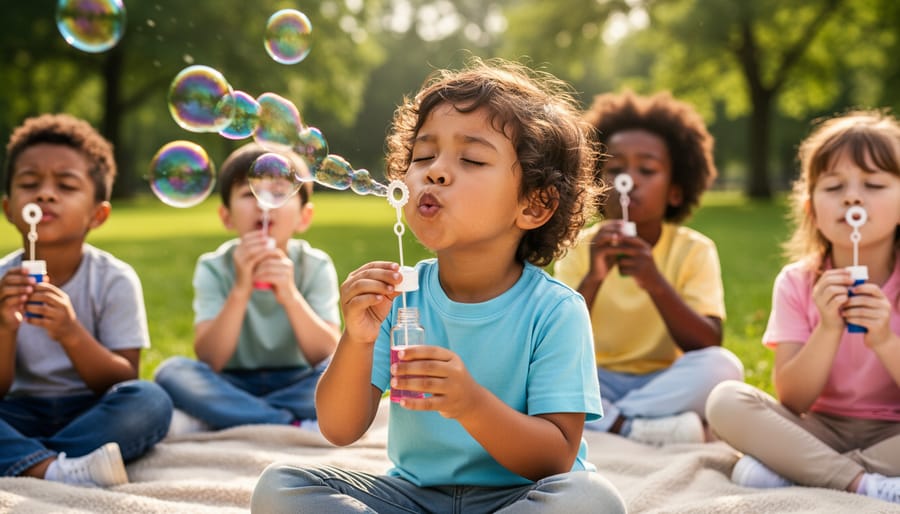
Young children respond best when breathing becomes a game rather than a task. At this age, imagery and playful language transform what could feel like work into something they want to do. The key is keeping instructions simple and using their natural imagination.
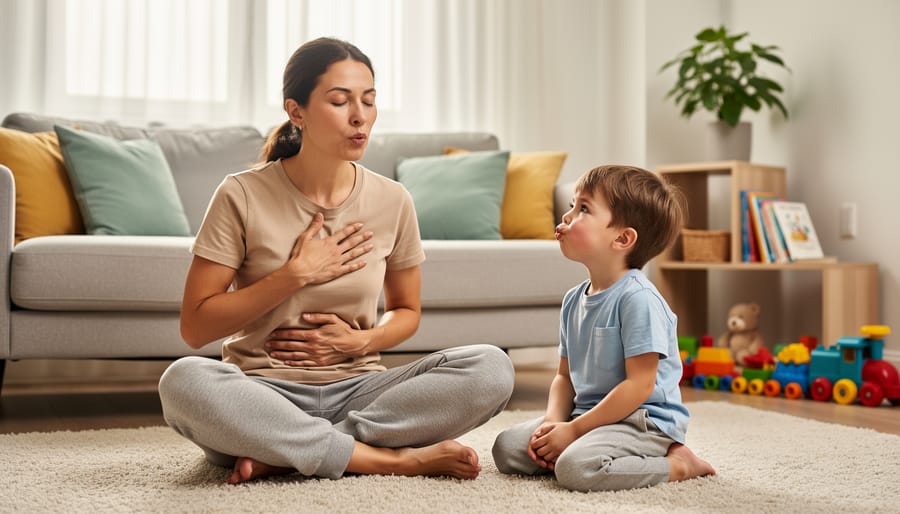
Start with “balloon belly” breathing, which helps children visualize what happens when they breathe deeply. Have your child lie down or sit comfortably, then tell them to imagine their belly is a balloon that fills with air and then deflates. They can place their hand on their tummy to feel it rise and fall, which turns the breath into something they can see and touch. This concrete feedback helps them understand they’re doing it right.
“Smell the flower, blow out the candle” works beautifully for children who struggle with counting. Ask them to breathe in through their nose as if smelling their favourite flower, then breathe out through their mouth like they’re gently blowing out birthday candles. The imagery gives them something familiar to connect with.
For bubble breathing, pretend you’re blowing the biggest, most beautiful bubbles. Breathe in through your nose, then breathe out slowly through your mouth as if you’re trying to make a giant bubble that won’t pop. The slower they breathe out, the bigger the bubble.
Here’s how to guide your child through a playful breathing session:
- Get comfortable lying down, sitting with back support, or standing with feet hip-width apart
- Place one hand on your belly to feel it move like a balloon
- Breathe in gently through your nose for a count of three, or while smelling an imaginary flower
- Breathe out slowly through your mouth for a count of three, or while blowing out pretend candles
- Repeat the pattern for 5 minutes, or for as long as your child can manage without losing interest
Don’t expect perfection. If your child giggles, gets distracted, or breathes too quickly at first, that’s completely normal. Praise any attempt and keep sessions short. Even two minutes of playful breathing counts as practice. The goal is making this feel safe and fun, not achieving perfect technique.
For Middle Childhood (Ages 8-11): Counting and Rhythm
Children in this age group are ready for more structure while still benefiting from a clear, rhythmic approach. They can grasp the concept of counting and timing, which gives them a sense of control during anxious moments. This simplified version of box breathing builds confidence and creates a predictable pattern they can rely on.
The basic counting technique works well before tests, presentations, or any situation where your child feels nervous. Here’s how to teach it:
- Help your child get into a comfortable supported position, sitting in a chair with their back supported or lying down works best. If sitting, both feet should be flat on the floor about hip-width apart.
- Ask them to let their breath flow deep down into their belly, as far as feels comfortable without forcing it.
- Guide them to breathe in gently through their nose while counting slowly to four in their head.
- Then breathe out gently through their mouth while counting slowly to four.
- Continue this pattern for at least 5 minutes, keeping the rhythm steady and gentle.
The key is maintaining a steady, even pace. Some children find it helpful to count on their fingers or tap each finger to their thumb as they count. Others prefer visualizing the numbers appearing in their mind. Let your child experiment to find what works best for them.
If counting to four feels rushed or uncomfortable, try counting to three instead. The goal isn’t perfection but creating a calm, sustainable rhythm. Your child might occasionally lose count or get distracted, that’s completely normal. Just encourage them to notice when their mind wanders and gently return to counting and breathing.
For Teens (Ages 12+): Independent Practice
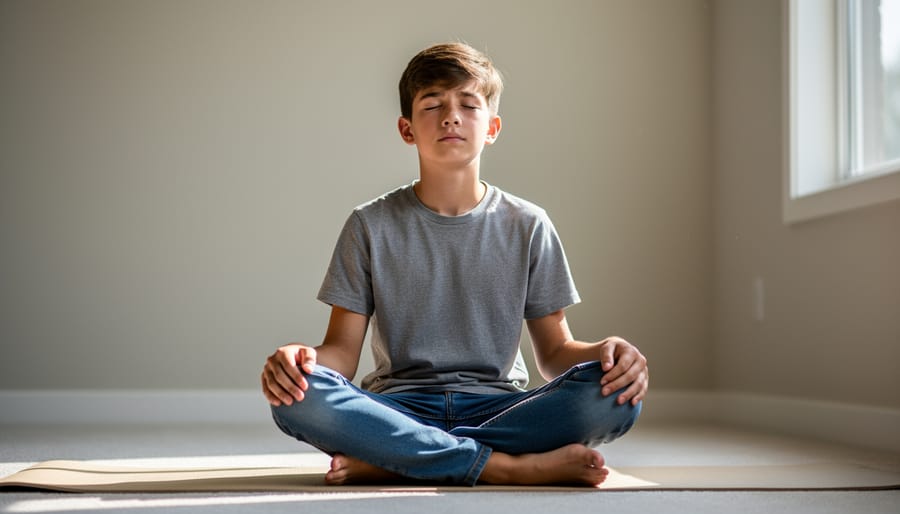
Teens face anxiety triggers everywhere, exams, social pressure, competitive sports, family tensions. The full NHS breathing exercise gives them a powerful tool they can use independently, anywhere, without drawing attention. This technique takes just a few minutes and works in a classroom before a test, backstage before a performance, in the car before a social event, or in their bedroom when overwhelmed.
Teaching your teen this exercise empowers them with genuine control over their anxiety response. They don’t need an app, special equipment, or anyone else present. Once they’ve learned the pattern, they can use it whenever they recognize anxiety building.
Here’s how to guide your teen through the complete technique:
- Choose your position: standing, sitting in a chair that supports your back, or lying on a bed or floor mat. All work equally well.
- Position yourself properly. If lying down, place your arms slightly away from your sides with palms facing up. If sitting, rest your arms on the chair arms. If sitting or standing, place both feet flat on the ground, roughly hip-width apart.
- Loosen anything restrictive, unbutton a tight collar, loosen a belt, remove a tie or scarf. Comfort matters.
- Let your breath flow deep down into your belly as far as feels comfortable. Don’t force it; just allow the breath to settle low.
- Breathe in gently and regularly through your nose.
- Breathe out gently through your mouth. Some teens find counting helps (in for four, out for six), but it’s optional.
- Continue this pattern for at least 5 minutes.
Encourage your teen to practice this daily when calm, not just during crisis moments. Regular practice makes the technique more effective when anxiety hits. Many teens prefer practicing alone in their room, which builds the independence and privacy they value.
Duration and Frequency Guidelines
Start with short, manageable sessions and build from there. The NHS five-minute breathing exercise sets the baseline: aim for at least five minutes of focused practice once you and your child have the technique down.
For younger children just learning, two to three minutes might be plenty at first. You’re building a skill, not testing endurance. Practice once or twice daily when your child is calm, not mid-meltdown. Morning routines or before bed work well because they’re predictable and low-pressure.
As the technique becomes familiar, encourage your child to use it when they actually feel anxious: before school, a sports match, or meeting new people. Consistency matters more than duration. A child who does three minutes every day will see better results than one who manages ten minutes sporadically.
Watch for your child’s cues. If they’re engaged and relaxed, continue. If they’re fidgeting or frustrated, wrap up and try again later. The goal is to make this feel like a helpful tool, not another chore.
How to Know If It’s Working
The clearest signs appear during and immediately after practice. Watch for physical changes: shoulders dropping, jaw unclenching, breathing becoming quieter and slower. You might notice your child’s face softening or their fists opening. These subtle shifts tell you the nervous system is responding.
Observable signs that breathing exercises are helping include:
- Your child appears noticeably calmer after a session
- Heart rate slows (you can gently check their pulse if they’re comfortable with it)
- Shoulders visibly relax and drop from a tense position
- Your child begins asking to do the breathing exercise when feeling anxious
- Improved ability to settle themselves during stressful moments without prompting
Ask simple, open questions rather than yes/no prompts. “How does your body feel now?” works better than “Do you feel better?” Listen for responses like “my tummy feels quiet” or “my head doesn’t hurt as much.” Younger children might need help identifying sensations, so you can guide them: “Do you notice anything different in your chest? Your shoulders?”
The most powerful indicator is when your child reaches for this tool independently. If they ask to practice before a test, suggest breathing when upset with a sibling, or retreat to their room for a quick session, they’ve internalized the technique.
If you’re not seeing any change after two weeks of consistent practice, adjust your approach. Try a different technique from the age-appropriate options, or pair breathing with 1-minute mindfulness exercises. Some children respond better to movement-based regulation.
Seek professional support if anxiety worsens, breathing exercises trigger distress rather than calm, or anxiety interferes significantly with daily activities despite trying these tools. Breathing exercises are helpful, but they’re not a replacement for therapy when a child needs it.
Integrating Breathing into Daily Life and Play
The secret to making breathing exercises work isn’t perfecting the technique, it’s weaving them into moments your child already experiences every day.
Start by anchoring breathing practice to existing routines rather than treating it as a separate task. The few minutes before bed work beautifully: after teeth brushing but before stories, guide your child through their breathing exercise as part of winding down. This consistent timing creates a natural association between breathing and relaxation that reinforces the calming effect.
Physical activity offers perfect teachable moments. Before football practice, dance class, or even playground time, spend two minutes doing breathing exercises together. This primes their nervous system for activity while establishing the habit of using breath to manage pre-performance jitters. After intense play, breathing exercises help children transition from high energy to calm, making homework or dinner time smoother.
Transitions throughout the day are ideal opportunities. In the car before school drop-off, while waiting for an appointment, or during the walk home, these in-between moments let children practice the skill when stakes are low. You’re building muscle memory for the times when anxiety hits unexpectedly.
Make it playful for younger children by turning breathing into a game they initiate. “Should we do balloon bellies before we leave?” gives them ownership. Teens benefit from privacy and independence, teach them the technique, then trust them to use it without hovering.
Consistency matters more than duration. Three minutes every evening beats an ambitious plan that fizzles after a week. Start small, stay steady, and watch breathing become second nature.
Common Questions Parents Ask
What if my child won’t sit still for the full 5 minutes?
Start with just 30 seconds or one minute and gradually build up as your child gets comfortable. Younger children often do better with shorter, more frequent practice sessions throughout the day rather than one long session.
My child says the breathing exercises don’t work. What should I do?
First, check that you’re practicing during calm moments, not in the middle of high anxiety when it’s hardest to learn new skills. Try different techniques to find what resonates with your child, and remember that breathing exercises are just one of many coping mechanisms that can help.
Can breathing exercises replace therapy or professional support?
No. Breathing exercises are a helpful self-regulation tool, but they don’t replace professional mental health support when your child needs it. If anxiety is significantly affecting your child’s daily life, relationships, or school support talk to your pediatrician or a mental health professional.
What if my child seems more anxious when we try breathing exercises?
Stop immediately and try again later in a different setting. Some children initially feel uncomfortable focusing on their breathing, which can temporarily increase anxiety. If this pattern continues, consult with a healthcare professional who can assess whether a different approach would work better for your child.
These questions come up frequently because every child responds differently to breathing exercises. If your child struggles with the techniques at first, that’s completely normal. Practice during peaceful moments like before bed or after a bath, not when anxiety is already high. Consistency matters more than perfection. Even 30 seconds of focused breathing counts as progress.
When breathing exercises become part of your family’s routine, children start using them naturally without prompting. You might notice your teen taking deep breaths before a test, or your younger child “smelling flowers” when frustrated with homework. These small moments show the skill is taking root.
Teaching your child breathing exercises for anxiety isn’t complicated, and you don’t need special equipment or training to get started. These techniques work because they’re rooted in how our bodies naturally calm themselves, and even young children can learn to use them. Start with just a few minutes at a time, perhaps before bed or during a quiet moment in the day, and let your child’s comfort guide the pace.
Progress won’t always be linear. Some days the exercises will feel easier than others, and that’s completely normal. Celebrate the small wins: your child remembering to take deep breaths before a test, asking to do their “bubble breathing” when upset, or simply being willing to try. These moments matter more than perfect technique.
Remember that breathing exercises are one valuable tool in supporting your child’s mental health, not a complete solution on their own. They work beautifully alongside other strategies like physical play, talking about feelings, consistent routines, and professional support when needed. If your child’s anxiety persists, intensifies, or interferes with daily activities, reach out to your GP or a child mental health professional. You’re not alone in this, and seeking help is a sign of strength, not failure.