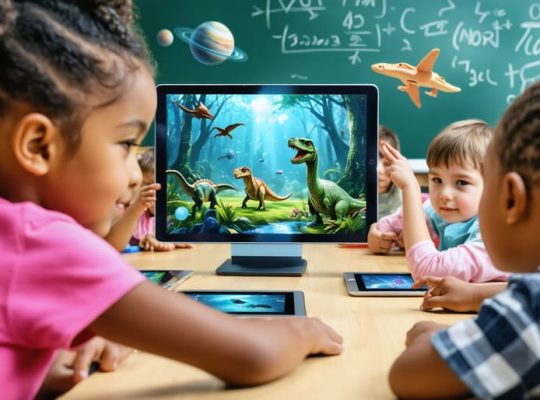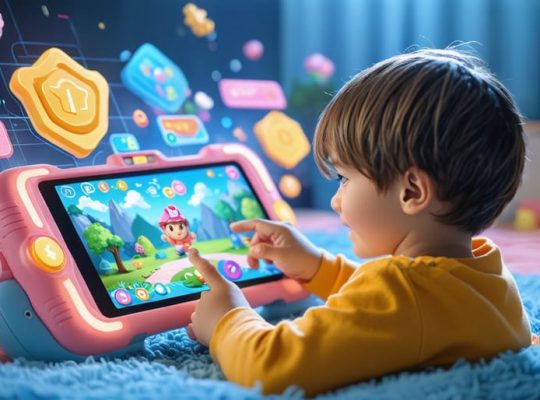
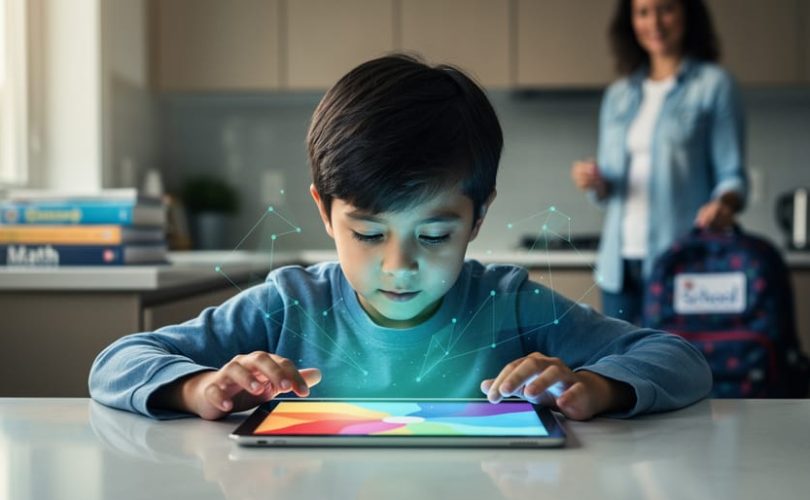
Every morning, millions of children open learning apps that seem to know exactly what they need—adjusting difficulty levels in real-time, suggesting topics that match their interests, and celebrating achievements in ways that feel personal. This is AI-driven personalization at work, a technology rapidly reshaping how our children learn, but one that many parents barely understand.
At its core, AI-driven personalization uses algorithms to analyze how each child interacts with educational content—tracking which problems they solve quickly, where they struggle, how long they focus, and what captures their attention. The system then adapts the learning experience automatically, much like a tutor who adjusts their teaching style for each student. For a child who excels in math but struggles with reading comprehension, the AI might present more challenging math problems while breaking reading passages into smaller, manageable chunks.
This technology promises remarkable benefits: students learning at their own pace without the shame of falling behind, instant feedback that prevents frustration from building, and engagement tailored to individual interests. Yet as parents and educators, we’re right to ask deeper questions. How does constant digital monitoring affect a child’s self-esteem? What happens when algorithms make mistakes about our children’s abilities? Does personalization sometimes mean isolation from collaborative learning experiences that build social skills?
Understanding these technologies isn’t just about keeping up with educational trends—it’s about protecting our children’s mental health while they navigate increasingly personalized digital worlds.
What AI-Driven Personalization Actually Means for Your Child
Imagine a learning companion that truly gets to know your child—not in a intrusive way, but by gently noticing what helps them thrive and what makes them struggle. That’s the heart of AI-driven personalization in learning.
Think of it like this: when your child uses an adaptive reading app, the technology quietly observes how they interact with the material. Does your daughter breeze through phonics but hesitate when tackling comprehension questions? Does your son fly through addition problems but get frustrated with word problems? The AI notices these patterns, just like an attentive teacher would.
Here’s what makes it different from traditional learning. Instead of moving everyone through the same lessons at the same pace, AI-powered platforms adjust in real-time. If a math program detects your child answering three geometry questions incorrectly, it might automatically offer a quick review or present the concept using different visuals or examples. When a child succeeds, the system introduces slightly more challenging material to keep them engaged without overwhelming them.
Many e-learning games now use this technology to create responsive experiences. For instance, when a reading platform senses your child is struggling—maybe they’re taking longer to respond or making repeated errors—it might slow the pace, provide encouraging feedback, or switch to a different teaching approach entirely.
Sarah, a parent from Toronto, shared how her son’s adaptive spelling program recognized his visual learning preference and began showing him more picture associations rather than just repeating word lists. “It was like the app figured out what his teacher had been trying different strategies to discover,” she explained.
The technology isn’t replacing human judgment or connection. Instead, it’s providing another layer of support, helping identify where children need extra help before frustration builds, and celebrating progress in ways that keep learning feeling achievable and positive.
The Mental Health Connection You Might Not See
When Learning Feels Like Failing
Picture a classroom where every child moves through the same material at the same pace, regardless of whether they’re struggling or already mastered the concept. For some children, this becomes a daily reminder that they’re falling behind. When 10-year-old Marcus consistently failed math tests using traditional methods, he started saying “I’m just stupid at numbers”—a heartbreaking example of how repeated academic struggles can chip away at a child’s self-worth.
Educational psychologist Dr. Sarah Chen explains: “When children face material that’s consistently too hard or too easy, they often internalize failure as a personal deficit rather than a mismatch in instruction. This creates learned helplessness, where they stop trying because they believe effort won’t make a difference.”
This is where AI-driven personalization can genuinely change trajectories. By continuously adjusting difficulty levels and presenting concepts through different approaches, these systems help children experience something powerful: success after struggle. When Marcus’s school introduced an adaptive learning platform, it identified his specific gaps and provided targeted support at his pace. Within months, his confidence rebuilt alongside his skills.
Personalized learning doesn’t eliminate challenge—it makes challenge feel surmountable. Children learn that difficulty doesn’t mean inadequacy; it means they’re at their learning edge, exactly where growth happens.
Building Confidence Through Small Wins
AI-powered learning platforms excel at creating momentum through carefully calibrated challenges. By analyzing a child’s performance in real-time, these systems adjust difficulty levels to keep tasks challenging yet achievable. This sweet spot, often called the “zone of proximal development,” helps children experience regular success without becoming frustrated or bored.
Think of it like a video game that adapts to your skill level. When children consistently accomplish tasks that feel meaningful but not overwhelming, they build genuine confidence. Each small victory releases dopamine, creating positive associations with learning and reinforcing the belief that effort leads to success.
Dr. Sarah Martinez, a child psychologist specializing in educational technology, notes: “These incremental wins are incredibly powerful for children who’ve struggled academically. Instead of facing repeated failure, they experience progress daily, which fundamentally shifts their relationship with learning.”
For children with anxiety or low self-esteem, this approach proves particularly valuable. The AI doesn’t judge or compare them to peers—it simply meets them where they are and guides them forward. This creates engaging educational experiences that feel safe and supportive.
Parents often report noticing increased willingness to try new things and improved emotional resilience as children internalize these positive learning experiences. The confidence gained through academic small wins naturally extends into other areas of life.
Real Ways AI Personalization Shows Up in Your Child’s Life
In the Classroom
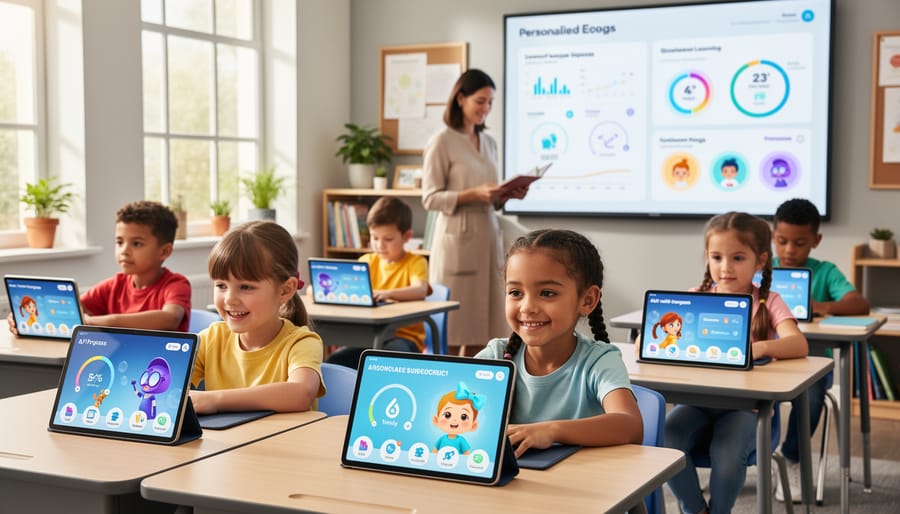
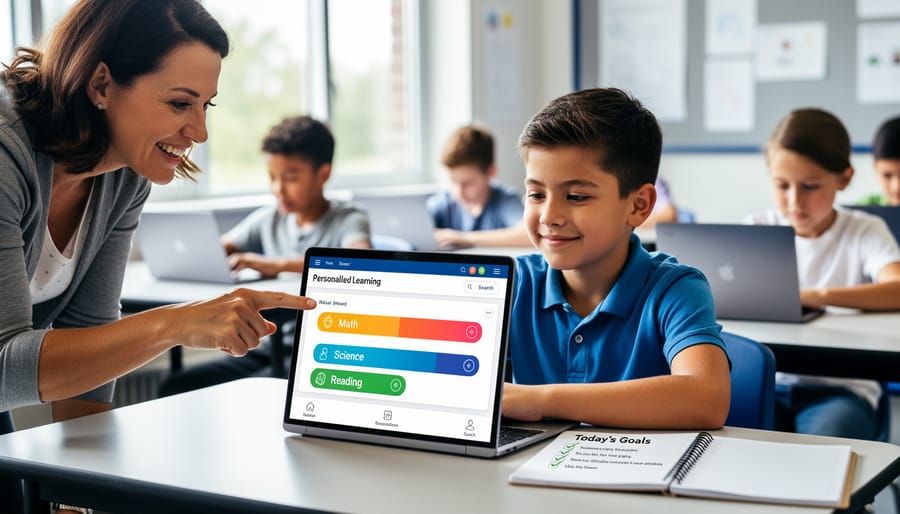
In classrooms across the country, teachers are discovering that AI tools can act like an extra set of eyes, helping them notice when students need support before small challenges become bigger struggles. These systems work quietly in the background, analyzing patterns in homework completion, test performance, and even how long students spend on different questions.
“I used to worry that I was missing signs that a student was falling behind,” shares Maria Chen, a fifth-grade teacher in Portland. “Now, the AI platform alerts me when someone’s reading comprehension scores start dipping or when they’re consistently stuck on certain math concepts. It gives me the chance to check in early.”
What makes this approach particularly valuable for children’s wellbeing is its discretion. Rather than publicly identifying struggling students, AI tools provide teachers with private insights they can act on sensitively. A teacher might quietly offer extra resources, suggest a brief one-on-one session, or adjust assignments to build confidence without the child feeling singled out or embarrassed.
The technology can also identify learning patterns that human observation might miss. For instance, AI might notice that a student performs well on morning assignments but struggles in the afternoon, potentially signaling attention issues, medication timing concerns, or simply the need for a different schedule.
Dr. James Rivera, an educational psychologist, notes that this early identification matters tremendously: “When we catch learning difficulties early and respond with targeted support, we prevent the anxiety and diminished self-esteem that often accompany prolonged academic struggle. Children maintain their confidence and curiosity about learning.”
At Home
Several user-friendly platforms bring AI-driven personalization right to your living room, making learning feel less like homework and more like discovery. Khan Academy Kids adapts to your child’s pace, offering math and literacy activities that adjust in real-time while celebrating small victories—crucial for building confidence and reducing anxiety around learning. The app’s encouraging feedback helps children develop a growth mindset without the pressure of traditional grading.
Duolingo uses AI to personalize language learning journeys, keeping kids motivated through gentle nudges and achievement celebrations. What makes it particularly valuable for emotional well-being is how it removes the fear of making mistakes—children can practice privately, building skills without peer comparison or judgment.
For younger learners, ABCmouse creates customized learning paths across multiple subjects while incorporating emotional learning elements. The platform celebrates effort over perfection, teaching children that learning is a journey rather than a race.
Many parents find success combining these educational apps with AR learning tools that make abstract concepts tangible and exciting. The key is choosing platforms that emphasize progress over perfection and provide regular breaks to prevent screen fatigue.
Dr. Sarah Chen, a child psychologist, suggests: “Look for apps that allow children to revisit challenging concepts without penalty. This builds resilience and reduces learning-related stress.” Remember, the best platform is one your child actually enjoys using—their enthusiasm matters more than fancy features.
What Parents and Caregivers Should Watch For
Signs It’s Working
When AI-driven personalization is truly supporting your child’s learning journey, you’ll notice meaningful changes in both their academic engagement and emotional wellbeing. Perhaps the most telling sign is renewed enthusiasm for subjects they once avoided. Children who previously resisted math or reading may suddenly ask to practice their skills or share what they’ve learned with genuine excitement.
You might also see homework battles diminish significantly. When learning feels achievable rather than overwhelming, children typically approach assignments with less resistance and greater independence. Many parents report that bedtime routines become smoother because kids aren’t carrying the weight of academic frustration into evening hours.
Watch for growing confidence in your child’s language about school. Instead of saying “I’m bad at this,” they might start saying “I haven’t figured this out yet” or “I need more practice with this part.” This shift reflects healthier self-perception and resilience.
Other positive indicators include improved focus during learning time, willingness to tackle challenging problems without immediate frustration, and better retention of material. Some children also show decreased anxiety around tests or assessments because the personalized approach has helped them build actual competency rather than just memorizing information.
Trust your parental instincts. If your child seems happier, more curious, and less stressed about schoolwork, the personalized approach is likely working well for them.
When to Step In
While technology in learning offers incredible benefits, there are times when human intervention becomes essential. Trust your instincts as a parent or caregiver—you know your child best.
Watch for signs that the app is becoming a replacement rather than a support tool. If your child seems more isolated, choosing screen time over social interactions, or if family connections feel strained, it’s time to reassess. Similarly, if you notice increased anxiety around learning, avoidance of the app, or emotional outbursts related to digital activities, these are red flags.
Some situations clearly exceed what technology can provide. When children experience significant anxiety, depression, trauma, or grief, they need the warmth and understanding only human connection offers. Apps cannot read body language, notice subtle emotional cues, or provide the comfort of a caring presence.
Dr. Amanda Chen, a child psychologist, shares: “I’ve seen families where a child’s reading app flagged concerning patterns—withdrawal from activities they once loved. The parents recognized this as a starting point for conversation, not a solution. That awareness led them to seek professional support when their daughter was struggling with bullying.”
If you’re unsure whether your child needs additional help, consult with teachers, school counselors, or mental health professionals. These tools should enhance human connection and support, never replace the irreplaceable value of caring relationships in a child’s life.
The Human Element Still Matters Most
While AI-driven personalization offers remarkable possibilities for learning, it’s essential to remember that technology is just one piece of the puzzle. At its core, every child’s educational journey requires something AI simply cannot provide: genuine human connection, empathy, and emotional understanding.
Think of AI as a highly skilled assistant, not a replacement. Dr. Maria Chen, a child psychologist with fifteen years of experience, puts it this way: “AI can identify that a child is struggling with fractions, but it takes a caring teacher to notice the anxiety in their eyes, the way they hold their pencil a little tighter, or how they’ve started avoiding math class altogether.”
The most effective personalized learning happens when AI insights inform human decisions. When a teacher uses data from an AI system to understand where a student needs help, they can then apply their emotional intelligence to provide support in a way that feels safe and encouraging. A parent might notice their child growing frustrated with an adaptive learning program and know exactly when to step in with a hug, a break, or words of reassurance that help their child push through the challenge.
Sarah, a mother of two, shared her experience: “The learning app told me my son was excelling in reading but falling behind in writing. That information was helpful, but what really made the difference was sitting with him, understanding his fear of making mistakes, and creating a judgment-free space where he felt comfortable trying.”
Mental health professionals also play a crucial role in this ecosystem. They can help families navigate the emotional aspects of learning challenges, recognize when frustration might signal deeper anxiety or attention difficulties, and ensure that personalized learning supports, rather than overwhelms, a child’s wellbeing.
The magic happens when we blend technological precision with human warmth, creating an environment where every child feels truly seen, supported, and understood.
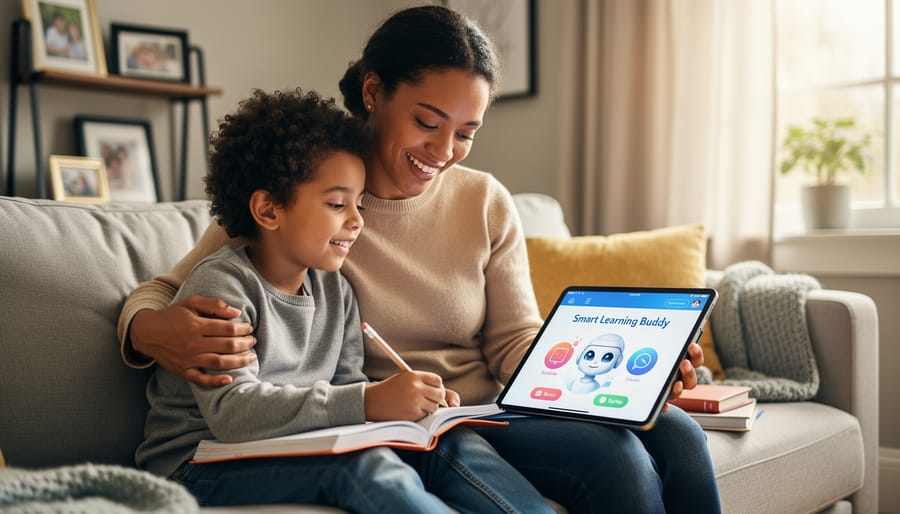
As you navigate the evolving landscape of educational technology, remember that AI-driven personalization is a tool, not a replacement for the human connections that truly nurture your child’s growth. These systems can offer valuable support in identifying learning patterns, adapting to your child’s pace, and even flagging potential concerns, but they work best when integrated thoughtfully into a broader network of care.
Think of AI as an additional team member, one that can handle data analysis and pattern recognition, freeing up more time for teachers to focus on what they do best: building relationships, fostering creativity, and providing emotional support. Similarly, at home, these tools can help you understand your child’s learning journey better, but they can’t replace your encouragement, your listening ear, or your reassuring presence during challenging moments.
Stay curious and engaged with the technology your child uses. Ask questions about how their learning platforms work, review the content together, and most importantly, keep the conversation going. Share what you notice about your child’s responses to these tools with their teachers and healthcare providers. If something doesn’t feel right, whether it’s increased anxiety, withdrawal, or frustration, trust your instincts.
Technology should amplify our ability to support children, not distance us from them. By remaining actively involved and maintaining open dialogue, you can help ensure that AI-driven personalization serves your child’s unique needs while protecting their mental health and wellbeing.