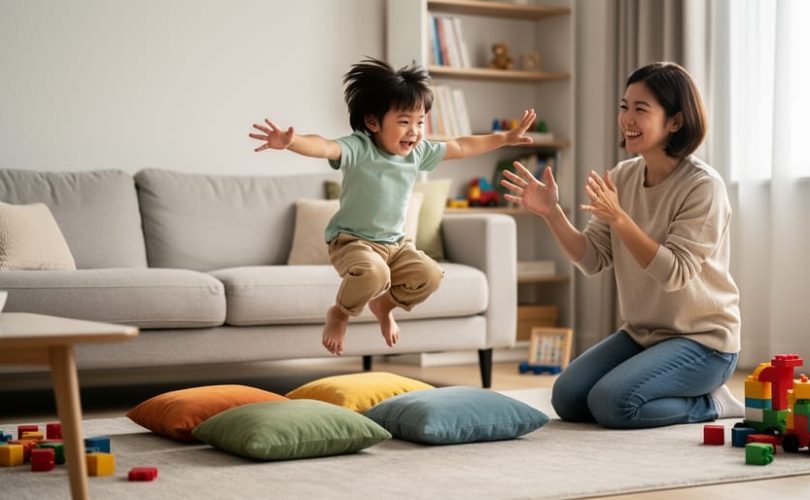
Getting your child moving isn’t complicated. Physical activity for young children works best when it’s built into daily routines through short bursts of play, whether that’s dancing during breakfast, climbing at the playground, or jumping over sofa cushions before bedtime. The key is consistency, not perfection. Most toddlers and preschoolers naturally want to move, and even 10 to 15 minutes of active play several times a day meets their developmental needs while supporting emotional regulation and cognitive growth.
As a parent of a three-year-old, I know the reality: some days flow smoothly, and others dissolve into screen time and snack negotiations. That’s normal. What matters is creating small, repeatable opportunities for movement that don’t require elaborate planning or equipment.
Research consistently shows that early physical activity shapes brain development, builds motor skills, and helps children learn to manage big emotions. When a toddler runs, climbs, or spins, they’re not just burning energy. They’re wiring neural pathways that support focus, resilience, and self-regulation.
This guide walks you through the practical steps to make movement a natural part of your young child’s day. You’ll learn what supplies help (spoiler: very few), how to keep activities safe and age-appropriate, and what to do when weather, space, or energy levels get in the way. Whether you’re working with a cautious climber or a perpetual motion machine, you’ll find strategies that fit your family’s rhythm and your child’s temperament.
Why Physical Activity Matters for Your Young Child’s Mind and Body
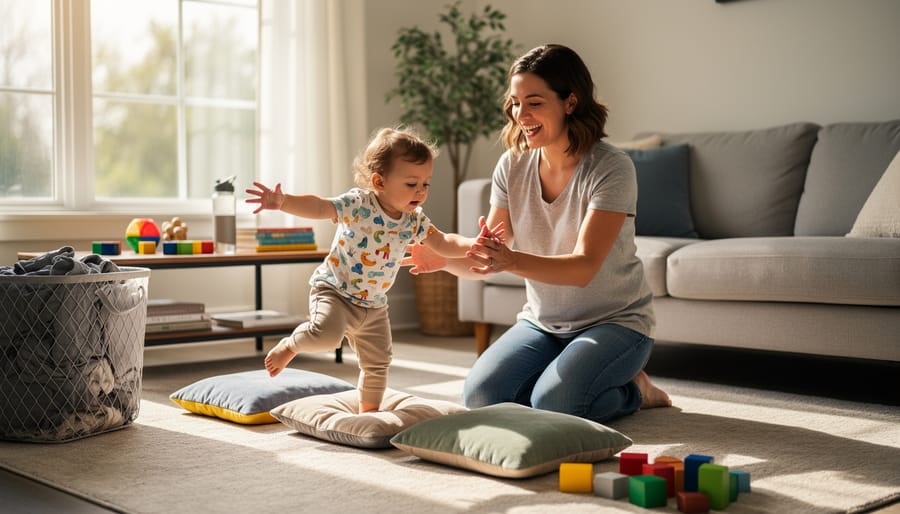
When your toddler spins in circles until they’re dizzy or your preschooler leaps off the couch for the tenth time today, they’re not just burning energy, they’re building their brain. Physical activity in the early years shapes everything from how children move their bodies to how they manage big feelings and connect with others.
Movement helps young children develop fundamental motor skills like balancing, running, climbing, and catching. These physical abilities form the foundation for confidence and independence as they grow. But the benefits reach far beyond muscles and coordination. Active play strengthens the connections between brain cells, supporting memory, problem-solving, and language development. When a child navigates an obstacle course or figures out how to climb onto a chair, they’re practicing spatial reasoning and planning, cognitive skills they’ll use for life.
The mental health benefits are equally powerful. Physical activity helps children regulate their emotions and reduce stress. A child who’s been running, jumping, or dancing is often calmer, more focused, and better able to handle frustration. Active play releases feel-good chemicals in the brain that naturally lift mood and reduce anxiety. It also builds resilience, when children take physical risks in safe environments, they learn they can try new things, fail, and try again.
Current guidelines recommend that toddlers and preschoolers engage in at least 3 hours daily of physical activity spread throughout the day. This doesn’t mean structured exercise classes. It means opportunities to move freely, explore, and play. These active moments also improve sleep quality, helping children fall asleep faster and rest more deeply, which in turn supports their emotional well-being the next day.
Active play is also where children learn to take turns, negotiate games, and navigate conflicts with peers. They discover what their bodies can do, which builds self-esteem and a positive relationship with movement that can last a lifetime.
What You’ll Need to Support Active Play at Home
You don’t need a home gym or expensive equipment to support your child’s physical activity. Most of what you need, you already have, or can find for free.
The essentials are simple: safe space to move, a few open-ended materials, and your presence. Young children thrive when they have room to explore movement on their own terms, whether that’s a corner of your living room, a patch of grass, or a nearby playground.
Safe Spaces First
Clear a spot where your child can roll, crawl, jump, and tumble without hitting sharp corners or fragile items. For infants, a clean blanket on the floor works beautifully for tummy time. Toddlers and preschoolers benefit from a clutter-free zone where they can move freely, push furniture to the edges if needed, or rotate which room becomes the active play space each day.
If you live in an apartment or small home, you’re not at a disadvantage. Hallways become race tracks, couches turn into climbing structures with supervision, and even a bathroom with a non-slip mat can host a dance party. Outdoor spaces like parks, playgrounds, and shared courtyards extend your options, but they’re not required for daily movement.
Simple Materials That Encourage Movement
These everyday items and inexpensive toys support active play across ages:
- Soft balls of various sizes for rolling, throwing, and kicking
- Scarves or lightweight fabric for dancing, peek-a-boo, and parachute play
- Couch cushions or pillows for building obstacle courses and soft landings
- Sidewalk chalk for hopscotch, drawing targets, or creating paths to follow
- Ride-on toys, push toys, or wagons for toddlers developing balance and coordination
- Laundry baskets for crawling through, filling and dumping, or pretend vehicles
- Masking tape for creating floor lines, shapes, or balance beams
Music costs nothing if you have a phone, playlists with different tempos invite dancing, marching, and freeze games. Cardboard boxes become tunnels, boats, or houses that require climbing in and out.
The goal isn’t to fill your home with toys. It’s to offer a few versatile materials that invite your child to move in different ways, then step back and let their imagination lead.
Safety First: Creating a Safe Environment for Active Play
Creating a safe space for active play doesn’t mean wrapping your child in bubble wrap. It means being thoughtful about their environment so they can explore, take small risks, and build confidence with your steady support nearby.
Start by scanning the play area at your child’s eye level. Remove sharp objects, secure furniture that could tip, and clear pathways of tripping hazards like cords or clutter. For infants doing tummy time, a clean blanket on a firm surface works perfectly. Toddlers learning to climb need soft landings, grass, rubber mats, or carpet, and benefit from age-appropriate equipment that’s low to the ground. Preschoolers gain coordination through active play but still need supervision, especially near stairs, water, or playground structures.
Weather matters too. On hot days, play earlier or later, offer water frequently, and watch for flushed cheeks or complaints of feeling too warm. In cold weather, layer clothing and limit outdoor time based on how your child responds. If it’s rainy or icy, move active play indoors using hallways, living rooms, or soft play equipment.
Check surfaces regularly. Outdoor spaces should be free of broken glass, animal waste, or uneven ground that poses fall risks. Indoors, ensure rugs are secured and floors are clear.
Your presence is the most important safety tool. You’re not hovering, you’re available, ready to steady a wobble, redirect away from danger, or simply notice when your child needs a break. That balance between freedom and protection is where confidence grows.
Step-by-Step: Building Physical Activity Into Daily Routines
Start the Day with Movement
Starting the day with even five minutes of movement can set a positive, energized tone for your child, and for you. Think simple: put on a favorite song and have a kitchen dance party while breakfast cooks, or guide your toddler through gentle animal stretches (reach like a cat, stomp like an elephant). For preschoolers, try a quick living room obstacle course using couch cushions to jump over or crawl under. Morning movement helps young children wake up their bodies, regulate emotions after sleep, and transition more smoothly into the day’s activities. It doesn’t need to be elaborate or long. What matters is making it joyful and predictable, so your child begins to associate mornings with feeling good in their body.
Use Active Transitions Throughout the Day
Everyday transitions, getting dressed, moving from room to room, waiting for dinner, are natural openings for quick bursts of movement. Instead of rushing through these moments, invite your child to hop like a bunny to the bathroom, crawl like a bear to the toy box, or do three jumps before getting in the car. These tiny pockets of activity add up throughout the day without requiring extra time or planning. Try “freeze dance” while you prepare lunch, or have your toddler march in place while you gather shoes. Even transitions around meals can support both movement and mindful eating a few stretches or deep breaths before sitting down helps children arrive at the table calm and regulated, ready to focus on their food.
Prioritize Outdoor Time When Possible
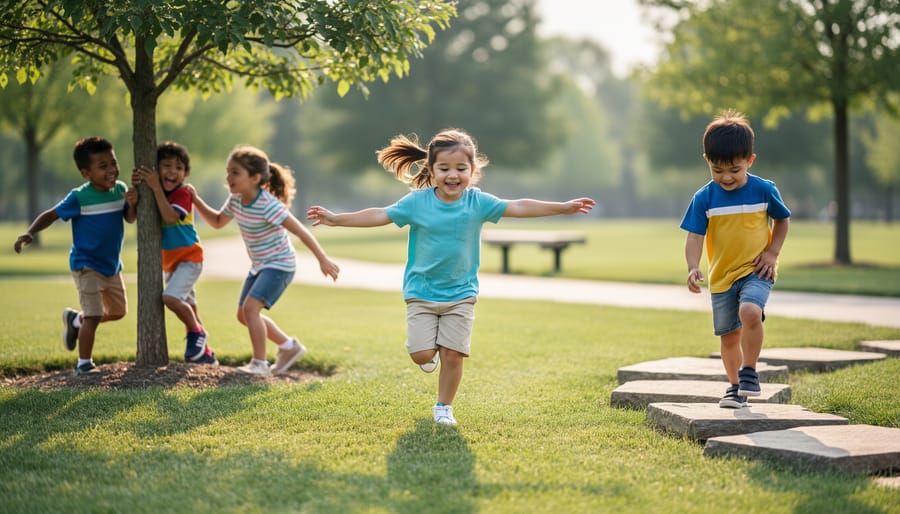
Outdoor time offers unique benefits that indoor play can’t fully replicate, natural light supports mood and sleep cycles, varied terrain challenges balance and coordination, and open spaces invite loud, big-body movements that small children crave. Even 10 to 15 minutes outside makes a difference for emotional regulation and sensory development.
If you have a backyard, let your child explore freely: digging, collecting sticks, watching clouds. No yard? Walk to a nearby park, play on the sidewalk with chalk, or simply step outside to jump in puddles or run in circles. On harsh weather days, bring the outdoor spirit inside, open windows, set up an indoor “nature walk” with textured materials, or dance energetically in a clear space. The goal isn’t perfection; it’s giving your child regular access to movement, fresh air, and a change of scenery whenever you can manage it.
Include Short, Focused Play Sessions
Brief, intentional bursts of movement can be just as valuable as long outdoor sessions, especially when your day feels packed. Setting aside 10 to 15 minutes for focused active play gives your child concentrated time to move their body, connect with you, and burn energy in a way that supports both physical development and emotional regulation.
These mini-sessions work best when they’re simple and joyful. Put on a favorite song and dance together, create a quick indoor obstacle course with couch cushions, play follow-the-leader with silly movements, or toss a soft ball back and forth. The key is engagement, not perfection. Your presence and enthusiasm matter more than the activity itself.
If your child resists structured play, follow their lead. Let them choose the game or movement. Some days might be wild and giggly; others, quieter and more exploratory. Both count. These short sessions teach children that movement is fun, not a chore, and that’s a gift that lasts well beyond early childhood.
Wind Down with Gentle Movement
After active play, your child’s body and mind need help shifting into a calmer state. Gentle movement before naps or bedtime acts as a bridge between activity and rest, helping young children regulate their nervous systems and support emotions after a busy day.
Try slow stretches like reaching for the sky and melting down to touch toes, or simple yoga poses, child’s pose, butterfly, and cat-cow work beautifully with toddlers and preschoolers. You can guide them with your own movements or make it a quiet game (“Let’s be sleepy cats”). Keep your voice soft and movements slow.
Sensory activities also calm: rolling a soft ball gently back and forth, tracing shapes on each other’s backs, or swaying together to quiet music. These activities lower heart rates, release tension, and signal that it’s time to wind down, making transitions to sleep smoother and less stressful for everyone.
Age-Specific Activity Ideas for Infants, Toddlers, and Preschoolers
Every child’s developmental journey is unique, and the best physical activities meet them exactly where they are. What looks like simple play to you is actually building your child’s brain, body awareness, and emotional regulation skills. The key is offering opportunities that feel like fun, not forced exercise.
Infants (0-12 months)
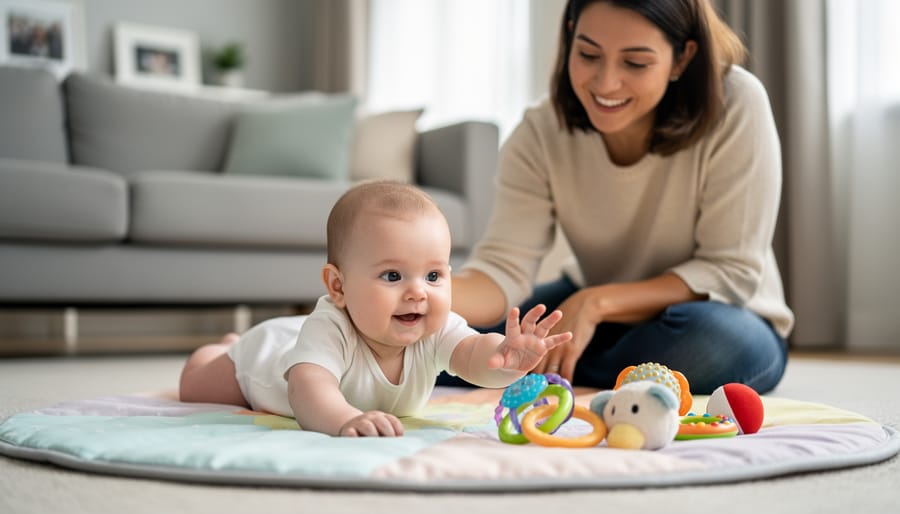
Movement for babies centers on exploration and building foundational skills. Tummy time is your starting point, try placing a colorful toy just out of reach to encourage stretching and reaching, or get down on the floor at their level and make silly faces to keep them engaged. As they grow stronger, hold their hands while they practice standing, or create a safe space where they can roll, scoot, and eventually crawl toward interesting objects. Music and gentle bouncing in your arms help babies experience rhythm and balance. Even something as simple as gently moving their legs in a bicycle motion during diaper changes counts as movement.
Toddlers (1-3 years)
This age group thrives on movement that lets them test new skills and burn endless energy. Set up a simple obstacle course using couch cushions to climb over, blankets to crawl under, and tape lines on the floor to walk along. Dance parties are magic at this age, put on music and let your toddler lead with jumping, spinning, and marching. Ball play develops coordination: try rolling a ball back and forth, kicking a soft ball in the backyard, or tossing bean bags into a laundry basket. Push and pull toys, climbing on safe furniture, and pretend play that involves movement (being animals, vehicles, or community helpers) all count. Water play, whether it’s splashing in a small pool or pouring at the sink, engages their whole body.
Preschoolers (3-5 years)
Older preschoolers are ready for more complex movement patterns and imaginative play. They love games with simple rules like freeze dance, red light green light, or Simon Says with active commands. Create backyard or living room challenges: how many times can you hop on one foot, can you walk backwards, can you balance on a low beam or curb? Tricycles, scooters, and climbing structures let them practice skills independently. Pretend play becomes richer, building forts, acting out stories, playing chase games, or creating their own obstacle courses. Many preschoolers enjoy helping with physical tasks like gardening, washing the car, or carrying groceries.
- Infants: Tummy time with toys, supported standing, gentle bouncing, floor exploration
- Toddlers: Cushion obstacle courses, dance parties, ball rolling and kicking, push toys, animal walks
- Preschoolers: Freeze dance, tricycle riding, climbing, balance challenges, imaginative active play
Remember that these are starting points, not requirements. Some babies skip crawling entirely. Some toddlers prefer quieter movement. Some preschoolers need more support with coordination. Watch your child’s cues, follow their interests, and trust that any movement they enjoy is valuable. If your child consistently avoids physical activity or seems significantly behind peers in motor skills, mention it at their next checkup, but don’t compare them to developmental charts obsessively. The goal is helping your unique child discover the joy of moving their body.
How to Know Your Child Is Getting Enough Activity
Most parents worry they’re not doing enough, but recognizing healthy activity patterns in your young child is simpler than you might think. According to 2026 guidelines, toddlers and preschoolers need about three hours of physical activity spread throughout the day, and that includes all movement, not just structured exercise. If your child is playing, exploring, and moving naturally during their waking hours, they’re likely meeting those needs.
Look for these signs that your child is getting enough movement: they fall asleep relatively easily at night, wake rested, and maintain fairly stable moods during the day. Active children show curiosity about their environment, engage readily in play, and can focus on activities appropriate for their age. You’ll notice they transition between energetic play and quieter activities naturally, rather than appearing constantly restless or unusually lethargic.
Pay attention to how your child regulates emotions. Kids who move regularly throughout the day tend to handle frustration better and recover from upsets more quickly. Physical activity supports mental wellness by giving children an outlet for big feelings and helping their bodies process stress.
If your child seems generally happy, sleeps well, and shows interest in their surroundings, you’re probably doing just fine. There’s no perfect formula, and every child’s activity needs vary slightly based on temperament, development, and energy levels. The goal isn’t to hit an exact number but to create a life rich with opportunities for joyful movement.
What to Do When Your Child Resists or Seems Uninterested
Not every child will leap into active play with enthusiasm, and that’s completely okay. Some young children naturally gravitate toward quieter activities like reading, drawing, or building. Others may hold back because of sensory sensitivities, developmental differences, or simply temperament. If your child resists movement or seems uninterested, it doesn’t mean you’re failing, it means you need a different approach.
Start by following your child’s lead. If they love dinosaurs, turn movement into a dinosaur stomp game. If they’re drawn to music, try gentle swaying or instrument play before working up to dancing. The goal is to meet them where they are, not force them into activities that feel overwhelming or boring.
Involve your child in choosing activities. Offer two simple options: “Should we hop like bunnies or crawl like bears?” Giving them control reduces resistance and builds confidence. Keep sessions short, five minutes of engaged play beats a dreaded 20-minute struggle.
Pay attention to sensory needs. Some children dislike loud environments, rough textures, or unpredictable movement. If your child seems anxious during active play, try calmer alternatives like stretching, water play, or slow-motion animal walks. A pediatric occupational therapist can offer personalized strategies if sensory issues are significant.
Remember that progress isn’t linear. A child who resists today might surprise you tomorrow. Celebrate tiny wins, a few extra steps, a moment of laughter during play, or willingness to try something new. If concerns about your child’s activity level or motor development persist, talk with your pediatrician. They can help determine whether additional support or evaluation is needed.
Your patience and creativity matter far more than perfection.
Frequently Asked Questions About Physical Activity in Early Childhood
How much physical activity does my young child really need?
Current guidelines recommend that toddlers and preschoolers get about three hours of physical activity spread throughout the day, but this doesn’t mean formal exercise. It includes all movement, walking, playing, climbing, dancing, and active games, woven naturally into daily life.
Can screen time replace active play if my child is watching movement-based shows?
No. While movement shows can occasionally inspire play, they don’t provide the sensory feedback, social interaction, problem-solving, and emotional regulation that come from actual physical activity. Screen time is passive, even when it features active content, and it can’t substitute for the developmental benefits of real movement.
What if we don’t have outdoor space or live in a small apartment?
You can create meaningful movement opportunities indoors with creative use of space. Dance parties, hallway obstacle courses with pillows, balloon batting, animal walks across the living room, and trips to nearby parks or indoor play spaces all count as valuable physical activity.
What if my child has a disability or developmental delay?
Physical activity remains essential and beneficial for all children, though it may look different. Work with your child’s healthcare team or therapists to identify safe, enjoyable movement opportunities that match your child’s abilities and interests, and remember that any movement, at any pace, supports their development and wellbeing.
These questions reflect what parents frequently worry about, and the answers are meant to ease your concerns rather than add to them. Many caregivers wonder whether they need to enroll their child in structured sports or classes to meet activity needs. The truth is that organized sports are not necessary in the early years. Young children benefit most from unstructured, exploratory play where they can move freely, make choices, and follow their curiosity. Formal classes can be fun if your child enjoys them, but they are not a requirement for healthy development.
The question of balancing safety with exploration is one that almost every parent navigates. You want your child to take risks, build confidence, and learn their physical limits, but you also want to keep them safe. The key is to create a safe-enough environment where minor bumps and tumbles can happen without serious harm, then step back and let your child test their abilities. Supervise closely, especially with infants and toddlers, but resist the urge to intervene at every wobble. Children learn resilience and body awareness through small challenges, and your calm presence gives them the security to try.
If your child consistently resists movement or seems anxious during active play, trust your instincts. Some children need more time to warm up, while others may have sensory sensitivities or motor planning difficulties that make physical activity uncomfortable. Speak with your pediatrician if you have ongoing concerns. There is no single right way for a child to be active, and your role is to support their unique path toward joyful movement.
Supporting physical activity in early childhood doesn’t require a perfect routine, expensive gear, or a packed schedule. It simply asks that you create space for your child to move, explore, and play in ways that feel natural and joyful. Every time you turn on music for an impromptu dance party, spread out cushions for climbing, or spend ten minutes at the park, you’re doing something profound: you’re helping your child build confidence, regulate their emotions, and develop a healthy relationship with movement that can last a lifetime.
There will be days when things don’t go as planned. Your toddler might refuse to go outside, or your preschooler might choose books over ball play. That’s okay. Progress isn’t measured in daily checklists but in the overall pattern you’re creating, one where movement is woven into life as something fun, safe, and always available.
Start where you are. Notice the small victories. Trust that by prioritizing play and presence, you’re giving your child exactly what they need. You’re not just supporting their physical development; you’re nurturing their mental health, their curiosity, and their belief that their body is capable and worthy of care. That foundation is one of the greatest gifts you can offer.