QEEG training, also called brain mapping neurofeedback, uses real-time measurements of your child’s brain wave patterns to guide personalized therapy sessions that can help address conditions like ADHD, anxiety, and learning challenges. The process starts with a painless brain scan that creates a detailed map showing where your child’s brain activity differs from typical patterns, then uses that information to design targeted neurofeedback exercises. Most children complete 20 to 40 sessions over several months, though you may notice improvements in focus or mood within the first 8 to 12 sessions.
If you’re reading this, chances are you’ve already tried multiple approaches for your child’s mental health struggles. Maybe medication helped but came with side effects you weren’t comfortable with long-term. Or perhaps traditional therapy made some progress, but you’re still seeing daily challenges with attention, emotional regulation, or behavior. Parents often discover QEEG training when searching for options that work with your child’s developing brain rather than simply managing symptoms.
The science behind this approach has grown considerably since early neurofeedback studies, and many parents report meaningful changes in their children’s daily functioning. But understanding what QEEG training actually involves, how to access it safely, and what realistic neurofeedback results look like can feel overwhelming when you’re just starting your research. This guide walks you through exactly what you need to know, from finding the right practitioner to tracking your child’s progress, so you can make an informed decision about whether this treatment fits your family’s needs.
Understanding QEEG Brain Mapping: What Parents Need to Know
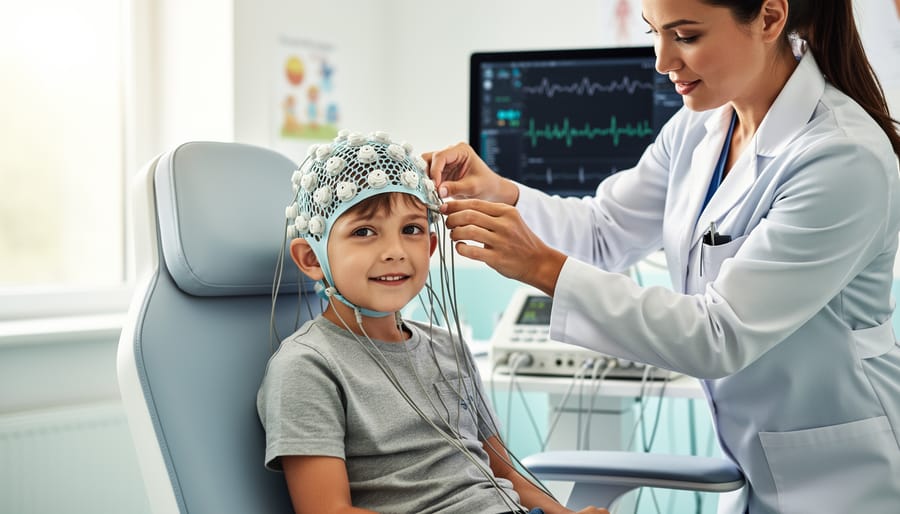
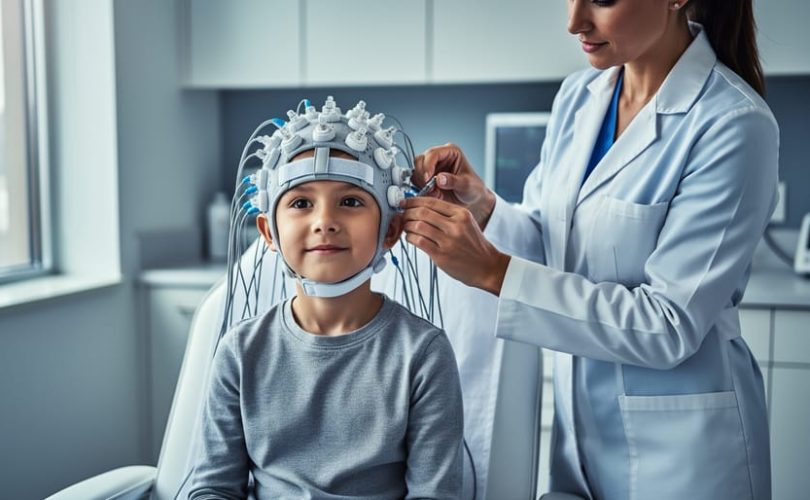
Quantitative electroencephalography might sound intimidating, but the process is actually quite straightforward. Think of it as creating a detailed map of your child’s brain activity, similar to how an X-ray creates an image of a bone. While your child sits quietly, sensors placed on their scalp measure electrical signals produced by brain cells communicating with each other. These signals, called brainwaves, have different speeds and patterns that relate to various mental states like focus, relaxation, or sleep.
The brain map doesn’t read thoughts or diagnose conditions on its own. Instead, it reveals whether certain brainwave patterns are unusually strong or weak compared to what’s typical for your child’s age. A child with ADHD might show excessive slow-wave activity in areas related to attention, while a child with anxiety might display too much fast-wave activity in emotional regulation regions. This information becomes the foundation for designing a personalized neurofeedback program.
During the actual mapping session, your child will experience a painless, non-invasive procedure that typically unfolds like this:
- A technician measures your child’s head and marks where sensors will go
- Small sensors are attached to the scalp with a gel or paste that washes out easily
- Your child sits in a comfortable chair and relaxes while the equipment records brain activity
- The recording usually lasts 15 to 30 minutes, during which your child might close their eyes, open them, or perform simple tasks
- Sensors are gently removed and your child’s hair is cleaned
Most children tolerate the process well once they understand nothing will hurt. The sensors don’t send electricity into the brain; they only listen to signals the brain naturally produces. Some kids find the gel in their hair annoying, but that’s usually the biggest complaint. Younger children sometimes get fidgety during the quiet sitting, so bringing a favorite stuffed animal for comfort can help.
After this assessment, the provider analyzes the data over several days, comparing your child’s patterns to research databases. That analysis shapes the neurofeedback training plan. The assessment itself is a one-time snapshot, while neurofeedback training involves multiple sessions where your child learns to shift their brainwave patterns through real-time feedback. One creates the roadmap; the other is the journey of actually changing brain function through repetition and practice.
What You’ll Need Before Starting QEEG Training
Finding a Qualified QEEG Provider
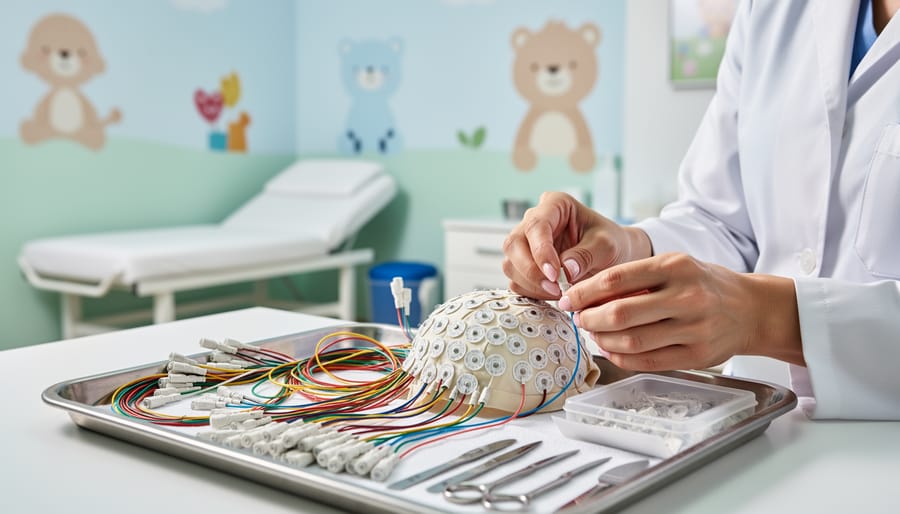
Finding the right provider is crucial because QEEG interpretation requires specialized training beyond basic neurofeedback certification. Start by looking for practitioners with Board Certification in Neurofeedback (BCN) from the Biofeedback Certification International Alliance (BCIA). This certification demonstrates they’ve completed required coursework, supervised practice hours, and passed a comprehensive exam.
Beyond BCIA certification, ask specifically about QEEG training. Many neurofeedback practitioners don’t have formal QEEG certification. Look for providers who’ve completed courses through organizations like the QEEG Certification Board or have extensive mentored training in brain mapping analysis. The International Society for Neurofeedback and Research (ISNR) maintains a directory where you can search for certified practitioners.
Pediatric experience matters enormously. Ask how many children they’ve worked with, what age ranges, and which conditions. Request references from other parents if you’re comfortable doing so. A provider experienced with adult anxiety may not understand the developmental considerations for treating a seven-year-old with ADHD.
Verify credentials directly through BCIA’s online registry rather than relying solely on certificates displayed in an office. Legitimate providers welcome these questions and understand that careful vetting protects your child.
Documents and Information to Gather
Before your first QEEG appointment, you’ll want to compile a comprehensive picture of your child’s health and development. Start with medical records from your pediatrician, particularly any diagnoses related to mental health, learning, or neurological concerns. Include documentation of current medications, both prescription and supplements, with dosages and how long your child has been taking them.
School reports offer valuable insight into how symptoms show up in daily life. Gather recent report cards, teacher observations about attention or behavior, and any Individualized Education Programs (IEPs) or 504 plans. Previous psychological or educational testing, like ADHD evaluations, learning disability assessments, or speech and occupational therapy reports, helps the provider understand what’s already been tried and what patterns emerged.
Don’t overlook family history. Mental health conditions, learning differences, and neurological disorders often run in families, and this context helps providers interpret your child’s brain map more accurately. Jot down any relatives with ADHD, anxiety, depression, autism, or seizure disorders.
Finally, prepare your own observations. Keep notes for a week or two before the appointment about specific challenges: when symptoms are worst, what helps, sleep patterns, and how your child responds to structure or transitions. These real-world details often reveal patterns that formal testing misses.
Preparing Your Child for the Process
Explaining QEEG to your child requires honesty balanced with reassurance. For younger children, you might say, “We’re going to measure your brain’s energy, kind of like how a doctor listens to your heartbeat.” Teens often respond to straightforward explanations about improving focus or managing stress.
Address fears directly. The sensors stick on with gel or paste, but there’s no pain, no needles, and no electricity going into the body. Your child simply sits still and watches something interesting while the computer learns about their brain patterns.
Set realistic expectations. Most children don’t notice dramatic changes right away. Improvements typically emerge gradually over several weeks or months of training. Frame it as a process, not a quick fix, and remind them that some days will feel easier than others.
Important Safety Considerations and When QEEG May Not Be Appropriate
QEEG training is generally safe and noninvasive, but it’s not right for every child or every situation. Before starting, you need to consider your child’s specific medical history and current treatments.
Children with seizure disorders or epilepsy require particular caution. While QEEG training doesn’t typically trigger seizures, certain visual stimuli used during neurofeedback sessions might pose risks for photosensitive individuals. Always get clearance from your child’s neurologist first. Similarly, if your child recently experienced a head injury or concussion, wait until they’ve fully recovered and been medically cleared before beginning training.
Some medications can affect brainwave patterns, which may complicate the QEEG mapping process. This doesn’t necessarily mean your child can’t do QEEG training, but the provider needs to know about all medications to interpret results accurately. Stimulants, antidepressants, and mood stabilizers all influence brain activity in ways that must be accounted for during analysis.
That warning points to important red flags. Be cautious of any provider who promises to cure your child’s condition, guarantees specific results, or pressures you to discontinue established treatments. Legitimate practitioners view QEEG training as complementary to traditional care, not a replacement. They’ll work alongside your child’s existing treatment team, not against them.
QEEG training works best when integrated with other supports, much like how a quick mental health screening helps identify needs that require deeper evaluation. Similarly, modern diagnosis tools complement rather than replace clinical judgment.
If your child is in crisis, experiencing severe symptoms, or hasn’t yet received a proper evaluation, seek traditional mental health treatment first. QEEG training can enhance ongoing care, but it shouldn’t delay necessary interventions.
The QEEG Training Process: Step-by-Step
Step 1: Initial Consultation and Assessment
The first meeting with a QEEG provider typically lasts 60 to 90 minutes and focuses on understanding your child’s complete picture. You’ll discuss your primary concerns, whether it’s difficulty focusing at school, anxious thoughts at bedtime, or emotional outbursts, and how long these challenges have been present.
The provider will ask detailed questions about your child’s developmental history, any diagnoses they’ve received, current medications, sleep patterns, and academic performance. They’ll want to know what you’ve already tried and what worked or didn’t. Many providers also ask about family mental health history, since brain patterns can run in families.
This conversation helps determine whether QEEG training makes sense for your child’s specific situation. Some children benefit more from other interventions first, and a good provider will tell you honestly if that’s the case. You’ll leave with a clear sense of next steps and whether to proceed with brain mapping.
Step 2: The QEEG Brain Mapping Session
The brain mapping session itself is typically quick and completely painless. Your child will sit in a comfortable chair while a technician places sensors on their scalp using a snug cap or individual electrodes held in place with conductive paste. The paste washes out easily with shampoo, though fair warning, it can feel a bit goopy and cold.
During the 15 to 30-minute recording, your child simply sits quietly while their brain does its normal thing. They might watch a calming video, look at a fixed point, or close their eyes for portions of the recording. Some providers also record during a simple focus task, like reading or playing a game. There’s no shock, no sound, and nothing entering the brain, the sensors just listen to the electrical activity already happening.
Most kids handle this easily, though wiggly younger children might need short breaks. After recording, the sensors come off, and you’re done. The provider will explain when to expect the analysis results, usually within one to two weeks.
Step 3: Analysis and Treatment Planning
After the brain map session, the provider begins a detailed analysis that typically takes one to two weeks. They’ll compare your child’s brainwave patterns against age-matched normative databases, essentially looking at how your child’s brain activity differs from typical patterns for children their age. This QEEG normative database comparison helps identify specific areas where brain activity may be too fast, too slow, or poorly coordinated.
The provider then connects these patterns to your child’s symptoms. For example, excessive slow-wave activity in frontal regions often correlates with attention difficulties, while overactive fast waves might relate to anxiety. Using this information, they design a personalized neurofeedback protocol targeting the specific brainwave patterns that need adjustment. You’ll usually receive a follow-up appointment to review the findings, see visual maps of your child’s brain activity, and discuss the recommended training approach before sessions begin.
Step 4: Beginning Neurofeedback Training Sessions
Once the treatment plan is ready, your child begins regular neurofeedback sessions. Most sessions last 30 to 45 minutes and happen two to three times weekly at the start. Consistency matters more than intensity, brains learn new patterns through repetition, much like practicing an instrument.
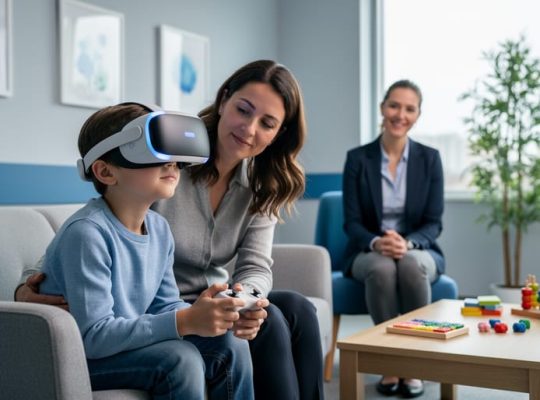
During each session, your child sits comfortably with sensors on their scalp, similar to the initial mapping. They watch videos, play games, or listen to music that responds in real-time to their brainwave activity. When their brain produces the desired patterns, the video plays smoothly or the game advances. When patterns drift off-target, the screen dims or the game pauses. This instant feedback teaches the brain to self-regulate without conscious effort.
The process feels effortless to children. They’re simply enjoying entertainment while their brain does the learning. Providers use this positive reinforcement approach because it keeps kids engaged and motivated across multiple sessions, making the neurological changes possible.
Step 5: Monitoring Progress and Adjusting Protocols
Your provider will track your child’s response through multiple channels. You’ll likely complete brief symptom checklists before each session, rating things like focus, emotional regulation, sleep quality, and behavioral concerns. These snapshots help identify subtle improvements you might not notice day-to-day.
Teachers often provide valuable input too, since they see patterns in classroom attention and social interaction. Many providers ask for simple weekly behavior logs, nothing elaborate, just notes on homework completion, meltdowns, or positive changes.
Most clinicians recommend a follow-up brain map after 20-40 sessions to measure actual changes in brainwave patterns. Comparing the new map to your baseline reveals whether the training is shifting the underlying patterns that contributed to symptoms.
Based on this combined feedback, your provider may adjust protocols, changing reward frequencies, session duration, or targeted brain regions. This personalization is what distinguishes QEEG-guided neurofeedback from one-size-fits-all approaches. Open communication about what you’re observing at home makes these adjustments more effective.
How to Know If QEEG Training Is Working

One of the most challenging aspects of QEEG training is knowing whether it’s actually helping your child. Unlike medication that might show effects within days, neurofeedback requires patience and careful observation over weeks or months.
Most children need 10 to 20 sessions before parents notice meaningful changes. Some kids show subtle improvements earlier, while others need 30 or more sessions to reach their goals. This timeline varies based on your child’s specific condition, the severity of symptoms, and how consistently they attend sessions. Setting realistic expectations from the start helps you stay committed through the initial weeks when progress may feel invisible.
What improvement looks like depends on why you sought QEEG training. For ADHD, you might notice your child completing homework with less prompting, remembering multi-step instructions better, or sitting through dinner without constant fidgeting. Anxiety improvements often show up as fewer complaints about stomachaches before school, willingness to try new activities, or falling asleep more easily. Children working on mood regulation might have fewer explosive outbursts, recover more quickly after disappointments, or express their feelings in words rather than through behavior.
Track these changes systematically at home. Keep a simple journal noting specific behaviors: How many times did you redirect your child during homework? How many nights did bedtime go smoothly? How did they handle frustration when losing a game? Concrete examples help you see patterns that might otherwise blur together. Ask teachers to share observations too, since improvements often appear in the classroom before parents notice them at home.
Observable signs of progress might include:
- Improved focus during homework or reading time
- Fewer emotional meltdowns or quicker recovery after upset
- Better sleep patterns, including falling asleep faster and waking less often
- Increased participation in class discussions or group activities
- Improved grades or teacher reports about behavior
Your provider should re-map your child’s brain after 20 to 40 sessions to measure actual changes in brainwave patterns. These objective measurements, combined with your observations and your child’s self-reports, paint the complete picture.
If you’re not seeing progress after 20 sessions, talk honestly with your provider. They may adjust the protocol, increase session frequency, or recommend pausing to try a different approach. Not every child responds to neurofeedback, and recognizing that early saves time and resources. Share all observations, both positive and concerning, with your child’s pediatrician, therapist, or psychiatrist so everyone stays coordinated about next steps.
Common Questions Parents Ask About QEEG Training
When you’re considering QEEG training for your child, you likely have dozens of questions swirling through your mind. You’re not alone, every parent I’ve spoken with has wanted to know the same core things before moving forward. Here are the answers to the questions that come up most often.
How long does QEEG training typically take?
Most children need 20 to 40 sessions to see meaningful, lasting improvements, though some notice changes earlier. The timeline varies based on your child’s specific challenges and how their brain responds to training.
Will insurance cover QEEG training?
Coverage varies widely by insurer and state. Some plans cover neurofeedback under mental health benefits, while others don’t, you’ll need to check your specific policy and get pre-authorization if possible.
Is the process painful or frightening for children?
Not at all. The sensors simply rest on your child’s scalp to record brain activity, there are no shocks, no needles, and nothing uncomfortable. Most kids find the training sessions relaxing, like playing a calm video game.
Can QEEG training replace my child’s medication?
No, you should never stop prescribed medications without your doctor’s guidance. QEEG training works best as a complement to other treatments, and any medication changes should be made gradually with your prescriber’s involvement.
What conditions respond best to QEEG training?
Research shows promising results for ADHD, anxiety disorders, and certain mood regulation challenges. Children with consistent practice and supportive home environments tend to see the best outcomes.
How do we maintain improvements after training ends?
The brain changes from neurofeedback can be lasting, but maintaining healthy sleep, nutrition, and stress management helps preserve gains. Some families return for occasional booster sessions during stressful periods.
The cost question weighs heavily on many families. Beyond insurance, you’re looking at roughly $100 to $250 per session at most clinics. Some providers offer package rates or payment plans, so don’t hesitate to ask about options that fit your budget.
Parents also wonder how QEEG training fits with emerging science. While neurofeedback focuses on immediate brain patterns, fields like epigenetic research are exploring how experiences shape gene expression over time. Both remind us that the brain remains capable of change throughout childhood.
One concern I hear frequently is whether training will change who their child is. The answer is no. QEEG training doesn’t alter personality or dampen creativity, it helps the brain regulate itself more efficiently. Your child remains exactly who they are, just with better tools for managing focus, emotions, or anxiety.
Finally, parents ask what happens if it doesn’t work. Not every child responds equally to neurofeedback, and that’s okay. A good provider will recognize when progress has plateaued and help you explore other evidence-based options. The goal is always finding what works for your unique child, not forcing a particular approach.
Moving Forward: Supporting Your Child’s Mental Health Journey
QEEG training represents one pathway among many in supporting your child’s mental health, not a magic solution or guaranteed cure. The most effective approach typically combines multiple strategies tailored to your child’s unique needs, whether that includes QEEG neurofeedback, traditional therapy, medication, school accommodations, or lifestyle changes. What matters most is finding the right combination that helps your child thrive.
Your willingness to explore options like QEEG training shows tremendous love and advocacy for your child. Searching for answers when your child struggles takes courage, especially when navigating treatments that feel unfamiliar or uncertain. Trust yourself to ask questions, seek second opinions, and make informed choices alongside qualified professionals who respect your role as your child’s primary advocate.
Remember that progress rarely follows a straight line. Some weeks will show clear improvements, others might feel discouraging. Your child’s brain is still developing, and meaningful change takes time. Celebrate small victories alongside your child, whether that’s completing homework more independently, managing frustration better, or sleeping through the night more consistently.
Stay connected with your child’s treatment team throughout the process. Share observations from home and school, report both successes and setbacks, and don’t hesitate to voice concerns when something doesn’t feel right. Your insights as a parent provide invaluable context that no assessment can capture.
You’re not alone in this journey. Connecting with other parents facing similar challenges, whether through support groups or trusted communities, can provide both practical guidance and emotional support when you need it most.