Music therapy for anxiety and depression is a clinical approach in which a trained therapist uses music-based activities like listening, singing, playing instruments, or songwriting to help individuals process emotions, reduce symptoms, and develop coping skills.
When your child is struggling with anxiety or depression, you want solutions that feel safe, accessible, and genuinely effective. Music therapy offers something many traditional approaches don’t: a way to communicate feelings that words alone can’t capture. For children who find talk therapy intimidating or who simply can’t articulate what’s happening inside, music becomes a bridge between their inner world and healing.
This isn’t about casually putting on a playlist and hoping for the best. Music therapy is an evidence-based treatment delivered by credentialed professionals who understand child development, mental health, and the neuroscience behind why rhythm, melody, and harmony can reshape how our brains process stress and emotion. Research shows that structured music interventions can lower cortisol levels, increase dopamine production, and help regulate the nervous system in ways that complement or, in some cases, enhance traditional therapies.
The beauty of this approach lies in its flexibility. A music therapist might guide a withdrawn child through improvisation on a drum to help them express anger they’ve been holding in. They might teach breathing techniques paired with calming melodies to a teenager paralyzed by panic attacks. Or they might work with a group of kids to co-write a song about their shared struggles, building connection and reducing the isolation that fuels depression.
In this article, you’ll learn exactly what music therapy is, how it works on a neurological level, the specific techniques therapists use, and how to find qualified practitioners who can help the child in your life find their voice again.
What Music Therapy Really Means
Music therapy is a clinical and evidence-based practice where a trained professional uses musical interventions to address specific health and wellness goals. It’s not the same as listening to your favorite playlist when you’re stressed or signing your child up for piano lessons, though both of those can certainly lift mood. Real music therapy involves a therapeutic relationship built on assessment, treatment planning, and measurable outcomes, all guided by someone who’s studied the intersection of music, psychology, and human development.
The difference matters because parents sometimes think music therapy means their child will learn an instrument or simply enjoy some calming background music during a session. While music lessons can boost confidence and background music can soothe, neither is designed to treat anxiety or depression. A board-certified music therapist works from a treatment framework, much like a psychologist or occupational therapist does. They assess your child’s emotional state, identify therapeutic goals, and then use specific musical experiences, songwriting, improvisation, drumming, guided listening, to help your child process feelings, build coping skills, and heal.
- Board-Certified Music Therapist (MT-BC)
- A credentialed professional who has completed an approved music therapy degree program and passed a national certification exam. This credential ensures they’re trained in both music and therapeutic techniques.
- Clinical Intervention
- A planned, purposeful activity designed to address a specific therapeutic goal, such as reducing anxiety symptoms or improving emotional regulation. It’s not recreational, it’s treatment.
- Therapeutic Goals
- Measurable outcomes the therapist and family work toward together, like decreasing the frequency of panic attacks, improving a child’s ability to identify emotions, or building resilience after trauma.
- Active vs. Receptive Music Therapy
- Active therapy involves the child creating music, playing instruments, singing, or composing. Receptive therapy focuses on listening experiences, such as guided relaxation or exploring lyrics that resonate with the child’s feelings.
Children with anxiety and depression often struggle to put their feelings into words, especially younger kids or those who’ve been told their worries aren’t real. Music therapy gives them another language. They can beat a drum to express anger, write a song about their fears, or simply listen to melodies that mirror what they’re feeling inside. It meets them where they are, without pressure or judgment, and that alone can be profoundly healing.
How Music Therapy Works for Anxious and Depressed Children
The Brain-Music Connection
When a child listens to or creates music, something remarkable happens in their brain. Research shows that music engages brain networks involved in emotion, reward, and memory all at once, areas that often function differently in children experiencing anxiety or depression.
The limbic system, which processes emotions, lights up during musical activities. This is significant because anxious children often have an overactive amygdala (the brain’s alarm center), and music can help calm this response. At the same time, music activates the brain’s reward pathways, releasing dopamine, the same neurochemical that’s often depleted in depression. This creates feelings of pleasure and motivation that can feel out of reach through other activities.
Music also accesses memory centers in unique ways. A familiar melody can unlock emotions and memories that children can’t put into words. For kids whose anxiety has essentially shut down their ability to talk about what they’re feeling, music offers a backdoor into emotional processing. The rhythmic and melodic elements provide structure and predictability, which can feel especially soothing to an anxious brain constantly scanning for threats.
This multi-network activation is why music therapy can reach children when other interventions struggle to connect.
Creating a Safe Space for Feelings
Many anxious and depressed children carry a heavy burden of shame about their feelings. They worry they’re being “too sensitive” or “dramatic,” or they fear disappointing adults by admitting they’re struggling. Traditional talk therapy can feel like an interrogation to a child who already feels vulnerable, “How does that make you feel?” becomes another question they’re afraid to answer wrong.
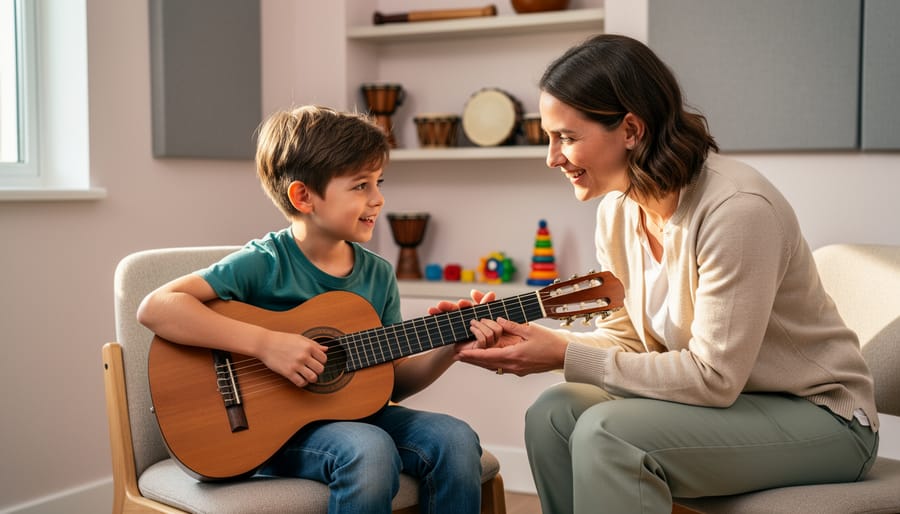
Music therapy sidesteps this pressure entirely. When a child pounds on a drum or plucks hesitant notes on a guitar, they’re expressing emotion without having to name it first. There’s no right or wrong way to play a feeling. A thundering cymbal crash can hold rage, fear, and grief all at once, emotions a seven-year-old might lack the vocabulary or courage to speak aloud.
This creative distance creates psychological safety. The child isn’t saying “I’m scared”, the music is scared. They’re not admitting “I feel like nobody understands me”, they’re writing a song about a lonely robot or a lost bird. The metaphor provides protective cover while still allowing genuine emotional processing to occur.
For children who’ve learned to suppress their feelings to protect others or avoid conflict, music therapy offers permission to feel again, loudly, quietly, messily, beautifully, without apology.
Different Approaches Music Therapists Use
Active Music-Making

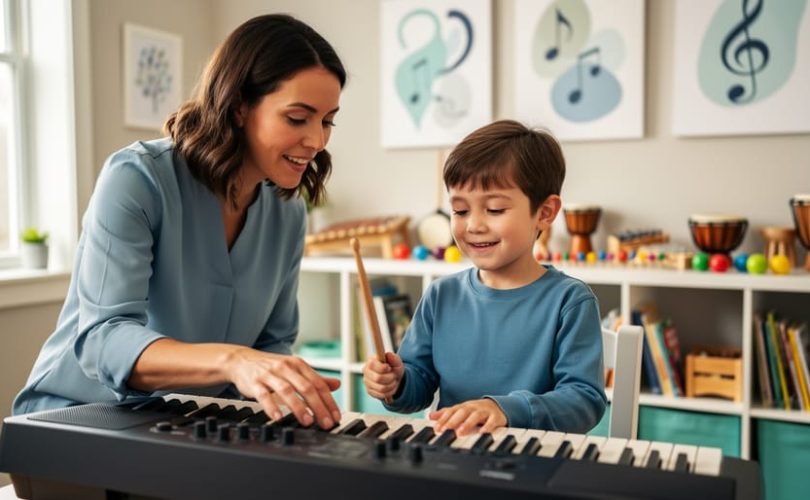
Active music-making puts instruments, voices, and creative tools directly into children’s hands. Rather than passively listening, kids engage with drums, xylophones, keyboards, guitars, or even simple percussion like shakers and egg rattles. They might improvise melodies, create rhythmic patterns, sing songs they know, or compose entirely new pieces with their therapist’s guidance.
This hands-on approach matters because it gives anxious or depressed children a sense of control and agency. A child who feels powerless over racing thoughts or heavy sadness can shape sounds, make choices about tempo and volume, and hear immediate results. That tangible feedback builds mastery, each successful note or rhythm reinforces their ability to affect their environment.
Improvisation, in particular, allows emotional expression without words. A child might pound a drum to release anger, then transition to softer tones as they calm. The therapist follows the child’s lead, creating a musical conversation that validates feelings and models regulation. Over time, these creative experiences strengthen confidence, improve mood, and teach children they can express what’s inside them in healthy, powerful ways.
Receptive Listening Experiences

Receptive music therapy focuses on listening rather than performing, but it’s far more intentional than simply playing calming background music. A trained therapist guides children through carefully selected pieces, leading them in relaxation exercises, breathing techniques synchronized to rhythm, or music-assisted imagery where they visualize safe, peaceful places while listening. These experiences activate the parasympathetic nervous system, the body’s natural “calm down” response, lowering heart rate and reducing the physical symptoms of anxiety like muscle tension and racing thoughts.
For children with depression, receptive listening can gently lift mood and help them access emotions they’ve been shutting down. The therapist might use uplifting music to energize a withdrawn child or melancholic pieces to validate sadness before transitioning toward hope. Some children pair receptive music therapy with creative art therapy drawing or painting what the music evokes. These sessions teach practical coping skills children can use at home, like playing a specific calming playlist during stressful moments or using breathing patterns learned in therapy when anxiety spikes at school.
Songwriting and Lyric Analysis
When a child writes their own song, they’re doing more than creating music, they’re making sense of their inner world. Music therapists use songwriting to help children put words to feelings they might not have names for yet. A child struggling with anxiety might write a song about their racing heart or the worried thoughts that keep them awake. Through this process, abstract fears become concrete enough to examine and address.
The therapist gently guides the child to explore metaphors and images in their lyrics. What does the anxiety look like? What color is it? If the sadness could talk, what would it say? These creative questions help children distance themselves just enough from overwhelming emotions to understand them better. Some children prefer analyzing existing songs they love, finding comfort in knowing others have felt similar pain and survived it.
Lyric work also creates what therapists call a “narrative coherence”, a story that makes sense of difficult experiences. A child grieving a divorce or dealing with depression might write verses about before, during, and after, building a beginning-middle-end structure that brings order to chaos. The finished song becomes something they can share with parents or keep private, a tangible reminder that their feelings matter and they have the power to shape their own story.
When Music Therapy Is Used for Children
As Part of a Treatment Plan
Music therapy rarely works in isolation. Most often, it forms one piece of a comprehensive treatment plan tailored to your child’s unique needs. A music therapist might collaborate with your child’s counselor, psychiatrist, pediatrician, or school psychologist to ensure everyone is working toward the same goals. For example, if your daughter is learning cognitive-behavioral strategies to challenge anxious thoughts in talk therapy, her music therapist might reinforce those skills through songwriting that reframes negative self-talk into more balanced lyrics. If your son is taking medication for depression, music therapy can provide an outlet for processing his feelings about the treatment itself and building coping skills that medication alone cannot address. This integrative approach is especially powerful for younger children working through preschool big feelings where creative expression complements other early interventions. The music therapist becomes part of your child’s care team, sharing progress notes, attending treatment planning meetings when appropriate, and adjusting their approach as your child’s needs evolve. This collaboration ensures nothing falls through the cracks and that every intervention reinforces the others.
For Children Who Struggle with Talk Therapy
Some children simply can’t, or won’t, sit still and talk about their feelings. Younger children often lack the vocabulary to describe anxiety or sadness. Others feel too self-conscious or overwhelmed to put their emotions into words, especially with an adult watching and waiting. Children with developmental differences, autism, or language delays may find the expectations of traditional talk therapy confusing or frustrating.
Music therapy meets these children where they are. Instead of demanding words, it invites expression through sound, rhythm, and movement. A child who freezes when asked “How are you feeling?” might pound a drum to show anger, strum gentle chords to convey sadness, or create a chaotic improvisation that captures the swirl of anxious thoughts. The music becomes the language, no translation required.
This approach also works beautifully alongside other creative methods, like visual tools for emotional expression. Together, these non-verbal pathways give children multiple ways to understand and communicate what’s happening inside, without the pressure of finding the “right” words.
What to Expect in a Music Therapy Session
Walking into a music therapy session for the first time can feel unfamiliar, but understanding the process helps ease any worry you or your child might have. Here’s what typically happens and what you can expect as your child begins this therapeutic journey.
The first session is usually an assessment. The music therapist will meet with you and your child to learn about your child’s history, current challenges with anxiety or depression, and what you hope therapy will achieve. They’ll observe how your child responds to different instruments and sounds, noting preferences and comfort levels. This isn’t a test, it’s a conversation through music that helps the therapist understand your child’s unique needs and strengths.
From there, the therapist develops specific, measurable goals. For a child with anxiety, goals might include learning three calming techniques using music, or expressing feelings through songwriting twice per session. For depression, goals could focus on increasing engagement, building positive emotional experiences, or creating songs that challenge negative thoughts. These goals guide the work but remain flexible as your child progresses.
Sessions themselves typically last 30 to 60 minutes, depending on your child’s age and attention span. The structure varies but often includes a familiar opening activity, maybe a hello song or a check-in using instruments to show how they’re feeling. The middle portion addresses therapeutic goals through activities like improvisation, songwriting, learning calming rhythms, or guided listening. Sessions close with a grounding activity that helps your child transition back to their day.
What happens in between these elements depends entirely on your child. One week might focus on drumming out frustration. Another might involve writing lyrics about worry or creating a “calm-down playlist.” Some children express grief through melancholy melodies they compose themselves. The therapist follows your child’s lead while gently guiding them toward therapeutic goals.
Progress is measured through observation, clinical notes, and periodic reviews with you. Therapists track things like how long your child can self-regulate using music techniques, whether they’re initiating musical expression more readily, or if their mood and engagement are improving. You’ll receive regular updates and have chances to adjust goals as needed.
Real Stories: Music Therapy in Action
Sometimes the best way to understand music therapy’s impact is through the children it has helped. These stories, shared with permission and details changed to protect privacy, show how music became a pathway to healing for two young people.
Emma’s Story: Finding Calm Through Rhythm
Eight-year-old Emma’s generalized anxiety made everyday activities feel overwhelming. She worried constantly about school performance, friendships, and things that might go wrong. Her parents noticed she struggled to sit still during traditional counseling sessions, often saying she didn’t know how to explain what she felt.
Her music therapist started with simple drumming exercises. Emma could express her racing thoughts through rapid beats, then practice slowing the rhythm as she learned to calm her nervous system. Over several months, she created her own “worry songs” on a keyboard, giving each anxiety a musical phrase. This helped her identify and name her feelings in a way words couldn’t capture.
Within six months, Emma’s parents reported she was using breathing techniques paired with humming (learned in sessions) when she felt anxious at school. She still experienced worry, but now had tools to manage it. Music gave her a language for emotions that felt too big to speak.
Marcus’s Story: Processing Grief Through Song
Twelve-year-old Marcus became withdrawn and sad after his parents’ divorce. He stopped engaging in activities he once loved and rarely spoke about his feelings. His therapist recognized signs of depression and suggested music therapy as a complement to his counseling.
Marcus gravitated toward songwriting. Over several sessions, he wrote lyrics about missing his old life, feeling stuck between two homes, and wondering if things would ever feel normal again. His therapist helped him set these words to music on guitar.
The process didn’t erase Marcus’s sadness, but it gave him a safe container for it. Creating something beautiful from painful feelings helped him process the loss. His mother shared that music therapy “gave him back his voice when depression had stolen it.”
Finding a Qualified Music Therapist
Finding the right music therapist starts with checking credentials. Look for a board-certified music therapist who holds the MT-BC designation (Music Therapist-Board Certified). This certification means they’ve completed an approved program, clinical training, and passed a national exam. In the U.S., the Certification Board for Music Therapists maintains standards and a public registry where you can verify credentials.
The American Music Therapy Association offers a therapist directory on their website, searchable by location and specialty areas like childhood anxiety. Many therapists list experience with specific age groups and conditions, making it easier to narrow your search. State associations can also provide local referrals and may know therapists who work extensively with children.
When you’ve identified potential therapists, ask about their experience with anxiety and depression in children. How long have they worked with this population? What approaches do they use? Can they explain their process for setting goals and measuring progress? A good fit means your child feels comfortable and the therapist communicates clearly with you about what’s happening in sessions.
Insurance coverage varies widely. Some plans cover music therapy when prescribed by a physician or included in a treatment plan, while others don’t recognize it yet. Call your insurer directly to ask about coverage, then discuss payment options with the therapist. Many offer sliding scale fees or accept health savings account funds.
Schedule an initial consultation before committing. Watch how the therapist interacts with your child. Do they listen well? Does your child seem at ease? Trust your instincts, the therapeutic relationship matters as much as the credentials. If something feels off after a few sessions, it’s okay to try someone else. Finding the right match can make all the difference.
Common Questions Parents Ask
Parents often have practical questions when considering music therapy for their child’s anxiety or depression. Here are answers to the most common concerns.
Does my child need to be musical or know how to play an instrument?
No. Music therapy doesn’t require any prior musical training, talent, or experience, it’s about using music as a tool for emotional expression and healing, not performance. Children of all abilities benefit, and therapists adapt activities to each child’s comfort level and interests.
How long does treatment typically take?
The duration varies based on your child’s needs and goals. Some children see meaningful progress in 8-12 weeks, while others benefit from ongoing support over several months or longer. Your therapist will regularly assess progress and adjust the treatment plan accordingly.
Will insurance cover music therapy sessions?
Coverage depends on your insurance plan and the setting. Some plans cover music therapy when provided by licensed healthcare facilities or when prescribed as part of a treatment plan. Contact your insurer directly and ask about music therapy benefits, providing the therapist’s credentials and diagnosis codes.
Can music therapy replace traditional counseling or medication?
Music therapy is often most effective as part of a comprehensive treatment approach, not as a standalone replacement. It works beautifully alongside talk therapy, medication, or other interventions, with your child’s healthcare team coordinating care to address their specific needs.
Many parents wonder about age appropriateness. Music therapy can benefit children from toddlers through teens, though the approaches differ. Younger children might explore instruments and simple songs, while adolescents often engage in songwriting or deeper lyric analysis. Board-certified therapists tailor every session to developmental stage and individual preferences.
Safety is another frequent concern. Music therapy is non-invasive and carries minimal risk. The therapeutic relationship provides a protected space where children control their participation level. If your child has sensory sensitivities, inform the therapist beforehand so they can adjust volume levels and instrument choices.
Recognizing progress matters to parents. Signs that music therapy is helping include improved mood, better emotion coping skills increased willingness to discuss feelings, reduced physical anxiety symptoms like stomachaches, and greater engagement in daily activities. Your therapist will track specific goals and share observations regularly, but trust your own observations too, you know your child best.
If your child resists at first, that’s normal. Some children need a few sessions to feel comfortable. A qualified therapist understands this and won’t push too hard too fast. However, if resistance continues after several sessions, talk openly with the therapist about whether the approach or timing needs adjustment.
Music therapy offers something many children struggling with anxiety and depression desperately need: a way to express what words cannot capture. This evidence-based approach has helped countless young people find relief, build resilience, and reclaim joy through the simple yet profound act of making and experiencing music together with a trained professional.
If your child is wrestling with anxiety or depression, music therapy might be worth exploring. It works alongside other treatments, meets children where they are, and creates a safe space for healing without the pressure of traditional talk therapy. Not every approach works for every child, but music therapy’s flexibility and gentleness make it accessible to many who’ve struggled to connect with other forms of support.
Seeking help for your child is not an admission of failure. It’s an act of love and courage. You’re showing them that their emotional wellbeing matters, that struggling is part of being human, and that asking for support is a strength, not a weakness. No child should face mental health challenges alone, and no parent should carry that burden in isolation either.
Music has always been humanity’s companion through difficult times. For your child, it might become a trusted friend on their journey toward feeling better, a language for emotions they’re still learning to understand, and a reminder that healing can be creative, hopeful, and even joyful.