

World Mental Health Day on October 10 offers parents a powerful opening to normalize conversations about emotional wellbeing with children of any age. The 2026 theme, “Lived experiences heard: Real voices, real change,” reminds us that even the youngest voices deserve to be heard when it comes to mental health. Rather than waiting for a crisis, using this observance as an annual touchpoint helps children learn that feelings matter, that struggles are part of being human, and that asking for help is a strength.
The reality is that many parents feel uncertain about how to bring up mental health without causing worry or saying the wrong thing. You might wonder if your child is too young, or worry that naming emotions will plant ideas that weren’t there before. Research consistently shows the opposite: children who grow up hearing their parents talk openly about feelings, stress, and mental health develop stronger emotional literacy and are more likely to reach out when they need support.
This year’s theme speaks directly to the heart of parenting. When we ask children about their own experiences, when we listen without immediately problem-solving, we validate their inner world. A seven-year-old describing school anxiety and a teenager sharing feelings of overwhelm are both exercising the same vital skill: putting feelings into words and trusting an adult to hold space for them.
World Mental Health Day doesn’t require grand gestures. What it does require is intention, a willingness to be honest about our own emotional lives, and the commitment to make October 10 the start of an ongoing conversation, not a one-time talk.
Why World Mental Health Day Matters for Children
Children face the same spectrum of emotions adults do, stress, anxiety, sadness, joy, but they often lack the vocabulary and emotional literacy to understand or express what they’re feeling. When we raise awareness of mental health starting in childhood, we give kids a language for their inner world. This foundation shapes how they’ll handle challenges throughout their lives, from friendship conflicts in elementary school to academic pressure in high school and relationship stress in adulthood.
World Mental Health Day, observed every October 10, offers a structured moment to begin these conversations. The 2026 theme, “Lived experiences heard: Real voices, real change,” holds particular significance for children. Too often, adults talk about kids’ mental health without actually listening to what children themselves are experiencing. This year’s theme challenges us to flip that script. When we create space for children to share their feelings, worries, and perspectives, we’re not just teaching them about emotions, we’re demonstrating that their voices matter in conversations about their own wellbeing.
Normalizing these discussions early removes the stigma that prevents many adults from seeking help. When a seven-year-old learns that feeling anxious before a test is normal and manageable, they’re less likely to hide mental health struggles at seventeen. When a twelve-year-old hears a trusted adult share an age-appropriate version of their own emotional challenges, that child learns that asking for support is strength, not weakness.
Using October 10 as a starting point also connects families to broader mobilization efforts. Schools often incorporate mental health themes into October programming, mental health organizations launch public education campaigns, and community resources become more visible. Your conversation at home reinforces what children might encounter elsewhere, creating multiple touchpoints that deepen understanding.
What You Need Before Starting the Conversation
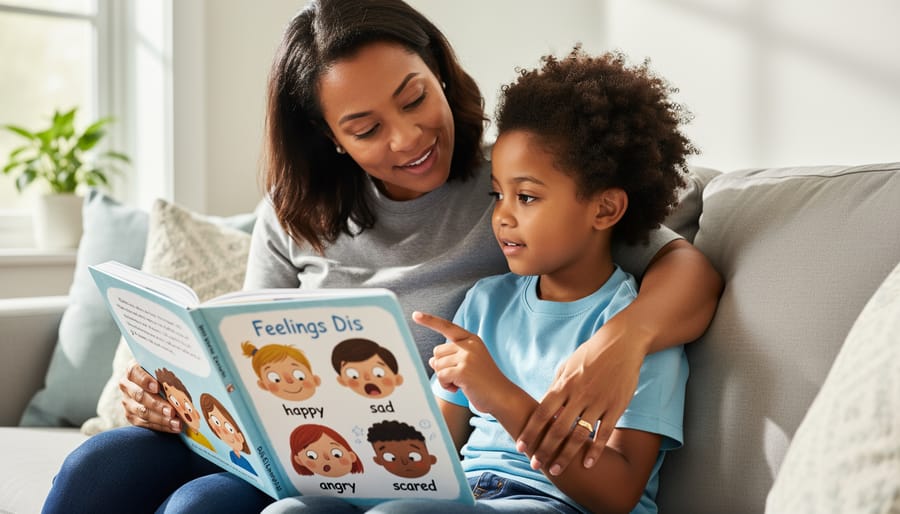
Before you sit down with a child to talk about mental health, gather a few simple tools and check your own emotional readiness. This isn’t about having a perfect script or a formal lesson plan, it’s about creating the conditions for an honest, safe conversation.
Start with age-appropriate resources that help you frame feelings in ways children can understand. Picture books about emotions work beautifully for younger kids: stories where characters feel worried, sad, or overwhelmed give you concrete examples to reference. For older children and teens, you might look at articles, videos, or social media content that discusses mental health in relatable terms. Canada’s health promotion calendar highlights World Mental Health Day on October 10, and many Canadian mental health organizations release free conversation guides and activity sheets around this date that you can download and review beforehand.
Your environment matters more than you might think. Choose a calm, private space where your child feels comfortable, maybe their bedroom, a quiet corner of the living room, or even during a car ride when side-by-side positioning can feel less intense than face-to-face. Turn off distractions. You want your child to feel like they have your full attention.
Here’s what to have ready before you begin:
- One or two children’s books about feelings or mental health appropriate for your child’s age
- A quiet, comfortable space free from interruptions and screens
- A calm, regulated emotional state in yourself, don’t start this conversation when you’re stressed or rushed
- Basic knowledge of your child’s developmental stage and what emotional concepts they can grasp
- A mental list of follow-up resources (counselors, help lines, trusted adults) in case your child discloses something concerning
Most importantly, prepare yourself emotionally. Reflect on your own feelings about mental health before you ask your child about theirs. If you carry shame or discomfort around emotions, children will sense it. You don’t need to have all the answers, but you do need to be genuinely open to hearing whatever your child shares, without judgment, panic, or dismissal.
Important Considerations Before You Begin

Before you mark October 10 on your calendar for a mental health conversation, recognize that timing and readiness matter more than the date itself. Not every moment is the right moment.
If your child is already in emotional distress, actively dysregulated, or experiencing a crisis, this is not the time for a planned educational conversation about mental health. When a child is crying, having a meltdown, or shutting down, they need comfort and calm, not a teaching moment. Learn effective crisis techniques for acute situations first, then save the reflective discussion for when they’re emotionally stable.
Respect resistance. If your child clearly doesn’t want to talk, pushing harder won’t build trust. They might need time, a different approach, or simply not be ready. Forced conversations can shut down future openness rather than create it.
Watch for signs they need support beyond what a parent conversation can provide: talk of self-harm, extreme withdrawal, drastic personality changes, or inability to function in daily activities. Your role is to open doors, not to diagnose or treat.
Never promise outcomes you can’t guarantee. Don’t say “talking will make you feel better” or “you’ll never feel sad again.” Mental health doesn’t work that way. Instead, promise to listen, to stay beside them, and to find help together if they need it.
For children who’ve experienced trauma, tread carefully. Asking “how are you feeling?” can inadvertently trigger re-traumatization if they’re not ready to revisit painful experiences. Let them control the depth and pace of what they share.
Step-by-Step: How to Talk to Kids About Mental Health
Step 1: Create a Safe Opening
Start by choosing a moment when your child is relaxed, maybe during a car ride, while preparing dinner together, or at bedtime. Avoid ambushing them with a serious announcement. Instead, weave World Mental Health Day into the conversation naturally: “I saw today is World Mental Health Day. It’s a day when people talk about feelings and how our minds work. I’ve been thinking it might be good for us to talk about that too.”
Notice you’re inviting, not demanding. Your tone matters as much as your words. Keep your body language open, sit beside them rather than across, get down to their eye level if they’re younger. If they seem hesitant, acknowledge it: “We don’t have to talk about everything right now. I just wanted you to know I’m here whenever you want to.”
Frame the conversation as something you’re doing together, not something you’re doing to them. You might add, “I’m learning about this stuff too,” which is honest and removes the pressure of you having all the answers. The goal isn’t a perfect therapeutic session, it’s opening a door they’ll feel safe walking through, today or another day.
Step 2: Use Age-Appropriate Language
Tailor your words to match where your child is developmentally. For preschoolers (ages 3-5), keep it simple and concrete: “Sometimes we feel happy, sometimes sad, sometimes worried. All feelings are okay. Our feelings live in our bodies and our hearts.” Use picture books or stuffed animals to demonstrate emotions rather than abstract explanations.
Elementary-aged children (6-11) can handle slightly more nuance: “Mental health is about how we feel inside and how our brains work. Just like we take care of our bodies by eating well and sleeping, we take care of our minds by talking about our feelings and asking for help when things feel too big.” They can grasp that feelings come and go, and that everyone experiences them differently.
Teenagers need honesty without condescension: “Mental health affects how we think, feel, and handle stress. It’s not about being ‘crazy’ or ‘broken’, it’s about understanding yourself and getting support when you need it, just like you’d see a doctor for a physical injury.” Avoid clinical terms like “diagnosis” or “disorder” unless your teen introduces them first.
After sharing, pause and ask, “Does that make sense?” or “What do you think about that?” Their response tells you whether to simplify further or go deeper.
Step 3: Share Your Own Experiences (Appropriately)
Sharing your own experiences with mental health can powerfully validate your child’s feelings, but the key is appropriate vulnerability. Choose a manageable story, not your heaviest burden. A parent might say, “I remember feeling really worried before my first day at a new job. My stomach felt tight and I couldn’t sleep well. I talked to a friend about it, and that helped.” This models that adults have struggles too and that seeking support is normal.
Keep your story brief and resolution-focused. Children need to know you’re okay now. Avoid graphic details about past trauma, ongoing crises, or situations that might frighten them. The goal is to normalize mental health experiences, not to parentify your child or make them worry about your wellbeing.
For professionals working with children, sharing lived experiences requires extra care. Stick to universal feelings rather than personal details. A teacher might say, “Sometimes I feel frustrated when things don’t go as planned, so I take three deep breaths to help myself feel calmer.”
This approach honors the 2026 World Mental Health Day theme by showing children that real voices, including theirs and yours, matter in mental health conversations. It demonstrates that emotional honesty strengthens relationships rather than weakening them.
Step 4: Listen More Than You Speak
Once you’ve opened the conversation and explained feelings in age-appropriate ways, resist the urge to fill silence or steer every moment. Children need time to process and respond. Practice active listening by putting away your phone, maintaining gentle eye contact, and letting pauses exist. When your child shares something, whether it’s “I felt scared at recess” or “Sometimes I think nobody likes me”, avoid immediately problem-solving or reassuring them it wasn’t that bad. Instead, reflect what you heard: “It sounds like recess felt really scary for you” or “You’re telling me sometimes you feel alone.”
This validation doesn’t mean agreeing with every perception; it means acknowledging their lived experience as real and worthy of being heard. The 2026 World Mental Health Day theme reminds us that real voices, including children’s, deserve space without interruption or correction. Ask open-ended follow-ups like “Tell me more about that” or “What did that feel like in your body?” rather than yes/no questions.
Watch for non-verbal cues too: a child who suddenly gets quiet or changes the subject may need a break, not more questions. Your quiet presence often communicates safety more effectively than any words you could offer.
Step 5: Normalize All Feelings
One of the most powerful gifts you can give a child is permission to feel everything. Make it clear that sadness, anger, fear, jealousy, and frustration are just as normal and acceptable as happiness and excitement. You might say, “All feelings are okay to have. There are no bad feelings, only feelings that feel comfortable or uncomfortable.”
The crucial distinction here is separating feelings from behaviors. A child can feel angry (always valid) without hitting (not acceptable). You can validate the emotion while still setting boundaries on actions: “I can see you’re really frustrated right now, and that’s completely okay. It’s not okay to throw things, but we can find other ways to show that frustration.”
Actively work to remove stigma by using the same matter-of-fact tone you’d use discussing physical health. Avoid phrases like “just be positive” or “you’re fine” that dismiss difficult emotions. Instead, normalize seeking help when needed: “Sometimes our brains need extra support, just like our bodies do. Talking to someone trained to help with big feelings is a smart, brave thing to do.” When children see that struggling doesn’t mean something is wrong with them, they’re more likely to ask for support when they need it.
How to Know the Conversation Worked
You’ll know your conversation landed when your child keeps talking. The strongest indicator isn’t immediate agreement or a perfect summary, it’s continued engagement. Watch for questions that come hours or even days later: “Mom, remember when we talked about feeling worried? My friend said she feels that way too.” That delayed processing shows they’re integrating what you discussed into their understanding of the world.
Body language tells you plenty. A child who leans in, makes eye contact (even briefly), or physically relaxes as you talk is feeling safe. Conversely, if they’re fidgeting, looking away constantly, or finding reasons to leave, they might need a break or a different approach. Neither response means failure, it’s information about timing and readiness.
Effective conversations often show up in these observable signs:
- Your child brings up feelings or mental health unprompted in the following days
- They ask clarifying questions about their own emotions or experiences
- You notice them using the language you introduced (“I’m feeling anxious” instead of just “bad”)
- They share observations about friends or characters in books dealing with similar feelings
- They come to you when they’re struggling instead of withdrawing
Don’t let October 10 be the only day you shatter mental health stigma in your home. The 2026 theme of hearing lived experiences requires ongoing listening, not a single conversation. Build mental health check-ins into your routine, car rides, bedtime, Sunday morning pancakes. Whatever works for your family.
Some children need more structured support. If your child’s distress intensifies, if they express thoughts of self-harm, or if daily functioning declines despite your best efforts, reach out to a pediatrician, school counselor, or mental health professional. Knowing when you need backup isn’t failure, it’s precisely the kind of help-seeking behavior we want to model. For younger children especially, resources that help big emotions can bridge the gap between conversation and professional care.
Answers to Common Questions
What if my child asks whether they have a mental illness?
Answer honestly and calmly based on what you know. If you’re unsure, validate their question by saying something like “That’s a really important thing to wonder about. Let’s figure it out together” and arrange to speak with their doctor or school counselor who can help assess whether support is needed.
Is five years old too young to talk about mental health?
No. Young children already experience big emotions, and you can introduce mental health concepts through simple feelings language. Use concrete terms like “Sometimes our brains need help feeling better, just like our bodies do,” and focus on naming emotions rather than diagnostic language.
What should I do if my child discloses something concerning during our conversation?
Stay calm, thank them for trusting you, and don’t promise to keep secrets if safety is involved. Listen without overreacting, then follow up by contacting appropriate professionals, their doctor, school counselor, or a crisis line, to discuss next steps and explore treatment options if needed.
How do I keep the conversation going after October 10?
Make mental health check-ins a regular part of your routine by incorporating feelings discussions into everyday moments, car rides, mealtimes, or bedtime. You might ask “What made you feel proud today?” or “Did anything feel hard this week?” to normalize ongoing dialogue rather than treating it as a one-time event.
Many parents worry they’ll say the wrong thing and accidentally harm their child’s mental health. The truth is that opening the conversation itself, even imperfectly, matters more than getting every word right. Children benefit from knowing their feelings are important enough to discuss.
Teachers and healthcare professionals often ask whether they need parental permission before discussing mental health with children in their care. While specific policies vary by institution, you can always teach general emotional literacy and coping skills as part of wellness education. When a child’s behavior suggests they need additional support, that’s the time to involve parents and recommend professional assessment.
Remember that World Mental Health Day 2026’s theme of centering lived experiences applies beautifully to children’s voices. When kids share their feelings and experiences, they’re not being dramatic or difficult, they’re offering you real insight into their inner world. Your job isn’t to fix everything immediately but to listen, validate, and help them understand that mental health matters just as much as physical health.
If you find yourself stuck or overwhelmed during these conversations, that’s normal. Parenting and supporting children through emotional challenges is hard work. Seeking guidance from mental health professionals doesn’t mean you’ve failed, it means you’re taking children’s wellbeing seriously enough to ask for help when you need it.
World Mental Health Day 2026’s theme, Lived experiences heard: Real voices, real change, isn’t just for adults. Your child’s feelings, fears, and questions about mental health are lived experiences too, and they deserve to be heard with the same respect we’d give any other voice.
October 10 is the starting line, not the finish. The conversation you begin today can ripple through your family, classroom, or practice for years, slowly dismantling the stigma that keeps too many children silent about their struggles. One honest talk won’t solve everything, but it plants a seed: the knowledge that emotions are normal, help is available, and they’re not alone.
Dr. Sarah Chen, a child psychologist I spoke with recently, put it this way: “I’ve worked with teenagers who tell me no one ever asked how they were really doing until they were already in crisis. The parents who start these conversations early, even awkwardly, give their kids permission to speak up before things get that hard.”
Your willingness to listen, stumble through tough questions, and show up consistently matters more than getting every word perfect. That’s how real change begins.