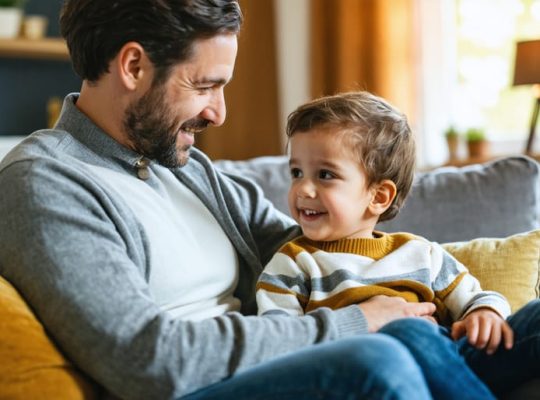
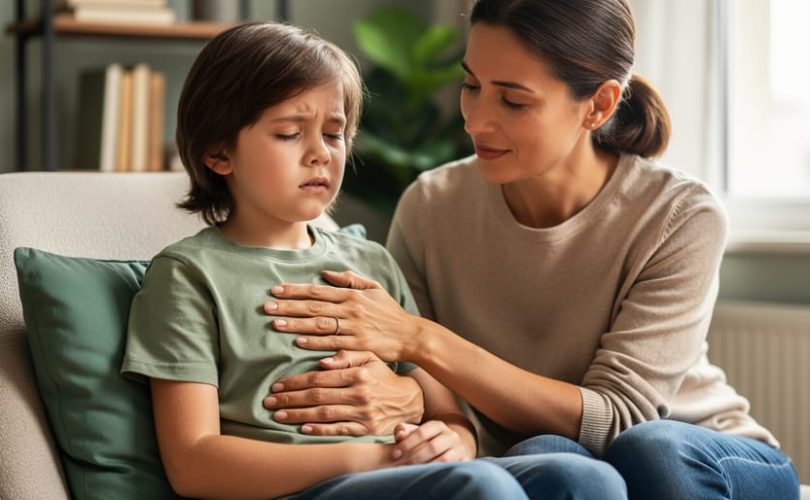
When your child’s chest tightens, breathing quickens, or panic takes hold, teaching them simple breathing exercises can interrupt the anxiety response within 60 to 90 seconds. These techniques work by activating the parasympathetic nervous system, the body’s built-in calm-down mechanism, shifting them from fight-or-flight mode to a steadier, safer state.
You don’t need special equipment or training to help your anxious child. The five breathing exercises you’ll find in this guide require nothing more than a quiet space and a few minutes of practice. They’re safe for children as young as three, and they’re backed by decades of research showing measurable reductions in anxiety symptoms when practiced regularly.
The real challenge isn’t whether these techniques work. It’s teaching them in a way that sticks. Most kids won’t master belly breathing during a meltdown if they’ve never tried it while calm. That’s why this article walks you through exactly how to introduce each exercise, what language works best for different ages, and how to recognize when a technique is actually helping versus just distracting.
I’ve worked with hundreds of families navigating childhood anxiety, and the ones who see lasting change share one thing in common: they practice breathing techniques together during peaceful moments, not just in crisis. You’re building a skill, like learning to ride a bike. The falls will happen, but with the right preparation and consistent practice, your child will develop a tool they can reach for whenever anxiety shows up.
Why Breathing Exercises Help Anxious Children
When your child feels anxious, their body goes into fight-or-flight mode, heart racing, breath shallow, muscles tense. That’s the sympathetic nervous system doing its job, preparing them to face danger. The problem is, their brain can’t tell the difference between a real threat and worry about tomorrow’s spelling test.
Breathing exercises work because they give you a direct way to interrupt that panic response. When children breathe slowly and deeply, they activate the parasympathetic nervous system, the body’s built-in calming mechanism. Research shows that slow breathing reduces anxiety by lowering heart rate, decreasing stress hormones, and sending “you’re safe” signals to the brain.
Children actually respond better to these techniques than many adults do. Their nervous systems are still developing, which means they’re incredibly adaptable. A seven-year-old who practices breathing exercises regularly is literally building neural pathways that make it easier to self-soothe. They’re learning emotional regulation at a critical developmental window.
What makes breathing particularly powerful for young minds is that it’s something they can control. When anxiety feels overwhelming, that “everything’s too big and scary” feeling, breathing gives them an anchor. It’s concrete. They can feel their belly rise, count to four, trace their fingers. That sense of agency matters enormously when everything else feels out of control.
Child psychologists also point to the portability factor. Once learned, breathing techniques go everywhere your child does: the classroom, the playground, bedtime, the car ride to Grandma’s. They don’t need equipment, apps, or adult supervision to use them in the moment they’re most needed.
What You’ll Need to Get Started
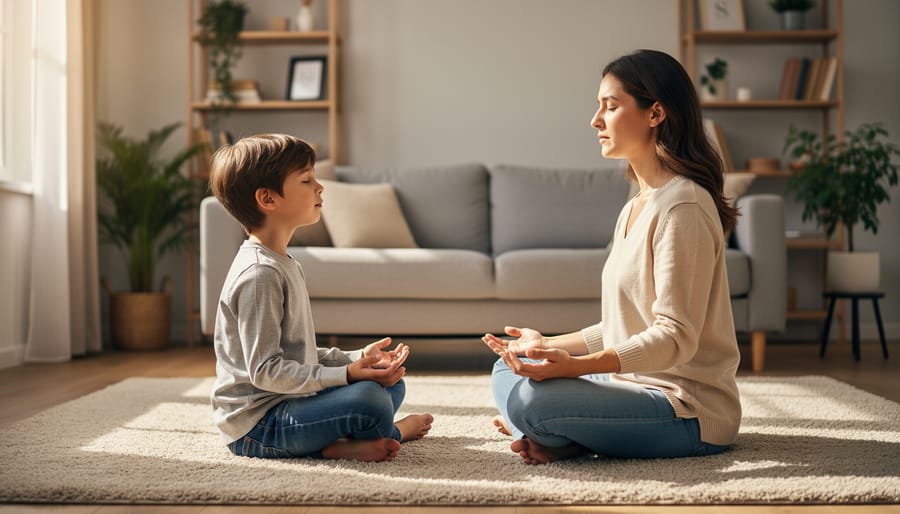
The beauty of breathing exercises for anxious children is that you already have everything you need. Unlike many anxiety management tools, these techniques require no special equipment, no expensive gadgets, and no elaborate setup. Your presence, a reasonably calm environment, and a few minutes of patience are the only essentials.
That said, simple props can make learning easier and more engaging, especially for younger children who benefit from concrete, tangible elements. Here’s what works:
- A quiet space where your child feels comfortable (bedroom, living room corner, even a parked car)
- A favorite stuffed animal or small toy for belly breathing exercises (ages 3-8)
- A cushion or yoga mat if your child prefers lying down
- Visual aids like a pinwheel, bubble wand, or paper windmill for demonstrating breath control (ages 3-6)
- A simple breathing app with animations like Breathe, Think, Do or Calm (ages 7+)
- Printed diagrams showing box breathing or finger breathing patterns (ages 6-12)
The key is starting simple. Most children respond best to basic techniques with minimal distractions, so resist the urge to over-prepare. You can always add props later if your child struggles to grasp a concept or loses interest. A cozy spot and your calm guidance matter far more than any accessory. If your child has asthma or uses an inhaler, keep it nearby during practice sessions, though you’ll rarely need it for gentle breathing work.
Before You Begin: Important Safety and Readiness Considerations
Breathing exercises are remarkably safe for most children, but they work best as one supportive tool, not a replacement for professional care when anxiety is severe or persistent. If your child’s anxiety interferes with daily activities (school refusal, trouble sleeping, social withdrawal), causes physical symptoms that worry you, or has worsened despite your efforts, that’s when to seek help from a pediatrician, school counselor, or child therapist.
There are also specific situations where breathing exercises need modification or might not be appropriate. During an asthma flare-up or respiratory illness, don’t push breathing exercises, your child needs to breathe comfortably in whatever way feels natural, and forcing slow breaths can increase distress. If your child is hyperventilating during a panic episode, encouraging them to slow their breath is helpful, but avoid asking them to hold their breath or breathe deeply, which can backfire. Instead, guide them toward gentle, natural breathing.
Developmentally, most children can begin simple breathing exercises around age three or four, though their attention span will be short. If your child can’t follow two-step instructions, understand “pretend” concepts, or sit still for 30 seconds, they’re probably not quite ready. That’s completely normal. You can introduce breathing play (blowing bubbles, feathers) and return to structured exercises in six months.
5 Breathing Techniques for Children with Anxiety (Step-by-Step)
1. Balloon Breathing (Ages 3-6)
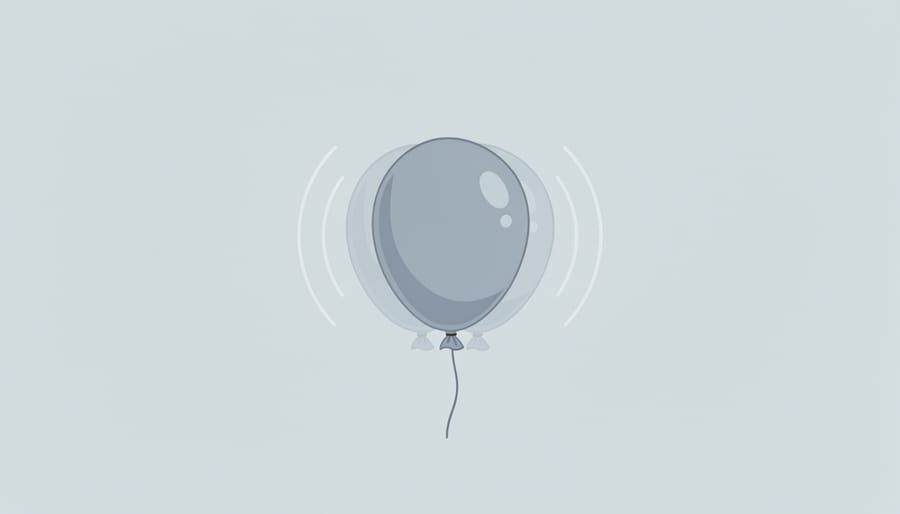
Balloon breathing works beautifully for preschoolers because it turns an abstract concept into something they can picture and act out. The goal is simple: breathe in deeply while “inflating” an imaginary balloon, then slowly let the air out as the balloon deflates.
Start by sitting face-to-face with your child at their eye level. Show them how you hold your hands together in front of your mouth, forming a small circle. Explain that you’re going to blow up a pretend balloon together.
- Hold your hands close together near your mouth and take a slow, deep breath in through your nose while you count “one, two, three” out loud.
- As you breathe in, gradually spread your hands apart as if the balloon between them is growing bigger and bigger.
- Hold the full breath for just one second while your hands are far apart, showing the full balloon.
- Slowly breathe out through your mouth with a soft “whoosh” sound while bringing your hands back together, showing the balloon getting smaller.
- Repeat three to five times, keeping the pace gentle and playful.
Watch your child’s hands and breathing, not the clock. Some three-year-olds will manage one or two rounds before wiggling away, and that’s perfectly normal. You can make it more engaging by changing balloon colors each round (“Now let’s blow up a big purple balloon!”) or asking them to show you how big their balloon can get.
If your child struggles with nose breathing, mouth breathing works fine at this age. The steady rhythm matters more than perfect technique.
2. Belly Buddy Breathing (Ages 4-8)
Have your child lie down on their back on a comfortable surface like a bed, couch, or yoga mat. Place their favorite stuffed animal on their belly, right over the belly button. Explain that their job is to give their “belly buddy” a gentle ride up and down using only their breath.
Here’s how to practice together:
- Ask your child to breathe in slowly through their nose while watching the stuffed animal rise up on their belly.
- Have them hold the breath for a count of two while the buddy sits at the top.
- Guide them to breathe out slowly through their mouth, watching the buddy gently lower back down.
- Repeat this pattern for five to ten breaths, keeping the focus on the rising and falling motion.
The visual feedback of the moving toy helps children naturally shift from shallow chest breathing to deeper belly breathing, which is exactly what calms the nervous system during anxious moments.
If your child gets distracted or giggly, that’s completely normal. Make it playful rather than serious. You can pretend the stuffed animal is on a boat riding waves, or going up and down in an elevator. For wiggly kids who struggle to lie still, try sitting positions with the toy in their lap instead, or practice for just three breaths at first and gradually build up. The goal is calm connection, not perfect stillness.
3. Box Breathing (Ages 7-12)
Box breathing works like drawing a square, four equal sides, four equal counts. It’s especially helpful for school-age children because it gives their busy minds something concrete to follow when worry spirals. The rhythm and predictability calm the nervous system while the counting occupies anxious thoughts.
Start by sitting together somewhere comfortable. Ask your child to imagine tracing the sides of a box or picture frame as they breathe. Walk them through the pattern slowly at first:
- Breathe in through the nose for four counts
- Hold the breath for four counts
- Breathe out through the mouth for four counts
- Hold empty for four counts
Demonstrate it yourself while they watch. Then guide them through three to five rounds, counting aloud until they catch the rhythm.
Visual aids make this technique stick. Draw a simple square on paper and add arrows showing the breathing direction for each side, up for inhale, across for hold, down for exhale, across for hold. Some children like tracing the square with their finger in the air while they breathe. Others prefer imagining a small box in their hands that they’re “filling and emptying” with their breath.
This technique shines during homework stress, before tests, or when your child feels overwhelmed by multiple worries at once. The hold phases teach patience and control, showing them they can manage uncomfortable sensations rather than panic. Once mastered, box breathing becomes a portable tool they can use anywhere without anyone noticing.
4. Five-Finger Breathing (Ages 5-10)

Five-finger breathing gives anxious children something concrete to focus on while they calm down. The physical act of tracing interrupts racing thoughts and grounds them in the present moment, which is exactly what an anxious brain needs.
Start by having your child hold one hand out in front of them, fingers spread wide like a star. With their opposite index finger, they’ll trace the outline of their hand while coordinating their breath:
- Place the tracing finger at the base of the thumb
- Breathe in slowly while tracing up the outside of the thumb
- Breathe out while tracing down the inside of the thumb
- Continue this pattern, in up the finger, out down the finger, across all five fingers
- When they reach the base of the pinky, they’ve completed one full cycle
The beauty of this technique is portability. Your child can practice five-finger breathing under a desk at school, in the car before a test, or while waiting for a doctor’s appointment. Nobody else even needs to know they’re doing it.
For children who struggle to slow their breathing, encourage them to trace more slowly, the finger sets the pace. If they rush through it, the calming effect diminishes. Some kids prefer switching hands halfway through for symmetry, which works perfectly fine.
5. 4-7-8 Calming Breath (Ages 9+)

The 4-7-8 technique works particularly well for older children and teens who can count and hold their breath comfortably. This pattern, developed by integrative medicine expert Dr. Andrew Weil, slows heart rate and quiets racing thoughts, making it ideal for bedtime anxiety or moments when panic starts to build.
Have your child sit comfortably with their back supported, or lie down if practicing before sleep. Their tongue should rest gently against the ridge of tissue behind their upper front teeth throughout the entire exercise. This positioning helps control the breath and creates a subtle whooshing sound that some teens find focusing.
- Empty the lungs completely through the mouth with a whoosh sound
- Close the mouth and breathe in quietly through the nose for 4 counts
- Hold the breath for 7 counts
- Exhale completely through the mouth for 8 counts, making the whoosh sound
- Repeat the cycle three more times for a total of four breaths
This technique works best when practiced twice daily, once in the morning and once before bed, even when anxiety is not present. The breath-holding component activates the parasympathetic nervous system more strongly than simpler techniques, which explains why many teens report feeling genuinely sleepy or calmer within minutes.
For panic moments during the school day, a modified version without the audible exhale works well. Your teen can practice silently at their desk, though the full four-cycle sequence may need to be shortened to one or two cycles depending on the situation.
Choosing the Right Technique for Your Child
No single breathing exercise works for every child. The best technique depends on your child’s age, what triggers their anxiety, and how they naturally respond to stress.
Start with age as your first filter. Preschoolers need concrete, playful methods like Balloon Breathing or Belly Buddy Breathing, techniques they can see and feel. School-age children often respond well to tactile approaches like Five-Finger Breathing, especially if they’re fidgety or need something portable for classroom anxiety. Older kids and teens typically prefer more sophisticated techniques like Box Breathing or 4-7-8, which feel less babyish and work for both sudden panic and bedtime worry.
Consider your child’s personality. Active, energetic children do better with breathing exercises that involve movement, tracing their hand, watching a stuffed animal rise and fall. Quieter, more introspective kids may prefer stillness-based techniques like Box Breathing.
Match the technique to the trigger. School anxiety often needs a discreet method your child can use at their desk, Five-Finger Breathing works perfectly. Bedtime worry responds well to longer, more rhythmic patterns like 4-7-8. For sudden panic moments, simpler techniques with fewer steps prevent overwhelm.
Let your child help choose. They know what feels right.
How to Know If It’s Working (and What to Do Next)
You’ll see progress in your child’s anxiety within the first week or two, though meaningful change often builds gradually over several weeks of consistent practice. The key is knowing what to look for and trusting that small shifts matter.
Watch for these concrete signs that breathing exercises are helping your child manage anxiety:
- They ask to practice breathing exercises when they feel worried or upset
- Physical signs of anxiety (tense shoulders, clenched fists, rapid breathing) ease during or after practice
- They recover more quickly from anxious moments or meltdowns
- They can name their feelings more clearly and express when they need a calm-down strategy
- Bedtime routines become smoother or they fall asleep faster when previously anxious
- They’re willing to try activities that previously triggered avoidance behavior
Don’t expect perfection or immediate transformation. A child who goes from ten minutes of crying to five minutes, or who remembers to use balloon breathing twice a week instead of never, is making real progress.
If you’re not seeing any improvement after three to four weeks of regular practice, adjust your approach. Try a different technique that better matches your child’s age or temperament. Practice at different times of day when they’re calmer rather than only during crisis moments. Shorten the sessions if they’re losing focus, or add a visual element if they need more engagement.
Some children benefit from layering breathing exercises with other calming strategies. You might introduce progressive muscle relaxation, guided imagery, or simple mindfulness activities like noticing five things they can see around them. These complement breathing work and give children multiple tools to choose from.
Know when to seek professional support. If your child’s anxiety is worsening despite consistent practice, interfering with school or friendships, causing physical symptoms like frequent stomachaches, or if they’re expressing thoughts of self-harm, it’s time to consult a pediatrician or child therapist. Breathing exercises are powerful, but they’re not a replacement for professional treatment when anxiety becomes overwhelming or persistent.
Common Questions Parents Ask
How often should you practice breathing exercises with your child? Aim for daily practice sessions when everyone is calm, five minutes before bed or after school works well. During anxious moments, your child can then draw on a familiar tool rather than learning something new while distressed. Think of it like building muscle memory: consistent practice when things are fine makes the technique automatic when stress hits.
What if your child resists or says breathing exercises are boring? Meet them where they are. Some kids respond better to making it a game (who can make their balloon belly bigger?) or incorporating it into existing routines they already enjoy. You might pair breathing with play-based activity practice together as a family challenge, or let them teach the technique to a stuffed animal. If resistance continues, back off and try again in a few weeks. Forcing it creates negative associations that defeat the purpose.
Can breathing exercises replace therapy or medication?
No. Breathing techniques are valuable tools for managing everyday anxiety, but they do not substitute for professional treatment when a child has an anxiety disorder or needs clinical support. They work best as one component of a broader approach to mental wellness.
How long before we see results?
Some children feel calmer immediately after their first session, while others need two to three weeks of daily practice before the benefit becomes noticeable. Look for subtle signs like less fidgeting, easier bedtimes, or your child asking to do breathing on their own.
Should breathing exercises be part of daily routine or just for crises?
Both. Regular daily practice builds the skill so it is available during tough moments. When anxiety spikes, your child will already know what to do rather than trying to learn something new while panicking.
Can breathing exercises help with other issues besides anxiety?
Yes. Many parents notice improvements in sleep quality, emotional regulation, focus, and sibling conflicts. The calming effect extends beyond anxiety management into overall self-regulation skills.
What about combining breathing exercises with other wellness practices? Breathing techniques complement approaches like mindful eating regular physical activity, and good sleep habits. Building your own mental health literacy helps you recognize when breathing exercises fit into a larger support plan versus when your child needs additional professional guidance. These techniques work best as part of a holistic approach to supporting your child, not as a standalone fix.
Teaching your child breathing exercises doesn’t require perfection. Start with one technique that feels natural for your family, practice it for just two minutes a day, and let your child’s comfort guide the pace. Some kids catch on immediately; others need weeks of gentle repetition. Both paths are normal.
These simple breathing tools can genuinely help anxious children feel more in control when worry shows up. They won’t solve every problem or replace professional care when it’s needed, but they give kids something concrete to do with the uncomfortable sensations anxiety brings. That matters.
If your child’s anxiety persists despite consistent practice, interferes with school or friendships, or causes physical symptoms that concern you, reach out to a pediatrician or child therapist. Breathing exercises work beautifully alongside professional support, and recognizing when to ask for help is part of good parenting.
You’re already doing important work by seeking ways to support your child’s emotional well-being. Trust your instincts, stay patient through the learning curve, and remember that small daily practices often create the biggest shifts over time. Your calm presence while teaching these techniques may be the most powerful tool of all.