
The Canadian Mental Health Association (CMHA) is the country’s most established community mental health organization, delivering direct support, education, and advocacy programs to children, youth, and families across more than 75 communities since 1918. If you’re a parent worried about your child’s anxiety, depression, or behavioral challenges, or a professional seeking evidence-based frameworks for young people, CMHA offers a comprehensive network of local branches providing counseling, peer support groups, school-based interventions, and crisis services tailored specifically to the developmental needs of kids and adolescents.
What makes CMHA particularly valuable for families is its dual approach: immediate practical help alongside systemic advocacy that shapes policy and reduces stigma. Unlike purely clinical settings, CMHA branches create accessible entry points for families who may not know where to start. A mother in Halifax recently described how her local branch helped her 12-year-old son navigate social anxiety through group therapy sessions designed for teens, something she couldn’t access through traditional healthcare wait lists.
CMHA’s child and youth programs in 2026 include early intervention initiatives, school mental health partnerships, family education workshops, and specialized supports for marginalized populations. Each branch operates with some independence, meaning services vary by location, but the organization’s commitment to community-based, inclusive care remains consistent nationwide. Understanding what CMHA offers, how to access these resources, and when to reach out can transform your family’s mental health journey from isolation and uncertainty into supported, informed action.
What Is the Canadian Mental Health Association?
The Canadian Mental Health Association stands as Canada’s most comprehensive mental health charity, operating through 330 community locations that bring support directly to families in nearly every region of the country. If you’ve felt unsure where to turn when worrying about your child’s mental health, CMHA exists precisely to fill that gap.
Founded on a straightforward mission, to promote mental health nationwide and support people recovering from mental illness, CMHA operates at both national and local levels. This dual structure means the organization can advocate for systemic change while simultaneously providing hands-on programs in your neighbourhood. Whether you live in a major city or a smaller community, there’s likely a CMHA branch working to make mental health support more accessible to families like yours.
What sets CMHA apart is its scope and longevity. As a charity that has championed mental health for decades, it brings both credibility and experience to the complex landscape of children’s mental health. The organization doesn’t just offer crisis intervention; it works to prevent mental health challenges from escalating in the first place, particularly during the critical developmental years when intervention makes the biggest difference.
For parents navigating their child’s mental health journey, CMHA represents a trusted starting point. For teachers and healthcare professionals, it offers a collaborative partner with evidence-based frameworks and proven programs. The organization’s nationwide presence means its resources are tested across diverse communities, giving you access to approaches that work in real-world settings, not just in theory.
Why CMHA Matters for Children and Youth Mental Health
When parents search for mental health support, they’re often navigating a fragmented system with long wait times and unclear next steps. CMHA stands apart because it doesn’t just offer crisis intervention, it actively works to prevent those crises from happening in the first place.
The numbers tell an urgent story. Approximately 1 in 5 children and youth in Ontario faces a mental health challenge, and about 70% of mental health challenges have their onset in childhood or youth. These aren’t just statistics. They represent real kids sitting in classrooms right now, struggling with anxiety that makes participation feel impossible, or dealing with depression that robs them of the joy they deserve. When we miss these early signs, we’re not just delaying support, we’re allowing challenges to become entrenched patterns that are harder to shift later.
This is exactly why CMHA has made children and youth a strategic priority. The organization runs youth mental health programs across Ontario, recognizing that intervention during these formative years can literally change a child’s developmental trajectory. The Youth Mental Health Fund, for example, was created to generate lasting and meaningful improvements in the mental health of young people and their families, not temporary fixes, but sustainable change.
What sets CMHA apart is its systems-level thinking. Rather than only treating individual children, the organization works to build capacity in the places kids spend their time: schools, community centers, and homes. CMHA Ontario partners with initiatives like the School Mental Health Assist implementation team, which helps Ontario district school boards promote student mental health and well-being directly within educational settings. They’ve also developed resources created for child and youth mental health in collaboration with Kids Help Phone and the Ontario Ministry of Children and Youth Services.
For parents, this means CMHA can meet you where you are, whether you need immediate crisis support, educational resources to understand what your child is experiencing, or preventive strategies to build resilience before problems escalate.
CMHA Programs That Support Kids and Families
The Youth Mental Health Fund
The Youth Mental Health Fund represents a significant commitment to creating lasting change for young people across Canada. Unlike one-time interventions, this fund supports initiatives designed to produce meaningful, long-term improvements in how youth experience mental health challenges and how their families access support. The focus isn’t just on crisis response, it’s about building sustainable systems that make mental health care more accessible, more effective, and more responsive to what young people actually need.
The fund enables a range of initiatives that directly benefit families navigating their child’s mental health journey. These include developing community-based programs that reduce wait times for services, creating peer support networks where young people can connect with others facing similar challenges, and funding training for professionals who work with children and youth. Some initiatives focus on prevention, teaching coping skills before problems escalate, while others strengthen the support available when families are in crisis.
For parents, this translates to more options in your community. The fund helps create programs that fit into family life rather than requiring you to navigate complex systems alone. It supports projects that recognize the whole family’s experience, not just the child’s diagnosis. When you reach out to your local CMHA branch, the services you find may have been developed or expanded through this funding stream, shaped by what families said they needed most. The goal is straightforward: ensure that when your child needs support, that support exists, works, and lasts.
School Mental Health (SMH) Assist
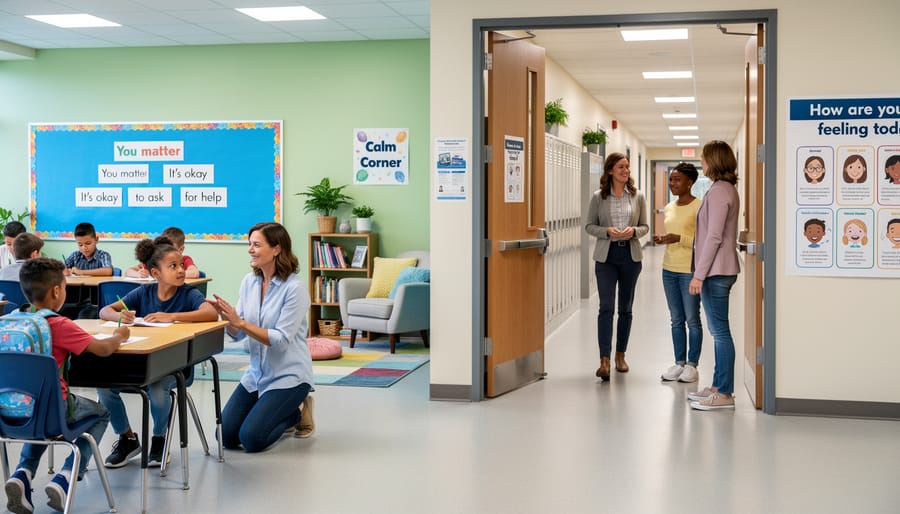
Schools have become a front line for recognizing mental health struggles in young people, yet most teachers aren’t trained mental health professionals. That’s where SMH Assist helps district boards across Ontario close the gap. This provincial implementation team works directly with school boards to build school mental health capacity, transforming classrooms into environments where students’ emotional well-being is supported alongside academic achievement.
The team takes a practical approach, equipping educators with concrete tools they can use every day. Their support includes:
- Training teachers and staff to recognize early warning signs of mental health challenges
- Developing evidence-based resources tailored to classroom settings
- Creating clear pathways to connect struggling students with appropriate services
- Implementing prevention strategies that benefit all students, not just those in crisis
For parents, this means your child’s teacher might notice concerning changes in behaviour or mood and know how to respond appropriately. It also means schools can better support kids with specific challenges, whether addressing anxiety during exams or accommodating ADHD in class. Teachers who participate in SMH Assist programs often report feeling more confident in their ability to support students’ mental health while respecting the boundaries of their role as educators.
This collaboration between mental health expertise and educational settings creates a safety net that catches problems earlier, when interventions are most effective and families have more options for support.
Child and Youth Mental Health Resources
CMHA Ontario has developed a comprehensive collection of educational materials that serve as practical tools for anyone supporting a child’s mental wellbeing. These resources were created with Kids Help Phone and the Ontario Ministry of Children and Youth Services, bringing together expertise from multiple trusted organizations.
The materials cover essential topics like recognizing signs of distress, understanding common mental health challenges in young people, and knowing when professional help is needed. Parents can find downloadable guides written in plain language that explain complex mental health concepts without overwhelming clinical terminology. Teachers and childcare providers have access to classroom-ready resources that help create supportive environments where kids feel safe discussing their feelings.
What makes these resources particularly valuable is their dual focus. They educate adults on how to support children while also providing age-appropriate materials that young people can engage with directly. This approach ensures the whole family or classroom community gains understanding together.
You can access these materials directly through the CMHA Ontario website at no cost. Most resources are available as PDFs for printing or digital viewing, making them accessible whether you prefer hard copies for your office or files you can reference on your phone. The materials are regularly updated to reflect current research and best practices in youth mental health support.

What Parents Can Learn from CMHA’s Approach
CMHA’s evidence-based approach offers parents a clear roadmap for supporting their children’s mental health without requiring advanced training or clinical expertise. The organization’s framework is built around proactive observation, timely intervention, and creating sustainable support systems, all things any parent can implement starting today.
One of the most valuable lessons from CMHA’s work is the importance of recognizing behavioral and emotional shifts early. Many parents second-guess themselves, wondering if changes they notice are normal development or signs of deeper struggles. Learning to identify early mental health signs becomes easier when you know what to watch for: persistent sadness lasting more than two weeks, withdrawal from previously enjoyed activities, significant changes in sleep or appetite, difficulty concentrating at school, or physical complaints without medical cause. CMHA emphasizes that parents know their children best, and trusting your instincts when something feels off is the first step toward getting help.
The organization also teaches that seeking support isn’t about waiting for a crisis. Many parents delay reaching out because they feel their child’s struggles aren’t “serious enough” or they should be able to handle it alone. CMHA’s framework flips this thinking: early intervention prevents escalation and builds resilience before problems become entrenched. If you’ve noticed concerning changes for more than a few weeks, or if your child’s distress is interfering with daily life, that’s the threshold for seeking professional guidance.
Here are practical steps you can take right now based on CMHA’s recommendations:
- Start regular check-ins with your child about their emotional state, using open-ended questions rather than yes-or-no prompts.
- Identify one of the 330 CMHA community locations near you and familiarize yourself with their services before you need them urgently.
- Create predictable routines around sleep, meals, and screen time, consistency reduces anxiety and supports emotional regulation.
- Model healthy coping strategies yourself, talking openly about stress and how you manage it.
- Build a support network of trusted adults (teachers, coaches, family members) who can provide additional perspectives on your child’s well-being.
CMHA also stresses the power of environment. A mentally healthy home doesn’t mean eliminating all stress or conflict, but rather creating space where emotions can be expressed safely. This might look like designating time when phones are put away for meaningful conversation, validating your child’s feelings even when you don’t fully understand them, or acknowledging that struggling emotionally isn’t a character flaw.
The real-world application of these principles means shifting from reactive parenting (responding only when problems surface) to intentional cultivation of mental wellness as part of daily life.
How Professionals Can Partner with CMHA
Teachers, childcare providers, and healthcare professionals play a vital role in identifying early signs of mental health challenges and connecting families to support. CMHA offers several pathways for collaboration that strengthen the safety net around children.
Start by exploring training opportunities through your provincial CMHA branch. Many locations offer professional development workshops on recognizing mental health concerns in children, trauma-informed practices, and creating supportive environments. The School Mental Health (SMH) Assist implementation team works directly with Ontario district school boards to promote student mental health and well-being, providing frameworks and resources that educators can integrate into their existing structures. If you work in education, reach out to your district to see if this partnership already exists or could be initiated.
Healthcare professionals can refer families to CMHA services while maintaining continuity of care. When you identify a child who could benefit from community support, contact your local CMHA branch to understand their intake process and current programming. This allows you to guide parents toward appropriate treatment options while CMHA provides the wraparound family support that reinforces clinical interventions.
Childcare providers can access CMHA’s educational resources to build their capacity for supporting children’s emotional development. The child and youth mental health materials created by CMHA Ontario in collaboration with Kids Help Phone offer practical tools you can use in daily interactions with young children.
Building a relationship with your local CMHA branch before a crisis occurs means you will already know who to call when a family needs help. Attend community events, join professional networks they facilitate, and keep their contact information readily available. This proactive approach ensures you can respond quickly and effectively when a child in your care shows signs of struggling.
Finding CMHA Support in Your Community
Locating the right help starts with knowing where to look. CMHA’s 330 community locations across Canada mean there’s likely a branch near you, but finding it isn’t always straightforward. Start at cmha.ca and use the provincial branch locator, select your province, then narrow by region or city. Each branch operates independently, so services vary. Some offer drop-in counseling, parent education workshops, and youth groups, while others focus on crisis intervention or referrals to specialized care.
Before you contact a location, clarify what you need. Are you seeking immediate crisis support, looking for information about your child’s behavior, or trying to connect with ongoing therapy? Knowing this helps staff direct you efficiently. When you call, expect to answer basic questions about your child’s age and your concerns. Many parents worry about being judged or not having “enough” of a problem to warrant help. Let that go. Community support exists precisely for these moments of uncertainty.
Wait times can be a barrier, especially in smaller communities. Ask upfront about availability and whether they offer virtual sessions. Some branches provide interim resources, worksheets, online modules, or parent support groups, while you wait for direct service. If your local branch can’t help immediately, request a referral. They often know which hospitals, school boards, or private practitioners have shorter waits.
Bring a list of specific observations to your first appointment: changes in sleep, school performance, friendships, or mood. Concrete examples help professionals assess need faster and recommend appropriate next steps. This isn’t about having all the answers; it’s about taking the first step.
The Canadian Mental Health Association stands as more than just a resource network. It represents a nationwide commitment to ensuring no child navigates mental health challenges alone. With 330 community locations and evidence-based programs spanning from early intervention to family support, CMHA has built the infrastructure Canadian families need.
For parents wondering if their child’s struggles warrant professional attention, the answer is clear: seeking help is never premature. Mental health challenges affect one in five children, and recognizing them early changes trajectories. CMHA’s accessible programs make that first step less daunting.
Professionals have a partner ready to collaborate. Whether you’re implementing School Mental Health Assist frameworks in your classroom or seeking training to better support the families you serve, CMHA provides the tools and expertise to strengthen your practice.
The ecosystem around a child matters profoundly. When parents educate themselves, when teachers recognize warning signs, when communities normalize mental health conversations, children thrive. CMHA makes that education accessible and actionable.
Start where you are. Visit your local CMHA branch, explore their child and youth resources, or simply begin the conversation with your child. That willingness to learn and support is exactly what today’s young people need.