Culture influences behavior through the shared beliefs, values, customs, and social norms that children absorb from family, community, and the broader society around them. From the moment a child is born, cultural forces shape how they communicate, relate to others, express emotions, solve problems, and understand their place in the world.
If you’ve ever wondered why your child responds differently to authority than their classmates, or why certain foods trigger strong reactions while others don’t, culture often holds the answer. These aren’t just abstract concepts. Cultural influence shows up in everyday moments: whether your toddler makes eye contact with adults, how your teenager handles conflict with friends, or even the way your family celebrates achievements together.
The patterns we see aren’t random. Children learn behavioral norms through observation, repetition, and the subtle messages embedded in daily routines. A child raised in a collectivist culture may naturally prioritize group harmony over individual expression, while a child in an individualist setting might be encouraged to voice personal opinions early and often. Neither approach is inherently better. Both reflect deeply held cultural values that guide how communities raise their young.
Dr. Patricia Greenfield, a developmental psychologist at UCLA, notes that cultural learning begins in infancy and continues throughout childhood, shaping not just what children do but how they think about themselves and others. Parents and teachers who recognize these cultural threads can better support children navigating multiple cultural contexts, whether at home, school, or in their wider community.
This article walks through concrete examples of cultural influence across different areas of child development, offering practical insights to help you understand the behaviors you observe every day.
What Cultural Influence on Behavior Really Means
Cultural influence on behavior refers to the way a child’s surroundings, family customs, religious practices, community expectations, and everyday social norms, quietly but powerfully shape how they think, feel, and interact with the world. It’s not about one dramatic moment but thousands of small lessons absorbed through observation, conversation, and correction from infancy onward.
When a toddler learns to say “please” before asking for a toy, when a school-age child knows whether to make eye contact with adults or look away respectfully, when a teenager decides whether asking for help is seen as resourceful or weak, these patterns emerge from the cultural environment surrounding them. Cultural heritage acts like an invisible set of instructions, teaching children what behaviors are valued, discouraged, or simply expected in their particular community.
- Culture
- The shared beliefs, values, traditions, and practices of a group that are passed down across generations and shape daily life.
- Behavioral Norms
- The unwritten rules about acceptable and expected ways to act in specific situations within a cultural group.
- Socialization
- The process through which children learn their culture’s norms and values by interacting with family, peers, and community members.
- Cultural Transmission
- The ways culture is passed from one generation to the next through teaching, modeling, storytelling, and shared experiences.
- Individualism vs. Collectivism
- Cultural orientations that emphasize either personal independence and achievement or group harmony and shared responsibility.
It’s crucial to understand that culture doesn’t replace a child’s individual personality or override their biology. A naturally shy child raised in an outgoing culture will still carry that temperament, but culture will influence whether they see their quietness as something to overcome or a trait their family respects. Similarly, a child with ADHD experiences their symptoms through a cultural lens that determines whether restlessness is seen as disruptive behavior needing correction or energetic spirit valued in certain contexts.
Culture, personality, and biology constantly interact. They’re not separate forces but interwoven threads that together create the unique way each child moves through their world.
How Culture Shapes Children’s Behavior
Early Childhood: Learning Through Observation
Between 18 months and five years old, children become expert observers. They watch how their mother greets the neighbor, how their father reacts when frustrated, how older siblings share food. This constant observation teaches them their culture’s unspoken rules long before anyone explains them directly.
A toddler in Japan learns to bow slightly when saying hello because that’s what everyone around her does. Meanwhile, a child in Brazil watches family members embrace and kiss cheeks during greetings, absorbing that physical warmth is how people show connection. Neither child receives formal instruction, they simply mirror what they see.
Eating habits emerge the same way. A three-year-old in India naturally uses his right hand for food after watching family members do the same at every meal. In Finland, a preschooler observes that everyone waits until all plates are served before eating, learning patience without a single lecture about table manners.
Emotional expression follows this pattern too. Children in cultures that value emotional restraint learn to keep disappointment quiet by watching adults model composure. Others grow up in households where feelings are expressed openly and loudly, making dramatic reactions feel completely normal.
School Age: Reinforcement and Peer Influence
As children enter school, cultural reinforcement becomes both more explicit and more complex. Teachers and parents begin clearly praising or correcting behaviors based on cultural values, a Japanese child might receive approval for working quietly without asking for help, while an American child gets praised for asking questions and showing initiative. These different reinforcements shape what children consider “good” behavior.
Peer influence amplifies cultural learning at this age. Children observe which classmates get positive attention and which face social consequences. In cultures valuing cooperation, a child who shares credit with their group earns respect. In cultures emphasizing individual achievement, the child who finishes first gains status. Kids quickly learn their culture’s unwritten rules through playground dynamics.
Cultural expectations around respect, classroom participation, and handling mistakes become crystal clear. A Korean child learns that disagreeing with a teacher, even politely, shows disrespect. A Swedish child learns that silent compliance without questioning seems passive. Neither behavior is inherently right, each reflects what their culture values. School-age children absorb these lessons through daily interactions, gradually internalizing their culture’s behavioral blueprint without anyone explicitly teaching them every rule.
Adolescence: Identity and Cultural Navigation
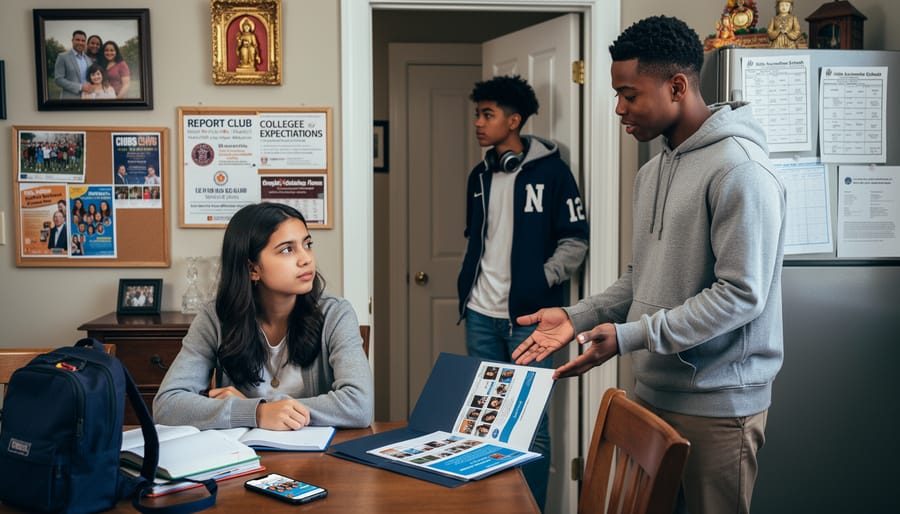
Teenagers face the complex task of forming their own identity while balancing three cultural worlds that often pull in different directions. They’re still rooted in their family’s traditions and values, yet increasingly influenced by peer group norms that may clash with what they learned at home. At the same time, they’re absorbing messages from the broader society through media, school, and community.
A teen from a traditional household might follow strict rules about dating and clothing at home but adopt different behaviors with friends. They’re not being dishonest, they’re learning to code-switch, adapting their behavior to different cultural contexts. This navigation becomes especially intense for immigrant teens or those whose family culture differs significantly from the dominant culture around them.
The adolescent brain’s heightened sensitivity to peer approval makes cultural negotiation even more challenging. Teens may temporarily reject family cultural practices to fit in, then later reclaim them as adults. Others find creative ways to blend cultures, selecting elements from each that feel authentic to their emerging identity.
Types of Cultural Influences on Children’s Behavior
Individualistic vs. Collectivistic Values
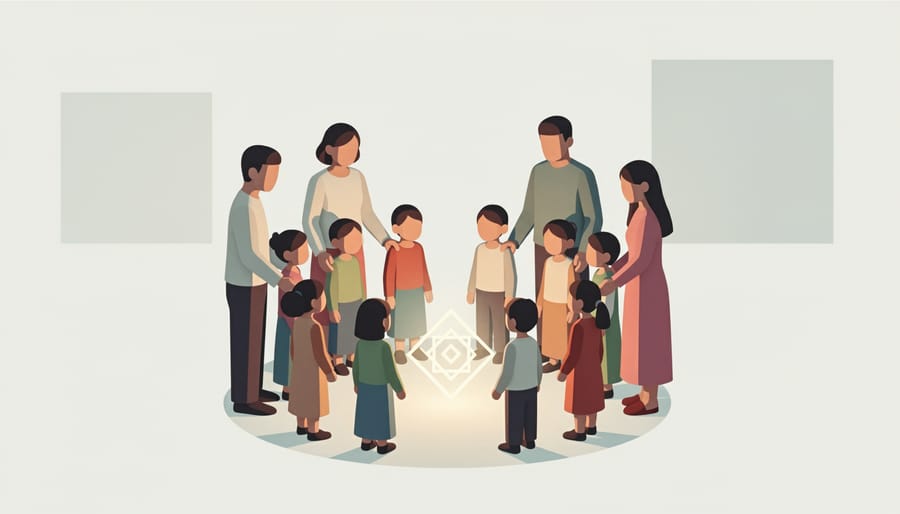
In individualistic cultures, common in the United States, Canada, and many Western European countries, children are often encouraged to express personal opinions, make independent choices, and pursue individual goals. A child might be praised for speaking up in class, choosing their own hobbies, or standing out with unique talents. Parents in these cultures frequently ask, “What do you want?” and celebrate personal achievements like winning a solo award or getting into a preferred college.
Collectivistic cultures, prevalent in many Asian, African, and Latin American societies, prioritize family needs, community harmony, and group success over individual desires. Children learn to consider how their actions affect the family’s reputation and to put group goals first. A child might be taught to share credit with siblings, defer to elders’ decisions about activities, or choose a career path that honors family expectations rather than personal passion.
These differences show up daily: an American child might argue with a parent to negotiate bedtime, viewing it as healthy self-advocacy, while a Chinese child might comply without question, seeing obedience as respect and family loyalty. Neither approach is better, they simply reflect what each culture values and teaches its children about their place in the world.
High-Context vs. Low-Context Communication
Some cultures teach children to read between the lines, picking up on facial expressions, tone of voice, and what isn’t said, while others encourage them to speak their minds plainly. This difference shapes everything from how children ask for help to how they handle disagreements.
In high-context cultures (common in many Asian, Middle Eastern, and Latin American communities), children learn to communicate indirectly. A Japanese child might say “It’s difficult” instead of “No,” and Middle Eastern children often express disagreement through careful phrasing rather than flat contradiction. These children develop nuanced social skills in interpreting nonverbal cues, a slight pause, a change in posture, a parent’s expression conveys volumes.
Low-context cultures (typical in the United States, Germany, and Scandinavia) value directness. Children learn to state their needs clearly: “I don’t want to go” or “I need help with this.” They’re taught that clarity prevents misunderstanding and that asking directly shows confidence, not rudeness.
Neither style is superior, but mismatches create confusion. A teacher from a low-context background might view an indirect child as evasive or uncertain, while a child raised with direct communication might seem blunt or disrespectful in high-context settings. Understanding these patterns helps adults interpret children’s behavior accurately rather than misjudging their intentions.
Authority and Respect Structures
Children in hierarchical cultures learn to defer to adults without question, standing when a teacher enters or using formal titles with anyone older. A child from such a background might never contradict a teacher, even when confused, and may view direct eye contact with authority figures as disrespectful. In contrast, children raised in egalitarian cultures often speak freely with adults, call teachers by first names, and advocate for themselves when they disagree. These differences aren’t defiance or passivity, they’re learned respect patterns. A child who doesn’t look you in the eye isn’t being rude; they’re showing deference as their culture taught them.
Emotional Display Rules
Some cultures teach children that showing joy freely, laughing loudly, jumping, squealing, is wonderful and healthy. Others encourage quiet contentment instead, viewing boisterous displays as disrespectful or attention-seeking. A child raised in a culture valuing emotional restraint might learn early to smile politely rather than beam broadly, to nod instead of shouting “yes!” These rules aren’t conscious lessons but daily demonstrations. Parents model them when they suppress tears at funerals or amplify excitement at celebrations. Children absorb which feelings are safe to show at home, school, or in public spaces. Many cultures teach boys to hide sadness while permitting anger, and teach girls the opposite pattern. Some communities expect children to openly express frustration so adults can address it; others view emotional control as maturity. These display rules shape not just outward behavior but how children eventually understand and process their own feelings internally.
Real-World Examples of Culture Shaping Behavior
Mealtime Behaviors Across Cultures
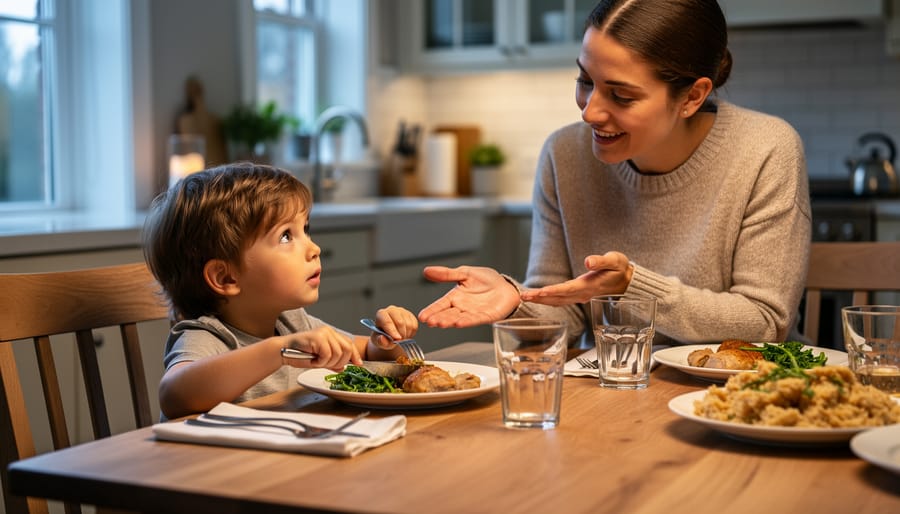
In many South Asian households, children learn to eat rice and curry with their right hand, a practice tied to tradition and sensory connection with food. Meanwhile, European families typically expect children to master fork and knife by age five. Japanese culture teaches children to hold their rice bowl close and eat quietly, while Italian families often encourage lively mealtime conversation as part of bonding. Some Mexican families expect children to finish everything served as a sign of respect, whereas French parents introduce small portions of unfamiliar foods repeatedly without pressure. These patterns aren’t arbitrary, they reflect deeply rooted values about respect, community, and nourishment that shape children’s relationship with food and social behavior. Understanding these differences supports both mental development and helps parents recognize that a child’s mealtime behavior often mirrors what their culture teaches, not defiance or pickiness.
Play and Socialization Patterns
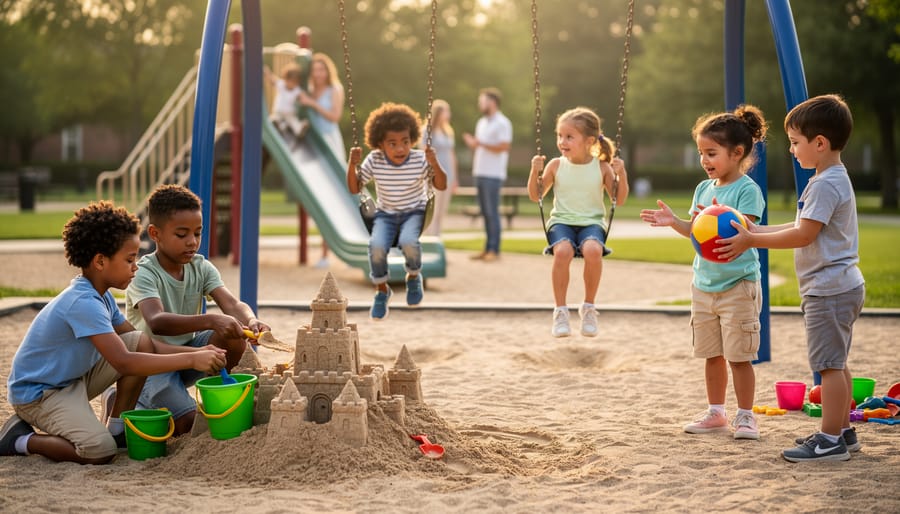
In many Western households, children might initiate competitive games where winning matters and individual achievement gets celebrated. A child in suburban North America learns early that being “the fastest” or “the best” at a playground game earns recognition. By contrast, children in collectivist cultures often engage in cooperative play where group harmony takes precedence. In parts of rural Indonesia, young children play traditional games that require coordinated movement and shared success rather than individual winners.
Gender expectations also vary dramatically across cultures. Some communities encourage all children to play with building blocks and dolls regardless of gender, while others maintain distinct toy categories. Outdoor play norms shift too: Scandinavian children routinely play outside in cold weather because their culture values nature exposure, whereas some East Asian urban cultures favor supervised indoor activities that develop specific skills. These patterns reflect deeper cultural beliefs about independence, risk, achievement, and social connection.
Academic and Achievement Behaviors
Culture shapes how children approach schoolwork and achievement from homework routines to classroom participation. In cultures prioritizing academic excellence, common in many East Asian communities, children often spend several hours on homework nightly, viewing it as their primary responsibility. Parents frequently sit alongside younger children during study time, reinforcing diligence. Conversely, some Western cultures emphasize balanced childhood experiences, where after-school sports and free play carry equal weight to academics.
Attitudes toward grades vary dramatically. Children from achievement-oriented cultures may feel intense pressure to excel and might hide disappointing marks from peers. In contrast, cultures valuing effort over outcomes teach children to view mistakes as learning opportunities rather than failures.
Classroom participation reveals cultural differences too. Students from cultures respecting authority may hesitate to ask questions, interpreting silence as respect rather than confusion. Meanwhile, children raised in cultures encouraging individual expression readily challenge ideas and seek clarification. Some cultures teach children to work through problems independently before requesting help, while others encourage immediate consultation with teachers. Understanding these patterns helps educators recognize that quiet students aren’t necessarily disengaged, they may simply be demonstrating culturally appropriate classroom behavior.
Expression of Emotions and Affection
In some cultures, children learn to express emotions freely and loudly, squealing with delight at gifts, crying openly when hurt, or shouting when angry. Other cultures teach emotional restraint, where children are encouraged to smile quietly, keep disappointment private, or express frustration through subtle cues rather than outbursts. A child raised in a Mediterranean or Latin American household might greet relatives with enthusiastic hugs and kisses, while a child from a Northern European or East Asian background might show affection through polite bows, respectful distance, or thoughtful gestures rather than physical contact.
These patterns extend to peer relationships. Some children learn that showing sadness to friends signals trust and deepens connection, while others are taught that sharing problems burdens others and should be avoided. Boys in certain cultures face pressure to hide sadness and fear, expressing only anger or stoicism, while girls might be discouraged from showing anger but encouraged to display warmth. Neither approach is inherently better, but recognizing these differences helps parents understand why their child might seem overly expressive or emotionally withdrawn compared to peers from different backgrounds.
Sleep and Bedtime Routines
Sleep arrangements vary dramatically across cultures. In many Asian, Latin American, and Middle Eastern families, children sleep in the same room or bed as parents well into elementary school, reinforcing closeness and family bonds. Western cultures typically encourage independent sleeping from infancy, promoting self-soothing and autonomy. Bedtime rituals differ too, some cultures emphasize quiet storytelling and lullabies, while others include evening prayers or family conversations. Sleep schedules reflect cultural norms around work, meal times, and social life, with Mediterranean cultures often having later bedtimes than Northern European ones.
How Parents and Professionals Can Apply This Understanding
Supporting Children Living Between Cultures
Children straddling multiple cultures often face conflicting behavioral expectations, what’s respectful at grandma’s house might seem overly formal at school, or assertiveness praised by teachers may clash with family values of deference. Rather than forcing them to choose one culture over another, help them develop bicultural competence: the ability to code-switch appropriately between cultural contexts. Acknowledge both identities openly (“We follow these traditions at home, and that’s different from what your friends do, both ways are good”). Create space to discuss the confusion they feel when expectations collide, validating their experience without dismissing either culture. Connect them with peers from similar backgrounds when possible, so they see others successfully navigating dual identities. Teach them that adapting behavior to different settings, like adjusting screen time habits for different households, isn’t being fake; it’s cultural fluency. Frame their multicultural experience as an asset, giving them broader perspective and adaptability rather than treating it as a problem to solve.
Avoiding Cultural Bias in Behavioral Assessment
When a teacher notices a child avoiding eye contact during conversations, or a healthcare professional observes a child who rarely speaks up in group settings, these behaviors might signal anxiety or developmental concerns, or they might reflect culturally taught respect and communication styles. Distinguishing between the two requires cultural humility and curiosity.
Before labeling a behavior as problematic, professionals should ask: Is this behavior causing the child distress or interfering with their learning and relationships? Does it occur across all contexts, or only in specific cultural settings? Consulting with families about their cultural expectations provides essential context. A child who seems “passive” in class discussions might come from a culture valuing reflective listening over quick verbal responses.
Cultural bias also appears in standardized assessments not normed for diverse populations. Effective evaluation combines multiple observation points, family interviews, and culturally informed screening tools. The goal isn’t to excuse concerning behaviors but to ensure cultural differences don’t pathologize normal development.
Building Cultural Awareness in Children
Teaching children cultural awareness starts early and grows with them. For toddlers and preschoolers, introduce simple traditions, cooking a family recipe together, celebrating cultural holidays, or reading stories from your heritage. Name what you’re doing: “This is how our family celebrates,” or “Your grandparents grew up doing this.”
School-age children benefit from exposure to other cultures through books featuring diverse characters, friendships with peers from different backgrounds, and conversations about why families do things differently. When they notice differences, respond with curiosity rather than judgment: “That’s interesting, I wonder why their family does it that way?”
Teenagers can engage more critically with cultural identity. Encourage them to explore their heritage through projects, interviews with relatives, or community involvement. Discuss how media portrays different cultures and help them recognize stereotypes versus authentic representation.
Throughout, model respect by avoiding generalizations and showing genuine interest in others’ traditions.
Common Questions About Culture and Children’s Behavior
Culture shapes so much of how children behave, but it also raises questions that concern parents and professionals trying to support healthy development. Here are answers to the most common concerns about cultural influences on behavior.
Can culture override a child’s personality?
Culture and personality work together rather than competing. A naturally shy child raised in an expressive culture will still be quieter than peers, but may show warmth differently than if raised in a reserved culture. Culture shapes the expression of personality traits, not the traits themselves.
How do I handle cultural conflicts with school expectations?
Start by communicating your family’s values to teachers, explaining specific behaviors that might seem unusual but are culturally appropriate. Most educators appreciate understanding the context behind a child’s actions. If conflicts persist, work with school counselors to find middle ground that respects both home culture and classroom needs without forcing your child to choose sides.
Is it harmful to raise children with strong cultural traditions?
Strong cultural traditions typically benefit children by providing identity, belonging, and clear values. Problems arise only when traditions are enforced rigidly without room for the child’s individual needs, or when children feel ashamed of their culture due to outside pressure. The goal is pride in cultural identity alongside flexibility for personal growth.
What if my child rejects our cultural practices?
Rejection often peaks during adolescence when teens explore identity and respond to peer influence. Keep cultural doors open without force, continue practices yourself, explain their meaning, and give your child space to return when ready. Many young adults reconnect with cultural roots after early resistance.
How does culture interact with neurodevelopmental differences?
Autism, ADHD, and other neurodevelopmental conditions exist across all cultures, but cultural norms affect how behaviors are interpreted and supported. A child who avoids eye contact might be seen as disrespectful in one culture and appropriately modest in another, complicating accurate assessment. Professionals should consider both cultural context and developmental differences when evaluating behavior.
Understanding these dynamics helps you support children through the complex process of growing up within, and sometimes between, cultural worlds. The key is recognizing that culture provides a framework for behavior without determining every choice a child makes. When you approach cultural influences with curiosity rather than judgment, you create space for children to develop both cultural pride and individual authenticity.
Culture shapes your child’s behavior in countless ways, from how they greet adults to how they express frustration. It’s not an obstacle to overcome or a badge to display, it’s simply the water they swim in, influencing their thoughts, feelings, and actions every day.
Understanding these cultural forces doesn’t mean you need to choose between honoring tradition and supporting mental health. The two work together. When you recognize that your child’s behavior reflects the values they’ve absorbed from family, community, and the world around them, you can guide them with patience rather than judgment. You can help them navigate conflicting expectations without feeling torn apart by them.
The children in your life, whether your own kids, students, or young patients, are doing their best to make sense of the cultural messages they receive. They’re learning when to speak up and when to listen, how to show respect, and what success means. Your awareness of these influences allows you to meet them where they are.
By honoring their cultural identity while nurturing their emotional well-being, you give them something invaluable: the freedom to be authentically themselves.