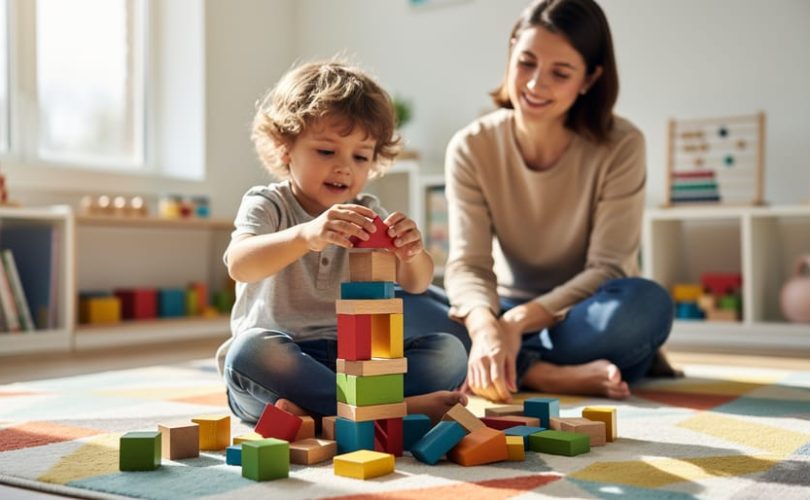
Play-based learning strategies are intentional teaching approaches that use children’s natural play activities to build academic, social, and cognitive skills. Rather than worksheets or direct instruction, children explore, experiment, and problem-solve through games, pretend play, building activities, and hands-on discovery.
These strategies matter now more than ever. Research continues to show that play strengthens cognitive flexibility, the brain’s ability to shift between tasks, adapt to new information, and approach problems from multiple angles. When a four-year-old builds a block tower that collapses and then redesigns it with a wider base, she’s not just playing. She’s exercising the same mental agility she’ll later use to revise an essay, pivot during a difficult conversation, or learn a new skill at work.
Yet many parents and educators feel caught between pressure for early academic achievement and instincts that tell them children need time to play. “I worried my son was falling behind because he wasn’t doing phonics drills in preschool,” one mother shared recently. “Then I watched him spend an hour creating an elaborate rescue mission with his toy animals, narrating every detail, solving problems, negotiating roles with his sister. That’s when I understood he was learning constantly.”
This article explains how play-based learning works in the developing brain, which types of play build cognitive flexibility most effectively, and how to put these strategies into practice whether you’re teaching in a classroom or supporting learning at home. You’ll find clear definitions, evidence-informed guidance, and answers to the questions parents and educators ask most often about balancing play with developmental goals.
What Play-Based Learning Really Means
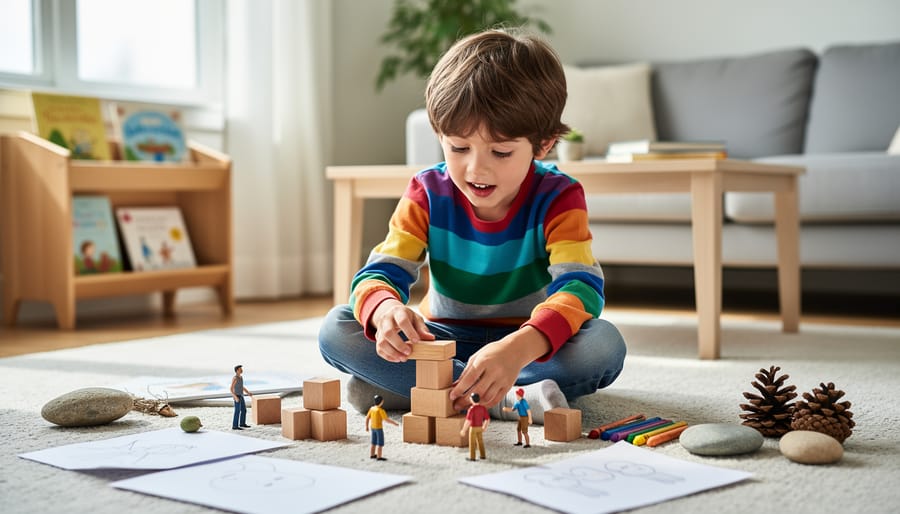
Play-based learning is when children explore, experiment, and discover through activities they choose and direct themselves. It’s not about adults handing down lessons or drilling facts. Instead, kids follow their curiosity, ask questions, build things, pretend, and solve problems on their own terms. The adult’s role shifts from instructor to facilitator: setting up interesting materials, stepping back, and letting the child’s natural drive to learn take the lead.
This approach is grounded in a simple truth: children are wired to learn by doing. When a toddler stacks blocks until they topple, then tries a different configuration, they’re experimenting with balance and cause-and-effect. When preschoolers negotiate the rules of a make-believe game, they’re practicing communication and flexibility. Research consistently shows that play-based learning outperforms direct instruction for developing critical thinking and social skills in young children. The magic lies in the low-pressure environment: mistakes become interesting puzzles, not failures.
- Play-Based Learning
- An educational approach where children gain skills and knowledge through self-directed, exploratory activities rather than formal lessons. Learning happens naturally as children play, with adults guiding rather than directing.
- Child-Led Play
- Play where the child decides what to do, how to do it, and when to change course. Adults provide safe space and materials but follow the child’s interests and pace.
- Structured vs. Unstructured Play
- Structured play has adult-set goals and rules (organized sports, board games); unstructured play is open-ended with no predetermined outcome (free play with blocks, outdoor exploration). Both support development in different ways.
- Cognitive Flexibility
- The brain’s ability to shift thinking, adapt to new information, and approach problems from different angles. Play strengthens this skill by requiring children to adjust plans and see things from multiple perspectives.
It’s worth clarifying what play-based learning isn’t. It’s not parking a child in front of a screen and calling it educational. Passive consumption doesn’t build the same neural pathways as active, hands-on exploration. It’s also not academic worksheets disguised as games. True play-based learning feels like play to the child, even as it builds real cognitive and social skills. There’s no pressure to perform or get the right answer. The process matters more than the product, and joy is a feature, not a distraction.
How Play-Based Learning Supports Cognitive Flexibility
When children play, they’re doing much more than having fun, they’re building the mental flexibility that helps them navigate an unpredictable world. Play creates a safe space to experiment, fail, and try again without real-world consequences. A child building a block tower that collapses learns to adjust their approach, testing new structures and weight distributions until something works. That process of trial, error, and revision strengthens the brain’s executive function, the mental control center that manages planning, focus, and adaptability.
The brain science behind this is surprisingly straightforward. Every time a child switches roles in a pretend game, negotiates rules with a playmate, or figures out a new way to use a household object, they’re forming and strengthening neural pathways. These connections make it easier to shift between tasks, consider multiple solutions, and adjust strategies when something doesn’t go as expected. Unlike rote learning, where the outcome is predetermined, play requires constant mental pivoting. One moment a child is the doctor, the next they’re the patient. A cardboard box becomes a spaceship, then a cave, then a shop counter.
This flexibility translates directly into real-world skills. Children who regularly engage in open-ended play tend to handle transitions better, moving from playtime to mealtime, adjusting when plans change, or switching focus during homework. They also develop stronger problem-solving abilities because play teaches them that there’s rarely just one right answer. When a puzzle piece doesn’t fit, they rotate it. When a friend disagrees, they negotiate. These everyday moments are rehearsals for the kind of adaptable thinking adults use constantly: adjusting a recipe when an ingredient is missing, taking a different route when traffic snarls, or pivoting a work project when priorities shift.
Play also builds emotional regulation, which is deeply connected to cognitive flexibility. Managing disappointment when a game doesn’t go your way or waiting your turn requires the same mental control as switching between math and reading or pausing one task to start another. The emotional ups and downs of play, excitement, frustration, triumph, give children repeated practice in staying flexible under pressure.
Types of Play That Build Flexible Thinking
Pretend and Imaginative Play
When your child transforms a cardboard box into a spaceship or slips on a cape to become a superhero, they’re doing more than just having fun, they’re building mental flexibility in real time. Pretend play asks children to hold multiple realities at once: they know they’re in the living room, but they’re also piloting through space. This constant shifting between imagination and reality exercises the brain’s ability to toggle perspectives and adapt rules on the fly.
Role-playing games like “house,” “restaurant,” or “vet clinic” require children to think from someone else’s viewpoint, what does the doctor do next, how does the customer feel, what would Mum say in this situation? Research confirms that pretend play supports perspective taking and helps children understand that others see the world differently. When the storyline shifts mid-game or a peer introduces a new twist, children learn to adjust their narratives without frustration.
Simple props spark this flexibility: dress-up clothes, puppets, toy kitchens, or even sticks and stones for building imaginary worlds. There’s no script, no right answer, just the freedom to experiment, revise, and invent as they go.
Open-Ended Construction and Creative Play
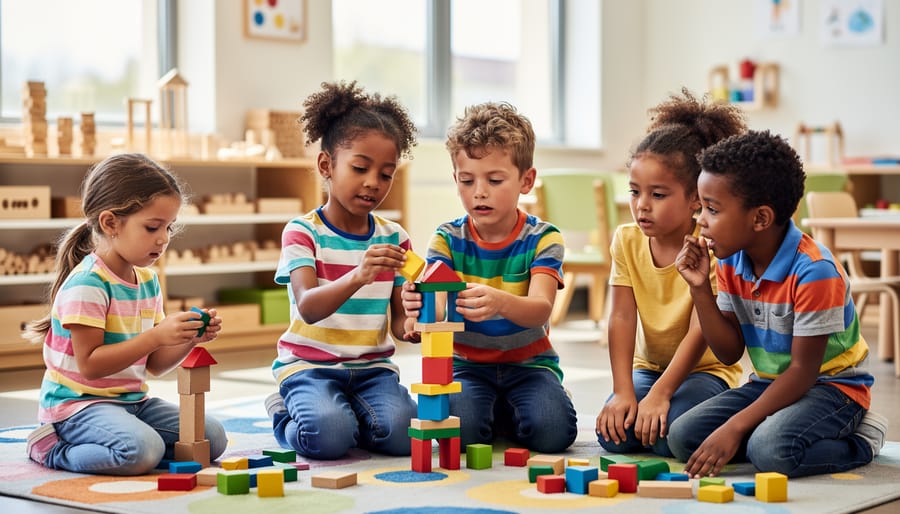
When children stack blocks, squish clay, or arrange loose parts like buttons and cardboard tubes, they’re not just making a mess, they’re practicing mental flexibility in real time. Open-ended construction and creative play have no instruction manual and no single right answer, which means kids must constantly adapt their approach as ideas evolve.
A tower that keeps toppling? Try a wider base or shorter design. A painting that didn’t turn out as planned? Add new colors or declare it something else entirely. This kind of play teaches children that mistakes aren’t failures, they’re information. Each attempt refines their thinking, and shifting gears becomes second nature.
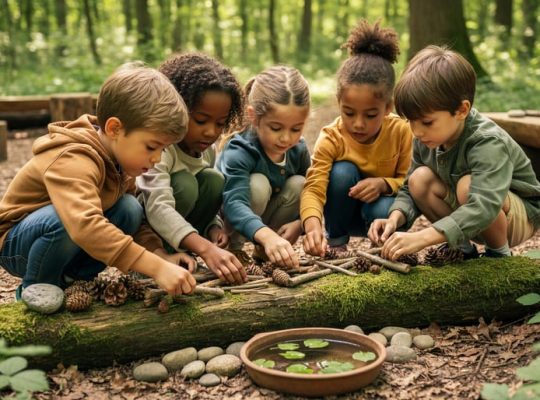
Materials like building blocks, art supplies, fabric scraps, natural objects, and recycled materials invite experimentation. Unlike toys with fixed purposes, these items can become anything a child imagines, encouraging them to pivot between roles and ideas fluidly. One moment the blocks are a castle; the next, they’re a road.
This process strengthens cognitive flexibility by normalizing revision and creative problem-solving. Children learn to hold multiple possibilities in mind, test them, and adjust without frustration. They develop resilience and the confidence to try new strategies when the first one doesn’t work, a skill that serves them far beyond the playroom.
Physical and Movement-Based Play
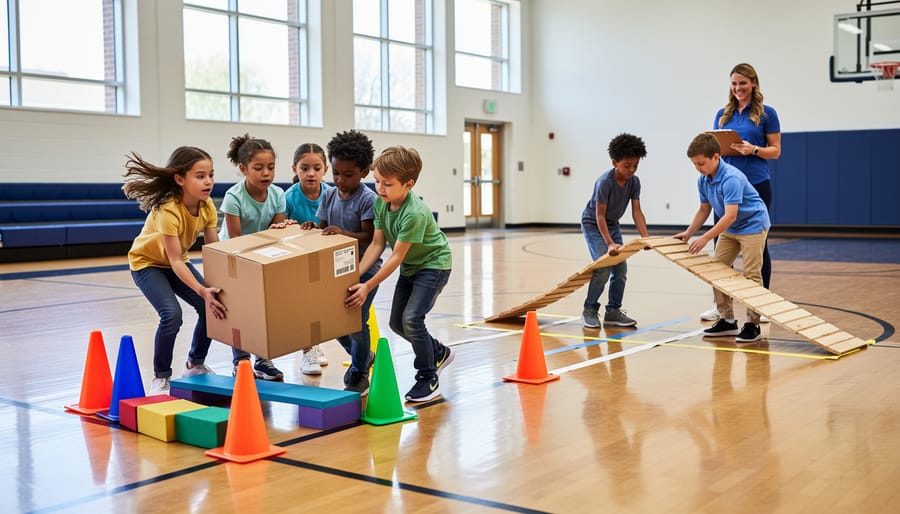
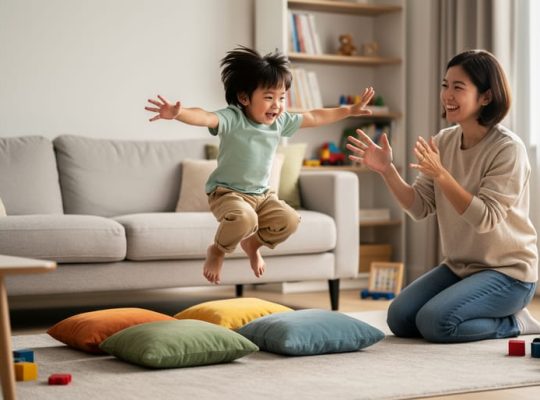
Running, jumping, spinning, when children move their bodies, they’re doing more than burning energy. Physical play challenges the brain to make split-second decisions, adjust movements on the fly, and solve problems with their whole body. That quick pivot during tag, the balance shift on a wobbling beam, or the route change mid-climb all require flexible thinking in real time.
Active play strengthens the connection between motor skills and executive function. When kids navigate an obstacle course, they plan sequences, monitor their movements, and adapt when something doesn’t work, core components of cognitive flexibility. Dance and movement games add rhythm, coordination, and the need to switch between different actions quickly. Even rough-and-tumble play teaches children to read social cues, adjust their force, and negotiate physical boundaries.
The beauty of movement-based play is its immediacy. Children get instant feedback from their bodies and environment, learning to respond and recalibrate without overthinking. This physical problem-solving builds neural pathways that support adaptability in all areas of life. You don’t need fancy equipment, climbing trees, jumping puddles, creating living room obstacle courses, or chasing games at the park all count. The key is giving children space to move freely, take safe risks, and figure things out through action.
Cooperative and Social Play
When children play together, they step into a constant dance of give-and-take that stretches their thinking in real time. Cooperative games, building a fort as a team, playing board games with shared rules, organizing a pretend restaurant, require kids to listen to other perspectives, negotiate roles, and adjust their own ideas when plans shift. A child who wants to be the doctor might need to accept being the patient this round, or two builders might need to compromise on which blocks go where. These micro-moments of adapting to others’ needs are cognitive flexibility in action.
Turn-taking games teach patience and mental shifting: holding one idea in mind while waiting, then pivoting when it’s finally your turn. Group projects, whether it’s a collaborative art piece or a backyard obstacle course, ask children to coordinate, troubleshoot together, and celebrate joint success rather than individual victory. Social play also builds empathy, understanding that friends have different feelings and preferences, which directly strengthens the ability to see situations from multiple angles. When a game doesn’t go as planned or a playmate suggests a new rule, children learn to regulate disappointment and flex their thinking. These skills transfer beyond playtime into classroom cooperation, family dynamics, and navigating friendships as they grow.
Children rarely stick to one play type at a time. A block tower becomes a castle; the castle needs a dragon; suddenly they’re acting out a story while building and negotiating roles with siblings. This natural blending is exactly what develops well-rounded cognitive flexibility. The key for adults is to offer a variety of materials and opportunities, then step back. When children have access to different play experiences, imaginative, creative, physical, and social, they strengthen multiple mental pathways at once, building a more adaptable, resilient brain.
Practical Strategies for Parents and Educators
Start by making play inviting and accessible. You don’t need expensive toys or elaborate setups. The goal is to create an environment where children feel free to explore, experiment, and make their own choices. Keep materials visible and within reach, baskets of blocks on a low shelf, art supplies in clear bins, dress-up clothes on hooks children can access themselves. When play items are easy to find and use, children are more likely to dive in without waiting for permission or instruction.
Step back and let children lead. This is often the hardest part for well-meaning adults. Resist the urge to direct the play, correct the “wrong” way of using a toy, or jump in the moment a child seems stuck. Cognitive flexibility grows when children work through their own problems, change their plans mid-stream, and discover solutions on their own. Your role is to observe, stay nearby for safety and support, and trust that the child’s choices have value even when they look messy or aimless.
A few simple, everyday strategies can weave play-based learning into your home or classroom without overhauling your routine:
- Set up inviting play spaces with accessible, organized materials that children can choose independently
- Offer open-ended materials like cardboard boxes, fabric scraps, natural objects, and art supplies with no fixed outcome
- Model curiosity by exploring alongside children, showing your own wonder and problem-solving process
- Ask open questions that spark thinking: “What do you think will happen?” or “How could you try it differently?”
- Allow safe risk-taking, climbing, balancing, trying new things, with supervision but without constant intervention
- Reduce screen time to make space for active, imaginative, and social play that builds flexibility
- Honor children’s interests and follow their lead, even when their play ideas surprise you or diverge from your plan
Recognize teachable moments without hijacking the play. When a child is frustrated because their block tower keeps falling, you might say, “That’s tricky. I wonder what might help?” rather than fixing it yourself or delivering a mini-lesson on balance. When two children disagree about the rules of their game, pause before stepping in. Often, they’ll negotiate, compromise, and adjust, that’s cognitive flexibility in action. Your quiet presence and occasional reflective comment (“You both have different ideas. How can you figure this out together?”) can guide without controlling.
Make time sacred. Even 20 minutes of uninterrupted, child-led play each day has real impact. Protect this time from screens, scheduled activities, and adult agendas. In classrooms, resist the pressure to fill every minute with structured tasks. Free play isn’t wasted time, it’s when the brain practices the very skills children will need for learning, relationships, and resilience throughout their lives.
When to Use Play-Based Learning and What to Expect
Play-based learning works beautifully from toddlerhood through early elementary school, though it looks different at each stage. Toddlers thrive on sensory exploration and simple pretend play, stacking blocks, pouring water, mimicking grown-up tasks. Preschoolers dive deeper into imaginative worlds and start negotiating rules with peers. By early elementary, children blend play with more structured problem-solving, using games and building projects to test ideas and collaborate.
You won’t see overnight transformations. Cognitive flexibility develops gradually, like a muscle that strengthens with consistent use. Some parents notice small shifts within weeks, a child who used to melt down over a cancelled plan might start suggesting alternatives, or a rigid thinker begins experimenting with new ways to build a tower. Other benefits, like improved emotional regulation and creative problem-solving, unfold over months as neural pathways strengthen through repeated playful challenges.
Many parents worry: “Is my child learning enough if they’re just playing?” The answer is yes. Play isn’t separate from learning, it is learning. When your child negotiates roles in a game, they’re practicing social skills and perspective-taking. When they redesign a block structure after it falls, they’re building persistence and flexible thinking. These capacities form the foundation for everything that comes later, including academic success.
Play-based learning doesn’t replace academics; it complements them. Children who develop strong cognitive flexibility through play often adapt more easily to classroom demands, handle mistakes with less frustration, and approach new concepts with curiosity rather than anxiety. You’re not choosing between play and school readiness. You’re giving your child the mental agility that makes formal learning stick.
Frequently Asked Questions
Children naturally learn through play, but parents and educators often have practical questions about how this approach fits into daily life and whether it truly supports development. Here are answers to the most common concerns about play-based learning and cognitive flexibility.
Can play-based learning work alongside academics?
Yes, the two approaches complement each other beautifully. Play-based learning builds the foundational cognitive skills, problem-solving, attention control, flexible thinking, that make formal academic learning more effective, not less.
How much free play is enough?
Most child development experts recommend at least one to two hours of unstructured play daily for young children. Quality matters more than quantity: even 30 minutes of truly child-led exploration can strengthen cognitive flexibility if the child is genuinely engaged.
What if my child only wants screen time?
Screen preference is common, but it helps to offer appealing alternatives without shame or pressure. Try introducing tactile materials, outdoor time, or co-playing alongside your child with open-ended toys to gently shift their interest toward more interactive play.
When should I be concerned about my child’s flexibility?
If your child becomes extremely distressed by minor changes, struggles intensely with transitions despite support, or shows rigid patterns that interfere with daily functioning, it’s worth speaking with a pediatrician or child psychologist. Most children develop flexibility at their own pace, but persistent challenges deserve professional insight.
These questions reflect real worries that caring adults face. Remember that play-based learning is not about perfection or forcing specific outcomes. It’s about creating space for children to explore, experiment, and grow their thinking skills in ways that feel natural and joyful. If you’re offering opportunities for varied, child-led play and responding with warmth when your child navigates challenges, you’re already supporting their cognitive flexibility. Trust that small, consistent efforts add up, and don’t hesitate to reach out for guidance if something feels off.
A Parent’s Story: Watching Flexibility Grow Through Play
When Maya was four, she’d dissolve into tears whenever plans changed. A cancelled playdate or a different route to the park could derail her whole afternoon. Her mum, Priya, worried constantly about how she’d cope with school transitions and life’s inevitable surprises.
Then Priya stumbled across play-based learning during a parenting workshop. She decided to try something simple: instead of directing Maya’s playtime, she stepped back. She set out cardboard boxes, fabric scraps, and kitchen utensils, then let Maya lead.
At first, Maya stuck to familiar patterns. But gradually, something shifted. She started turning boxes into rockets one day and castles the next. When her tower collapsed, she’d pause, then rebuild it differently. During pretend play with her stuffed animals, she’d invent new storylines mid-game, switching characters and changing rules without missing a beat.
The real breakthrough came three months later. Their usual swimming class was unexpectedly closed, and Priya braced for a meltdown. Instead, Maya shrugged and suggested they go to the playground instead. “We can pretend it’s a swimming pool,” she said cheerfully.
Priya couldn’t believe it. The rigid, easily frustrated child had become someone who could pivot, adapt, and even find joy in the unexpected. It wasn’t an overnight transformation, and Maya still had tough moments. But the hours of unstructured, imaginative play had quietly built something powerful: the mental flexibility to roll with life’s changes.
Play-based learning isn’t just about keeping children entertained, it’s a fundamental way to build the cognitive flexibility they need to navigate life’s challenges with resilience and creativity. When we give kids space to explore, imagine, and problem-solve through play, we’re supporting brain development that will serve them for years to come.
You don’t need elaborate setups or expensive toys. Start where you are. Let your child lead more often. Notice the moments when they’re adjusting their plans, negotiating with a friend, or trying a new approach after something doesn’t work. Those everyday discoveries are exactly where flexible thinking takes root.
There’s no one right way to support your child’s development, and questions or concerns along the way are completely normal. What matters most is creating an environment where play is valued, curiosity is encouraged, and children feel safe to experiment and grow.
By embracing play-based learning, you’re not falling behind on preparation for the future, you’re investing in the adaptable, confident thinkers we need. Trust the process, celebrate small wins, and remember that open conversations about development benefit every child.