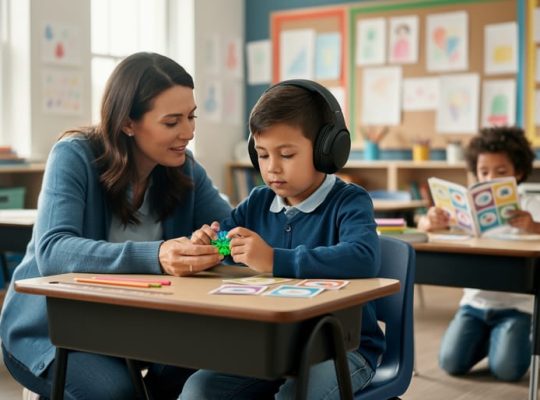

Noise pollution is unwanted or harmful sound that disrupts normal activity and diminishes quality of life, and it’s quietly becoming one of the most pervasive environmental health threats we face today. From the roar of traffic outside our windows to the constant hum of machinery in our workplaces, excessive noise affects millions of people worldwide and carries serious consequences for both physical and mental wellbeing.
The impact goes far deeper than simple annoyance. Research shows that chronic exposure to high noise levels triggers a cascade of physiological stress responses in our bodies, raising blood pressure, disrupting sleep patterns, and increasing the risk of heart disease. Children exposed to persistent noise in schools and homes face unique vulnerabilities, including difficulties with concentration, delayed language development, and elevated stress hormones that can affect their growing brains.
As a pediatrician, I’ve watched parents struggle to understand why their child has trouble focusing on homework in an apartment near a busy highway, or why a toddler seems unusually irritable after moving to a noisier neighborhood. These aren’t coincidences. The sounds we dismiss as background noise can fundamentally alter how our bodies and minds function.
This article explores the full scope of how noise pollution damages human health across all ages, the biological mechanisms behind these effects, and the populations most at risk. Understanding these connections is the first step toward protecting ourselves and the people we care for from this often-overlooked environmental hazard.
What Noise Pollution Actually Means
Noise pollution means unwanted or harmful sound that interferes with normal activities, disrupts sleep, or causes physical or mental health problems. Unlike pleasant sounds like music or conversation, noise pollution consists of loud, intrusive, or persistent sounds that the body perceives as stressful or damaging. It’s not just about volume alone, timing, duration, and context all matter. A jackhammer at 8 a.m. outside your bedroom window qualifies as noise pollution even if the same sound level wouldn’t bother you in the middle of an empty field.
Noise measured in decibels (dB) helps us understand when sound becomes harmful. Normal conversation sits around 60 dB. Traffic noise typically ranges from 70 to 85 dB. Prolonged exposure above 70 dB can interfere with sleep and concentration, while sounds above 85 dB begin causing physical damage to hearing with repeated exposure. A lawnmower produces about 90 dB, a chainsaw reaches 110 dB, and a jet taking off generates 120 dB or more.
- Decibels (dB)
- The unit measuring sound intensity on a logarithmic scale, where every 10 dB increase represents sound that’s roughly twice as loud to human ears.
- Chronic noise exposure
- Repeated or continuous exposure to harmful noise levels over weeks, months, or years, leading to cumulative health effects beyond immediate hearing damage.
- Ambient noise
- The background sound level present in an environment, such as distant traffic hum or HVAC systems, which becomes problematic when it exceeds comfortable levels.
- Noise threshold
- The sound level at which negative health effects begin, generally considered 70 dB for sleep and concentration disruption and 85 dB for hearing damage risk.
- Sound pressure level
- The force that sound waves exert on the ear, measured in decibels, determining both perceived loudness and potential for physical harm.
Common sources of noise pollution surround us daily. Road traffic creates constant low-to-moderate noise in urban and suburban areas. Construction sites generate intense, intermittent sounds. Airports expose nearby communities to recurring jet noise. Industrial facilities produce machinery hum and impact sounds. Even household appliances like vacuum cleaners, blenders, and leaf blowers contribute to our cumulative noise exposure. The key difference between environmental noise and acceptable sound levels lies in intensity, duration, and whether the sound prevents normal activities or triggers stress responses in the body.
How Noise Pollution Works on the Human Body
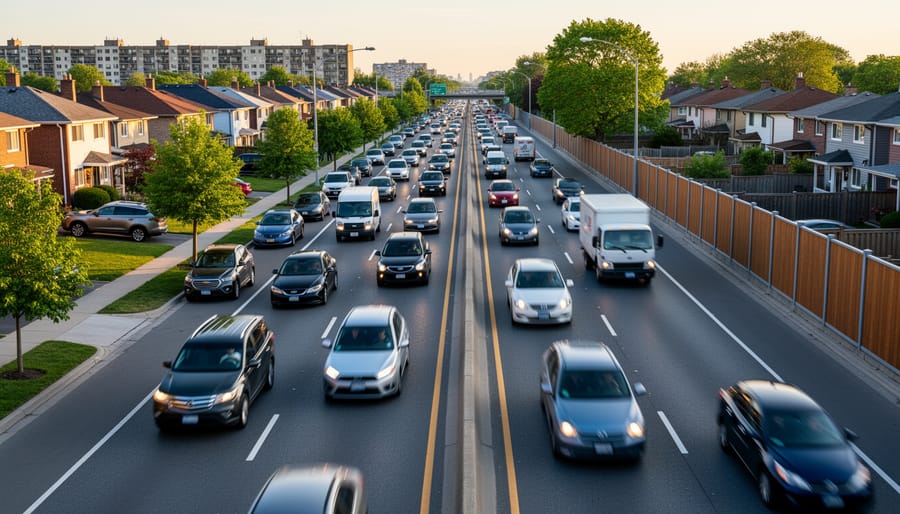
When your ears detect loud or unexpected sounds, your body doesn’t wait for your conscious mind to decide if there’s danger. The auditory system immediately sends signals to the amygdala, the brain’s alarm center, which triggers a cascade of physiological responses designed to help you react quickly. Your heart rate spikes, blood pressure rises, and stress hormones flood your system, all within milliseconds of the noise reaching your ears.
This automatic stress response involves the release of cortisol and adrenaline. Noise increases stress hormones even when you’re asleep or unaware of the sound consciously. Your body treats persistent noise as an ongoing threat, keeping your nervous system in a heightened state of alertness. Over time, this chronic activation takes a real toll.
The cardiovascular system bears much of this burden. Repeated spikes in blood pressure and heart rate strain blood vessels and the heart muscle itself. Adults exposed to chronic environmental noise show higher rates of hypertension and coronary heart disease. Children’s developing cardiovascular systems are similarly affected, though the damage may not become apparent until adulthood.
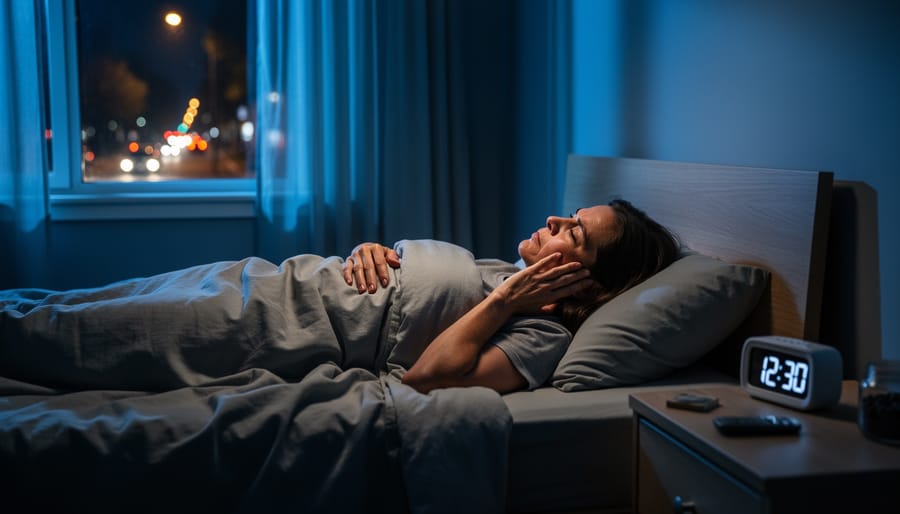
Sleep disruption represents another critical pathway. Noise doesn’t need to wake you fully to cause harm. Even sounds that don’t rouse you from sleep can fragment your sleep architecture, reducing time spent in restorative deep sleep and REM stages. Your brain continues processing sounds throughout the night, triggering micro-arousals and stress responses that you won’t remember in the morning. Poor sleep quality then compounds other health problems, impairing immune function, emotional regulation, and cognitive performance.
The auditory system itself sustains direct damage from excessive noise. Loud sounds can injure or destroy the tiny hair cells in the inner ear that convert sound waves into electrical signals. Unlike most body tissues, these cells don’t regenerate. The damage is permanent. Lower-level chronic noise may not cause immediate hearing loss but can lead to tinnitus, increased sensitivity to sound, and gradual hearing decline over years.
Hormonal changes extend beyond the immediate stress response. Chronic noise exposure disrupts the body’s natural cortisol rhythm, keeping baseline levels elevated. This affects metabolism, appetite regulation, and the immune system’s ability to fight infection and inflammation. The effects accumulate across the lifespan, making noise pollution a serious public health concern for people of all ages.
Types of Health Effects from Noise Pollution
Physical Health Impacts in Adults and Children
Chronic exposure to noise pollution sets off a cascade of physical health problems that affect people of all ages, though the mechanisms and severity can vary between adults and children. The constant barrage of unwanted sound triggers stress hormones like cortisol and adrenaline, which over time strain multiple body systems.
Traffic noise and cardiovascular disease research has established clear links between prolonged noise exposure and heart health. Adults living in high-noise environments show elevated rates of hypertension, with blood pressure remaining higher even during sleep. Over years, this persistent elevation increases the risk of heart attacks and strokes. Children’s developing cardiovascular systems respond similarly, showing raised blood pressure and heart rate when exposed to sustained noise, though the long-term consequences may not manifest until adulthood.
The documented physical health effects include:
- Cardiovascular disease and hypertension
- Noise-induced hearing loss and tinnitus
- Chronic sleep disruption and insomnia
- Elevated blood pressure during waking and sleeping hours
- Weakened immune system function
Hearing damage occurs when noise exceeds 85 decibels for extended periods. Adults in noisy workplaces or neighborhoods face gradual hearing loss, but children’s ears are more sensitive. A child’s ear canal is smaller, amplifying sound pressure, and their auditory systems are still developing, making them more vulnerable to permanent damage from the same noise levels an adult might tolerate.
Sleep disruption affects everyone exposed to nighttime noise, but the impacts differ by age. Adults experience fragmented sleep and reduced deep sleep phases, leading to daytime fatigue and impaired immune function. Children need more total sleep for growth and development, so noise-related sleep loss can affect their physical growth, hormone regulation, and ability to fight infections. Even when people don’t consciously wake up, their bodies register the noise, triggering stress responses that prevent restorative sleep.
Metabolic changes also emerge from chronic noise stress. Adults show increased markers of inflammation and altered glucose metabolism. In children, persistent noise exposure can disrupt normal metabolic development, potentially setting patterns that affect health throughout life.
Mental and Cognitive Health Effects Across Ages
Chronic noise exposure affects mental and cognitive functioning across the entire lifespan, from young children to older adults. When our brains constantly process unwanted sound, cognitive resources get diverted from thinking, learning, and emotional regulation toward filtering out distraction. Over time, this creates measurable deficits that impact everyday life.
Anxiety and irritability are common responses to persistent noise. Adults living near highways or airports report higher rates of anxiety disorders and feelings of helplessness over their environment. Children exposed to chronic classroom or neighborhood noise show increased irritability and difficulty self-regulating emotions. The unpredictability of sudden noises triggers stress responses repeatedly throughout the day.
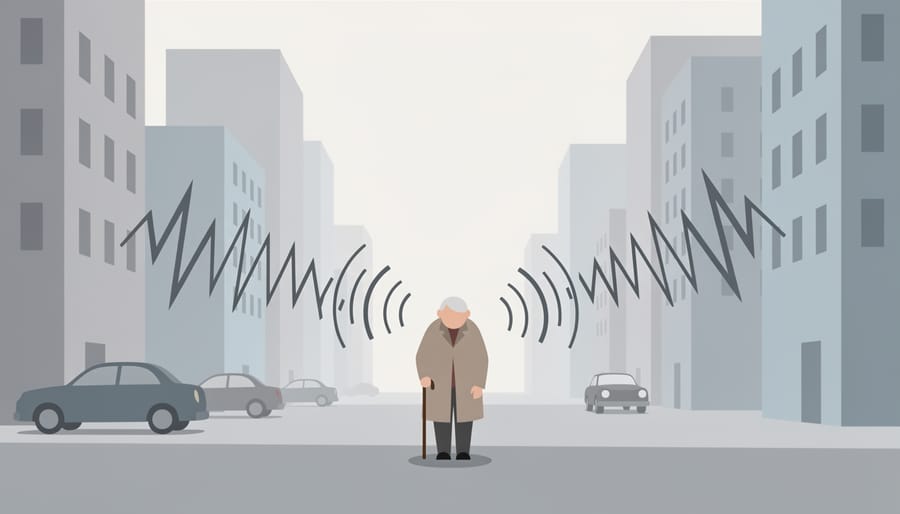
Concentration and memory suffer when noise interferes with cognitive processing. Office workers near construction sites struggle to complete complex tasks. Students in noisy environments take longer to process information and make more errors. Older adults experience faster cognitive decline when exposed to chronic environmental noise, particularly affecting working memory and executive function.
Mental fatigue accumulates as the brain works harder to maintain focus despite auditory interference. This exhaustion isn’t just tiredness, it’s cognitive depletion that reduces problem-solving ability and decision-making quality. Teachers in loud schools report burnout, while children facing both classroom noise and school stress from academic demands show compounded mental health impacts.
Sleep disruption from nighttime noise creates next-day cognitive impairment across all ages. Even when people don’t fully wake, noise fragments sleep architecture, reducing restorative deep sleep phases. This affects mood stability, attention span, and learning capacity the following day. The mental health toll becomes particularly visible when noise exposure continues for months or years without relief.
Developmental and Behavioral Effects in Children

Children face unique developmental and behavioral consequences from noise pollution because their brains and nervous systems are still forming. Unlike adults whose neural pathways are largely established, young children process environmental stimuli differently, making chronic noise exposure particularly disruptive during critical developmental windows.
Language acquisition takes a measurable hit in noisy environments. When children can’t clearly hear speech sounds, whether from teachers, parents, or peers, they miss the auditory input essential for building vocabulary and grammar. Studies consistently show that children in classrooms exposed to aircraft noise or heavy traffic demonstrate slower language development compared to peers in quieter settings. The brain needs clear, consistent auditory signals to map speech patterns, and background noise creates interference that forces the developing auditory cortex to work harder with less precision.
Attention and concentration suffer similarly. Developing brains haven’t yet built the cognitive filtering mechanisms that help adults tune out irrelevant sounds. A child trying to focus on homework while traffic rumbles past the window must expend mental energy managing the distraction that an adult might unconsciously ignore. This cognitive load doesn’t just cause momentary lapses, over time, it can reshape how attention systems develop, potentially contributing to difficulties with sustained focus and task completion.
Academic performance shows the cumulative effect. Children chronically exposed to environmental noise tend to score lower on reading comprehension tests, struggle more with complex problem-solving tasks, and show reduced memory retention. These aren’t minor gaps, the differences can amount to several months of learning progress lost over a school year.
Behavioral and emotional regulation also become strained. Persistent noise creates a low-grade stress response that elevates cortisol levels in children’s bodies. This physiological arousal manifests as irritability, restlessness, difficulty calming down, and sometimes aggression. Teachers in noisy schools report more behavioral disruptions and reduced cooperation during group activities.
The vulnerability extends beyond biology. Children typically have less control over their environments than adults, can’t easily leave noisy situations, and face longer cumulative exposure across their developmental years. A child living near a highway doesn’t get to choose quieter housing, they’re absorbing the impact during years when their brain architecture is most malleable and most susceptible to environmental shaping.
Where and How Noise Pollution Affects Daily Life
Noise pollution infiltrates nearly every setting where people live, work, and gather. In residential areas, constant traffic rumble from highways and major roads creates a baseline of sound that rarely subsides, even at night. Homes located within a few hundred meters of busy streets expose residents to noise levels that disrupt sleep and conversation throughout the day. Aircraft flight paths add another layer, with homes near airports experiencing regular overhead roars that can exceed safe thresholds dozens of times daily.
Schools present particular challenges because they’re often built in urban areas where land is available, sometimes adjacent to highways or under flight paths. Children attending these schools face sustained exposure during critical learning hours, when concentration matters most. The same issues affect childcare centers and preschools situated in commercial districts or near construction zones, where the noise environment contributes to broader stress from surroundings that young children navigate daily.
Workplaces add occupational noise exposure for adults, from factory floors and construction sites to open-plan offices where conversation and equipment hum create constant background sound. Even service workers in restaurants and retail spaces contend with elevated noise throughout their shifts. Public spaces like parks near roadways, transit stations, and shopping centers expose everyone to intermittent spikes in sound levels.
The cumulative effect means that many people, regardless of age, cycle through multiple noisy environments each day. A child might live near a highway, attend a school beside train tracks, and play in parks bordered by busy streets. An adult might commute on noisy transit, work in a loud office, and return to a home where traffic noise seeps through windows. These everyday settings don’t just create isolated exposure moments. They layer together, building a sustained pattern that affects community safety perceptions and overall well-being for families and individuals across all life stages.
Who Is Most at Risk
While noise pollution affects everyone, some groups face heightened vulnerability due to biological, developmental, or circumstantial factors.
Children remain particularly at risk because their brains and auditory systems are still developing. Chronic exposure during critical growth periods can disrupt language acquisition, attention development, and stress regulation in ways that persist into adulthood. Children also spend more years exposed to their environments than adults who might relocate, and they have less control over their surroundings. Access to quiet green spaces and stable living conditions can significantly buffer these risks, though not all families have equal access to such protective factors.
Older adults face greater risk too. Age-related hearing loss makes it harder to filter out background noise, increasing cognitive load and fatigue. Elderly people with cardiovascular conditions are more susceptible to noise-induced stress responses that can trigger heart complications.
Pregnant women represent another vulnerable group. Sustained noise exposure during pregnancy has been linked to increased stress hormone levels, which can affect fetal development and birth outcomes. The mother’s stress response becomes the developing baby’s environment.
Night-shift workers experience compounded effects. They must sleep during daytime hours when environmental noise peaks, leading to chronic sleep deprivation that amplifies cardiovascular and metabolic health risks.
People with pre-existing health conditions, such as heart disease, anxiety disorders, or autism spectrum conditions, often experience more pronounced reactions to noise pollution. Their bodies may respond more intensely to auditory stressors or have fewer reserves to manage the additional burden.
Socioeconomic factors intersect with all these vulnerabilities. Families without housing stability or those living near highways, airports, or industrial zones face constant exposure with limited options for creating quieter environments.
What Parents and Communities Can Do
You don’t need to accept noise pollution as an unchangeable fact of modern life. Start at home by identifying your loudest noise sources and addressing what you can control. Seal gaps around windows and doors with weatherstripping to block outside traffic noise. Add soft furnishings like rugs, curtains, and upholstered furniture that absorb sound rather than bouncing it around rooms. If you live near a highway or airport, consider acoustic curtains or double-pane windows for bedrooms where uninterrupted sleep matters most.
When choosing childcare centers or schools, visit during typical hours and listen. Are children constantly shouting to be heard over nearby construction or traffic? Ask administrators what they’ve done to reduce noise levels inside and whether they consider noise exposure when planning outdoor play times. You have a right to ask these questions, noise affects everyone’s ability to learn and work, not just children’s development.
Use white noise machines thoughtfully. They can mask disruptive sounds for better sleep, but keep the volume low and place the machine across the room rather than next to the bed. The goal is gentle masking, not adding another loud noise source.
At the community level, your voice matters in local planning decisions. Attend public meetings about new construction projects, flight path changes, or traffic pattern modifications. Ask whether noise impact assessments have been conducted and what mitigation measures are planned. Support noise ordinances that limit construction hours in residential areas and set maximum decibel levels for bars, restaurants, and outdoor events.
Organize with neighbors if a specific noise source affects multiple households. Document the problem with noise measurement apps on your phone, noting dates and decibel levels. A collective complaint to city officials carries more weight than individual ones.
These steps won’t eliminate all noise exposure, but they reduce cumulative effects on your family’s health and demonstrate to children that they deserve quieter, calmer environments where their bodies and minds can develop without constant stress.
Common Questions About Noise Pollution and Health
Noise pollution raises understandable concerns for anyone trying to protect their family’s health or create healthier environments for children. Here are answers to questions that come up frequently in conversations with parents, teachers, and healthcare professionals.
How loud is too loud for health?
Generally, prolonged exposure above 70 decibels can begin affecting health, while sounds above 85 decibels pose risk of hearing damage with extended exposure. For perspective, normal conversation measures about 60 decibels, heavy traffic reaches 85 decibels, and a lawnmower hits around 90 decibels.
Can noise affect my child even if they seem used to it?
Yes. Habituation, where children appear to adapt to constant noise, doesn’t prevent biological stress responses or developmental impacts. Their bodies still experience elevated stress hormones, disrupted sleep patterns, and cognitive interference even when they stop consciously noticing the noise.
Do noise-canceling headphones actually help?
Quality noise-canceling headphones can reduce environmental noise exposure during study time or sleep, particularly for low-frequency sounds like traffic hum. They work best as one part of a broader approach rather than a complete solution, and shouldn’t be used at high volumes, which creates its own risk.
When should I talk to a doctor about noise concerns?
Consult a healthcare provider if your child shows signs of hearing difficulty, frequently complains about ringing in their ears, experiences persistent sleep problems in noisy environments, or displays anxiety or concentration issues that coincide with noise exposure. Adults should seek evaluation for similar symptoms or cardiovascular changes like elevated blood pressure.
Measuring noise exposure has become easier with smartphone apps that estimate decibel levels, though these aren’t as precise as professional sound meters. These tools can help you identify problem areas in your home, school, or neighborhood. If readings consistently exceed 70 decibels in spaces where your family spends significant time, especially during sleep or learning activities, consider it a signal to explore noise reduction strategies.
Remember that protecting health from noise pollution doesn’t require eliminating all environmental sound. Focus on reducing prolonged exposure to moderate and high noise levels, creating quiet spaces for sleep and concentration, and advocating for reasonable noise controls in your community. Small, consistent changes make a meaningful difference for both immediate comfort and long-term health outcomes across all age groups.
Noise pollution affects all of us, regardless of age or where we live. From cardiovascular strain and sleep disruption to anxiety and reduced concentration, excessive noise creates real health consequences for adults, children, and elderly people alike. The evidence shows these aren’t minor inconveniences, they’re measurable physiological responses that compound over time.
Children face particular risks because their bodies and brains are still developing. Chronic noise exposure during these formative years can shape how they learn, regulate emotions, and interact with others. But this isn’t just a pediatric concern. Partners working night shifts, aging parents with hearing sensitivity, neighbors near construction zones, everyone in your circle experiences noise pollution differently, and everyone deserves environments that support rather than undermine their wellbeing.
The encouraging news is that meaningful change doesn’t require perfect solutions. Simple modifications at home, sound-dampening curtains, strategic furniture placement, advocating for quieter appliances, create immediate relief. When parents and teachers speak up about noise levels in schools and childcare centers, administrators listen. When communities push for thoughtful urban planning and enforce noise ordinances, policymakers respond.
You have more influence than you might think. Start with one small adjustment in your own space. Notice the difference it makes. Share what you learn with other parents, neighbors, or your child’s school. These conversations multiply. Collective awareness becomes collective action, and that’s how we build communities where everyone, especially our most vulnerable members, can truly thrive.