

The most reliable way to handle a child’s anxiety is to stay calm yourself, name the feeling together, and practise small, steady coping skills until they become habit. Most parents can start today with no special equipment, and consistent practice is what helps these skills take hold.
If your child’s worries have you feeling helpless, you’re in good company. Anxiety disorders are the most common mental health concerns affecting Canadian children and adolescents, which means countless families are having the same late-night conversations you are. A stomachache before school, a meltdown at the door, a hundred “what if” questions at bedtime: these are signals, not failures of parenting.
What works is rarely dramatic. It’s helping a child notice what anxiety feels like in their body, giving them a few simple ways to settle it, and showing them, again and again, that scary feelings pass. The right tools shift as children grow, so a strategy that soothes a five-year-old looks different from one that reaches a thirteen-year-old.
Support also exists beyond your own kitchen table. The Canadian Paediatric Society has published position statements summarizing current evidence on diagnosing and managing childhood anxiety, and programs like the Vancouver Coastal Health skill-building course help parents of children aged 3 to 12 with mild to moderate worries.
In the sections ahead, you’ll find age-by-age strategies, guidance for anxiety that shows up around screens and social media, and a clear sense of when it’s time to bring in a professional.
Understanding Childhood Anxiety Before You Start
When Anxiety Shows Up Online
Screens can feed worry in quiet ways. A child scrolling through photos may start comparing their life to everyone else’s. A busy group chat can create pressure to reply fast and say the right thing. Upsetting news shows up uninvited, and fear of missing out can make logging off feel risky. Gaming can bring its own stress too, from tough losses to teammates who are less than kind. For some kids, these pressures feed the anxiety in children that already shows up elsewhere, and they can keep the cycle of anxiety turning, because checking and rechecking never quite settles the worry.
Still, screens aren’t the enemy. The same devices can offer real comfort: a video call with a grandparent, a friend who understands, a calming app to practise breathing, or a place to draw, write, or make music. The goal isn’t to take technology away. It’s to notice how it leaves your child feeling, and to guide them toward the helpful side.
What You’ll Need: Simple Tools for Calming Anxiety at Home and Online

You don’t need much to start helping a child with worry. Most of what works is free, and most of it is about how you show up rather than what you buy.
Start with the non-physical basics: a calm voice, a few unhurried minutes to talk each day, and a quiet spot where your child can settle when feelings run high. Then add a few simple items to make those moments easier.
- A feelings chart, so younger kids can point when words are hard to find.
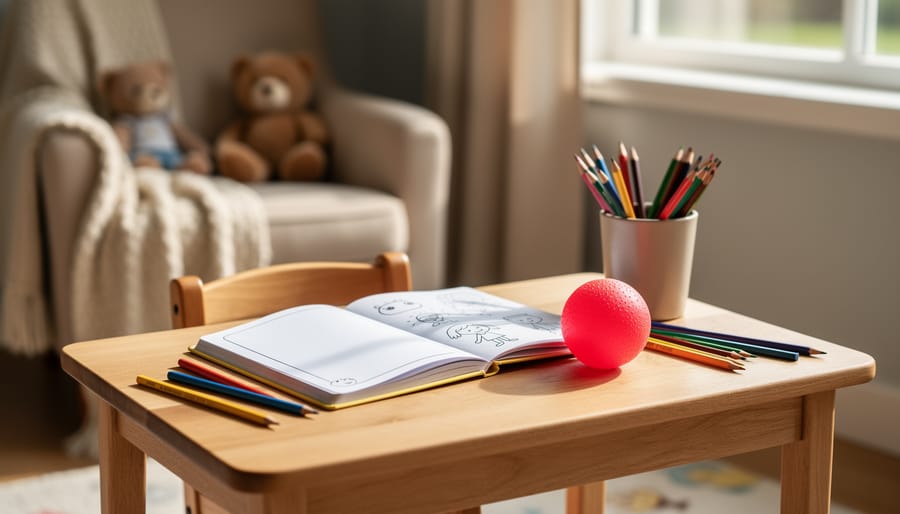
- A comfort corner with a soft blanket, a stuffed toy, or a stress ball.
- Drawing or journaling supplies for getting worries out of their head and onto paper.
- A family media plan that spells out when and where screens are used.
- A calm daily check-in time, such as the car ride home or bedtime.
- A short list of trusted adults or professionals you can contact if you need support.
Digital habits can quietly shape how anxious a child feels, so a few optional tools can help. Parental controls, device-free zones like the dinner table and bedrooms, and a shared charging spot outside the bedroom all make it easier to protect wind-down time. If you’re wondering how much these habits matter, this look at screen time & anxiety is a good place to start. You don’t need to buy anything special, since the built-in settings on most devices cover the basics.
You also don’t have to figure this out alone. Parent skill-building programs exist, such as Vancouver Coastal Health’s program for parents of children aged 3 to 12 who are having mild to moderate challenges with anxiety. Consider it a resource to explore, and check with your local health authority or your child’s doctor about what’s available where you live.
Safety First: When to Pause the Tips and Reach Out for Professional Support

Everything in this guide is meant to support your child, not replace professional care. Home strategies can make a real difference, but they work best alongside expert help when anxiety is intense, long-lasting, or getting in the way of school, friendships, sleep, or family life. If you’re noticing that pattern, that’s your cue to pause the tips and reach out.
A good first step is a conversation with your child’s family doctor, paediatrician, or school team. Anxiety disorders are the most common mental health concerns among Canadian children and adolescents, and paediatric providers have evidence-informed guidance to draw on when helping families decide what comes next. You don’t need to wait until things feel unmanageable to ask.
It also helps to know that two well-meaning habits can quietly keep anxiety going: letting your child avoid everything that frightens them, and giving repeated reassurance every time worry flares up. Neither makes you a bad parent. They come from love and a wish to ease distress. But they’re hard to untangle alone, and a professional can help you shift them gently.
Finally, if medication ever comes up, remember that this decision belongs with a qualified health provider who can talk through the benefits, side effects, and risks with your family. You don’t have to fix this by yourself, and you don’t have to have all the answers.
Step-by-Step: How to Help Your Child Handle Anxiety
Calming Strategies by Age: Preschoolers to Teens
Every child is different, so treat the ideas below as starting points rather than rules. What soothes one seven-year-old may do nothing for another. Try a strategy a few times, notice what lands, and adjust.
Preschoolers and early childhood (about ages 3 to 5)
Young children feel big emotions in their bodies long before they have words for them. Keep things playful and concrete. Read storybooks about feelings together and pause to ask, “How do you think that character feels?” Try “balloon” breathing: pretend to blow up a big balloon slowly, then let it float away. A favourite stuffed toy or blanket can also be a steady comfort, so let it come along to tricky places. Play works well too. A teddy bear who feels nervous about bedtime lets your child practise brave thinking without any pressure.
Elementary years (about ages 6 to 12)
School-age kids can start naming and sorting their feelings. Build a feelings vocabulary beyond “good” and “bad,” and encourage a worry journal where they draw or write what’s bothering them. Grounding games, like noticing five things they can see and four they can hear, bring racing minds back to the present. Here’s a simple way to bring these ideas together:
- Notice the worry and name it together: “That sounds like a nervous feeling.”
- Pick one small calming skill, such as slow breathing or a grounding game.
- Break the scary thing into tiny steps, like waving to a classmate before joining a group.
- Try the first step side by side, then let your child try it alone.
- Celebrate the effort, not just the outcome.
If you’d like extra support, Vancouver Coastal Health offers a skill-building program for parents of children aged 3 to 12 who are experiencing mild to moderate anxiety. It may be worth exploring.
Teens
Teenagers want to feel respected, so lead with curiosity rather than advice. Ask open questions, listen fully, and solve problems together instead of handing down solutions. Respect their growing need for independence, even when you’re worried. Movement, like walking, dancing, or shooting hoops, and simple mindfulness practices can ease tension without a big conversation. And if they open up about stress, resist the urge to lecture. Sometimes “That sounds really hard” is exactly what they need.
Managing Anxiety in Digital Contexts: Screens, Social Media, and Gaming
Screens aren’t the enemy here. For many kids, the same phone that fuels worry also carries a friend’s funny message or a calming playlist. The goal is to help your child feel more in control of their online world, not to take it away.
Start by getting curious instead of corrective. Sit beside your child while they scroll or play, and ask open questions: “What’s the best part of this game?” or “How did that video make you feel?” When kids sense you’re interested rather than inspecting, they tend to share more, including the things that bother them.
Help them build a few quick escape skills. Show them how to pause a video, mute a chat, or block an account that leaves them uneasy, and let them know they never get in trouble for stepping away. Group chats deserve special attention. The pressure to reply right away, or the sting of being left out, can feel enormous at any age, so name it out loud: “It’s really hard when everyone’s talking and you feel behind.”
Upsetting news is another reason to stay close. If something scary is in the headlines, talk about it together, answer honestly at their level, and end with what adults are doing to help. A calm, shared conversation usually settles worries better than a child piecing it together alone.
Remember that kids learn from what they see. If you scroll through dinner or check your phone at midnight, they notice. Saying “I’m putting my phone away so I can unwind too” shows the habit without a lecture.
A few routines can make the whole family’s digital life feel calmer:
- Keep meals device-free so everyone can connect and breathe.
- Create a shared family media plan that your child helps write.
- Charge phones and tablets outside the bedroom overnight.
- Build in a screen-free wind-down before bed, like reading, drawing, or a warm bath.
- Hold a relaxed weekly check-in about what’s been fun or tricky online.
These habits aren’t about perfection. Start with one, keep it kind, and adjust as your child grows.
What Professional Support Can Look Like
If you decide to reach out for help, it can be reassuring to know what the process is built on. The Canadian Paediatric Society has published position statements that summarize current evidence on diagnosing and managing anxiety disorders. They’re written to guide paediatric health care providers, not to hand parents a checklist, and decisions are made together with families.
The management statement describes education and psychotherapy as key parts of both prevention and treatment. In practice, that means helping you and your child understand anxiety, and teaching your child skills for working through it. If anxiety is getting in the way of daily life, the statement also reviews approaches that combine behavioural and medication-based options. Medication is one possibility providers may discuss, and the statement is clear that it comes with side effects and risks, so it’s weighed carefully with your family rather than assumed.
Support can also begin at home while you wait for an appointment. A steady bedtime routine and a few digital calming tools can be good complements to professional care, though they don’t replace it.
Seeking help isn’t a sign that you’ve failed. It’s a way of adding trained people to your child’s team.
Checking Progress and Knowing What to Do Next
How will you know whether any of this is working? Look for small shifts rather than big breakthroughs. Maybe mornings feel a little easier, bedtime takes less negotiating, meltdowns come a bit less often, or your child is willing to try something they used to dodge. Progress with anxiety rarely moves in a straight line, and a rough week doesn’t erase the good ones.
A few practical ways to keep track:
– Jot down quick notes about when worries show up, what helped, and what didn’t.
– Celebrate small wins out loud, like “You tried that even though it felt scary.”
– Revisit your family media plan as your child grows, since what worked at eight may not fit at thirteen.
If things aren’t improving, adjust one thing at a time. Try a different calming skill, shrink the brave step, or add more downtime. Those notes will also be useful if you talk with your child’s school team or family doctor, who can offer ongoing support. And if worries keep getting in the way of daily life, it may be time to find a professional who can work alongside you.
Picture one parent, whose story is shared here in general terms. Her son used to refuse to enter the classroom each morning. After a few weeks of naming his feelings and practicing one small step at a time, he walked to the door on his own, just once. She wrote it down and celebrated with a high-five. It wasn’t a cure, but it was a sign he was learning.
Frequently Asked Questions About Helping Kids With Anxiety
How do I know if my child’s worry is normal?
Worry is a normal part of growing up, and most kids feel nervous about new things like a first day of school or a big test. It’s worth paying closer attention when the worry feels bigger than the situation, sticks around, or starts getting in the way of school, friendships, sleep, or family life.
Can screens make anxiety worse?
For some kids, yes. Group chats, comparing themselves to others, and upsetting news can add to their worry, while other kids find comfort and connection online. Watching how your child feels before and after screen time, and talking about it without blame, tells you more than any rule of thumb.
Should I let my child avoid what scares them?
It’s natural to want to protect them, but avoiding a fear can quietly keep it going. Try to acknowledge how hard it feels, then help them take small, manageable steps toward it, with you right beside them.
When should I see a doctor?
Consider reaching out to your child’s family doctor or paediatrician if anxiety is intense, lasts a long time, or is interfering with daily life. If your child ever talks about self-harm or feeling hopeless, treat it as urgent and contact emergency services or a crisis line right away.
Do all children with anxiety need medication?
No. Medication, known as pharmacotherapy, is one option that health care providers may discuss, and it comes with possible side effects and risks. Any decision is made case by case, together with your family and a qualified provider.
Helping a child handle anxiety doesn’t mean getting everything right. It means showing up, again and again, with a steady voice and an open ear. Kids can learn to manage anxious feelings, and the skills they build now can stay with them for life.
The heart of it is simple. Pair calm connection with strategies that fit your child’s age, whether that’s balloon breathing for a preschooler or an honest, no-lecture chat with a teen. Build healthy digital habits together, from tech-free wind-down time to talking about what they see online. And when worry starts crowding out sleep, school, or friendships, reach out to your family doctor or school team. Asking for help is a strength, not a failure.
You don’t have to carry this alone. If this article gave you even one idea to try tonight, please share it with another parent, teacher, or caregiver who might need it. Join our community, swap stories, and keep talking openly about children’s mental health. The more we normalize these conversations, the safer kids feel having them.