
Anxiety in Arabic is قَلَق (qalaq), defined as a feeling of tension and fear, and understanding this terminology is the first step toward helping Arabic-speaking families access mental health support for their children. For parents navigating childhood anxiety in Arabic-speaking households, the language barrier often compounds an already challenging situation. You might notice your child withdrawing from friends, complaining of stomach aches before school, or struggling to sleep, yet struggle to find resources that speak to your family’s linguistic and cultural reality.
The gap isn’t just about translation. Mental health conversations in Arabic-speaking communities carry unique cultural weight, and many families find themselves caught between traditional approaches to emotional wellness and contemporary mental health frameworks. When a healthcare provider mentions “generalized anxiety disorder,” you need to know that in Arabic, this is اضطراب القلق العام (idtirab al-qalaq al-‘am), not just مجرد ضغط نفسي مؤقت (temporary stress). The distinction matters because it shapes how seriously the concern is taken and what interventions follow.
Arabic-language mental health resources have grown significantly, with more clinicians offering services in Arabic and greater awareness of conditions like social anxiety within Arabic-speaking communities. Parents, educators, and healthcare professionals now have better tools to bridge the language divide. This article provides the essential Arabic terminology you need, explores how cultural context shapes anxiety expression in children, and offers practical guidance for seeking help within Arabic-speaking families. Whether you’re a parent trying to explain your child’s needs to grandparents or a teacher supporting bilingual students, understanding anxiety in both languages opens doors to more effective, compassionate care.
Why Language Matters When Your Child Is Anxious
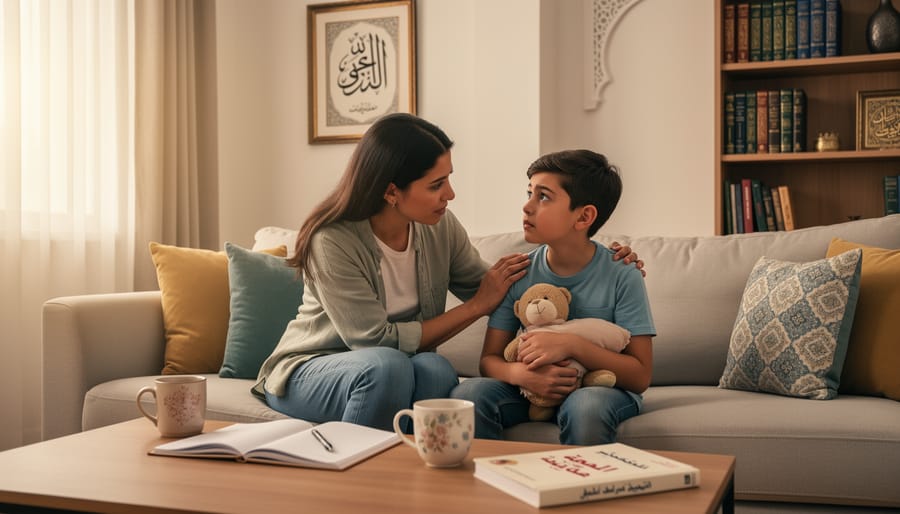
When your child struggles with anxiety, finding the right words to describe what they’re experiencing can feel overwhelming. For Arabic-speaking families, this challenge runs deeper than most realize. The language you think in, dream in, and feel in shapes how you understand and express emotions.
Speaking about mental health in Arabic isn’t just about translation. It’s about capturing the nuanced feelings that don’t always transfer neatly between languages. When a parent can say قَلَق and immediately understand the full weight of شعور بالتوتر والخوف (a feeling of tension and fear), they’re connecting to their child’s experience in a profoundly different way than when using borrowed English terms.
Many Arabic-speaking parents have lived most of their lives thinking and feeling in their native language, even if they’ve learned English for work or daily life. When discussing something as intimate and frightening as your child’s mental health, switching to a second language can create an uncomfortable distance. You might know the clinical English terms but struggle to truly feel their meaning or explain them to your child in a way that resonates.
This linguistic gap has real consequences. Parents who can’t accurately describe what their child is experiencing may delay seeking help. They might minimize symptoms because they lack the vocabulary to articulate the difference between normal childhood worries and something more serious, like distinguishing “هذا مو مجرد ضغط نفسي مؤقت، هذا اضطراب القلق العام” (this is not just temporary stress, this is generalized anxiety disorder).
The growing availability of mental healthcare resources in Arabic reflects an important recognition: effective treatment starts with clear communication. When families can discuss anxiety in their primary language, they move from confusion to clarity, from isolation to action.
Understanding Anxiety in Arabic: Key Terms Parents Should Know
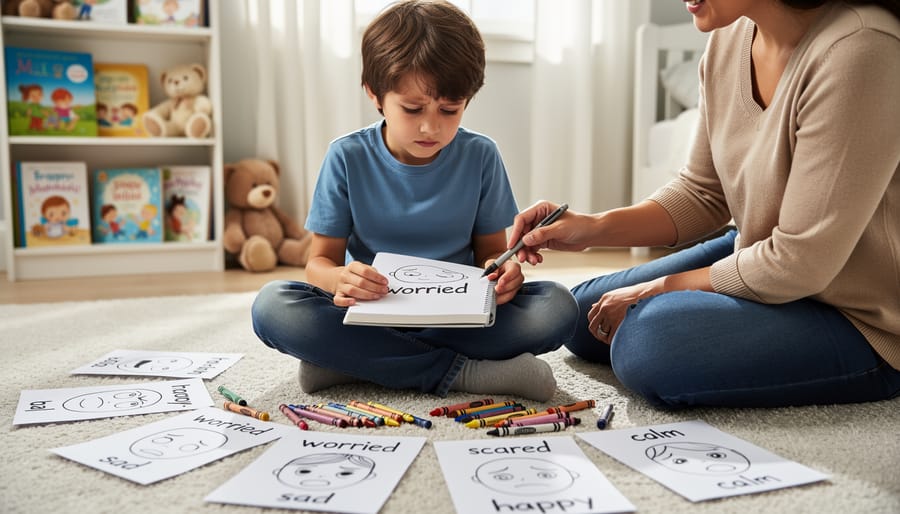
When Arabic-speaking parents first notice their child struggling with worry or fear, having the right words to describe these experiences becomes crucial. The ability to name what your child is feeling in your native language creates a foundation for understanding, validating their emotions, and seeking appropriate help.
The cornerstone term parents need is قَلَق (qalaq), the Arabic word for anxiety. This word encompasses the complex emotional state defined as شعور بالتوتر والخوفa feeling of tension and fear. Understanding this primary term helps parents move beyond vague descriptions like “my child is nervous” to recognizing anxiety in children as a specific mental health concern that deserves attention.
- قَلَق (Qalaq)
- The primary Arabic word for anxiety, describing the feeling of tension and fear that characterizes anxious states. Use this when discussing your child’s overall emotional distress with healthcare providers or family members.
- اضطراب القلق العام (Idtirab al-qalaq al-‘am)
- Generalized anxiety disorder, a clinical condition requiring professional diagnosis. This term helps distinguish persistent, clinical anxiety from temporary worry or stress.
- قلق اجتماعي (Qalaq ijtima’i)
- Social anxiety, specifically describing fear or discomfort in social situations. Use this when your child shows excessive worry about being judged, embarrassed, or rejected by peers.
- ضغط نفسي مؤقت (Daght nafsi mu’aqqat)
- Temporary psychological stress or pressure. This phrase describes normal, short-term worry that children experience during challenging times, distinct from clinical anxiety disorders.
One of the most valuable phrases parents should know is the distinction medical professionals use: هذا مو مجرد ضغط نفسي مؤقت، هذا اضطراب القلق العام“This is not just temporary stress, this is generalized anxiety disorder.” This statement captures a critical diagnostic distinction in anxiety that helps families understand when their child’s struggles have crossed from typical childhood worries into territory requiring professional intervention.
Learning these terms empowers you to communicate more precisely with healthcare providers who offer services in Arabic. When you can articulate that your child experiences persistent قَلَق rather than occasional ضغط نفسي مؤقت, you provide essential information that shapes the evaluation and treatment approach. This vocabulary also helps when explaining your child’s needs to extended family, teachers in Arabic-language schools, or when accessing bilingual mental health resources that now serve Arabic-speaking communities in English and Arabic.
Common Types of Childhood Anxiety in Arabic-Speaking Communities
Social Anxiety and Cultural Expectations
In Arabic-speaking families, social anxiety in children often carries a particularly heavy weight because it intersects with deeply held cultural values. When a child struggles with القلق الاجتماعي (social anxiety), parents may worry not just about their child’s comfort, but about how their behavior reflects on the family’s reputation within the community. A child who refuses to greet relatives, stays silent at family gatherings, or avoids speaking in front of others might be seen as disrespectful rather than anxious.
This cultural context can make social anxiety harder to recognize and address. Many Arabic-speaking communities place high value on social harmony, hospitality, and maintaining family honor. Children are often expected to demonstrate confidence and good manners in social settings, especially with extended family and community members. When a child’s anxiety prevents them from meeting these expectations, parents might respond with frustration or increased pressure, inadvertently making the anxiety worse.
The challenge becomes especially acute during significant social events like weddings, religious celebrations, or family visits, where children are expected to participate actively and gracefully. A child with social anxiety might experience intense physical symptoms, refusing to attend or hiding during these gatherings. Without understanding that this is القلق rather than defiance, families may unintentionally shame the child or dismiss their distress.
Recognizing social anxiety as a legitimate condition, separate from shyness or bad manners, allows parents to respond with compassion rather than criticism and seek appropriate support while honoring their cultural values.
Generalized Anxiety Disorder vs. Temporary Stress
Every child experiences worry. Your daughter gets nervous before a test. Your son feels uneasy when meeting new people. These moments of قَلَق (anxiety) are part of normal development. But when should you be concerned that temporary stress has crossed into something more persistent?
The distinction matters. Temporary stress responds to specific situations and fades when the trigger passes. Your child worries about tomorrow’s presentation, then relaxes once it’s over. Clinical anxiety, however, lingers without clear cause and interferes with daily life for weeks or months.
Arabic-speaking parents can use this helpful phrase when recognizing anxiety in their children: “هذا مو مجرد ضغط نفسي مؤقت، هذا اضطراب القلق العام” (this is not just temporary stress, this is generalized anxiety disorder). This phrasing captures the critical difference between a passing reaction and a clinical condition.
Watch for patterns rather than isolated incidents. Does your child’s شعور بالتوتر والخوف (feeling of tension and fear) prevent them from attending school, sleeping through the night, or enjoying activities they once loved? Do worries jump from topic to topic without resolution? Generalized anxiety disorder affects multiple areas of life simultaneously, while temporary stress typically stays focused on one concern.
If anxiety persists beyond six months or significantly disrupts your child’s functioning, seeking professional guidance becomes important. Trust your instincts as a parent, you know when normal childhood fears have become something heavier.
Breaking the Stigma: Mental Health Conversations in Arabic Families
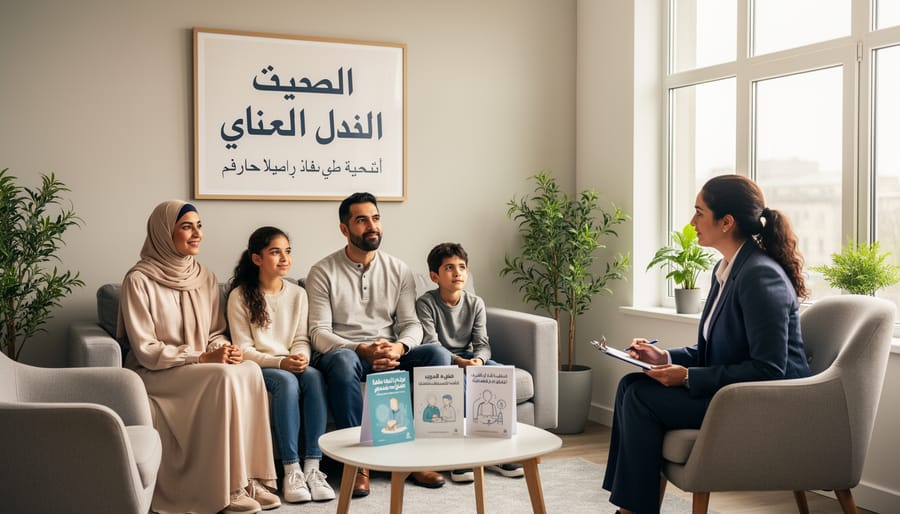
In many Arabic-speaking families, discussing قَلَق (anxiety) with children or seeking professional help carries an unspoken weight. The traditional view that mental health struggles reflect personal weakness, lack of faith, or family shame has kept countless parents silent, even as they watch their children suffer. These beliefs run deep, shaped by generations who understood emotional distress through different frameworks, as tests of character, spiritual trials, or private matters never meant for outside eyes.
But times are changing. A new generation of Arabic-speaking parents recognizes that anxiety is not a character flaw or a spiritual failing. It’s a medical condition, as real as asthma or diabetes, and equally deserving of treatment. This shift matters because silence harms children. When parents avoid naming قَلَق, children internalize the message that their feelings are shameful, something to hide rather than address.
The fear of judgment from extended family or the broader Arab community remains a real barrier. Many parents worry that acknowledging their child’s anxiety will invite gossip, damage marriage prospects, or reflect poorly on their parenting. These concerns are valid within tight-knit communities where reputation carries significant social weight. Yet protecting a child’s mental health requires courage to prioritize their wellbeing over potential criticism.
Starting these conversations doesn’t mean abandoning cultural values. It means integrating modern understanding of mental health with the deep care and family bonds that Arabic culture celebrates. Parents can begin by educating themselves about anxiety using Arabic-language resources, which validates both their native language and their child’s experience. When extended family questions this approach, explaining that early intervention prevents larger struggles later can help shatter stigma within your circle.
The Arabic-speaking mental health community is growing, with more professionals offering culturally informed care in 2026. Finding a provider who understands both the language and cultural context makes it easier to discuss sensitive topics without constant translation or cultural explanation. This matters because healing happens best when families feel fully understood, not just linguistically translated.
Finding Arabic-Language Mental Health Resources in 2026
Finding help for your child shouldn’t require choosing between quality care and cultural understanding. The good news is that Arabic-language mental health services have expanded significantly, though knowing where to look makes all the difference.
Start by asking your pediatrician for referrals to Arabic-speaking mental health professionals in your area. Many medical practices now maintain lists of culturally competent providers who offer services in multiple languages. Don’t hesitate to ask specifically about providers who understand both the language and the cultural context of Arabic-speaking families.
Online directories have become increasingly useful tools. Psychology Today’s therapist finder and similar platforms allow you to filter by language, specialty, and cultural background. When reviewing profiles, look beyond language fluency. The best providers will mention experience working with Arab families or understanding cultural values around family dynamics, community relationships, and mental health.
Teletherapy has opened doors that didn’t exist a few years ago. Virtual sessions connect families with qualified Arabic-speaking therapists regardless of geographic location. This matters especially if you live in an area with limited local options. Many providers now offer bilingual resources in English and Arabic, particularly for common concerns like sleep disorders and mental healthcare.
When evaluating potential providers, ask direct questions during initial consultations. Can they explain treatment approaches in Arabic? Do they understand cultural nuances around mental health stigma? Are they familiar with the specific challenges Arabic-speaking children face balancing multiple cultural identities?
Community organizations serving Arab populations often maintain resource lists or offer mental health programming themselves. Mosques, cultural centers, and Arab-American associations can point you toward trusted providers who have worked successfully with families in your community.
Remember that finding the right fit may take time. A provider who speaks Arabic but doesn’t understand your family’s cultural context may be less effective than someone who offers both linguistic and cultural competence.
Starting the Conversation: Talking to Your Child About Anxiety in Arabic
Starting an anxiety conversation with your child in Arabic creates space for honest dialogue while honoring your family’s linguistic and cultural identity. The key is choosing words that feel authentic to both you and your child, whether that means using pure Arabic, mixing in English terms they’ve learned at school, or code-switching naturally between languages.
Begin by introducing the concept of قَلَق (anxiety) when your child seems calm and receptive, not during a moment of distress. You might say something like, “أحيانًا كلنا نحس بـ قَلَق – شعور بالتوتر والخوف” (Sometimes we all feel anxiety – a feeling of tension and fear). This normalizes the experience before making it personal.
For younger children (ages 5-8), connect قَلَق to physical sensations they can identify. Ask, “هل تحس قلبك يدق بسرعة؟” (Do you feel your heart beating fast?) or “هل بطنك يوجعك؟” (Does your stomach hurt?). Children this age understand concrete feelings better than abstract emotions. Help them label what’s happening: “This feeling you’re describing is قَلَق, and it’s completely normal.”
With older children and teens (ages 9-17), you can introduce more nuanced distinctions. Explain the difference between everyday worries and clinical anxiety using the phrase: “هذا مو مجرد ضغط نفسي مؤقت، هذا اضطراب القلق العام” (this is not just temporary stress, this is generalized anxiety disorder). This helps them understand that what they’re experiencing has a name and isn’t a character flaw.
Here’s a practical framework for your first conversation:
- Choose a quiet, private moment without distractions or time pressure.
- Share a personal example of when you felt anxious, using the word قَلَق to model openness.
- Ask open-ended questions about their experiences: “كيف تحس لما تكون قلقان؟” (How do you feel when you’re anxious?)
- Listen without interrupting, allowing silence for them to gather their thoughts.
- Validate their feelings by saying “أنا أفهمك” (I understand you) rather than minimizing with “Don’t worry.”
- Introduce the possibility of coping mechanisms you can explore together.
Remember that validating doesn’t mean agreeing that every fear is rational. You’re acknowledging the feeling is real while gently helping your child develop perspective. If anxiety interferes with daily activities, school performance, or relationships, mention that professionals can help and that seeking school support or outside counseling shows strength, not weakness.
Keep follow-up conversations short and frequent rather than rare and lengthy. Check in casually: “كيف كان قَلَقك اليوم؟” (How was your anxiety today?). This ongoing dialogue, conducted in the language of your home and heart, builds trust and makes mental health a natural part of family conversation rather than a crisis-only topic.
Understanding قَلَق, anxiety, in your child isn’t just about knowing the right words. It’s about recognizing that mental health challenges cross all languages and cultures, and that your ability to discuss these concerns in Arabic is a genuine asset, not a limitation. When you can name what your child is experiencing in the language that feels most natural to you both, you create space for honest, meaningful conversations about their wellbeing.
The landscape for Arabic-speaking families is shifting. More mental health professionals now offer services in Arabic, and the cultural conversation around childhood anxiety is gradually moving away from silence and stigma. Resources that were scarce even a few years ago are becoming more accessible, whether you’re looking for bilingual providers or Arabic-language educational materials about conditions like generalized anxiety disorder.
Your child’s anxiety is real, and it’s treatable. Whether you’re explaining the difference between everyday stress and اضطراب القلق العام (generalized anxiety disorder), or simply validating their شعور بالتوتر والخوف (feelings of tension and fear), you’re already taking an important step. The fact that you’re seeking information, learning the vocabulary, and preparing to support your child means you’re meeting them where they are.
Trust your instincts as a parent. Use the language that connects you to your child. And know that seeking help for childhood anxiety isn’t a failure of family or culture, it’s an act of love and wisdom that honors your child’s needs.