
GHK-Cu is a small naturally occurring peptide made of three amino acids (glycine, histidine, and lysine) that binds tightly to copper. It’s found in human blood, saliva, and urine, and researchers have studied it for decades, mostly in the lab, for its role in tissue repair, skin biology, and inflammation. If you visit the site you’ll see it listed among research-focused copper peptides.
Why does a children’s mental health site cover it? Because parents and professionals increasingly run into the term online, often attached to bold claims, and a calm, clear explanation helps families sort what’s known from what’s hype. Most of the research so far involves cells, animals, and adult skin and wound studies. Almost none of it speaks to children, and nothing here is a recommendation or a treatment suggestion.
Think of this article as a steady, plain-language background briefing. We’ll cover what GHK-Cu is, how researchers believe it works, where it has been studied, and how much weight the evidence deserves, so you can talk about it with confidence, and with your child’s pediatrician or care team when questions come up.
What GHK-Cu Means in Plain Language
GHK-Cu sounds like a technical code, but the idea behind it is simple. It’s a very small molecule your body already makes, and researchers have been curious about it for decades.
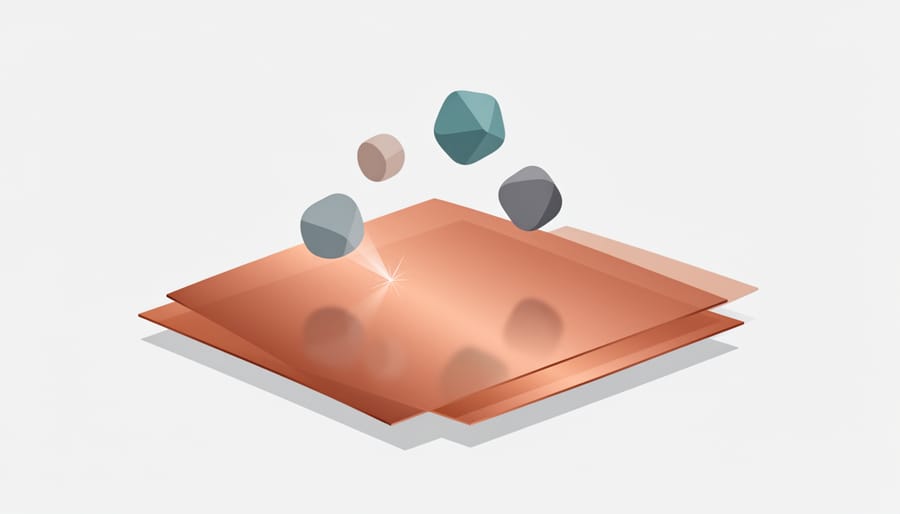
Start with the name. The “GHK” part stands for three amino acids linked together: glycine, histidine, and lysine. The “Cu” is the chemical symbol for copper. So GHK-Cu is that little three-piece chain holding onto a copper ion, a bit like a tiny hand gripping a small metal bead. A few terms come up again and again in this research, so here they are in everyday words:
- Amino acid
- One of the basic building blocks that the body uses to make proteins and other important molecules.
- Peptide
- A short chain of amino acids linked together. Think of it as a small piece of a protein.
- Tripeptide
- A peptide made of exactly three amino acids, which is what GHK is.
- Copper complex
- A molecule that is bound to a copper ion, so the two travel and act together.
- Plasma
- The clear, yellowish liquid part of blood that carries cells, nutrients, and signaling molecules around the body.
- In vitro versus in vivo
- “In vitro” means studied in a lab dish or test tube, while “in vivo” means studied in a living organism.
The body produces this peptide naturally, and it has been found in places like blood plasma, saliva, and urine. Researchers have reported that levels appear to decline as people get older, though that finding is still part of an ongoing conversation rather than settled fact.
The story of GHK-Cu goes back to the 1970s, when scientists studying human blood plasma noticed that it seemed to influence how liver cells behaved. They traced that effect to this small copper-binding peptide and identified it. That early discovery sparked interest in what the molecule might do elsewhere in the body, and research has continued from there. It’s worth keeping the history in perspective, though: an interesting early finding is a starting point for questions, not proof of any particular benefit.
How Researchers Think GHK-Cu Works in the Body
Imagine GHK-Cu as a small delivery messenger. Researchers think the peptide picks up a copper ion and carries it to cells, where the copper may help certain processes run. That’s the basic idea, and it’s still a theory being tested rather than a settled fact.
Scientists have looked at a few areas where this messenger might play a part. One is tissue repair signaling, meaning the chemical “notes” cells pass to each other after an injury. Another is collagen and skin-related processes. Collagen is the protein that gives skin its structure, and some lab studies have asked whether GHK-Cu changes how cells make or break it down.
Researchers have also explored inflammation, which is the body’s natural response to irritation or injury, and antioxidant activity. Antioxidants help limit damage from unstable molecules called free radicals. Copper is part of several of the body’s own antioxidant enzymes, which is one reason this peptide has drawn curiosity.
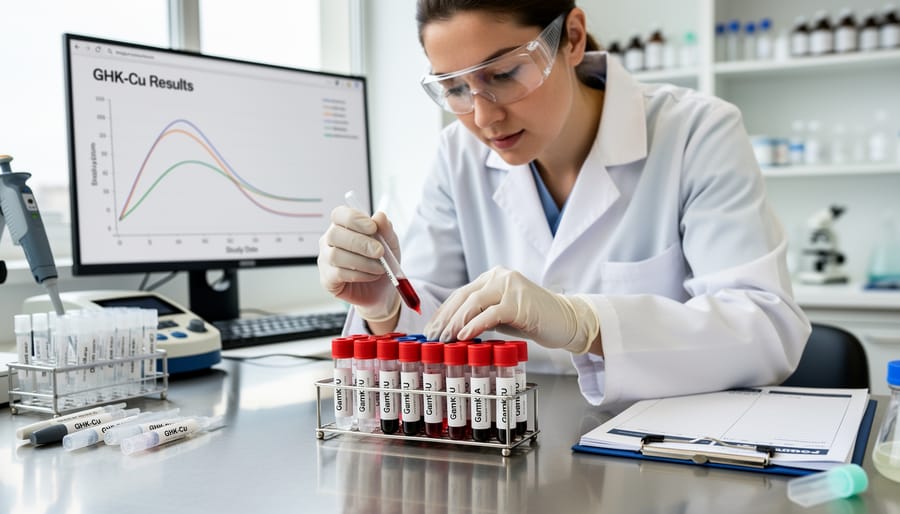
Here’s the part worth holding onto: most of this evidence comes from experiments on cells in a dish and studies in animals. Human studies exist, but they tend to be small, short, and quite varied in how they were done. What happens in a lab dish doesn’t always happen the same way in a living person, and it’s even less certain for children, who are rarely included in this kind of research.
So when you see a bold claim online, it helps to ask what kind of study it came from. A promising result in cells or animals is a starting point for more questions, not an answer. Keeping that distinction in mind makes it easier to stay curious without getting swept up in hype.
Where GHK-Cu Shows Up: Research Areas and Everyday Products

If you’ve spotted GHK-Cu on a skincare label or in a social media video, you’re not alone. This ingredient has moved from laboratory papers into everyday conversation, and it helps to know which is which.
Here are the main places it appears, along with how solid the evidence is in each:
- Skin and wound healing studies: the longest-running area of research, mostly lab and animal work, with some small human studies.
- Cosmetic skincare products: serums and creams often cite this research, though results from studies on specific products vary.
- Hair and scalp research: an early, limited area, with small studies and no firm conclusions.
- Other areas, such as inflammation and tissue repair: still exploratory, mainly in cells and animals.
- Online wellness content: claims here often run well ahead of what studies have actually shown.
Notice the gap between the first and last items. Researchers working in a lab are asking careful questions and often reporting mixed or preliminary answers. Consumer marketing tends to compress all of that into a confident promise. A study showing that a compound affects cells in a dish doesn’t tell us how a store-bought product will behave on a child’s skin, or in anyone’s body.
That gap matters because curiosity is easy to turn into assumption. A parent who sees a glowing post may reasonably wonder if a product is worth trying, and that’s a perfectly normal reaction. It just helps to treat a viral claim as a starting point for questions rather than an answer, especially when children are involved.
The same habit applies well beyond skincare. Families often meet big promises about supplements and “natural” fixes, and it’s worth asking what the evidence really supports. Even something as everyday as diet and mental health is best explored with a trusted professional rather than a trending video.
Why Research Background Matters for Families and Professionals
Parents and professionals meet new health claims all the time, and a term like GHK-Cu can arrive wrapped in confident language. Knowing the research background helps you slow down and ask better questions. It’s the same calm, critical habit that helps when sorting out stress vs trauma or weighing headlines about environmental exposures: look at the evidence first, then decide what it means for your family.
Early-stage research is a starting point, not a verdict. A result in a lab dish or an animal study tells scientists where to look next. It doesn’t show that something is safe or helpful for a child.
It’s also worth saying plainly that there is no established role for GHK-Cu in children’s mental health care. Any decision about a supplement, serum, or other product for a child belongs with a pediatrician or other qualified healthcare provider.
Picture a parent scrolling at night who sees a video calling copper peptides a breakthrough for everything from skin to mood. Worry is a natural first reaction. A gentler response is curiosity: Who is making this claim? Is it based on research in people, or in cells and animals? Does it apply to children at all? Jotting down those questions and bringing them to your child’s doctor turns a moment of uncertainty into a useful conversation.
Common Questions About GHK-Cu and Copper Peptides
Is GHK-Cu natural?
Yes, the body makes a small amount of it naturally. Versions used in products are typically made in a lab.
Is it proven to work?
Not conclusively. Much of the evidence comes from lab and animal studies, and human data is limited and varied.
Is it safe for children?
There isn’t enough research to say. Please check with your child’s pediatrician before trying any product.
How is it different from copper in food?
Dietary copper is a mineral your body uses in many ways. GHK-Cu is a specific peptide that carries copper, so the two aren’t interchangeable.
If you’re wondering how this fits alongside herbal supplements or other trending products, a good rule is to ask a pediatrician or pharmacist first. They can look at your child’s full picture, which no article can do.
GHK-Cu is a small, naturally occurring peptide that binds copper, and researchers have studied it for decades. Much of what we know comes from lab and animal work, with human findings still limited and mixed. That means it’s a topic worth understanding, not a reason to change anything at home.
If a wellness trend catches your attention, it’s okay to be curious. Ask where the claim comes from, what kind of study backs it up, and whether it was ever tested in children. Questions like these are a sign of caring, not overthinking.
And whenever you’re unsure, your pediatrician or another qualified professional is always the best person to ask.