
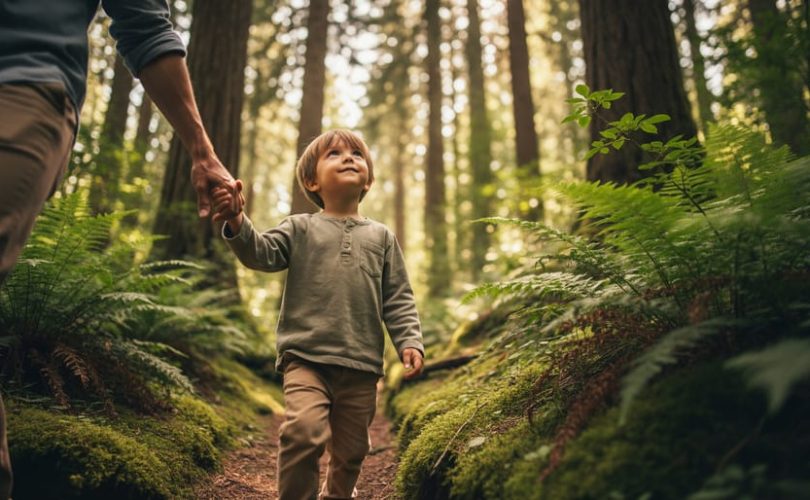
Forest bathing, the practice of mindfully immersing yourself in nature, reduces stress hormones, strengthens immune function, lowers anxiety, and improves mood in children. Often called shinrin-yoku (its Japanese origin term), this gentle, evidence-based intervention requires nothing more than time spent among trees. And the benefits extend far beyond a pleasant afternoon outdoors.
If you’re watching your child struggle with overwhelm, trouble sleeping, or emotional ups and downs, you’re not alone. Many parents today are searching for accessible, natural ways to support their kids’ well-being without adding more structure or screen time to already packed schedules. Forest bathing offers something different: permission to slow down, breathe, and simply be.
Research confirms what many of us sense instinctively. When children spend time in forested environments, their bodies respond at a physiological level. Cortisol drops. Heart rate variability improves. Attention sharpens. Similar to the calming effects of blue spaces like rivers and lakes, green forest settings create measurable changes in children’s nervous systems.
This article walks you through nine specific, research-backed benefits of forest bathing for children’s emotional health. You’ll discover how even short woodland visits can help anxious kids regulate their emotions, why trees may improve focus better than medication for some children, and what happens in your child’s body during those quiet moments under the canopy. Each benefit includes practical guidance you can use this week, explained with the kind of compassion every parent deserves when they’re doing their best to help their child thrive.
Why We Focus on These Nine Benefits
We didn’t pick these nine benefits randomly. Each one comes from peer-reviewed research in child psychology, neuroscience, and environmental health, backed by experts in child development and pediatric mental health. We focused on benefits that busy families can actually access, you don’t need special equipment, training, or even a pristine wilderness area to see results.
What matters most is measurable impact on the emotional challenges you’re likely noticing in your child: difficulty managing big feelings, trouble focusing, persistent worry, low mood, or poor sleep. These aren’t abstract wellness concepts. They’re specific, observable changes in how children feel, cope, and thrive. Every benefit we explore has research showing it can genuinely help children regulate emotions, reduce stress responses, and build mental health skills they’ll use for years.
We also prioritized benefits you can start seeing relatively quickly. While long-term nature connection builds deeper resilience, many parents notice shifts in their child’s behavior, mood, or sleep within just a few consistent forest bathing sessions.
1. Reduces Stress and Anxiety Levels
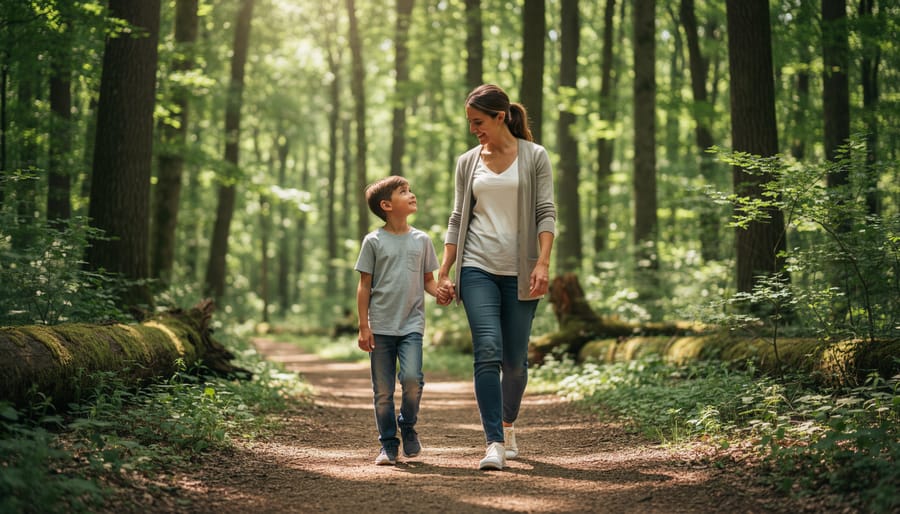
When children step into a forest, their bodies respond in ways that go far beyond what we can see. Research shows that spending time among trees actively lowers cortisol, the stress hormone, in children’s bloodstreams. Within just 20 minutes of quiet time in nature, their nervous systems begin to shift from high alert to rest mode, slowing heart rates and easing the physical tension that stress creates.
This biological response matters because today’s children face relentless academic pressure, packed schedules, and constant social navigation that rarely lets up. The forest offers something increasingly rare: a space where no one is grading them, no screens are pinging for attention, and the only expectation is to simply be present.
One mother of a seven-year-old shared how she noticed her daughter’s shoulders would literally drop within minutes of entering their local woodland trail. “She’d been so wound up from school all week, stomach aches, trouble sleeping, snapping at her brother. We started doing 30-minute forest walks after pickup on Fridays. I’d watch her pick up sticks, examine moss, just breathe. By the time we got back to the car, she was a different kid, softer, sillier, more like herself.”
This isn’t about replacing therapy or other interventions when children struggle with anxiety. Rather, forest bathing works as a gentle, accessible tool that naturally calms anxious kids by engaging their senses and removing them from environments where stress accumulates. The forest asks nothing of them, which paradoxically gives them everything they need to reset.
2. Improves Focus and Attention Span
Children’s brains are constantly processing information, screens, homework, social dynamics, schedules. This mental overload creates what researchers call “directed attention fatigue,” which shows up as difficulty concentrating, irritability, and impulsiveness. Forest bathing offers a scientifically-backed antidote.
When children spend time in natural settings, their brains shift into a different processing mode. Unlike the forced concentration required for schoolwork or structured activities, nature allows what’s called “soft fascination”, gentle, effortless attention to birdsong, rustling leaves, or sunlight filtering through branches. This restful state gives the brain’s executive function networks time to recover and recharge.
Nature doesn’t demand children’s attention; it invites it. This effortless engagement allows depleted attentional resources to restore themselves in ways that no amount of screen time or indoor rest can replicate.
Research consistently demonstrates that even brief nature exposure improves concentration and reduces impulsivity. One study found that children with ADHD showed significant improvements in attention after just 20 minutes in a park compared to the same time spent in urban settings. The unstructured element matters tremendously, children don’t need organized activities or learning objectives. Simply being present in a forest environment, free to explore at their own pace, provides the cognitive reset.
Parents often notice the difference immediately. A child who struggled to sit through homework before a forest walk may return noticeably calmer and more focused. The benefits extend beyond that single session, too. Regular forest bathing appears to build attentional capacity over time, helping children develop stronger self-regulation skills.
The nature healing power works partly through reducing stress hormones that interfere with concentration, but also by giving children’s developing brains the recovery time they desperately need. For children facing attention challenges, this natural intervention offers meaningful support without medication side effects or therapeutic pressure.
3. Boosts Mood and Reduces Depression Symptoms
Time in nature doesn’t just calm children, it actively lifts their spirits. When kids spend time among trees, their brains receive a natural mood boost through increased production of serotonin and dopamine, the neurotransmitters responsible for feelings of happiness and well-being. Natural light exposure, particularly morning sunlight filtered through tree canopies, helps regulate circadian rhythms and supports healthy brain chemistry in developing minds.
The sensory richness of forest environments, rustling leaves, dappled sunlight, earthy scents, textured bark, engages children’s attention in gentle, non-demanding ways that reduce rumination and negative thought patterns. Unlike screens or structured activities, forests invite observation without pressure, giving children’s minds permission to rest while staying gently engaged. This combination of movement, sensory stimulation, and natural light creates conditions that counteract the withdrawal and flatness often seen in childhood depression.
For children experiencing persistent low mood or depressive symptoms, forest bathing should never replace professional support, but it can strengthen a comprehensive treatment approach. Parents report that regular nature time helps their children show more spontaneous smiles, engage more readily with family, and express fewer negative self-statements. One mother of a 10-year-old struggling with depression noticed her daughter laughing genuinely during forest walks for the first time in months, small moments that signaled gradual healing.
The physical movement involved in forest bathing, even gentle walking, releases endorphins and reduces inflammation linked to depression. Combined with reduced cortisol levels and improved sleep, these neurochemical shifts help build strong kids who can better weather emotional challenges. Consistency matters more than duration, three 20-minute forest visits weekly often proves more beneficial than occasional longer outings for maintaining stable mood.
4. Strengthens Emotional Regulation Skills
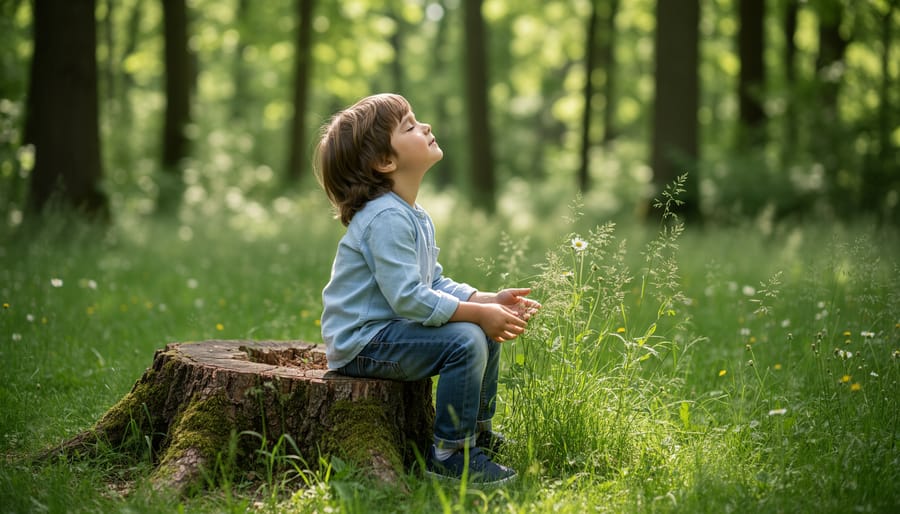
When your child melts down over a small frustration or struggles to calm themselves after a disappointment, they’re wrestling with emotional regulation, one of childhood’s toughest developmental tasks. Forest environments offer something classrooms and playrooms can’t: a judgment-free practice ground where children can feel, process, and reset without the pressure of being watched or evaluated.
Natural settings create what child psychologists call a “soft fascination” state. Unlike screens or structured activities that demand directed attention, the forest gently holds a child’s interest through rustling leaves, bird calls, and changing light patterns. This gentle engagement allows the emotional brain to settle while the thinking brain gradually comes back online. A child who arrived at the trailhead angry or overwhelmed often finds themselves naturally quieter after 20 minutes of watching water move in a creek or following an ant across bark.
The sensory richness of forests also gives children concrete tools for self-soothing. Cool moss under fingers, the rhythm of walking on uneven ground, and deep breaths of pine-scented air provide immediate, physical ways to shift their nervous system from fight-or-flight to rest-and-digest. Unlike telling a dysregulated child to “just calm down,” nature offers them something to do with the big feelings.
Forest time also helps children develop emotional awareness without forcing conversation. A seven-year-old noticing that kicking through leaves makes her feel less angry is learning cause and effect about her own emotions. Parents report that children often open up about worries during forest walks that they’d never mention at the dinner table, the side-by-side movement and lack of direct eye contact creates psychological safety for sharing hard things.
5. Enhances Creativity and Imagination
A fallen log becomes a pirate ship. Tree roots transform into a castle maze. A collection of acorns turns into currency for an elaborate forest economy. When children spend unstructured time in nature, they don’t just play, they create entire worlds.
This imaginative freedom does something remarkable for developing brains. Unlike structured activities with predetermined outcomes, forest bathing invites children to make their own rules, solve problems creatively, and express emotions through play. A child working through friendship troubles might build an elaborate stick fortress. Another processing family changes might create complex scenarios with pine cone characters.
Research shows that natural environments significantly boost divergent thinking, the ability to generate multiple solutions to open-ended problems. Children playing in forests demonstrate more creative story development, more varied play scenarios, and more complex language use than those in built playgrounds. The unpredictability of nature, uneven terrain, changeable weather, varied textures, constantly challenges children to adapt and innovate.
The emotional benefits extend beyond the immediate play. Dr. Angela Hanscom, a pediatric occupational therapist, notes that creative outdoor play helps children process difficult feelings they might not yet have words for. A child can be big and powerful like a tree, quick and clever like a squirrel, or fierce and protective like a parent bird, trying on emotional states in a safe, symbolic way.
Natural materials offer infinite possibilities without instructions or batteries. The same stick might be a wand, a fishing rod, a bridge, or a paintbrush depending on what the child’s imagination needs that day. This cognitive flexibility, the ability to see multiple uses and perspectives, strengthens both creative capacity and emotional adaptability, skills that serve children well beyond the forest.
6. Builds Resilience and Confidence
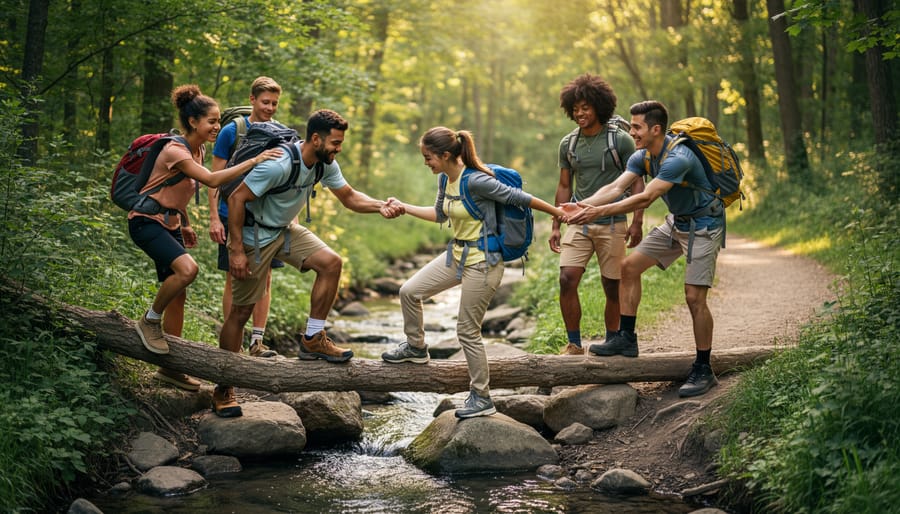
When children navigate a forest trail, step over fallen logs, or balance on a low stone wall, they’re doing more than playing, they’re building the emotional foundation they’ll draw on during difficult moments throughout their lives. Natural spaces offer what researchers call “graduated challenges”: experiences that feel like real accomplishments without overwhelming a child’s capabilities.
A seven-year-old who successfully crosses a stream by hopping stones learns she can assess risk, make decisions, and trust her body. These small victories accumulate. The same child who felt proud navigating that stream may approach a tough math problem or a friendship conflict with greater confidence, having internalized the message: “I can figure hard things out.”
Forest environments naturally calibrate challenge to each child’s readiness. Timid children might start by collecting pinecones, gradually working up to climbing gentle slopes. Bold children find steeper terrain or longer hikes. Unlike structured activities with fixed rules, nature lets children choose their own edge, the sweet spot between comfort and growth where resilience develops.
Child psychologist Dr. Angela Hanscom notes that physical challenges in nature directly strengthen emotional regulation. When a child feels anxious climbing over a log, then does it anyway and succeeds, their nervous system learns that discomfort doesn’t equal danger. This pattern, feel uncertain, try anyway, survive and succeed, is exactly how resilience forms.
Parents consistently report that children who spend regular time in forests handle disappointment better, recover from setbacks faster, and approach new situations with less fear. One mother described her previously anxious son returning from weekly forest visits “standing taller, literally and emotionally.” Nature doesn’t coddle or criticize. It simply presents opportunities for mastery, and children rise to meet them.
7. Improves Sleep Quality
Sleep struggles affect emotional health profoundly, when children don’t sleep well, everything from mood regulation to stress management becomes harder. Forest bathing creates conditions that naturally support better sleep patterns in several interconnected ways.
Natural light exposure during outdoor time helps regulate children’s circadian rhythms, the internal clock governing sleep-wake cycles. Morning or daytime forest visits particularly strengthen this effect, signaling to the body when to be alert and when to wind down. Unlike artificial indoor lighting that can confuse these signals, sunlight filtered through trees provides the full spectrum children’s bodies evolved to recognize.
Physical activity in natural settings contributes too. Walking forest paths, climbing gentle slopes, and exploring terrain engages muscles and expends energy without the overstimulation that playground equipment or organized sports sometimes create. This balanced exertion promotes the healthy tiredness that leads to restful sleep rather than the wired exhaustion that keeps children awake.
Perhaps most significantly, forest bathing’s stress-reducing effects prepare the nervous system for sleep. When cortisol levels drop and the parasympathetic nervous system activates during nature time, children arrive at bedtime already partway into the relaxed state needed for sleep. Parents often report their children fall asleep faster and sleep more soundly on days they spend time outdoors.
Quality sleep then creates a positive cycle, well-rested children manage emotions better, cope with stress more effectively, and have greater capacity for the attention and mood regulation discussed earlier. Some families combine forest bathing with other calming practices like ocean-inspired healing techniques at bedtime to extend the soothing effects into evening routines.
8. Fosters Social Connection and Cooperation
Forest time transforms from a solitary activity into a powerful relationship builder when children share it with others. Unlike screen-dominated interactions, nature creates space for genuine connection, kids collaborate to build stick forts, parents and children walk side-by-side noticing bird calls, siblings invent games with pinecones and leaves. These unplugged moments strengthen family bonds because everyone’s engaged in the same sensory experience rather than competing for attention.
Research shows that cooperative play in natural settings produces different social dynamics than structured indoor activities. Without rules or equipment dictating interactions, children negotiate roles, solve problems together, and practice compromise. A child who struggles with peer relationships indoors often finds it easier to connect when building a nature fort or exploring a creek together, shared discovery creates natural conversation and mutual goals.
For families, regular forest bathing builds emotional security through predictable, positive time together. Parents report that their children open up more easily during nature walks, perhaps because the lack of eye contact and shared focus on surroundings reduces pressure. One mother noticed her anxious daughter began sharing school worries during their Saturday forest visits, something that rarely happened at home. The practice of outdoor mindfulness naturally encourages presence and attention, which strengthens attachment and helps children feel truly seen.
Even brief nature experiences, twenty minutes at a local park with a friend, a family sunset walk, build social-emotional skills through relaxed, meaningful interaction that busy schedules often crowd out.
9. Increases Body Awareness and Mindfulness
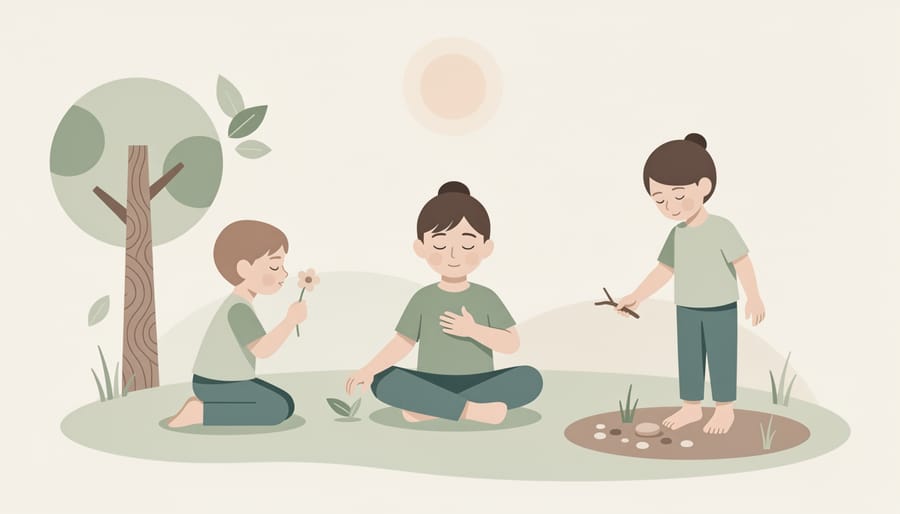
Forest bathing naturally guides children into mindfulness without requiring them to sit still or follow complex meditation instructions. When kids step into a forest, their senses activate automatically, they hear leaves rustling, feel bark texture under their fingers, smell pine or damp earth, watch light filter through branches. This sensory engagement is mindfulness in its most accessible form, perfectly suited to how children naturally interact with the world.
This body-aware exploration helps children reconnect physical sensations with emotions. A child who stomps through crunchy leaves learns to notice the energy in their legs. One who stops to listen to birdsong discovers they can choose where to place their attention. These aren’t abstract concepts, they’re concrete experiences that build the foundation for emotional awareness.
Research shows that nature-based mindfulness activities improve children’s ability to recognize and name what they’re feeling in their bodies, a skill psychologists call interoceptive awareness. When children can identify tension in their shoulders or butterflies in their stomach, they gain early warning signals for stress and better tools for self-regulation.
Parents report that children who regularly spend time in nature become more attuned to their bodies’ needs, recognizing when they’re tired, hungry, or overwhelmed before emotions escalate. This isn’t formal meditation practice; it’s learning to inhabit their bodies comfortably through gentle, repeated exposure to environments that encourage presence.
The beauty of forest bathing for mindfulness is its flexibility. A three-year-old touching moss is practicing mindfulness. So is a ten-year-old quietly watching ants build a trail. Each child engages at their developmental level, building awareness without pressure or performance anxiety that sometimes accompanies structured mindfulness programs.
Making Forest Bathing Work for Your Family
You don’t need pristine wilderness or hours of free time to bring forest bathing into your child’s life. Start with whatever green space you can access, a neighborhood park, a tree-lined street, even your backyard. The key is intention: slow down, put phones away, and encourage your child to engage their senses rather than rushing through.
Here’s how to begin:
- Aim for 20-30 minutes in nature two to three times per week, adjusting based on your child’s age and attention span
- Let your child set the pace and choose where to explore within safe boundaries
- Ask open-ended questions like “What do you hear?” or “How does the air feel?” to draw attention to sensory experiences
- Skip the educational agenda, resist the urge to teach; just be present together
- Notice what works: does your child calm down near water, perk up on trails, or focus best sitting under trees?
Every child responds differently to nature. Some become noticeably calmer after just ten minutes among trees, while others need several sessions before you see changes in mood or behavior. Pay attention to what your child gravitates toward and build from there. Forest bathing isn’t about perfection or following rules; it’s about creating regular, relaxed opportunities for your child to connect with the natural world in whatever form fits your family’s reality.
Frequently Asked Questions
How long should a forest bathing session last for children?
Even 20-30 minutes can provide noticeable benefits for younger children, while older kids may enjoy 45 minutes to an hour. The key is making it enjoyable rather than forcing a specific duration, let your child’s engagement guide you.
What if we don’t live near a forest?
Any green space works, neighborhood parks, botanical gardens, tree-lined trails, or even your backyard. The goal is spending time among trees and natural elements, not necessarily deep wilderness.
Do we need to do specific activities during forest bathing?
No structured activities are required. Forest bathing is about slowing down and noticing your surroundings through all five senses. Let your child explore at their own pace, touch bark, listen to birds, or simply sit quietly together.
Can forest bathing replace therapy for children with mental health challenges?
Forest bathing is a valuable complementary practice but shouldn’t replace professional mental health care when needed. Think of it as one tool in your child’s emotional wellness toolkit, working alongside other supports like therapy, medication, or school accommodations.
These questions address the most common concerns parents raise when they’re ready to start forest bathing but aren’t sure how to begin. Remember that consistency matters more than perfection, regular short visits to nature tend to benefit children’s emotional well-being more than occasional long outings. Start small, stay flexible, and pay attention to what works for your unique child.