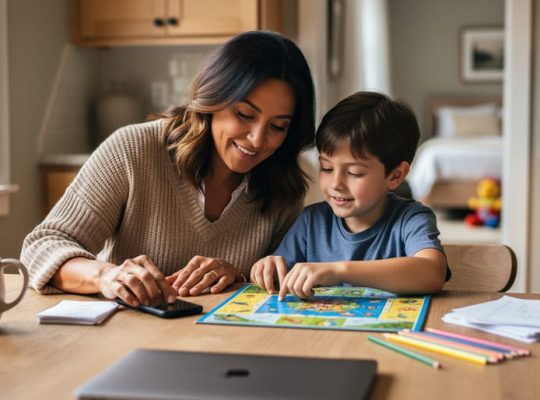

Role-play in counseling is a therapeutic technique where children act out real-life situations, emotions, or challenges in a safe, guided environment with a trained mental health professional. Through pretend scenarios using toys, puppets, or direct interaction, children explore feelings they might struggle to express in words alone.
If you’ve ever watched your child process a difficult day by reenacting it with stuffed animals, you’ve witnessed the natural healing power at work in role-play therapy. Children think and communicate differently than adults. A seven-year-old who freezes when asked “How did that make you feel?” might readily show you through a puppet conversation or dollhouse scene. This isn’t just creative play. It’s a evidence-based therapeutic method that helps children work through anxiety, trauma, social struggles, and behavioral challenges.
The role of play in child development extends powerfully into the counseling room, where structured role-play gives therapists a window into a child’s inner world while simultaneously offering children a rehearsal space for real life.
Perhaps your child’s therapist mentioned using role-play, or you’ve noticed it listed on a treatment plan and wonder what actually happens in those sessions. Many parents initially question whether “just playing” can truly address serious emotional or behavioral concerns. This article walks you through concrete examples of role-play techniques across common childhood challenges, explains how and why this approach works, and offers guidance on recognizing when your child might benefit from this form of therapy.
What Role-Play in Counseling Means
Role-play in counseling is a structured therapeutic technique where a trained counselor guides children through pretend scenarios to help them work through difficult emotions, practice new behaviors, and make sense of challenging experiences. Unlike the free-flowing play children do at home or on the playground, therapeutic role-play has a specific purpose: it creates a safe container where kids can try on different roles, express feelings they might not have words for, and rehearse responses to situations that feel overwhelming or confusing.
When counselors use role-play, they’re tapping into something children already do naturally, using imagination to understand the world. But in therapy, this pretend play becomes intentional. A counselor might set up a scenario where puppets act out a conflict at school, or where stuffed animals take turns sharing toys, or where action figures face a scary situation. The child participates actively, sometimes playing themselves and sometimes taking on different roles, which helps them see problems from new angles and explore emotions and coping strategies in ways that feel less threatening than direct conversation.
- Role-Play Therapy
- A counseling approach where children act out scenarios to practice skills and process emotions in a safe, guided environment.
- Therapeutic Play
- Structured play activities designed by mental health professionals to address specific emotional or behavioral challenges.
- Scenario-Based Counseling
- Using pretend situations relevant to a child’s life to help them rehearse responses and build confidence for real-world challenges.
- Play Therapy
- A broader treatment approach that uses play as the primary way children communicate, express feelings, and work through difficulties with a trained therapist.
The key difference between casual play and therapeutic role-play lies in the counselor’s trained observation and gentle guidance. While children play, therapists watch for patterns, gently introduce choices, and help kids notice their own reactions. This makes role-play a pivotal intervention for challenges like anxiety, trauma, social struggles, and grief, giving children a language beyond words to heal and grow.
How Role-Play Works in Counseling Sessions
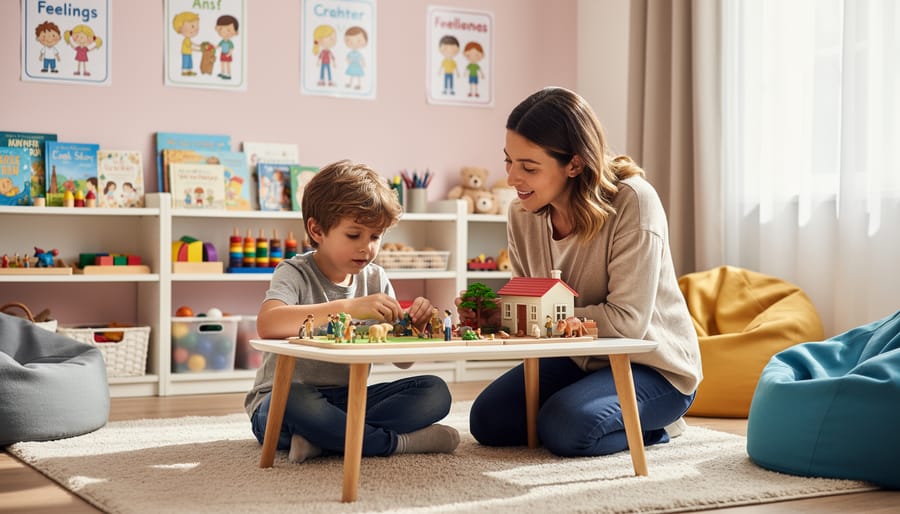
The Counselor’s Role
The counselor’s job during role-play is to follow the child’s lead rather than control the story. This means offering props, suggesting starting points, “What if your stuffed bear was feeling really sad today?”, and paying close attention to what unfolds. Therapists trained in non-directional child-led play won’t tell a child how the story should end or what the characters should feel. Instead, they observe, reflect back what they see, “The bear looks like he’s hiding”, and ask gentle questions that help children explore their own emotions.
Safety matters just as much as freedom. Counselors set clear boundaries about what’s okay in the playroom (no hurting ourselves or each other, no breaking things on purpose) while keeping the emotional space wide open. If a child’s play becomes overwhelming or veers into harmful territory, the therapist gently redirects without shutting down the feelings behind it. They might say, “I can see you’re really angry. Let’s find another way to show that.”
Throughout, counselors track patterns, what themes keep surfacing, which emotions the child avoids, moments when their body language shifts. This observation guides the work without interrupting the child’s natural process of discovery.
The Child’s Experience
For most children, role-play in counseling feels like playing with purpose. Instead of free-form pretending, they’re given gentle structure, a therapist might suggest they pretend to be a superhero facing their specific worry, or act out what happened at school using puppets or toys.
The key difference is the therapist’s presence and attention. Children notice someone is truly watching, asking thoughtful questions (“What does the bear need right now?” or “How does your character feel about that?”), and making the play feel important. This focused attention often helps kids open up in ways they wouldn’t during regular playtime.
Many children report feeling safer to explore difficult emotions through characters. It’s easier to say “The puppy is scared of storms” than “I’m scared.” The pretend layer creates just enough distance to practice big feelings without feeling exposed.
Sessions typically feel low-pressure, children aren’t being tested or judged. They’re simply playing while someone helps them notice patterns, name emotions, and discover new ways to respond. Most kids leave feeling heard rather than lectured, which is precisely what makes the approach effective.
Common Types of Role-Play Used in Child Counseling
Counselors draw on several distinct role-play approaches depending on what a child needs to work through. Each type serves a specific therapeutic purpose, and skilled therapists often blend techniques within a single session based on how the child responds.
Emotion Coaching Scenarios help children recognize, name, and manage their feelings. A counselor might set up a situation where a toy character feels scared, angry, or disappointed, then guide the child in exploring what that emotion looks like and how to handle it. For instance, a puppet might “feel nervous” about an upcoming test, and the child helps the puppet figure out calming strategies. This approach teaches emotional literacy, the ability to identify what you’re feeling before it becomes overwhelming.
Social Skills Practice involves acting out everyday interactions that challenge children: making friends, sharing toys, asking to join a game, or handling teasing. The counselor and child take turns being different characters, practicing conversation starters, reading social cues, and responding to rejection. Kids who struggle with autism spectrum traits, ADHD, or simple shyness benefit enormously from rehearsing these moments in a judgment-free space. They build confidence through repetition.
Trauma Processing Role-Play allows children who’ve experienced frightening or confusing events to replay them safely, often reversing the outcome or asserting control they didn’t have originally. A child might use action figures to reenact a car accident, but this time the characters escape unharmed, or they direct a different ending. This isn’t about changing reality, it’s about reducing the emotional charge of the memory and restoring a sense of agency.
Family Dynamics Exploration gives children a way to express complicated feelings about parents, siblings, or household situations. Using a dollhouse or family figurines, a child might show what dinnertime feels like, who gets angry, or how divorce has shifted their world. Counselors observe these scenarios without judgment, helping children externalize feelings they can’t yet put into words.
Future-Self Rehearsal involves practicing upcoming challenges: the first day at a new school, meeting a new baby sibling, or talking to a doctor. The child walks through the experience beforehand, identifying what might be hard and planning coping strategies. It transforms abstract worry into concrete, manageable steps.
Different children respond to different types, and good counselors adjust their approach based on developmental stage, temperament, and presenting concerns. Some kids dive into elaborate fantasy scenarios; others prefer straightforward practice of real situations. The method matters less than the connection it creates and the skills it builds.
Real Examples of Role-Play in Counseling
Managing Big Feelings: The Volcano Exercise
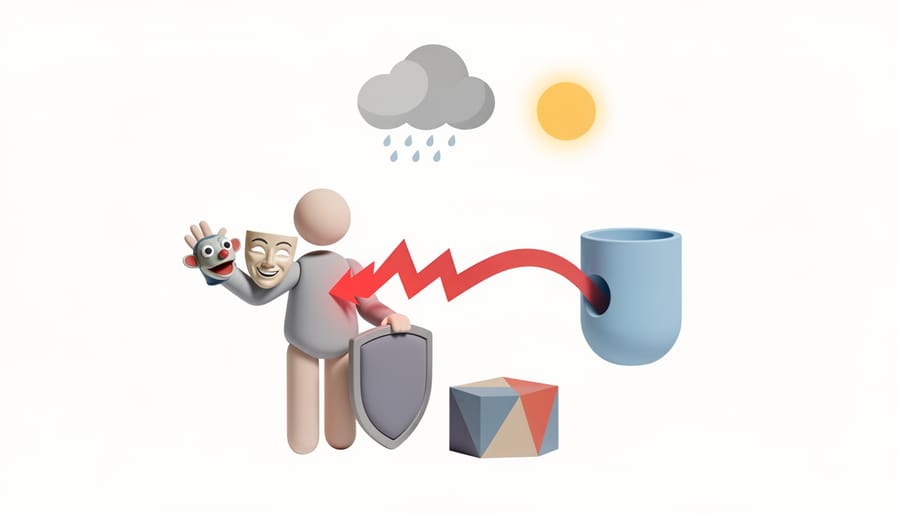
The Volcano Exercise gives children a physical way to show what happens inside their body when anger builds up. The counselor asks the child to pretend they’re a volcano, starting calm and quiet like a sleeping mountain. As they imagine frustrating situations, a sibling taking their toy, being told “no” at bedtime, the child slowly raises their arms and begins to rumble. Their body tenses, their voice gets louder, and eventually they “erupt” with a big jump and shout, releasing the pressure.
After the explosion, the counselor guides the child through cooling down: taking deep breaths, lowering their arms, and returning to calm. This mirrors how real anger works and what happens after an outburst. The child learns that angry feelings build predictably and that they can notice the warning signs, the rumbling stage, before they erupt. Many counselors combine this with big emotions play at home, teaching parents the same volcano language so everyone recognizes when feelings are heating up and knows how to cool down together safely.
Building Friendship Skills: Playground Scenarios
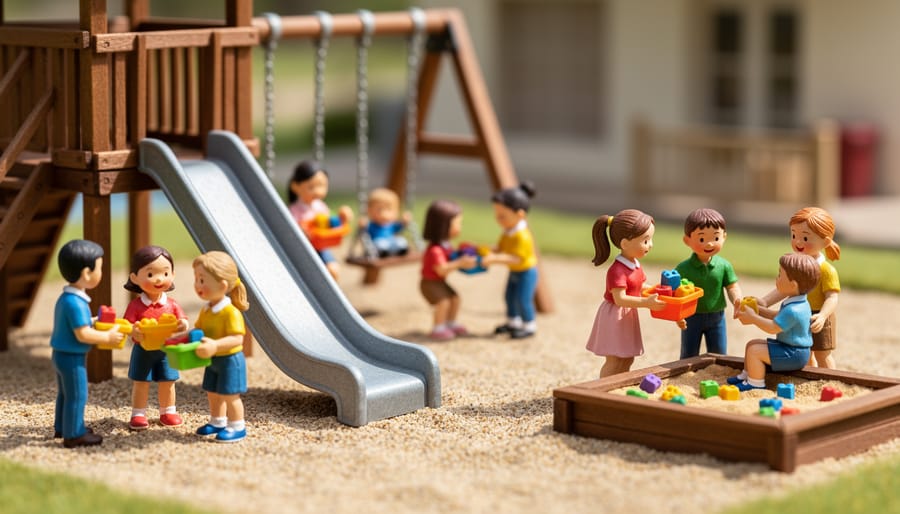
Playground scenarios help children practice the everyday social situations that often feel overwhelming. A counselor might set up a pretend recess scene where the child practices approaching a group already playing tag. They rehearse different opening lines, “Can I play too?” or “That looks fun, how do you play?”, and the counselor takes on various responses, from welcoming to dismissive.
When practicing rejection, the child might hear “We already have enough players” and work through their feelings of disappointment without internalizing it as personal failure. The counselor helps them generate alternatives: finding another game, asking to join the next round, or starting a different activity. Children also practice reading social cues like body language and voice tone.
These rehearsals build confidence before real-world interactions. A child who’s practiced joining games in counseling feels less anxious trying it at actual recess, knowing they have strategies beyond just walking away hurt.
Processing Loss or Change: Memory Theater
When a child experiences loss or major family changes, a death, divorce, or move, words often fail them. Memory Theater gives children a way to revisit and reorganize difficult experiences through safe reenactment.
In a typical session, a child might create a scene from before the loss occurred. A seven-year-old whose grandmother died might recreate Sunday dinners at her house, assigning the counselor to play grandma while she plays herself. Through repetition and variation, she controls the narrative, sometimes changing the ending, sometimes simply reliving happy moments she fears forgetting.
The counselor might gently introduce new scenarios: “What would you want to tell her now?” This opens space for unspoken feelings without forcing direct conversation about death.
For divorce, a child might stage the announcement scene multiple times, trying different reactions each time. This helps them process what happened and discover they weren’t responsible.
The physical act of arranging toys, choosing roles, and directing action gives children agency during times when everything feels beyond their control.
Reducing Anxiety: Worry Rehearsal
Sophie sits in the counselor’s office, twisting her hands together. School starts in two weeks, and she’s terrified. Her counselor suggests they “practice” the first day together.
They set up chairs like desks. The counselor becomes the teacher, greeting Sophie at the door. Sophie practices walking in, finding her seat, introducing herself to imaginary classmates. When Sophie freezes, unable to speak, they pause. “What’s happening in your body right now?” the counselor asks. Sophie identifies the tight feeling in her chest, her worry signal.
They replay the scenario. This time, Sophie uses the breathing technique they’ve practiced. She manages a quiet “hello.” They run through it again, each repetition making the unknown slightly less scary.
By rehearsing her fears in this safe space, Sophie builds a mental map of what to expect. The actual first day won’t be entirely new, she’s already experienced a version of it. Her brain has practiced staying calm when anxiety rises, giving her real tools when the moment arrives.
When and Why Counselors Use Role-Play
Role-play works especially well when children struggle to name what they’re feeling or when words alone don’t capture their experience. Counselors turn to this technique most often for kids between ages four and twelve, though the approach adjusts based on the child’s developmental stage and comfort with imaginative play. Younger children naturally think in concrete, story-based ways, which makes pretend scenarios feel safer than direct conversation about difficult topics.
Therapists choose role-play when they see children who benefit from practicing skills before facing real situations. A child anxious about starting a new school can rehearse introducing themselves dozens of times through play, building confidence that talking about anxiety might not create on its own. The method shines when children need to develop coping skills they can actually use, role-play turns abstract advice like “take deep breaths” into muscle memory through repeated practice.
This technique proves particularly valuable in several common situations:
- When children act out behaviorally but can’t explain why they’re upset
- For kids struggling with social skills like sharing, turn-taking, or reading social cues
- During trauma recovery, allowing children to retell their story with a sense of control
- Teaching children to handle big emotions like anger or fear in healthy ways
- Working through family conflicts such as divorce, new siblings, or household changes
Children who respond best tend to have some capacity for imaginative play and feel comfortable with pretending. That said, even resistant or literal-minded kids often warm up once they realize role-play gives them permission to express feelings without consequence. A child who refuses to talk about their anger might eagerly show a puppet “how mad someone could get.”
Counselors avoid role-play when children find pretending distressing, when they’re in acute crisis requiring immediate intervention, or when cultural factors make imaginative therapeutic play feel inappropriate. The approach works because it meets children where they already are, in a world where play is their first language.
What Parents Should Know About Role-Play Therapy
If your child is starting role-play therapy, you might wonder what happens behind closed doors and whether pretend play can truly help with real problems. Rest assured that therapeutic role-play is a structured, evidence-based approach guided by trained professionals who prioritize your child’s safety and comfort.
During sessions, your counselor will create a welcoming space where your child can explore feelings through play without judgment or pressure. These aren’t scripted performances, children lead the scenarios at their own pace, and therapists follow their cues. You might notice your child coming home and reenacting parts of their session, which is completely normal and often a sign they’re processing what they learned.
Supporting the process at home doesn’t mean becoming a therapist yourself. Simply staying curious and open helps. If your child wants to play out scenarios from counseling, join in without correcting or teaching. Ask gentle questions like “What happened next?” rather than “What did you learn?” which can feel like a test.
Watch for small shifts rather than dramatic changes. Your child might use new words for feelings, handle frustration slightly better, or show more confidence in social situations. Progress in emotional growth happens gradually, like building muscle through regular exercise.
Keep communication open with your counselor. Share what you observe at home and ask questions about anything that puzzles you. Professional role-play therapy is carefully designed to help children feel empowered, never exposed or uncomfortable. If your child ever seems distressed about sessions rather than just processing difficult feelings, bring it up immediately.
Trust that your decision to seek help is supporting your child’s wellbeing in meaningful ways.
Frequently Asked Questions
What age is role-play counseling appropriate for?
Role-play works well for children as young as three or four, once they’ve developed basic pretend-play skills. Most counselors use it with kids between ages 4-12, though teens can benefit from structured role-play scenarios too.
Is role-play therapy the same as drama therapy?
They’re related but different. Role-play in counseling is a technique therapists use within various therapeutic approaches, while drama therapy is a specialized discipline that uses theatrical processes more extensively. Both can be helpful, but drama therapy requires specific certification.
How long does role-play therapy take to work?
Results vary by child and challenge. Some kids show improvement in social skills or emotional regulation within a few weeks, while deeper issues like trauma processing may take several months of consistent sessions.
Can I watch or join my child’s role-play sessions?
It depends on your child’s needs and the therapist’s approach. Some counselors invite parents into sessions occasionally, especially for younger children, while others prefer individual time to help kids express themselves freely.
Beyond these basics, parents often wonder how frequently their child should attend sessions. Most counselors recommend weekly meetings to maintain continuity and build on skills between visits. Skipping weeks can interrupt the momentum, especially when children are working through active challenges or practicing new behaviors they need to reinforce.
Finding a counselor trained in play-based approaches matters more than looking for someone who specializes only in role-play. Licensed professional counselors, clinical social workers, and psychologists who work with children typically integrate role-play into their practice. When searching, ask potential therapists directly about their experience using play and role-play techniques, their training background, and whether they tailor approaches to each child’s learning style.
Role-play also combines well with other therapeutic methods. Your child’s counselor might use it alongside cognitive-behavioral techniques, art therapy, or family therapy sessions. The flexibility of role-play makes it a natural complement rather than a standalone treatment, which often means stronger results as children benefit from multiple tools working together.
Role-play in counseling meets children exactly where they are, in the world of pretend and possibility. What looks like simple make-believe to an outsider is actually a child’s most natural language for processing hard emotions, practicing new skills, and making sense of confusing experiences. Through guided role-play, counselors help kids translate feelings they can’t yet name into actions they can understand and change.
If your child is struggling, play-based approaches like role-play aren’t “just games”, they’re evidence-backed therapeutic tools that honor how young minds actually learn and heal. You’re not choosing between fun and serious help; you’re choosing an approach designed for how children genuinely communicate.
Seeking professional support for your child takes courage, not weakness. Finding a counselor trained in play therapy or role-play techniques can open doors that direct conversation simply can’t. Our site offers additional resources on recognizing when children need extra support, understanding different therapy approaches, and supporting your child’s emotional growth at home. You’re not alone in this journey, and the right help can make all the difference.