
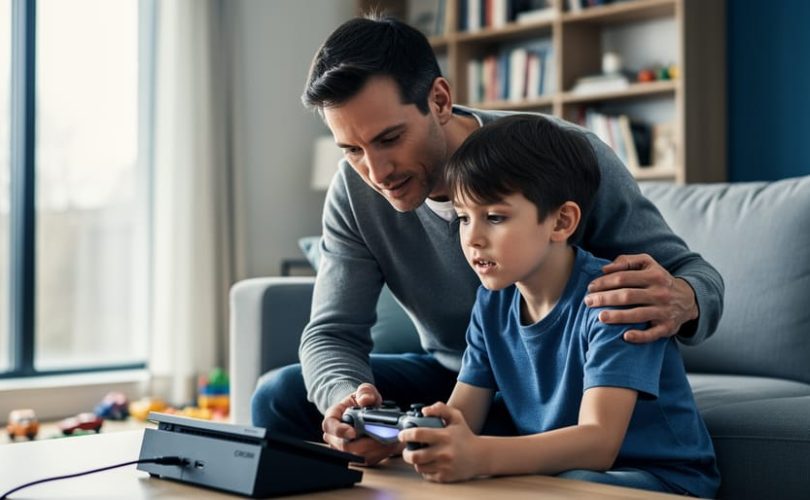
The psychological effects of video games are the mental, emotional, and behavioral changes that occur in players as a result of gaming experiences, ranging from improved problem-solving skills and emotional resilience to potential issues with aggression or screen time dependence.
If you’re a parent watching your child navigate digital worlds for hours each day, you’ve likely wondered whether those games are shaping their mind for better or worse. You’re not alone. In 2026, as gaming has become woven into childhood as tightly as playground time once was, understanding its psychological impact isn’t optional anymore. It’s essential.
The question isn’t simply whether video games are good or bad. Research shows the answer is far more nuanced. Games can teach children to persevere through challenges, recognize complex emotions in characters, and collaborate with peers across the globe. The same medium can also expose developing minds to intense stimuli that some children aren’t ready to process.
What makes this topic particularly challenging for parents and educators is that video games aren’t a monolithic experience. A puzzle game that rewards patience looks nothing like a competitive shooter that demands split-second reactions. Story-driven adventures where players make moral choices create different psychological effects than endless mobile games designed to trigger reward loops.
This article will help you understand how video games actually influence children’s minds, what specific effects researchers have identified, and how different types of games create different outcomes. You’ll learn to recognize both the benefits and the warning signs, so you can guide the young people in your life toward gaming experiences that support their emotional development rather than undermining it.
The goal isn’t to eliminate gaming. It’s to understand it well enough to make informed choices.
What the Psychological Effects of Video Games Really Mean
When we talk about psychological effects of video games, we’re describing the real changes that happen in how children think, feel, and interact with others through their gaming experiences. These aren’t abstract concepts, they’re measurable shifts in brain activity, emotional responses, and social behaviors that researchers can observe and track.
Video games influence four main areas of development. Cognitively, they affect how children process information, solve problems, and make decisions. Emotionally, games shape how kids recognize feelings in themselves and others, and how they respond to emotional situations. Behaviorally, gaming can change how children react to challenges, handle frustration, and persist through difficulty. Socially, games impact how kids communicate, cooperate, and build relationships with peers.
Here’s what’s crucial for parents to understand: these effects aren’t inherently good or bad. A child playing a story-rich adventure game where characters face moral dilemmas experiences different psychological effects than a child playing a fast-paced shooter or a creative building game. The content matters, the amount of time matters, and the context, whether they’re playing alone or with family, whether gaming replaces other activities or complements them, matters enormously.
- Emotional regulation
- The ability to recognize, understand, and manage your own emotional responses. Games can teach this through challenges that require staying calm under pressure or through narratives that model healthy emotional processing.
- Cognitive empathy
- Understanding another person’s thoughts and perspective intellectually, even if you don’t share their feelings. Story-driven games develop this by letting players see situations through different characters’ eyes.
- Perspective-taking
- The capacity to imagine how someone else experiences a situation and what might motivate their actions. Games with multiple playable characters or branching storylines strengthen this skill.
- Narrative immersion
- The state of being deeply engaged in a story, where the player feels emotionally connected to events and characters. This immersion creates opportunities for emotional learning that stick with children beyond screen time.
- Parasocial relationships
- One-sided emotional bonds that players form with game characters, similar to how readers connect with book characters. These relationships can become practice grounds for understanding complex emotions and motivations.
Gaming narratives function as emotional learning tools because they let children experience consequences in a safe space. When a game character faces rejection, loss, or difficult choices, your child processes those emotions without real-world stakes. They learn what different emotional situations feel like and practice responses they might use later in actual relationships and challenges.
How Video Games Shape Emotional Development
The Role of Story and Character Connection
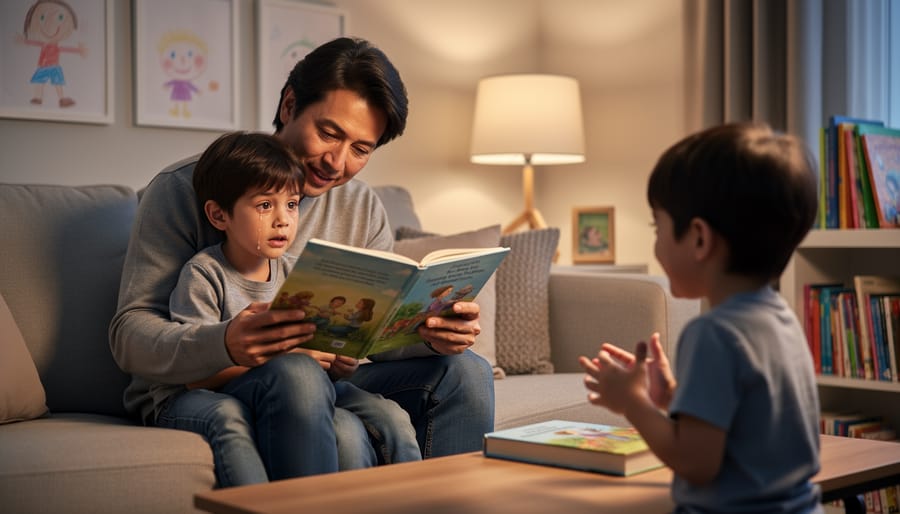
When children become invested in a video game character’s journey, something remarkable happens in their developing brains. They begin experiencing that character’s emotional world as if it were their own, activating the same neural pathways involved in real-world empathy and emotional understanding.
Narrative-driven games create these connections through carefully crafted stories that reveal characters’ vulnerabilities, motivations, and growth over time. A child playing a game like Life is Strange doesn’t just control a character making choices. They genuinely worry about friendships fracturing, feel the weight of difficult decisions, and experience authentic concern for characters facing hardship. This emotional investment transforms passive entertainment into active perspective-taking practice.
The most effective games for building emotional intelligence present characters with internal conflicts that mirror real emotional challenges. In Undertale, players encounter characters dealing with loneliness, anger, and redemption, learning that understanding someone’s backstory changes how they respond to that person’s behavior. Games like Spiritfarer guide children through complex emotions surrounding loss and saying goodbye, modeling how to sit with difficult feelings rather than avoiding them.
Through extended interaction with well-developed characters, children practice seeing situations from viewpoints different than their own. They learn that people act for reasons that make sense within their own emotional experiences, a foundational skill for real-world empathy and relationship building.
Learning Through Virtual Consequences
Video games create something rare in childhood: a consequence-free laboratory where kids can test emotional decisions and see what happens. When your child chooses to help a struggling character in a game or decides to betray an ally for personal gain, they experience the emotional fallout without real-world stakes. This virtual rehearsal space builds emotional intelligence in ways traditional media cannot match.
The key mechanism is immediate feedback. Games show players the emotional ripple effects of their choices through character reactions, story branches, and changes in relationships. A child who ignores a teammate’s distress might watch their in-game alliance crumble. One who shows compassion sees trust deepen and new story possibilities open. These cause-and-effect loops help children connect actions to emotional outcomes in ways they can revisit and refine.
Research shows this emotional experimentation transfers to real life. Children who navigate complex moral choices in narrative-driven games demonstrate stronger perspective-taking abilities. They learn to pause and consider how decisions affect others because they’ve practiced it repeatedly in low-stakes virtual scenarios. The pattern-recognition skills developed through cooperative play in games translate to better emotional prediction in actual relationships.
The safety of these virtual consequences matters profoundly. Children can explore difficult emotions like guilt, regret, or moral ambiguity without lasting harm, building emotional resilience through controlled exposure.
Different Ways Gaming Affects Emotional Skills
Positive Effects on Emotional Intelligence
Well-designed video games can actively strengthen several components of emotional intelligence, particularly when they incorporate thoughtful narratives and meaningful player choices. When children engage with character-driven stories, they practice identifying and understanding emotions in contexts that feel safe yet engaging.
gameplay empathy training research shows that narrative games requiring players to consider characters’ feelings and motivations strengthen empathy development. A child guiding a character through difficult relationships learns to recognize emotional cues and consider how their decisions affect others. This mirrors real-world emotional processing but removes the immediate social pressure of face-to-face interaction, creating a low-stakes environment for practicing emotional responses.
Gaming narratives naturally build specific emotional competencies:
- Emotion recognition: identifying characters’ feelings through dialogue, facial expressions, and behavioral changes
- Perspective-taking: experiencing situations through multiple characters’ viewpoints and understanding different emotional reactions to the same event
- Emotional regulation: managing frustration during challenging gameplay and celebrating achievements appropriately
- Moral reasoning: weighing emotional consequences of choices and recognizing how actions affect others’ wellbeing
- Cooperation skills: coordinating with teammates and navigating group dynamics in collaborative play
Cooperative gameplay particularly enhances social skills through shared problem-solving. When children work toward common goals in games, they practice reading teammates’ emotional states, offering encouragement, and managing disagreements constructively. multiplayer cooperation demands real-time emotional awareness as players coordinate strategies and support one another through setbacks.
Games with branching narratives, where choices produce visible emotional outcomes for characters, create powerful learning moments. Children see how their decisions ripple through a story, connecting actions to emotional consequences in ways that support developing empathy and emotional responsibility.
When Gaming Can Interfere with Emotional Health
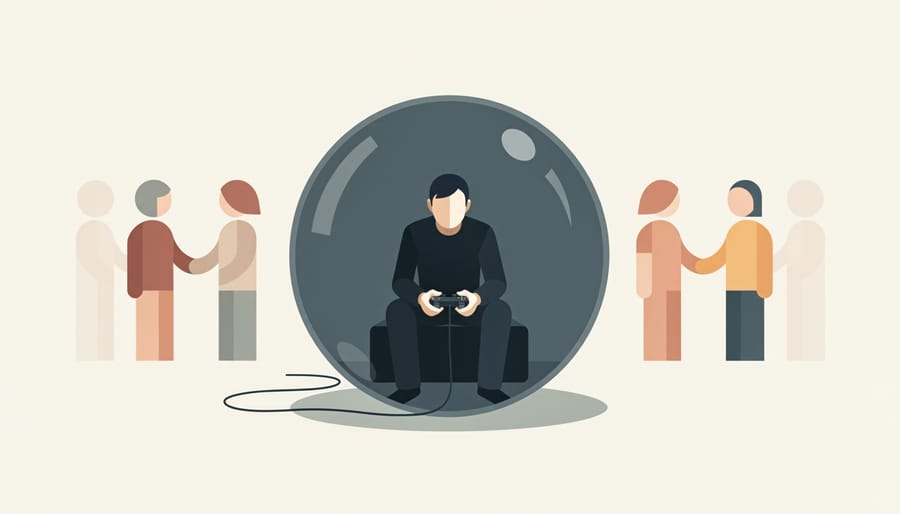
While video games can support emotional growth, certain patterns of gaming may interfere with a child’s developing emotional health. Understanding these potential downsides helps you spot warning signs early and maintain balance.
Emotional desensitization can occur when children spend excessive time with violent or emotionally intense content. Repeated exposure to virtual aggression or trauma may dull emotional responses, making real-world suffering seem less significant. This doesn’t happen overnight or from moderate gaming, but prolonged immersion in harsh virtual worlds can shift a child’s emotional baseline.
Gaming sometimes becomes an escape from difficult emotions rather than a way to process them. When children consistently turn to games to avoid sadness, anxiety, or social challenges, they miss opportunities to develop real-world coping skills. The comfort of a virtual world where they feel competent can delay the harder work of facing genuine emotional struggles. You might notice this if your child immediately reaches for a controller when upset or withdraws from family interactions after setbacks.
Face-to-face social interaction teaches emotional nuances that online gaming can’t replicate. Reading facial expressions, responding to body language, and navigating in-person conflicts build crucial emotional intelligence. Children who spend most social time in online gaming environments may struggle with these real-world skills, even if they cooperate well with teammates virtually.
Research on emotional regulation in gaming disorder shows that problematic gaming patterns correlate with difficulty managing emotions outside the game. Children may experience irritability when not gaming, emotional outbursts when gaming is limited, or reduced interest in activities that once brought joy. These signs suggest gaming has moved from recreation to emotional dependency.
Context matters enormously. A child who games moderately, maintains friendships, participates in family life, and shows varied interests faces different risks than one whose emotional world centers entirely on gaming.
How Parents Can Support Healthy Gaming and Emotional Growth
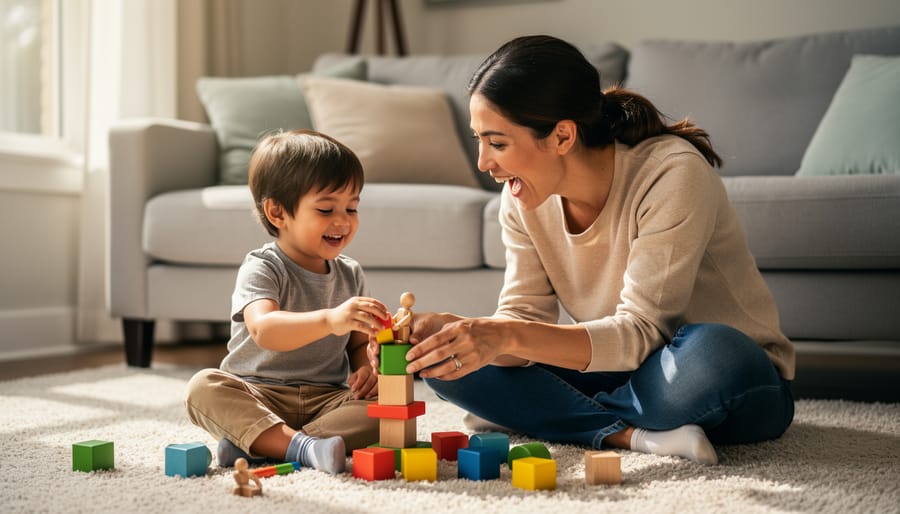
Choosing Games That Build Emotional Skills
When selecting games for emotional growth, prioritize titles with story-driven narratives that feature characters facing genuine dilemmas. Look for games rated E10+ or T by the ESRB that emphasize moral decision-making rather than reflexive action. Adventure games like Life is Strange or puzzle-based narratives such as Gris present complex emotional situations where choices carry weight and consequences.
Cooperative multiplayer games, think It Takes Two or *Overcooked*, require communication, patience, and teamwork, naturally building empathy as children navigate shared challenges. These experiences complement efforts toward digital balance by encouraging connected play rather than isolated screen time.
Seek games where characters express diverse emotions beyond anger or excitement. Role-playing games often excel here, offering branching storylines where players explore different perspectives. Check for content descriptors mentioning “mild fantasy violence” or “comic mischief” rather than “intense violence” or “blood”, these typically indicate age-appropriate emotional complexity without overwhelming themes.
Read parent reviews on Common Sense Media before purchasing, focusing on comments about emotional content and character depth rather than just entertainment value. Games that slow down for reflection, those with journaling mechanics, quiet exploration moments, or dialogue-heavy scenes, tend to encourage emotional processing better than constant action-driven experiences.
Turning Gaming Into Emotional Learning Opportunities
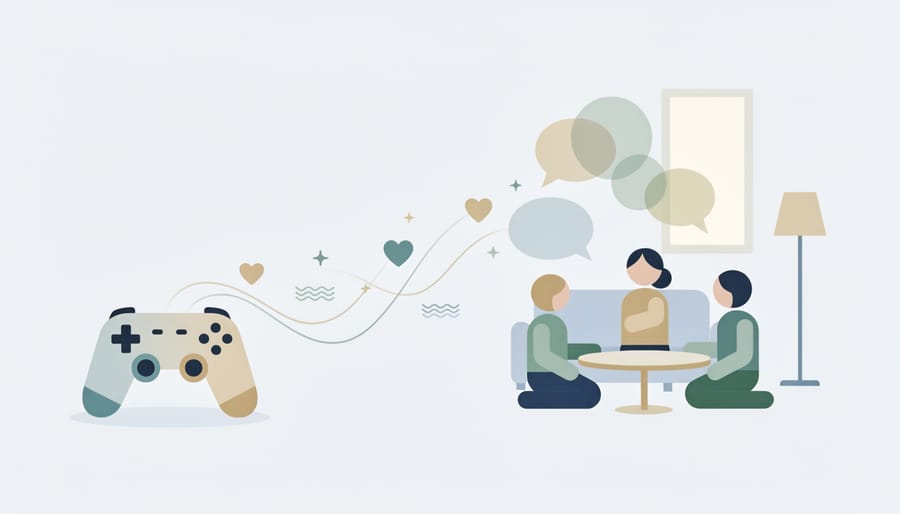
When your child finishes a gaming session, try asking “What was going through your character’s mind when they made that choice?” rather than “Did you win?” This simple shift transforms passive entertainment into active emotional reflection. Games create natural conversation bridges about feelings that children might otherwise struggle to articulate.
After watching your child play a narrative-rich game, explore the emotional stakes together. “How do you think the shopkeeper felt when you helped them?” or “Why was that character so angry?” prompts your child to identify emotions beyond their own experience. These discussions build the same skills therapists use, recognizing that people’s actions stem from underlying feelings and needs.
Moral dilemmas in games offer low-stakes practice for real ethical thinking. When a game presents choices like “save the village or rescue your friend,” pause and discuss it together. “What would you do in real life?” helps transfer virtual decision-making to actual emotional reasoning. Acknowledge that many situations don’t have perfect answers, normalizing the complexity children face in their own relationships.
Connect game scenarios to familiar situations without forcing the parallel. If a character struggled with peer pressure, you might mention “Remember when your friend wanted to skip homework to play outside? That’s kind of similar, right?” These gentle bridges help children see gaming narratives as practice for real emotional challenges.
The key is staying curious rather than lecturing. Balance these meaningful conversations with reasonable screen-time limits and respect for their gaming enjoyment. When children feel heard rather than interrogated about their games, they’re more likely to share deeper thoughts and apply emotional lessons beyond the screen.
What Research Tells Us About Gaming and Emotional Intelligence
The relationship between video games and emotional development has become a significant focus for researchers over the past decade. A 2024 meta-analysis published in the journal Developmental Psychology examined 47 studies involving over 12,000 children and found that narrative-driven games with complex characters showed measurable improvements in empathy scores, particularly when children discussed the game content with adults. The research revealed that games requiring perspective-taking decisions enhanced emotional recognition skills by an average of 15 percent compared to control groups.
Dr. Rachel Kowert, a research psychologist specializing in gaming effects, notes that the quality of the narrative matters more than the amount of time spent playing. Her 2025 study found that children who played story-rich games for five hours weekly demonstrated better emotion regulation than those who played action-oriented games for the same duration. However, she emphasizes that these benefits diminish when gaming replaces face-to-face social interaction entirely.
Research from the University of Wisconsin in 2023 tracked 800 adolescents over two years and discovered that cooperative multiplayer games strengthened social-emotional skills, but only when players communicated verbally during gameplay. Text-based interaction showed minimal emotional learning benefits. The same study identified that approximately 8 percent of participants developed problem gaming signs characterized by gaming interfering with emotional processing of real-life situations.
Child psychologist Dr. Michael Rich from Boston Children’s Hospital cautions that current research cannot yet determine long-term effects. Most studies track participants for two years or less, leaving questions about whether emotional gains persist into adulthood. He also points out that research has primarily focused on children aged 10-16, with limited data on younger children whose emotional development follows different trajectories.
The emerging consensus among researchers is that gaming narratives can serve as supplementary tools for emotional learning when integrated thoughtfully into a child’s life, but they work best alongside traditional social-emotional experiences rather than as replacements.
Common Questions Parents Ask About Gaming and Emotions
Parents often worry about getting the balance right between allowing their children to enjoy video games and protecting their emotional wellbeing. These concerns are valid, and understanding the nuances can help you make informed decisions that work for your family’s unique situation.
How much gaming time is appropriate for different ages?
The American Academy of Pediatrics suggests no more than one hour per day of quality programming for children ages 2-5, while older children benefit from consistent limits that don’t interfere with sleep, physical activity, and face-to-face interactions. Rather than focusing solely on duration, consider whether gaming time displaces important activities like homework, outdoor play, or family conversations.
What are the warning signs that gaming is affecting my child’s emotional health?
Watch for significant changes in mood when gaming is limited, withdrawal from previously enjoyed activities, declining school performance, or difficulty regulating emotions outside of gaming contexts. If your child becomes irritable, anxious, or sad primarily when not gaming, or uses games exclusively to avoid dealing with real-world problems, these patterns warrant attention.
Do violent video games always damage emotional development?
The relationship isn’t that simple. Context matters enormously, including the child’s age, the game’s narrative complexity, and how violence is framed within the story. A mature teen playing a narrative-driven game that explores the consequences of violence may develop greater moral reasoning, while a young child exposed to graphic violence without context may become desensitized.
Can video games replace reading or other traditional ways of learning about emotions?
Gaming offers unique interactive emotional experiences but works best as a complement rather than replacement. Reading builds different cognitive pathways and allows deeper reflection, while face-to-face interactions provide irreplaceable practice with real-time emotional cues and genuine social consequences.
The key distinction parents should understand is between gaming as one tool among many versus gaming as the primary source of emotional learning. Children develop emotional intelligence through varied experiences: reading stories, playing pretend, navigating playground conflicts, having family discussions, and yes, engaging with well-chosen video games. Each contributes something different.
When parents ask whether their child’s gaming habits are healthy, the answer rarely lies in hours alone. Look instead at the whole picture. Is your child maintaining friendships, pursuing interests beyond screens, sleeping well, and able to discuss their feelings? Can they step away from games without emotional meltdowns? Do they show empathy in real-world situations, not just virtual ones?
Trust your instincts about what feels right for your child while staying curious about their gaming experiences. The parents most successful at supporting healthy gaming relationships are those who remain engaged without being controlling, asking genuine questions about game stories and characters rather than issuing blanket judgments.
How The Psychological Effect of Video Games on Works
The psychological impact of video games unfolds through a repeating cycle that begins the moment a child picks up a controller. First, the game presents a scenario, a character facing a moral dilemma, a team needing cooperation, or a challenge requiring persistence. The child’s brain processes this virtual situation using the same neural pathways involved in real-world emotional experiences.
As the child responds to the scenario, the game provides immediate feedback. A compassionate choice might lead to a grateful character’s response, while an aggressive action could result in visible consequences. This feedback loop teaches cause and effect in emotional contexts, creating what psychologists call experiential learning.
The brain then stores these virtual experiences as emotional memories, similar to how it processes actual events. When your child later encounters a comparable situation in real life, their brain draws on both real and virtual experiences to guide their response.
Repetition strengthens this process. Each time a child navigates emotional scenarios in games, the neural pathways associated with empathy, self-regulation, or problem-solving become more developed. Think of it like building muscle memory, except it’s happening with emotional skills rather than physical coordination.
Types of The Psychological Effect of Video Games on
Video games can affect children’s emotional development in several distinct ways that parents should understand:
Cognitive-emotional effects involve how games shape thinking patterns about emotions. Strategy games might strengthen problem-solving under pressure, while narrative-driven titles can expand emotional vocabulary as children encounter characters expressing complex feelings like guilt, jealousy, or moral conflict.
Social-emotional effects emerge through multiplayer experiences. Cooperative games can build teamwork and communication skills, while competitive environments may trigger frustration management challenges or teach graceful winning and losing.
Behavioral-emotional effects relate to how gaming influences emotional expression and regulation. Some children learn patience through difficult game challenges, while others may display increased irritability during or after intense gaming sessions.
Motivational-emotional effects concern what drives gaming behavior. Games can foster healthy achievement motivation and resilience through manageable challenges, but may also create unhealthy emotional dependence when used primarily for escape or validation.
Each type can lean positive or negative depending on the specific game content, your child’s temperament, and the context surrounding their play. The same game might build confidence in one child while triggering anxiety in another.
The relationship between video games and emotional intelligence isn’t black and white. Research shows that gaming narratives can genuinely support emotional development when parents stay involved and choose content thoughtfully. The key lies not in whether children play video games, but in how they engage with them and what conversations happen around that experience.
Your child’s gaming time can become an opportunity for emotional growth rather than a source of worry. When you co-play story-driven games together, discuss character motivations, or talk through moral dilemmas encountered in virtual worlds, you’re actively building their emotional skills. These conversations help children transfer what they learn from game narratives into real-world emotional understanding.
The games your child plays will likely continue evolving, but your role as a guide remains constant. Set reasonable boundaries around content and screen time, but don’t dismiss gaming as purely entertainment or inherently harmful. Many games offer rich emotional experiences that rival traditional storytelling in books and films.
Pay attention to how gaming affects your child’s mood, behavior, and social connections. If you notice withdrawal from real-world relationships or difficulty managing emotions around gaming, address it early through open dialogue. Most children benefit from gaming when it’s balanced with other activities and supported by engaged parents.
Your involvement makes all the difference. You have the power to help your child develop emotional intelligence through gaming while protecting them from potential harm.