

Parenting resilience is your ability to adapt, recover, and grow stronger through the daily stresses and unexpected crises of raising children. It doesn’t mean never feeling overwhelmed or frustrated. It means developing specific skills to manage those moments, bounce back from setbacks, and model healthy coping for your kids in the process.
You can build this resilience through five core practices: regulating your own emotions during high-stress moments, establishing realistic expectations that account for your family’s unique circumstances, creating a support network you actually use, prioritizing rest and recovery without guilt, and reframing challenges as opportunities to teach your children problem-solving skills. The timeline varies, some techniques work immediately while others take weeks of consistent practice, but most parents notice meaningful change within a month.
Why does this matter beyond your own wellbeing? Children learn resilience primarily by watching how the adults around them handle stress. When you demonstrate that setbacks are temporary and manageable, your child internalizes that same capacity. Research consistently shows that parental resilience directly influences a child’s ability to regulate emotions and cope with their own challenges.
The pressure to be a perfect parent makes this harder. Social media shows curated highlight reels while you’re dealing with tantrums in the grocery store or sleepless nights with a sick child. That gap between expectation and reality drains your reserves. Building resilience means closing that gap, not by becoming superhuman, but by developing practical tools that work when you’re already exhausted and short on patience.
What You’ll Need: Essential Resources and Support Systems
Building resilience isn’t like assembling furniture, you won’t find a checklist of concrete supplies. Instead, think of these as the foundational resources that make the work possible. Without them, you’re trying to build strength on shaky ground.
Your Essential Resilience Resources
Before you can strengthen your capacity to bounce back from parenting challenges, you need access to certain emotional, social, and practical supports:
- A support network of at least one or two trusted people who understand your parenting reality
- Protected time for basic self-care, even if it’s just 10-15 minutes daily
- Basic knowledge about how stress affects your body and mind
- Willingness to practice self-compassion instead of self-criticism
- Access to mental health resources or professional support when needed
Notice that none of these require perfection. You don’t need a huge friend group, hours of free time, or a psychology degree. What matters is having some version of each element in place.
Your support network might be a partner, a friend from your child’s school, an online parent group, or a family member who truly gets it. The key is that these people can listen without judgment and offer practical help when you’re stretched thin. Resilience research consistently shows that isolation undermines our ability to cope, we’re simply not designed to parent alone.
Self-care time feels impossible when you’re already overwhelmed, but it’s precisely why resilience building requires intention rather than waiting for the perfect moment. This might mean asking your partner to handle bedtime twice a week, swapping childcare with another parent, or protecting your morning coffee before anyone else wakes up.
Understanding your stress responses helps you recognize when you’re running on empty before you hit crisis mode. When you notice your shoulders tensing, your patience evaporating, or your mind racing, you can intervene earlier.
Finally, self-compassion isn’t optional, it’s the difference between viewing setbacks as evidence you’re failing versus seeing them as normal parts of a difficult job. You can’t build resilience while constantly beating yourself up.
Before You Begin: Recognizing When to Pause
Building resilience doesn’t mean facing everything alone. Sometimes the most resilient thing you can do is recognize when you need outside support. Before you dive into strengthening your parenting resilience, it’s important to honestly assess where you’re starting from.
If you’re experiencing persistent feelings of hopelessness, thoughts of harming yourself or your children, or you’ve lost the ability to complete basic daily tasks, please pause. These aren’t signs of weakness, they’re signals that your nervous system needs professional intervention to reset. When sleep deprivation, irritability, or disconnection from your children have become your baseline rather than temporary stress responses, it’s time to reach out to a mental health professional. If poor sleep is compounding your stress, you may need to fix poor sleep patterns as part of your foundation for resilience.
Other signs that working with a therapist should come before self-guided resilience work include: panic attacks that interfere with parenting, using substances to cope with daily stress, persistent anxiety that won’t quiet even during calm moments, or withdrawal from all social connection. Many parents assume they should be able to handle everything, but parenting through trauma, major life transitions, or with pre-existing mental health conditions often requires professional guidance.
Starting resilience work with a therapist doesn’t mean you’ve failed. It means you’re being realistic about what you need to show up for your family. The strategies in this article can complement professional support, but they’re not a replacement when you need more intensive help.
6 Steps to Build Your Parenting Resilience

Step 1: Acknowledge Your Stress Without Judgment
You can’t build resilience if you don’t acknowledge when you’re struggling. The first step sounds simple, but it’s often the hardest: notice your stress and name it without beating yourself up about it.
Many parents dismiss their own stress, telling themselves they’re overreacting, that other parents have it worse, or that they should just push through. This denial actually blocks resilience. When you ignore stress signals, they intensify until you hit a breaking point.
Start by tuning into your body’s warning signs. Does your jaw clench when the kids fight? Do you hold your breath during bedtime battles? Does your chest tighten when you’re running late? These physical cues are your body’s stress alarm system.
Sarah, a mother of two, realized she’d been gritting her teeth so hard during mornings that she developed headaches. Once she recognized this pattern, she could pause and think, “I’m feeling stressed right now.” That simple acknowledgment, without the internal criticism of “I should handle this better”, was her first resilience practice.
Naming your stress doesn’t make you weak. Research shows that parents’ self-esteem and self-awareness directly influence how children learn to handle their own emotions. When you model honest self-recognition, you’re teaching your kids that feelings are information, not failures.
Step 2: Build Your Support Circle
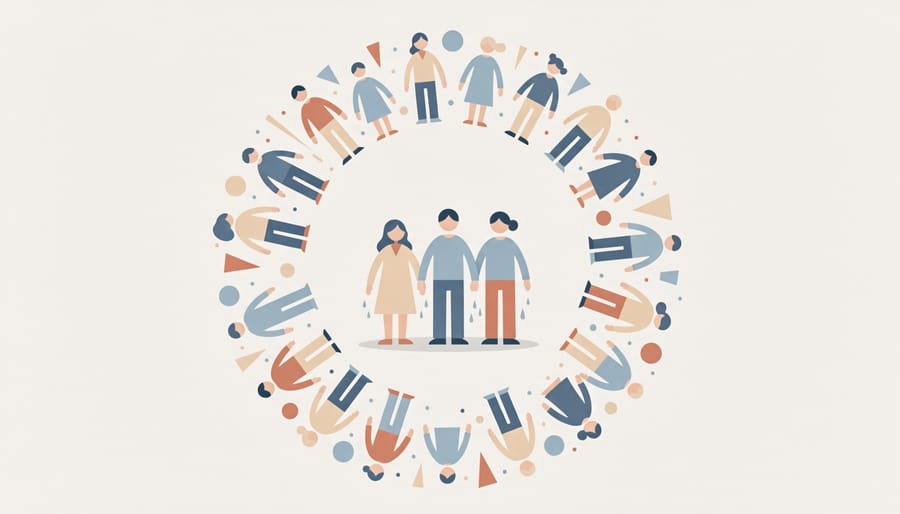
Start by writing down three people you could call if you needed help today. They don’t have to be perfect, just reliable. A neighbor who could watch your kids for twenty minutes. A friend who listens without judging. A family member who actually follows through.
Now comes the harder part: actually asking them. Be specific. Instead of “Can you help sometime?” try “Could you pick up my daughter from school next Thursday?” Specific requests get specific answers. Vague ones get polite brush-offs.
If your in-person circle feels thin, look online. Parent groups on social media or forums connect you with people navigating similar challenges. You’ll find 2 a.m. solidarity when your toddler won’t sleep and daytime advice from parents who’ve been there. Local parenting groups, through libraries, community centers, or places of worship, offer face-to-face connection.
Maintaining these relationships when you’re stretched thin takes intention. Send a quick text. Show up to one gathering a month, even briefly. Offer help when you can, support circles work both ways.
Your support network doesn’t need to be large. Three solid connections beat twenty acquaintances. Quality matters more than quantity, and asking for help strengthens relationships rather than weakening them.
Step 3: Establish Non-Negotiable Self-Care Practices
Self-care isn’t about spa days or perfect morning routines. It’s about keeping yourself functional enough to weather the daily storms of parenting. Think of it like maintaining a car, you wouldn’t skip oil changes and expect the engine to last. Your body and mind work the same way.
Start with the basics. Protect your sleep however you can. If the baby’s up at night, grab a 20-minute nap when they nap instead of tackling the dishes. Sleep debt erodes your ability to handle stress faster than almost anything else. One parent I spoke with keeps a water bottle and healthy snacks in every room because she realized she’d go entire days forgetting to eat or drink, then wonder why she felt so shaky and irritable.
Movement doesn’t require a gym membership. Ten minutes of stretching while your toddler watches their show counts. Dancing in the kitchen while making dinner counts. Walking around the block pushing the stroller counts. The goal is regular movement, not Instagram-worthy workouts.
Build in small moments of calm that feel realistic for your life. One dad uses his commute home to sit in the driveway for five minutes, just breathing. Another parent sets a timer for three minutes of stillness with morning coffee before the kids wake up. These aren’t luxuries, they’re the small deposits that keep your resilience account from hitting empty.
Step 4: Reframe Setbacks as Learning Opportunities

When your toddler has a meltdown in the grocery store or your teen shuts down during a conversation, your first thought might be “I’m failing at this.” Resilient parents learn to catch that thought and reframe it: “This moment is hard, and I’m figuring it out.”
Cognitive reframing means actively changing how you interpret setbacks. Instead of viewing a difficult bedtime as proof you can’t manage parenting, you might see it as information, maybe your child needs an earlier start to the routine, or they’re processing something from their day. The situation becomes temporary and solvable rather than a referendum on your abilities.
Compare these thought patterns: Non-resilient thinking says “I always lose my temper” or “My child never listens.” Resilient thinking says “I raised my voice today, and tomorrow I’ll try pausing before responding” or “My child struggled to listen when overtired, we need better timing for important talks.”
This shift matters beyond your own stress levels. Children absorb how you interpret challenges. When they see you break the cycle of catastrophic thinking and instead problem-solve calmly, they learn that setbacks are feedback, not failure. You’re teaching them the coping skill of flexible thinking.
Start small: After a tough parenting moment, ask yourself “What can I learn from this?” rather than “What did I do wrong?” That single question begins building both your resilience and your child’s.
Step 5: Practice Emotional Regulation Techniques
When your toddler melts down in the grocery store or your teenager slams a door, your immediate reaction sets the tone for everything that follows. Emotional regulation, the ability to manage your own feelings in high-stress moments, is perhaps the single most powerful resilience skill you can develop. The good news? It’s entirely learnable.
Start with the simplest tool: deep breathing. When you feel anger or frustration rising, take three slow breaths before responding. Breathe in for four counts, hold for four, out for six. This activates your parasympathetic nervous system, literally calming your body’s stress response.
Try grounding techniques when you’re overwhelmed. Notice five things you can see, four you can touch, three you can hear. This pulls you out of emotional flooding and back to the present moment.
Practice the pause and self-regulate approach: when triggered, mentally count to ten before speaking. This tiny gap between stimulus and response is where resilience lives.
Label your emotions out loud: “I’m feeling really frustrated right now, so I need a minute.” This models emotional awareness for your children and validates that big feelings are manageable, not catastrophic.
Your children are watching. When they see you calm yourself down, they’re learning the exact neural pathways they’ll need to manage their own emotions. You’re not just coping, you’re teaching.
Step 6: Create Family Rituals That Anchor You

Family rituals act as touchstones when everything else feels chaotic. These aren’t elaborate ceremonies, they’re simple, predictable moments that create connection and stability for everyone.
Start small with daily anchors. A five-minute morning check-in where everyone shares one thing they’re looking forward to. Bedtime gratitude where each person names something good from their day. Saturday morning pancakes. These predictable rhythms give children (and you) something solid to count on, which builds security.
Weekly rituals work especially well for processing stress together. One family I know does “Rose, Thorn, Bud” every Sunday dinner, the best part of the week, the hardest part, and something they’re excited about. It normalizes talking about difficulties while maintaining hope.
The key is consistency, not perfection. Missing a ritual occasionally won’t break its power, but having them in place means there’s always a way back to center when life knocks you sideways.
These rituals don’t just calm the immediate moment. They teach children that stability can be created even during uncertain times, a core resilience skill they’ll carry forever. You’re building their emotional scaffolding while reinforcing your own.
How to Know It’s Working: Signs of Growing Resilience
Building resilience doesn’t happen overnight, and the changes can be subtle at first. You might notice you’re recovering from difficult moments more quickly than before, a toddler tantrum that would have derailed your entire day now feels manageable within an hour. You’re catching yourself before spiraling into worst-case thinking, or you’re taking three deep breaths before responding to your teenager’s eye roll instead of immediately snapping back.
One of the clearest signs is how your children respond to stress. When you model calm during chaos, they begin mirroring that steadiness. You might see them using words to express frustration instead of melting down, or attempting to solve problems before asking for help. This shift reveals you’re breaking the parenting anxiety cycle your growing resilience is teaching them coping skills they’ll carry into adulthood.
Another indicator is how you handle asking for help. If you’re reaching out to your support circle without shame or hesitation, you’ve internalized that vulnerability is strength. You might also notice you’re letting go of perfectionism, accepting that a “good enough” dinner or a missed extracurricular activity doesn’t make you a bad parent.
Expect the process to take months, not weeks. Some parents notice shifts within four to six weeks of consistent practice, while deeper transformation often unfolds over six months to a year. Resilience isn’t a finish line you cross; it’s a skill you’ll keep strengthening throughout your parenting journey, with setbacks and growth cycles along the way.
Common Questions About Parenting Resilience
How long does it take to build parenting resilience?
There’s no fixed timeline, resilience develops gradually through consistent practice. Some parents notice small shifts in a few weeks, like recovering faster from a tough day, while deeper changes often emerge over months. Think of it as building a muscle rather than flipping a switch.
What if my partner isn’t on board with working on resilience?
You can only control your own growth. Start by modeling resilient behaviors yourself, your calm responses and self-care practices may inspire change without you saying a word. If the disconnect is causing serious strain or affecting your children, couples counseling can help bridge the gap.
Can you be too resilient?
Yes, if resilience becomes avoidance. Toxic positivity, forcing yourself to “stay strong” while ignoring legitimate pain, isn’t true resilience. Healthy resilience means acknowledging real problems, processing emotions, and adapting, not pretending everything is fine when it isn’t.
How do I balance resilience with acknowledging serious problems?
Resilience doesn’t mean minimizing real issues like financial hardship, illness, or relationship breakdown. It means facing these challenges with self-compassion and support rather than alone or in denial. If you’re dealing with something like parental alienation or other complex family trauma, professional help is essential, that’s resilience in action.
Is building resilience different for parents of children with special needs?
The core principles remain the same, but the stressors and demands are often more intense and chronic. Parents of children with special needs typically need stronger support networks, more frequent self-care, and specialized resources. Your resilience toolkit may look different, but the practice of acknowledging stress, seeking support, and reframing challenges still applies.
Remember that questions about your resilience journey are normal. The fact that you’re asking them shows you’re already thinking critically about your growth. Some days you’ll feel strong and capable; others, you’ll barely hold it together. Both are part of the process. Keep coming back to the practices that work for you, adjust what doesn’t, and give yourself credit for showing up even when it’s hard.
Building parenting resilience isn’t something you finish and check off your list. It’s a practice you return to again and again, through different seasons of life and different challenges with your children. Some days you’ll handle stress beautifully. Other days you’ll fall apart and need to start fresh tomorrow. That’s not failure, that’s what resilience actually looks like.
What matters most is that your children are watching. When they see you acknowledge your struggles, ask for help, take care of yourself, and keep showing up even when things are hard, they’re learning how to do the same. You’re not just managing your own stress, you’re teaching them the coping skills they’ll carry into adulthood.
The ripple effect of your resilience extends far beyond the immediate moment. Children raised by parents who model healthy stress responses develop stronger emotional regulation, better problem-solving skills, and greater confidence in facing their own challenges.
You don’t need to implement everything at once. Choose one small step from this guide, maybe it’s naming your stress without judgment, or protecting ten minutes for yourself each day. Start there. Your resilience journey begins with that single, intentional choice.