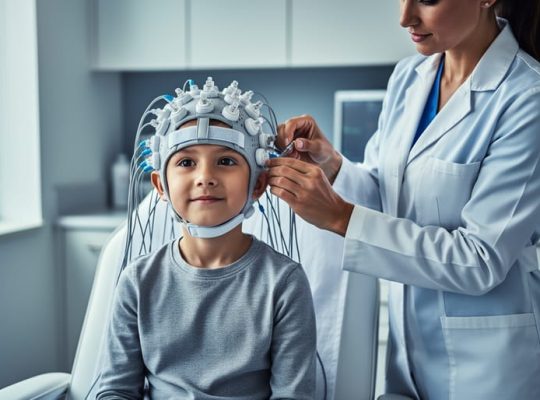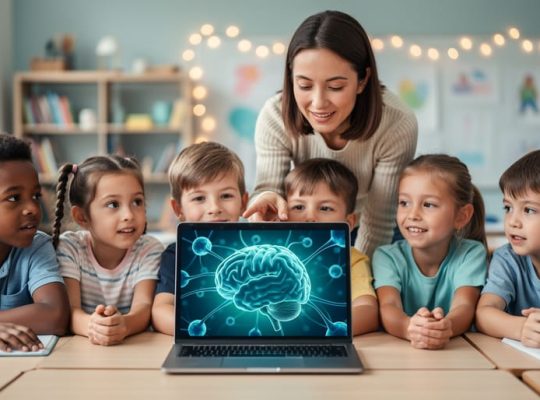

Neuro knowledge is the bridge between what neuroscience tells us about how children’s brains develop and learn, and how we can use that understanding to support real kids in real classrooms and homes. When you know that repeated practice actually strengthens neural pathways, or that stress hormones can temporarily block access to memory and reasoning, you stop seeing your child’s struggles as defiance or laziness. You see a developing brain doing exactly what brains do.
The science here isn’t theoretical. Brain imaging studies from the past decade have shown us precisely which regions light up during reading, how executive function develops throughout childhood and adolescence, and why some learning strategies work better than others. More importantly, this research has given us practical tools. We now understand why breaking tasks into smaller chunks reduces cognitive load, why movement breaks aren’t just nice but necessary for attention, and how emotional safety directly impacts a child’s ability to learn.
For parents watching their child struggle with homework meltdowns or teachers wondering why a bright student can’t seem to retain information, neuro knowledge offers something powerful: explanation without blame. The eight-year-old who can’t sit still isn’t being difficult. His prefrontal cortex, responsible for impulse control and focus, won’t fully mature for another fifteen years. The teenager who seems to forget instructions immediately isn’t ignoring you. Working memory is a limited resource that gets easily overwhelmed.
What follows is a practical guide to the brain science that matters most for learning, translated into strategies you can use tomorrow. No advanced degree required.
What Neuro Knowledge Really Means for Your Child
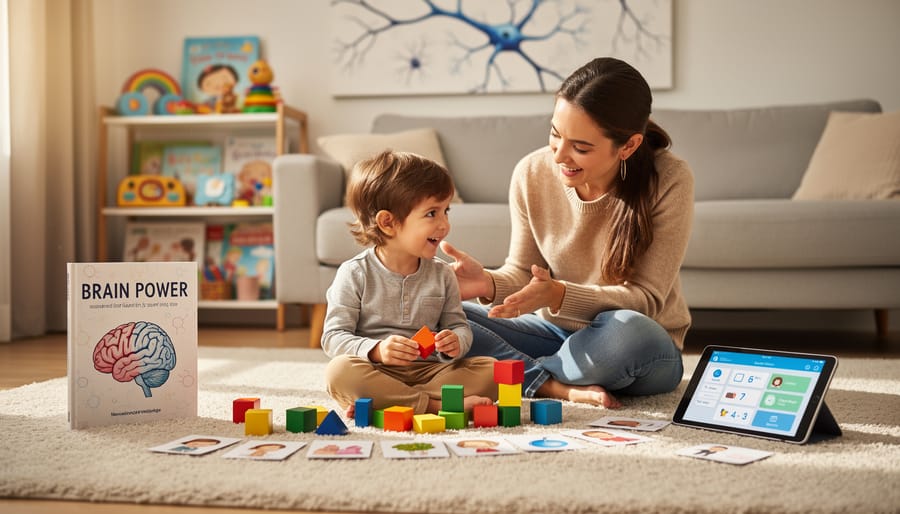
Neuro knowledge isn’t about understanding complex brain anatomy or memorizing scientific terminology. It’s about recognizing what’s happening inside your child’s head when they’re learning to read, solving a math problem, or trying to remember their spelling words.
When your child practices their times tables and gets faster each week, that’s their brain building stronger neural pathways, literal physical connections between brain cells that make information flow more easily. When they struggle to focus on homework after a stressful day at school, that’s their cognitive load maxing out. These aren’t abstract concepts. They’re real processes affecting your child’s ability to learn right now.
Here are the fundamental terms that explain how your child’s brain learns:
- Neuroplasticity
- The brain’s ability to form new connections and pathways throughout life, meaning your child’s learning capacity isn’t fixed, it grows with practice and experience.
- Neural pathways
- The connections between brain cells that strengthen with repetition, which is why practicing something makes it feel more automatic over time.
- Cognitive load
- The amount of mental effort your child’s working memory can handle at once, which is why breaking tasks into smaller steps often works better than tackling everything simultaneously.
- Working memory
- The brain’s temporary storage system for information being actively used, like a mental workspace where your child holds and manipulates new concepts before they move to long-term memory.
Understanding these processes changes how you respond when your child hits a learning obstacle. Instead of assuming they’re not trying hard enough, you recognize their brain might need a different approach, more time to build those pathways, or a break to reduce cognitive overload.
The real power of neuro knowledge is knowing that learning difficulties aren’t character flaws or permanent limitations. They’re often a mismatch between teaching methods and how a particular brain processes information best.
The Science Behind How Children’s Brains Learn Best
Why Repetition Works Differently at Different Ages
A three-year-old needs to hear the same story fifty times before it feels familiar. A ten-year-old might master a concept after three focused attempts. This isn’t about intelligence, it’s about how neural pathways form at different developmental stages.
In early childhood, brain connections are still forming their basic structure. When your preschooler insists on the same bedtime book every night, they’re actually strengthening neural pathways through repetition. Each retelling helps their brain build and reinforce those connections. This is why young children genuinely need more repetition for learning to stick, and why variety too soon can actually interfere with foundational learning.
By middle childhood, established neural pathways allow for faster pattern recognition. Your eight-year-old doesn’t need the same number of repetitions because their brain can now connect new information to existing knowledge more efficiently. They benefit more from spaced repetition, revisiting concepts with gaps in between, rather than constant drilling.
Teenagers’ brains are pruning unused connections while strengthening frequently used pathways. This means they need fewer total repetitions but benefit from varied contexts. The same math concept practiced through different real-world applications creates stronger retention than doing fifty identical problems.
Understanding these differences helps you meet your child where they are. When your kindergartener asks “why?” for the twentieth time, they’re not testing your patience, they’re building brain architecture that makes future learning possible.
The Emotional Brain Connection Parents Need to Know
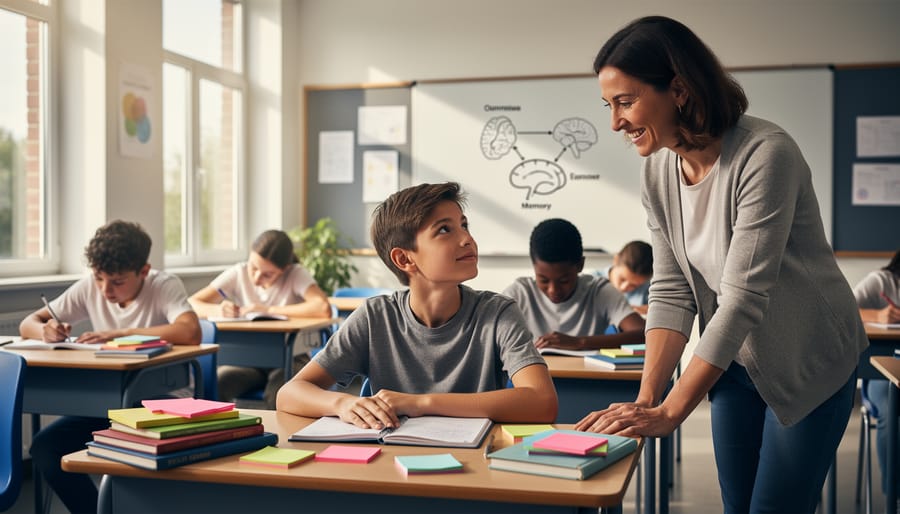
When your child sits down to learn something new, their emotional state isn’t just background noise, it’s actively shaping whether that information sticks or disappears. The amygdala, your child’s emotional processing center, acts as a gatekeeper for the hippocampus, where memories form. When stress hormones like cortisol flood the brain, research shows that stress impairs memory formation literally blocking the neural pathways needed for learning.
This explains why your child might blank on material they knew perfectly well at home once test anxiety kicks in, or why arguments before school make it harder for them to focus in class. The brain interprets emotional threats the same way it does physical ones, redirecting resources to survival mode rather than learning mode.
But positive emotions work the opposite way. When children feel safe, curious, or excited, dopamine and other neurochemicals enhance memory consolidation and attention. This doesn’t mean learning needs to be constant entertainment, but it does mean that your child’s emotional experience during learning moments matters as much as the content itself.
The practical takeaway? Before drilling facts or pushing through homework battles, check in with your child’s emotional state. A five-minute walk, a snack, or simply acknowledging their frustration can shift their brain chemistry from locked down to receptive. You’re not coddling them, you’re working with their neurobiology, not against it.
Interactive Learning Tools That Work With Your Child’s Brain
Adaptive Learning: When Technology Meets Brain Science
Traditional worksheets present the same problems to every child at the same pace, regardless of whether a particular brain needs more time to process or is ready to sprint ahead. Adaptive learning tools work differently: they watch how your child responds, the hesitation before answering, the pattern of errors, the speed of completion, and adjust in real time to match their actual processing capacity.
Think of it as having a tutor who notices exactly when your child’s working memory is getting overloaded and automatically simplifies the next step, or recognizes when they’ve mastered a concept and quietly increases the challenge. This responsiveness prevents the cascade of frustration that happens when a child repeatedly faces material they’re not quite ready for, which can trigger stress responses that literally shut down learning centers in the brain.
AI adaptive learning platforms track these patterns across hundreds of practice sessions, identifying not just what your child knows, but how they learn best. Does their accuracy improve when given visual supports? Do they need longer processing time for multi-step problems? The technology builds a detailed profile of their learning preferences and adjusts accordingly.
For children who’ve experienced repeated school struggles, this individualized pacing rebuilds something precious: the belief that they can actually succeed. When tasks consistently match their current capacity, confidence grows naturally. Some parents find that pairing these tools with neuroscience videos helps children understand why the technology adjusts, turning adaptive features from mysterious to empowering.
Multi-Sensory Approaches That Strengthen Neural Connections
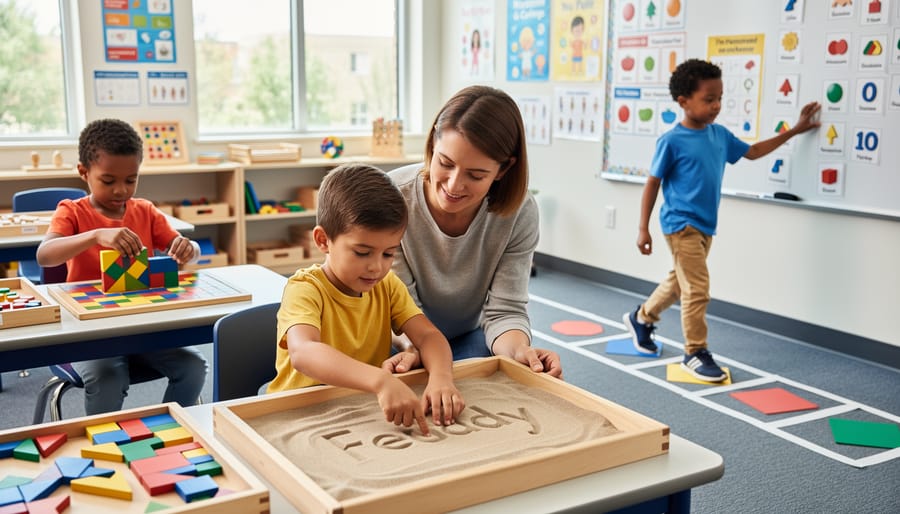
When a child touches sandpaper letters while saying the sound aloud, they’re not just learning, they’re building multiple neural pathways to the same information. This creates what neuroscientists call “redundancy,” making memories more accessible and durable.
Your brain doesn’t store “reading” in one location. Instead, it weaves together visual recognition, sound processing, physical movement, and emotional response across different regions. When children engage multiple senses simultaneously, they create more neural connections to retrieve later. It’s why your child might remember a science experiment they conducted far better than one they watched.
This principle explains why interactive learning games prove more effective than passive video watching. A child manipulating virtual objects, hearing feedback, and seeing results creates interconnected memory traces. AR learning tools take this further by anchoring digital information to physical space and movement.
At home, this translates simply: let your child move while learning. Spell words with their body, count stairs, draw vocabulary words. Use textured materials, sing multiplication facts, act out stories. The messier and more physical the learning, the stronger the neural foundation you’re building.
Children with attention differences or learning challenges often benefit most from multi-sensory approaches because they provide multiple entry points to the same concept, allowing the brain to compensate through its strongest pathways.
Recognizing When Neuro Knowledge Can Help Your Child
Every child’s brain works differently, and recognizing when neuroscience-based learning approaches might help doesn’t mean something is wrong. Think of it as tuning into your child’s unique learning signals rather than looking for problems to fix.
You might notice your child gets frustrated quickly with homework that seemed manageable last year, or they remember song lyrics effortlessly but struggle to recall what they read five minutes ago. Perhaps they can focus intensely on building projects for hours but can’t sit through a 20-minute lesson. These aren’t signs of laziness or defiance. They’re your child’s brain telling you it processes information in specific ways that traditional methods might not match.
Emotional barriers often show up subtly. A child who suddenly claims to hate a subject they once enjoyed, or who develops stomachaches before school, might be experiencing cognitive overload rather than refusing to try. When anxiety builds around learning, the brain’s stress response actually blocks the very pathways needed for memory and comprehension.
Learning differences like dyslexia, ADHD, or processing delays become more apparent when children start falling behind peers, but neuroscience-informed tools help all learners, not just those diagnosed with challenges. If your child learns better through movement, needs information presented visually, or thrives when they can use social media to connect concepts to real-world examples, that’s just their brain’s preferred pathway.
The key is observation without judgement. Does your child light up with hands-on activities but shut down with worksheets? Do they need extra processing time before answering questions? These patterns aren’t weaknesses to correct but clues about how their brain naturally learns best. Understanding this shifts everything from forcing conformity to supporting genuine capability.
Applying Neuro Knowledge at Home: What Actually Works
Creating a Brain-Friendly Learning Environment
Your child’s brain doesn’t operate the same way at 3pm after school as it does at 9am on a Saturday morning. Understanding this rhythm matters more than buying the right desk.
Start with the physical space. Your child’s brain processes information more efficiently in environments with natural light and minimal visual clutter. This doesn’t mean a Pinterest-perfect study room. It means clearing the learning table of yesterday’s art supplies and positioning it near a window when possible. Temperature affects concentration too, brains work best in slightly cool rooms, around 68-72°F, not the cozy warmth we instinctively prefer.
Timing trumps persistence. Children’s brains have natural attention cycles: younger kids manage 10-15 minutes of focused work, older ones perhaps 25-30 minutes. After that, the prefrontal cortex needs recovery time. A five-minute break where your child moves their body resets these neural circuits more effectively than pushing through fatigue.
Routine structure creates prediction, and prediction reduces cognitive load. When your child knows that homework happens at the same time daily, their brain doesn’t waste energy deciding when to start or negotiating transitions. This predictability frees up mental resources for actual learning.
The goal isn’t rigidity. It’s creating conditions where your child’s brain can do what it naturally does best, learn, without fighting against biological realities like exhaustion, distraction, or sensory overload.
When to Push and When to Pause: Reading Your Child’s Learning Signals
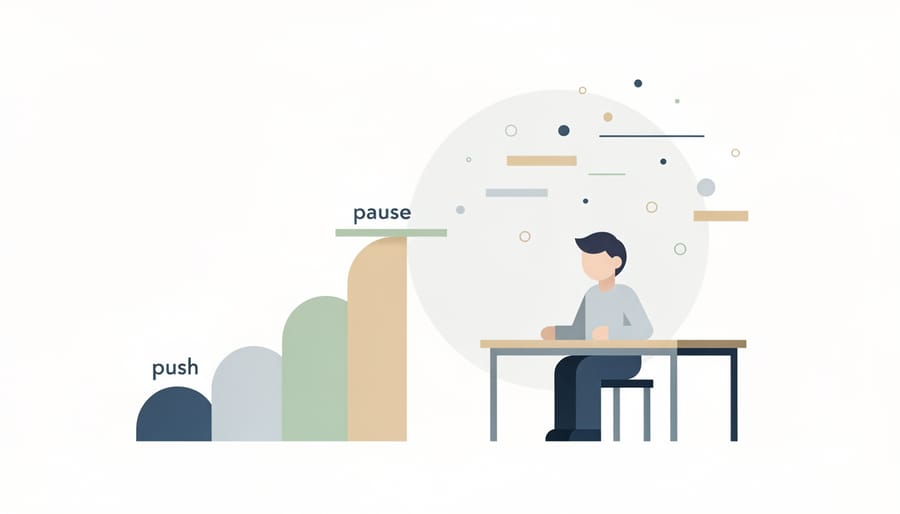
Your child slumps at the homework table, staring blankly at a math problem they solved easily yesterday. They’re not being difficult. Their brain is signaling it has reached capacity.
Cognitive load refers to how much mental effort working memory can handle at once. Think of it like your phone running too many apps: everything slows down, then freezes. Children’s working memory is smaller than adults’, and it depletes faster. The signs are physical and behavioral, not motivational.
Watch for these neurological signals that pause is needed: eyes glazing over despite looking at the page, sudden increase in mistakes on familiar material, fidgeting that escalates rather than settles, or emotional responses that seem disproportionate to the task. These aren’t character flaws. They’re the prefrontal cortex communicating it needs recovery time.
The brain consolidates learning during rest, not just during active study. When your child seems “stuck,” a 10-minute break often solves what 20 more minutes of pushing cannot. During genuine cognitive fatigue, continued effort actually interferes with memory formation. The neurons need time to strengthen the connections they just formed.
Conversely, some resistance comes from activation energy, not overload. If your child struggles to start but engages once moving, gentle prompting helps. The distinction: true cognitive fatigue worsens with continued effort, while activation resistance improves once momentum builds.
Trust what you observe in your specific child. One might need breaks every 15 minutes; another sustains focus for 40. These patterns aren’t fixed, either. Monday after a full school day looks different from Saturday morning. Reading your child’s signals means noticing their patterns without judgment, then adjusting accordingly.
What Mental Health Professionals Want Parents to Understand
Mental health professionals consistently emphasize one message to worried parents: your child’s brain isn’t broken, it’s different. Understanding this distinction fundamentally changes how families approach learning challenges and reduces the anxiety that often makes those challenges worse.
Child psychologists see countless parents who believe their child’s learning differences signal something fundamentally wrong. But the reality, backed by neuroscience research, is that brains develop along varied timelines and through different pathways. Some children’s brains excel at visual processing while struggling with auditory information. Others need movement to consolidate learning. These aren’t deficits requiring fixing, they’re variations requiring understanding.
When parents shift from asking “what’s wrong with my child?” to “how does my child’s brain learn best?”, we see dramatic reductions in both parent and child anxiety around academic performance.
Educational therapists report that this perspective shift creates space for genuine progress. Children pick up on parental stress about learning, and that stress triggers their own nervous system responses that actively interfere with memory formation and focus. When parents approach differences with curiosity rather than concern, children relax enough to actually engage with new strategies.
The intersection of mental health and learning is more direct than many families realize. Anxiety about school performance can physically change brain function, making it harder to access working memory and process new information. Conversely, when children experience success through approaches matched to their neural patterns, their confidence builds and anxiety decreases, creating an upward cycle.
Mental health professionals want parents to know they don’t need to choose between addressing emotional wellbeing and academic progress. Neuroscience-informed approaches do both simultaneously by reducing the frustration and shame that accumulate when teaching methods don’t match how a child’s brain actually works. Progress in one area naturally supports the other, because learning and emotional regulation share overlapping neural networks.
Real Stories: How Neuro Knowledge Changed Learning for These Families
When Maya’s mom Sarah first learned about working memory limitations, everything clicked. Her bright eight-year-old would start homework enthusiastically but dissolve into tears within twenty minutes. Teachers suggested she wasn’t trying hard enough. Sarah felt like she was failing her daughter.
“I thought I just needed to be firmer about sitting still and focusing,” Sarah recalls. After consulting with an educational therapist who explained how working memory functions like a mental sticky note that fills up quickly for some kids, Sarah changed her entire approach. Instead of hour-long homework sessions, they broke tasks into ten-minute chunks with movement breaks. Sarah started writing down multi-step instructions instead of just saying them.
The transformation took weeks, not days. Maya still struggled sometimes, but the meltdowns decreased dramatically. “She wasn’t being difficult. Her brain was genuinely overwhelmed with too much information at once,” Sarah says. “Understanding that removed so much shame for both of us.”
For David and his twelve-year-old son Marcus, the breakthrough came from understanding the teenage brain’s shifted sleep cycle and heightened emotional reactivity. Marcus had always been a strong student, but in sixth grade his grades plummeted. He seemed angry all the time. David pushed harder on studying, which only created more conflict.
A conversation with Marcus’s pediatrician about adolescent brain development changed David’s perspective. He learned that Marcus’s natural bedtime had shifted later, but their 6 a.m. wake-up meant chronic sleep deprivation. The doctor also explained how the emotional centers of the teenage brain develop faster than the reasoning centers, making emotional regulation genuinely harder.
David adjusted expectations rather than doubling down on discipline. They moved Marcus’s hardest homework to late afternoon when his brain was more alert, not right after school when he was depleted. They established a later bedtime on weekends to help him catch up on sleep debt. David stopped taking the emotional outbursts personally.
“It wasn’t a magic fix,” David admits. “But understanding what was actually happening in his brain helped me parent him instead of punish him. Our relationship improved, and his grades followed.”
Understanding how your child’s brain learns doesn’t require a neuroscience degree. It simply means recognizing that every child’s brain develops at its own pace, processes information differently, and responds uniquely to various learning approaches. This knowledge shifts you from feeling helpless when your child struggles to feeling equipped to try something different.
You’ve already taken the most important step by learning about neuro knowledge. Now the work isn’t about implementing everything at once or creating the perfect learning environment overnight. Start with one small change that resonates with your family. Maybe it’s adjusting homework timing to match your child’s natural attention rhythms. Perhaps it’s introducing brief movement breaks between subjects. Or simply noticing when your child’s frustration signals cognitive overload rather than defiance.
Watch how your child responds. Their brain will tell you what works through improved focus, reduced resistance, better retention, or simply more joy in learning. Trust those signals more than any expert advice, including this article. You know your child better than anyone.
The beautiful truth about brain-based learning is that it meets children where they are rather than demanding they fit a single mold. Your child isn’t broken or behind. Their brain is wired uniquely, and understanding that wiring helps you become their most effective advocate and supporter. That’s not pressure to be perfect. It’s permission to be present, observant, and responsive to the remarkable person learning right in front of you.