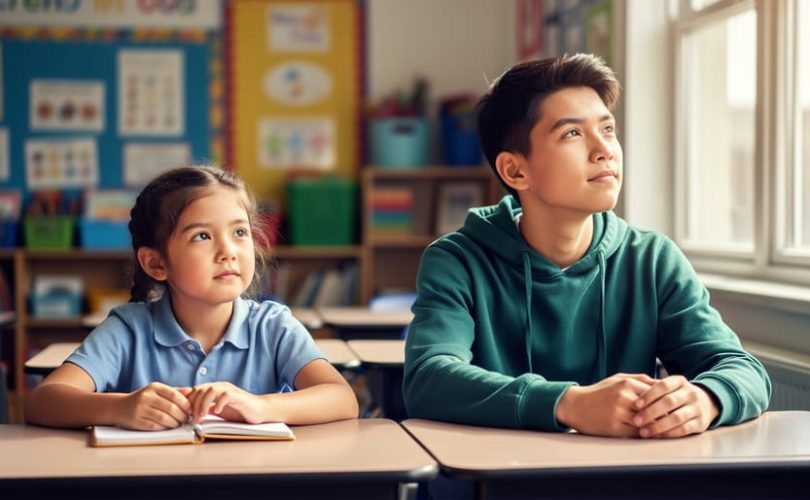
Emotional intelligence is the ability to recognize, understand, and manage your own emotions while also being aware of and influencing the emotions of others. First identified by psychologists Peter Salovey and John Mayer in 1990 and later popularized by Daniel Goleman, emotional intelligence consists of five core components: self-awareness, self-regulation, motivation, empathy, and social skills.
These five components aren’t abstract psychological concepts. They’re practical skills that shape how children respond to frustration, navigate friendships, and develop resilience. A child with strong self-awareness notices when they’re getting overwhelmed before a meltdown happens. A teenager with good self-regulation can pause before reacting angrily to a disappointing grade.
For parents and educators, understanding these five components offers a roadmap for supporting children’s emotional development. Research consistently shows that children with higher emotional intelligence perform better academically, build stronger relationships, and experience fewer behavioral problems. They’re better equipped to handle stress, recover from setbacks, and work effectively with others.
Dr. Marc Brackett, director of the Yale Center for Emotional Intelligence, explains that emotional intelligence skills are teachable. “These aren’t fixed traits you’re born with or without,” he notes. “They’re abilities we can develop through practice and guidance.”
This article breaks down each of the five components, explaining what they mean in everyday situations and how they develop in children. You’ll learn how these skills work together, what they look like at different ages, and how you can nurture them in the young people you care for.
What Emotional Intelligence Really Means
Emotional intelligence is the ability to recognize, understand, and manage your own emotions while also being aware of and responsive to the emotions of others. For children, this means knowing when they’re feeling frustrated, calming themselves down when upset, and noticing when a friend needs support. It’s not about suppressing feelings or being happy all the time, it’s about developing awareness and skills to navigate emotions in healthy ways.
Many parents wonder how emotional intelligence differs from IQ, the traditional measure of cognitive ability. IQ tells us about a child’s capacity to solve problems, remember information, and think logically. Emotional intelligence, on the other hand, determines how well they work with others, handle stress, persist through challenges, and adapt to change. Research shows that while IQ might predict academic performance, emotional intelligence often better predicts long-term success in relationships, career, and overall well-being. A child can be intellectually brilliant but struggle in school if they can’t manage anxiety during tests, work cooperatively on group projects, or bounce back from mistakes.
The framework most widely used today comes from psychologist Daniel Goleman, who identified five core components that make up emotional intelligence. Goleman’s five EI areas work together like instruments in an orchestra, each one matters on its own, but they create something more powerful when they function in harmony. This model has become the standard because it breaks down a complex concept into practical, teachable skills that parents and educators can actually nurture in children.
- Emotional Intelligence
- The capacity to recognize and manage emotions in yourself and others, enabling better relationships and decision-making.
- Self-Regulation
- The ability to control emotional reactions and impulses, helping children respond thoughtfully rather than react impulsively.
- Empathy
- Understanding and sharing the feelings of others, which allows children to build meaningful connections and respond with compassion.
- Social Skills
- The practical abilities to communicate effectively, resolve conflicts, and maintain healthy relationships with peers and adults.
Understanding these components gives parents and teachers a roadmap for supporting children’s emotional development. The Emotional Intelligence Yale approach and similar programs have shown that these skills can be taught systematically, especially when integrated into how children learn and grow each day. When we help children develop emotional intelligence alongside academic knowledge, we’re equipping them for genuine success in all areas of life.
The Five Components: How Emotional Intelligence Works
Self-Awareness: Recognizing Your Own Emotions
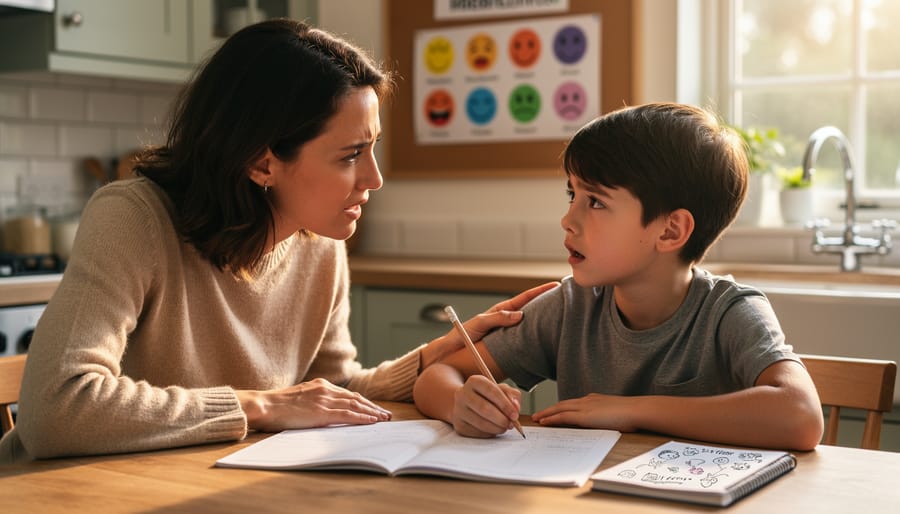
Self-awareness is a child’s ability to recognize and name what they’re feeling in real time. It’s understanding “I’m frustrated because this math problem is confusing” rather than just feeling upset without knowing why. For children, this means identifying their emotions, recognizing what triggers certain feelings, and understanding their own strengths and areas where they need more support.
In personalized learning environments, self-awareness becomes especially powerful. A self-aware child notices patterns in their own learning. They might realize they concentrate better in quiet spaces, or that they need to move around between tasks, or that certain subjects make them anxious. Nine-year-old Marcus, for example, struggled with reading comprehension in the afternoons. After working with his teacher to track his energy and focus, he recognized that mornings were when he felt most alert. His personalized learning plan shifted reading to earlier in the day, and his comprehension improved dramatically, not because the material changed, but because he understood himself better.
This component forms the foundation of all emotional intelligence because you can’t manage what you don’t recognize. Before a child can regulate their frustration, they need to identify that they’re frustrated. Before they can empathize with others, they need to understand their own emotional experiences. Self-awareness gives children the vocabulary and insight to build every other emotional skill.
Self-Regulation: Managing Emotions and Impulses

Self-regulation is the capacity to manage your emotional responses and control impulses, even when things don’t go your way. For children, this might look like pausing before reacting when angry, staying calm during a frustrating math problem, or choosing to finish homework before playing video games.
In learning environments, self-regulation makes the difference between a child who crumbles at the first challenge and one who bounces back. When kids possess this skill, they can recognize rising frustration, choose helpful coping strategies, and keep working toward their goals rather than giving up or lashing out.
I watched this transformation with my neighbor’s daughter, Mia, who used to throw her workbook across the room whenever she encountered a difficult reading passage. Her mother worked with her to identify the physical signs of overwhelm, tight chest, clenched fists, and taught her to step away for five-minute breaks instead of quitting entirely. Within weeks, Mia was catching herself mid-frustration, taking those breaks, and returning to her work with fresh eyes. She wasn’t avoiding the challenge; she was managing her response to it.
In personalized learning settings where children often work independently, self-regulation becomes especially vital. There’s no teacher standing nearby to redirect attention or manage behavior. Children need to resist the pull of distractions, pace themselves through longer assignments, and recover from mistakes without external intervention. They learn that emotions are temporary, but their choices about how to respond have lasting consequences for their progress.
Motivation: Finding Internal Drive
Motivation in emotional intelligence isn’t about gold stars or pizza parties. It’s about the fire that burns inside a child who wants to learn something simply because it matters to them.
When children have strong internal motivation, they set their own learning goals instead of waiting for adults to tell them what to accomplish. They feel genuine satisfaction when they master a new skill, not just when someone praises them or hands them a reward. This intrinsic drive pushes them forward even when the work gets hard.
I watched this unfold with my neighbor’s daughter, Maya. She became fascinated with origami after seeing someone fold a crane. For weeks, she spent every spare moment practicing folds, watching tutorials, and attempting increasingly complex designs. No one assigned this. No one graded her paper cranes. She simply wanted to get better, and that desire pulled her through dozens of crumpled failures until she could create beautiful, intricate models. The pride on her face came from the mastery itself, not from any external validation.
This component becomes especially vital in personalized learning environments where children often work at their own pace without constant teacher oversight. A child with internal motivation doesn’t need someone standing over them to stay engaged. They’re curious about their own growth. They notice their progress. They want to improve because learning feels good, not because a test is coming.
That self-directed drive transforms education from something done to children into something they actively pursue.
Empathy: Understanding Others’ Emotions
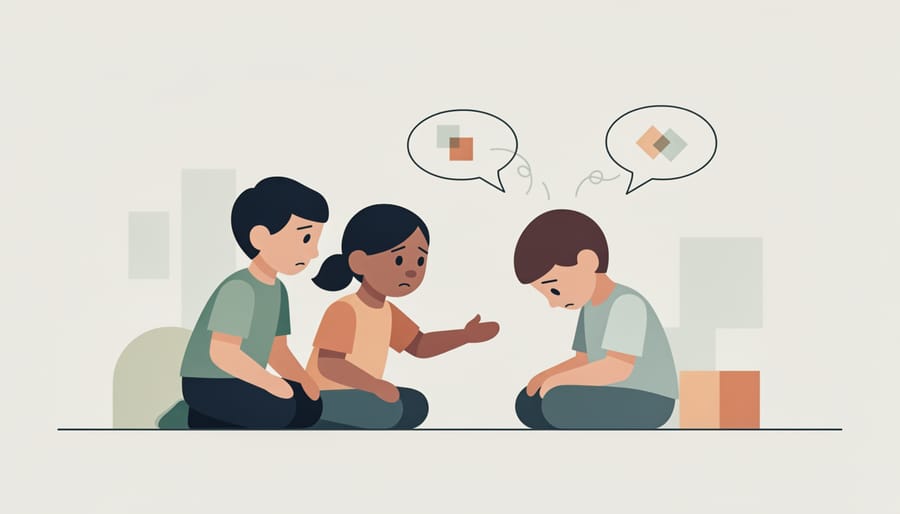
Empathy is the ability to recognize what someone else is feeling and respond with care and understanding. For children, this means noticing when a friend is sad, understanding why a classmate might be frustrated, or sensing when someone needs help, even if they don’t say so directly.
In learning environments, empathy transforms how children interact with peers and teachers. A child with strong empathy can pick up on subtle cues: they notice when a group member is confused during a project and naturally slow down to explain. They recognize when a classmate feels left out and include them. They can sense when their teacher is having a difficult day and adjust their behavior accordingly.
I once watched a seven-year-old named Maya pause her own work when she noticed the boy next to her repeatedly erasing his math answers. Instead of ignoring him or rushing ahead, she quietly asked, “Do you want to figure out the next one together?” She hadn’t been told to help, she simply recognized his struggle and responded with kindness. That moment of empathy not only helped him learn but strengthened their working relationship.
This component is especially valuable when children learn at different paces. Empathetic children understand that everyone has strengths and challenges. They don’t judge a peer who needs more time or feels proud when someone else succeeds. They’re also more comfortable asking for help themselves because they understand that struggling is universal, not shameful.
In personalized learning settings, where collaboration often happens in small groups or peer partnerships, empathy creates a supportive atmosphere. Children learn better when they feel understood and accepted, making empathy essential for both social-emotional development and academic progress.
Social Skills: Building Healthy Relationships
Social skills are where the first four components of emotional intelligence come together in action. This is your child’s ability to communicate clearly, work through disagreements, and build genuine connections with others. When children develop strong social skills, they know how to express what they need without demanding, listen when someone else is speaking, and navigate the give-and-take of group situations.
In personalized learning environments, these skills become especially valuable. A child who can articulate where they’re stuck gets better help from teachers. When they can respectfully disagree with a peer during a collaborative project, they contribute more effectively. Social skills turn individual learning into shared growth.
Watch for these moments: A seven-year-old notices two classmates both want the same learning station and suggests they work together instead of competing. A ten-year-old receives critical feedback on their presentation and responds with, “Thanks for that idea, I hadn’t thought about it that way.” A six-year-old clearly tells their teacher, “I need more time with this activity before moving on.”
These aren’t natural talents for most children. They’re learned through practice and gentle guidance. In peer learning situations, socially skilled children negotiate who goes first, share resources without resentment, and celebrate others’ successes genuinely. They read social cues, understanding when to speak up and when to hold back. With teachers, they build trust through respectful communication, asking questions when confused rather than shutting down.
Strong social skills don’t mean being extroverted or constantly popular. They mean handling relationships with awareness, respect, and authenticity.
How These Components Show Up in Personalized Learning
In classrooms and home learning spaces built around personalized learning these five emotional intelligence components transform from abstract concepts into powerful daily tools that directly affect how well children succeed.
Self-aware children make better advocates for themselves. A nine-year-old who recognizes she’s a visual learner can ask her teacher for diagrams instead of just lectures. When children understand their attention patterns, knowing they focus best in 20-minute blocks or need movement breaks, they can structure their learning time to match their natural rhythms rather than fighting against them.
Self-regulation becomes the engine for independent work. Children who can manage frustration don’t shut down when tackling challenging math problems alone. They’ve learned strategies: take three deep breaths, re-read the instructions, try a different approach. This emotional control means they can work through their individualized curriculum without constant adult intervention.
Intrinsic motivation drives genuine engagement with material. Instead of racing through lessons for gold stars, emotionally intelligent children set personal goals, “I want to read this whole chapter book myself” or “I’m going to understand fractions better this month.” That internal drive sustains them through the ups and downs of mastering difficult concepts at their own pace.
Empathy supports the collaborative moments within personalized paths. Even when children work on different levels or topics, they still learn together in groups. The child who notices a peer struggling with a science concept offers encouragement or explains it differently. These empathetic connections prevent personalized learning from becoming isolated learning.
Social skills help children articulate their needs clearly to teachers. They can say, “I don’t understand this yet” or “Could I try the harder version?” without shame. They accept constructive feedback as guidance rather than criticism, and they contribute productively to mixed-ability group projects.
Dr. Sarah Chen, an educational psychologist specializing in child development, notes: “Children with stronger emotional intelligence consistently show better learning outcomes in personalized settings because they can self-direct, seek appropriate support, and persist through challenges. These aren’t just nice-to-have soft skills, they’re fundamental to independent learning success.”
Supporting Your Child’s Emotional Intelligence Development
You can strengthen your child’s emotional intelligence through everyday moments rather than formal lessons. The key is creating consistent opportunities for practice while modeling the skills yourself.
Start by naming emotions out loud in daily life. When you’re frustrated by traffic or excited about plans, say so, “I’m feeling impatient right now because we’re stuck here.” This simple habit builds your child’s emotional vocabulary and shows that all feelings are valid. During conflicts, avoid jumping straight to solutions. Instead, ask “How did that make you feel?” and sit with the answer, even if it’s uncomfortable.
Different ages need different approaches. Preschoolers benefit from picture books that name emotions and simple breathing exercises when upset. Elementary-age children can start keeping mood journals or using emotion thermometers to track intensity. Teens respond well to conversations that respect their growing independence, like discussing how they handled a social situation rather than telling them what they should have done.
Here are specific practices to weave into your routines:
- Label emotions during everyday activities: “You seem disappointed that we can’t go to the park today”
- Practice calm-down strategies together like counting to ten or taking three deep breaths
- Set personal learning goals with your child and celebrate progress, not just completion
- Read stories and discuss how characters might be feeling and why they acted certain ways
- Model empathy by pointing out others’ perspectives: “I wonder how your sister felt when that happened”
- Create regular family check-ins where everyone shares their day’s emotional highs and lows
The most powerful teaching happens through your own behavior. When you apologize after losing your temper, acknowledge your mistakes, and show curiosity about others’ viewpoints, your child learns that emotional intelligence is something everyone works on continuously.
For children who learn differently, remember that technology for learning can provide additional support through apps that teach emotion recognition or games that build social skills. If your child consistently struggles with emotional regulation despite your efforts, seeking inclusive EI support from school counselors or therapists can provide targeted strategies tailored to their specific needs.
What Parents Often Wonder About Emotional Intelligence
Parents often worry whether their child will develop strong emotional intelligence, especially if certain skills don’t come naturally. The good news is that emotional intelligence isn’t fixed at birth, it’s a set of learnable skills that grow with practice and support. Research shows that even children who struggle initially can make significant gains with consistent guidance and patience.
Can emotional intelligence really be taught, or is my child just born with it?
EI is largely learned through experience, modeling, and practice. While temperament plays a role in how quickly children develop these skills, every child can strengthen their emotional intelligence with support and opportunities to practice.
At what age should I start focusing on emotional intelligence?
You can begin as early as toddlerhood by naming emotions and modeling self-regulation. The foundation builds throughout childhood, with different components becoming more sophisticated as children mature and gain language skills.
What if my child struggles with one component more than others?
This is completely normal and common. Children develop unevenly, and some components naturally take longer based on personality and experience. Focus on strengthening that area while celebrating their existing strengths in other components.
How long does it take to see progress in emotional intelligence?
Small improvements often appear within weeks, but deep skill-building happens gradually over months and years. Consistency matters more than speed, regular practice and modeling create lasting change.
When should I seek professional help for emotional development?
Consider consulting a child psychologist if your child’s emotional struggles significantly interfere with daily life, relationships, or learning, or if you’ve tried consistent strategies for several months without progress. Professional support can offer targeted neurodiversity strategies and personalized guidance.
Remember that every child’s emotional journey looks different. Some pick up self-awareness quickly but need more time with social skills. Others show strong empathy early but struggle with self-regulation. These variations don’t signal failure, they simply show where your child needs extra practice and encouragement. Meeting children where they are, rather than comparing them to others, creates the safe space they need to grow.
The beautiful thing about emotional intelligence is that it’s not fixed at birth. Every child can develop these five components, self-awareness, self-regulation, motivation, empathy, and social skills, with patience, practice, and the right support. You don’t need to overhaul your entire parenting approach or worry that you’re somehow behind. Small, everyday moments matter most: naming emotions during bedtime stories, modeling how you handle frustration, celebrating effort rather than just results, or simply listening without judgment when your child shares how they feel.
Think of these five components as interconnected threads that strengthen each other. A child who recognizes their emotions becomes better at managing them. A motivated learner develops empathy by understanding their own drive and recognizing it in others. Strong social skills grow from self-awareness and empathy working together. You’re not building five separate skills, you’re nurturing a whole child.
Take a moment this week to observe where your child already shines. Maybe they’re naturally empathetic, or perhaps they show remarkable self-regulation during challenging tasks. Celebrate those strengths, then gently support the areas that need more practice. Your consistent presence and encouragement are what help emotional intelligence grow, one interaction at a time.