

Attachment theory explains how the emotional bonds formed between a child and their primary caregiver in the first years of life shape that child’s relationships, emotional regulation, and sense of security throughout their entire lifespan. The quality of these early connections creates internal blueprints for how we relate to others, manage stress, and see ourselves in the world.
Dr. Sarah Chen, a developmental psychologist who has studied early childhood relationships for over two decades, puts it simply: “The way your child learns to trust, communicate needs, and regulate emotions begins in those thousands of small interactions before they can even speak. A parent who consistently responds with warmth when their baby cries teaches that child the world is safe and that their needs matter.”
This isn’t about being a perfect parent. Most caregivers have moments of distraction, frustration, or misunderstanding. What matters is the overall pattern of responsiveness and repair. Research shows that when parents are emotionally available and attuned most of the time, children develop secure attachment, which serves as a protective factor against anxiety, depression, and relationship difficulties later in life.
Understanding attachment theory matters because these early patterns aren’t set in stone. Whether you’re a parent navigating sleepless nights with an infant, a teacher noticing a withdrawn student, or a healthcare professional supporting families, recognizing attachment styles can open doors to healing and stronger connections. This article will walk you through what attachment theory actually is, how different attachment styles develop, how they show up across childhood and adulthood, and most importantly, what you can do to support secure attachment in the children you care for.
What Attachment Theory Means
Attachment theory is a psychological framework that explains how the bonds children form with their primary caregivers become the blueprint for their emotional lives. Developed by British psychiatrist John Bowlby in the 1950s, the theory emerged from his observations of children separated from their parents during World War II. He noticed these children experienced profound distress, leading him to conclude that attachment isn’t just about comfort, it’s a fundamental biological need, as essential as food or shelter.
Bowlby proposed that babies are hardwired to seek closeness with caregivers because this proximity means survival. When a caregiver consistently responds to a child’s cries, smiles, and reaching arms, the child develops trust that the world is safe and their needs matter. When responses are inconsistent, absent, or frightening, children adapt by developing different strategies to cope with uncertainty.
American psychologist Mary Ainsworth expanded Bowlby’s work in the 1970s through her groundbreaking “Strange Situation” research. By observing how toddlers reacted when their mothers left and returned in a laboratory setting, she identified distinct patterns of attachment behavior. Her research gave us the language to describe what secure and insecure attachment actually look like in real children.
Understanding a few core concepts helps make sense of how attachment works:
- Attachment
- The deep emotional bond between a child and caregiver that provides safety and security. This connection shapes how children understand themselves and relationships throughout life.
- Secure base
- When a caregiver provides reliable comfort and protection, allowing a child to explore the world confidently, knowing they can return for reassurance when needed.
- Internal working model
- The mental template children develop about relationships based on early experiences. This internal map guides their expectations about whether people are trustworthy and whether they themselves are worthy of love.
- Caregiver responsiveness
- How consistently and sensitively a caregiver recognizes and meets a child’s physical and emotional needs, from soothing distress to celebrating joy.
What makes attachment theory powerful is its recognition that these early patterns aren’t set in stone. While childhood experiences create strong tendencies, understanding how attachment works gives parents and professionals a roadmap for building security at any stage of development.
How Attachment Bonds Form
The Critical Early Years
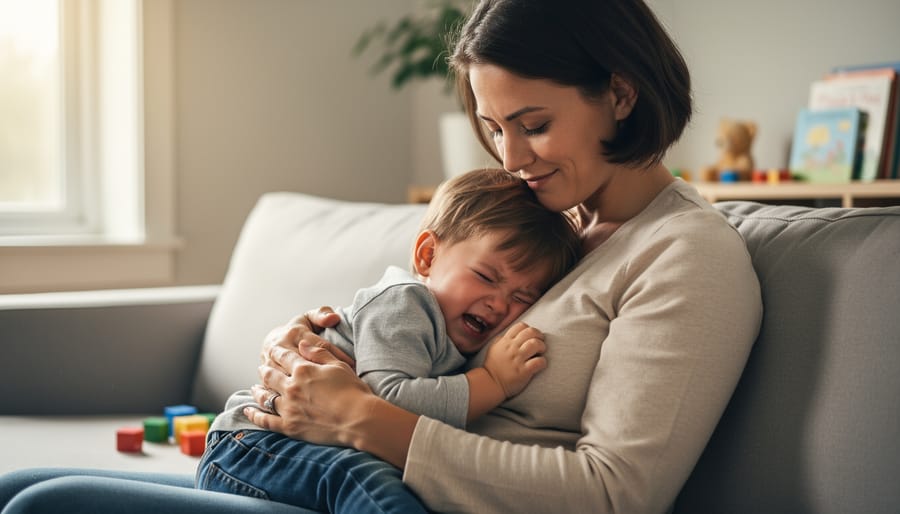
The first two years are critical for attachment formation because your baby’s brain is developing at its most rapid pace, creating the neural pathways that will shape how they experience relationships and emotions. During this window, your child is learning whether the world is a safe place and whether the people around them can be trusted to meet their needs.
Think of these early years as laying a foundation. The thousands of daily interactions, how you respond when your baby cries, the way you meet their gaze during feeding, your tone when they’re distressed, are teaching them fundamental lessons about connection and security. Their developing brain is literally being wired by these experiences.
That said, attachment isn’t set in stone at age two. While early patterns do carry forward, your relationship with your child continues to shape their attachment throughout early childhood and beyond. Children are remarkably resilient. With consistent support, responsive caregiving, and sometimes professional help, attachment patterns can and do shift. A child who experienced inconsistent care early on can develop greater security with a caregiver who provides stability. The early years matter most, but they aren’t the only years that matter.
What Children Need to Feel Secure
Children don’t need perfection to feel secure, they need a few core ingredients that show up consistently in everyday moments.
Consistency matters most. When bedtime routines happen around the same time, when the same caregiver responds to nighttime cries, when rules stay relatively stable, children learn the world is predictable. This doesn’t mean rigid schedules; it means patterns they can count on. A toddler who knows lunch follows playtime and that Mom always comes back after work develops a fundamental sense of safety.
Emotional availability means being present even when you’re tired or distracted. It’s putting down your phone when your child shows you a drawing, noticing when they’re upset even if they haven’t said anything, and staying calm when they have big feelings. Children need to know their emotions matter and won’t overwhelm you.
Physical comfort builds the foundation. Hugs when they’re hurt, holding them during storms, a hand on their back at the doctor’s office, these moments of touch communicate safety at a primal level. Even older children need physical reassurance, though it might look like sitting close during homework rather than constant cuddles.
Attuned responses teach children they’re understood. This means reading their cues accurately, recognizing that whining before dinner signals hunger, not manipulation, or that clinginess after daycare means they need reconnection time. When caregivers respond to the need behind the behavior, children learn to trust their own feelings and the people who care for them.
The Four Attachment Styles in Children

Secure Attachment
A securely attached child has a beautiful confidence about them. Watch a toddler at a park with their parent nearby, they’ll venture off to explore the slide, glance back to make sure their caregiver is watching, then return for a quick hug before heading out again. This “secure base” behavior is the hallmark of healthy attachment.
When these children get hurt or frightened, they seek comfort directly. They cry, reach for their parent, and calm down relatively quickly once soothed. By school age, secure attachment shows up as resilience: these kids can manage disappointment, ask for help when they need it, and form friendships more easily.
What creates this security? Caregivers who respond consistently and warmly. When your baby cries and you pick them up, when your toddler falls and you offer comfort, when your preschooler shares excitement and you share it back, these moments build trust. It’s not about perfect parenting. It’s about being emotionally available most of the time, repairing the moments when you’re not, and showing your child that their feelings matter and they can count on you.
Anxious-Ambivalent Attachment
Children with anxious-ambivalent attachment often seem caught in a painful contradiction. They desperately want closeness with their caregiver but can’t quite trust it will be there when needed. You might notice a toddler who clings frantically at daycare drop-off, then pushes the caregiver away angrily when they return. Or a school-age child who constantly seeks reassurance, asking “Do you love me?” yet never seems fully satisfied with the answer.
These children aren’t being difficult on purpose. Their caregivers have typically been inconsistent, sometimes warm and responsive, other times distracted or overwhelmed. The child learns that comfort is available, but unpredictable. They never quite know if their needs will be met, so they stay hypervigilant and demanding.
Common behaviors include excessive crying when separated, difficulty exploring new environments even with a parent present, and heightened emotional reactions to minor frustrations. These children may struggle with independence because letting go feels too risky.
This pattern often develops when parents love their children deeply but face challenges with consistency, perhaps due to depression, stress, or their own unresolved attachment issues. Understanding this can open the door to more predictable, attuned responses that help children relax into security.
Avoidant Attachment
Children with avoidant attachment have learned to expect little comfort or support when distressed, so they become prematurely self-reliant. These children typically don’t seek help when hurt or upset, appearing independent beyond their years. A toddler might barely react when a parent leaves and show little interest when they return. School-age children often keep emotions to themselves and may withdraw when experiencing stress rather than reaching for connection.
This pattern usually develops when caregivers consistently dismiss, minimize, or reject bids for emotional closeness. Perhaps they discouraged crying, emphasized self-sufficiency too early, or were emotionally unavailable. The child adapts by learning that showing need brings discomfort or rejection, so they suppress attachment behaviors altogether.
In daily life, you might notice these children play alone without checking in with caregivers, refuse comfort after falls or disappointments, or insist they don’t need help even when struggling. They seem fine on the surface but often carry significant internal stress. Teachers may describe them as pleasant but distant, rarely asking questions or forming close friendships. This apparent independence masks an underlying belief that others won’t reliably meet their emotional needs.
Disorganized Attachment
Disorganized attachment represents the most challenging pattern, where children exhibit contradictory or confused behaviors because they face an impossible dilemma: their source of safety is also their source of fear. You might notice a child who runs toward their caregiver when upset, then suddenly freezes, backs away, or appears dazed. They seem caught between desperately wanting comfort and being afraid to seek it.
This pattern typically develops when caregiving is frightening, chaotic, or deeply unpredictable. It can result from abuse, severe neglect, or a caregiver struggling with unresolved trauma who inadvertently frightens their child through dissociation or extreme emotional dysregulation. Sometimes loving parents dealing with their own mental health challenges can unintentionally create this confusion.
Children with disorganized attachment often struggle more significantly with emotional regulation, relationships, and behavior than those with other insecure patterns. They may seem controlling, overly compliant, or exhibit explosive reactions.
If you recognize these signs, professional support is essential, not optional. Trauma-informed therapists can help both children and families heal these deep wounds through specialized interventions that rebuild safety and trust.
How Early Attachment Affects Development Throughout Life
Impact on Relationships and Social Skills
The attachment bond you build with your child becomes their internal blueprint for all future relationships. Children with secure attachment typically approach friendships with confidence and trust. They share easily, manage conflicts through communication, and can read social cues accurately because they’ve learned that relationships are safe and reciprocal.
In contrast, children with anxious attachment often seem clingy with peers, needing constant reassurance or becoming upset when friends play with others. They may struggle with boundaries, worrying excessively about being liked. Those with avoidant attachment might appear indifferent to friendships, keeping emotional distance even from close friends, or dismissing feelings when conflicts arise.
These patterns don’t disappear with age. Teenagers and adults with insecure attachment may struggle with intimacy, misinterpret others’ intentions, or repeat unhealthy relationship dynamics because their early template taught them that closeness is unreliable or overwhelming.
The good news? You can support healthier patterns with a social skills action plan and practical peer relationship tips that reinforce secure connection while your child navigates friendships.
Emotional and Behavioral Development
A child’s attachment pattern shapes their emotional world in profound ways. When secure attachment supports emotion regulation children learn to identify their feelings, calm themselves when upset, and ask for help when they need it. They develop the capacity to manage frustration, disappointment, and anger without falling apart. In contrast, children with insecure attachment often struggle with emotional regulation they might have intense tantrums that last longer, difficulty recovering from setbacks, or trouble expressing what they feel.
Behaviorally, these differences show up in impulse control and how children respond to limits. Securely attached children typically handle rules and transitions more smoothly because they trust the structure adults provide. Children with anxious attachment might be overly compliant or prone to emotional outbursts when seeking reassurance. Those with avoidant patterns may appear well-behaved but disconnected, while disorganized attachment often correlates with unpredictable behavior that confuses both parents and teachers.
The mental health implications matter too. Research consistently links insecure attachment to higher rates of anxiety and depression in childhood and beyond, though this doesn’t mean these outcomes are inevitable, early intervention and supportive relationships can shift trajectories significantly.
Effects on Learning and Achievement
Children with secure attachment enter the classroom ready to learn. When a child feels emotionally safe at home, their brain is free to focus on exploration and problem-solving rather than scanning for threats or managing distress. This security creates a foundation for curiosity, securely attached children ask more questions, engage more deeply with new material, and persist longer when tasks become difficult.
The connection shows up in measurable ways. Research consistently finds that securely attached children demonstrate better attention spans, stronger executive function skills, and higher academic achievement across subjects. They’re more likely to raise their hand when confused, try again after making mistakes, and seek help appropriately, all crucial learning behaviors.
The mechanism is straightforward: emotional regulation supports cognitive function. A child who can manage frustration stays engaged with challenging math problems. One who trusts adults asks the teacher for clarification instead of shutting down. Meanwhile, children with insecure attachment patterns often struggle with these same tasks, not due to intellectual ability but because anxiety, hypervigilance, or emotional shutdown interferes with learning. Their stress response systems remain activated, diverting mental resources away from academics and toward emotional survival.
Recognizing Attachment Concerns in Your Child

Noticing potential attachment challenges isn’t about labeling your child or finding fault in your parenting. It’s about recognizing patterns that might benefit from support. Children express attachment difficulties differently depending on their age and developmental stage, and many behaviors exist on a spectrum between typical and concerning.
Trust your instincts as a parent. If something feels off in how your child connects with you or manages emotions, that awareness matters. You know your child best, and persistent patterns that worry you deserve attention, even if you can’t quite articulate why.
Here are age-appropriate behavioral signs that might signal attachment concerns:
- Infants (0-12 months): Minimal eye contact during feeding, lack of social smiling by 3 months, no preference for primary caregiver over strangers, extreme passivity or inconsolable distress
- Toddlers (1-3 years): No distress when separated from parents, avoiding comfort when hurt or scared, excessive clinginess that doesn’t ease with reassurance, aggression toward caregivers
- Preschoolers (3-5 years): Indiscriminately affectionate with strangers, inability to ask for help, controlling or role-reversed behaviors with parents, persistent tantrums beyond typical developmental stage
- School-age children (6-12 years): Difficulty forming friendships, extreme self-reliance or helplessness, lying or stealing from family members, lack of remorse after hurting others, describing themselves in entirely negative terms
Context matters enormously. A child going through a stressful transition might temporarily show some of these behaviors without having an attachment disorder. What professionals look for are persistent patterns across settings and relationships, especially behaviors that interfere with your child’s ability to feel safe, connect with others, or develop appropriately.
If you notice several concerning signs lasting more than a few months, or if your child has experienced trauma, multiple placements, prolonged separation, or inconsistent early care, consider scheduling an evaluation with a child psychologist or attachment specialist. Early intervention makes a significant difference, and seeking help demonstrates strength and love for your child.
Supporting Secure Attachment: What Parents Can Do
Daily Practices That Strengthen Connection
Building secure attachment doesn’t require perfect parenting or hours of dedicated time. It happens in the small, repeated moments of connection throughout your day.
Attunement in everyday moments means noticing and responding to your child’s emotional signals. When your toddler points at a bird, pause and share their excitement. When your school-age child comes home upset, stop what you’re doing and make eye contact before asking what happened. These brief moments of “I see you, and you matter” build trust more powerfully than scheduled quality time.
Physical affection meets a biological need for connection. Hugs when reuniting after separation, a hand on the shoulder during tough moments, or cuddling during bedtime stories all communicate safety. Follow your child’s lead, some kids need more touch than others.
Predictable routines create the consistency attachment needs. Bedtime rituals, goodbye routines before school, or Friday pizza nights give children an anchor. When routines must change, explain what’s happening and why.
Emotional coaching teaches children that all feelings are acceptable. Instead of dismissing big emotions with “you’re fine,” try naming what you see: “You seem really frustrated that tower fell down.” This helps children understand their internal experiences and trust you’ll help them navigate difficult feelings.
The goal isn’t perfection. It’s showing up, staying present when possible, and repairing the connection when you inevitably miss the mark.
Repairing Attachment After Disruption
Attachment bonds can heal and strengthen even after significant disruption. Whether you’ve experienced trauma, separation, adoption, foster care placement, or periods when you couldn’t be emotionally available, your child’s attachment system remains capable of positive change with consistent effort and support.
Start where you are now, not where you wish you’d been. Children are remarkably resilient when they experience a shift toward reliable, responsive care. The brain continues developing throughout childhood and adolescence, creating ongoing opportunities to form new patterns of trust and security.
Focus on predictability first. After disruption, children need to learn that you’re dependable. Keep promises, maintain routines, and show up consistently even for small moments. This steady presence gradually rebuilds the foundation of trust.
Acknowledge what happened in age-appropriate ways. You don’t need to explain everything, but validating that things were hard and reassuring your child that they’re safe now helps them make sense of their experiences. Avoid over-explaining or burdening them with adult details.
Expect testing behaviors. Children who’ve experienced attachment disruption often push caregivers away to see if you’ll stay. This isn’t personal rejection but a protective strategy. Respond with calm patience and consistent boundaries that communicate you’re not going anywhere.
Professional support accelerates healing. Attachment-focused therapists can guide both you and your child through specialized approaches like dyadic developmental psychotherapy or trust-based relational intervention. These evidence-based treatments work specifically on repairing attachment bonds and addressing trauma’s impact on the developing relationship.
When to Seek Professional Help

Most parents wonder at some point whether their child’s behavior is normal development or a sign that professional support would help. When attachment concerns interfere with your child’s daily functioning or well-being, reaching out to a trained professional is a strength, not a failure.
Consider seeking help if your child consistently struggles to form or maintain relationships with peers or adults, shows extreme distress during separations that doesn’t improve over time, exhibits persistent aggression or withdrawal that impacts home or school life, or demonstrates behaviors that seem rooted in past trauma or disrupted early care. You might also notice difficulties regulating emotions that feel beyond typical developmental stages, or persistent anxiety and fear that limit their activities.
Several types of professionals specialize in attachment-related challenges. Child psychologists assess attachment patterns and provide therapy tailored to developmental needs. Attachment-focused therapists use specialized approaches to strengthen caregiver-child bonds. Family therapists work with the whole family system to improve relationships and communication patterns. Your pediatrician can provide referrals and rule out medical factors.
Evidence-based treatments show real promise. Dyadic therapy involves parent and child together, focusing on rebuilding trust through positive interactions. Trust-Based Relational Intervention (TBRI) helps caregivers understand and respond to attachment needs, particularly for children who’ve experienced trauma or disruption. Play therapy allows younger children to process emotions and practice secure relationships through developmentally appropriate methods.
Getting support early often prevents challenges from becoming entrenched. Just as you’d address screen time habits or sleep routines that aren’t working, seeking help for attachment concerns is responsible parenting. Therapy isn’t about fixing your child, it’s about giving your whole family tools to connect more securely.
How Attachment Theory Works
At its core, attachment works through a simple but powerful feedback loop between child and caregiver. When a baby cries, reaches out, or signals distress, their brain is asking: “Will someone come? Am I safe?” The caregiver’s response, whether they show up quickly, offer comfort, and meet the need, becomes data the child’s developing brain stores and organizes into patterns.
Over hundreds of these daily interactions, a child builds what researchers call an “internal working model.” This mental blueprint answers fundamental questions: Can I trust others to be there for me? Am I worthy of care? Is the world safe or threatening? These conclusions aren’t conscious thoughts but deeply wired expectations that shape how the child approaches relationships and handles stress.
The brain’s attachment system operates most actively during the first few years when neural pathways are forming rapidly. Consistent, warm responses literally build neural connections that support emotional regulation and secure relating. Inconsistent or frightening responses create different wiring, pathways primed for anxiety, avoidance, or confusion.
This isn’t about perfect parenting. It’s about patterns. Most children need their caregiver to respond sensitively about 50-60% of the time to develop secure attachment. The brain is looking for “good enough” reliability, not flawless performance.
How Attachment Theory Is Used
Attachment theory guides professionals across multiple fields in supporting children and families. Mental health clinicians use it to assess relationship patterns and design interventions, particularly when children show behavioral concerns or emotional difficulties. Therapists working with adopted children or those in foster care rely on attachment principles to understand trauma responses and build healing relationships.
Pediatricians and family doctors apply attachment knowledge during well-child visits, helping parents recognize developmental needs and respond to distress signals. Schools incorporate attachment-informed practices to create emotionally safe classrooms where struggling students can build trust with teachers and peers.
Parent educators and family support workers use attachment theory to teach responsive caregiving strategies without blame. They help parents understand how their own childhood experiences might influence their parenting, offering tools to break unhelpful cycles.
The framework also informs child welfare decisions about placement stability and family reunification timelines. Early intervention programs use attachment principles to screen for developmental delays linked to relationship disruption. Understanding how cultural heritage and cultural influence on behavior shape caregiving practices helps professionals apply attachment concepts respectfully across diverse families.
Common Questions About Attachment Theory
Will going to work harm my child’s attachment?
No. What matters most is the quality of time together and consistent, responsive care, whether from you or a trusted caregiver. Children can form secure attachments while parents work full-time, as long as they experience reliable connection and emotional availability during the time you share.
Can my child attach to multiple caregivers?
Absolutely. Children can form healthy attachments to several people, including both parents, grandparents, and consistent daycare providers. Multiple secure relationships actually strengthen a child’s sense of safety rather than confusing them.
Can insecure attachment patterns be changed?
Yes. Attachment patterns can shift throughout childhood and even into adulthood with consistent, responsive caregiving and sometimes therapeutic support. The brain remains capable of forming new relational patterns when children experience safe, reliable connection.
Does attachment theory apply equally to fathers?
Completely. Children form attachment bonds with any primary caregiver who provides consistent care and emotional responsiveness. Fathers, co-parents, and other caregivers who engage in attentive, nurturing interactions create equally important attachment relationships.
What if my adopted child has attachment difficulties?
Many adopted children, especially those who experienced early trauma or multiple placements, may show insecure attachment patterns initially. With patience, consistency, and often professional support through attachment-focused therapy, most children can develop more secure bonds over time.
Does letting my baby cry it out damage attachment?
Sleep training methods remain debated, but occasional crying during age-appropriate sleep learning doesn’t appear to harm secure attachment when parents are generally responsive throughout the day. The overall pattern of care matters more than any single parenting choice.
These questions reflect what parents worry about most when they first learn about attachment theory. Many fear they’ve already made irreversible mistakes or that their circumstances make secure attachment impossible. The reality offers much more hope.
Understanding attachment doesn’t mean achieving perfection. You won’t respond perfectly every time, and that’s okay. Repair matters as much as prevention. When you lose patience, miss a cue, or have a rough day, reconnecting afterward teaches your child that relationships can withstand stress and that people who care come back.
Your child also doesn’t need constant attention to feel secure. They need to know you’re reliably there when they truly need you and that their emotions matter to you. A working parent who makes eye contact during breakfast, listens without distraction at pickup, and stays emotionally present during bedtime builds strong attachment just as effectively as a stay-at-home parent who provides those same moments of genuine connection throughout the day.
Understanding attachment theory isn’t about judging the past or adding another item to your parenting worry list. It’s about recognizing the profound power you hold in your everyday interactions with your child. Every responsive moment, every time you attune to their needs, every repair after a difficult day, these are the building blocks of emotional security that will serve them throughout their lives.
If you’re reading this and seeing patterns you wish were different, take heart. Attachment isn’t destiny. Research shows that relationships can heal and patterns can shift at any age with awareness, intention, and support. The fact that you’re here, learning and reflecting, already demonstrates the care that forms the foundation of secure attachment.
You don’t need perfection. Children don’t need parents who never make mistakes, they need parents who show up, who try, who repair when things go wrong, and who seek help when they need it. That willingness to grow and adapt is itself a model of healthy emotional regulation.
The gift of secure attachment ripples forward through generations. When you respond with warmth and consistency to your child’s needs today, you’re not just shaping their childhood. You’re giving them an internal template of trust, resilience, and connection they’ll carry into every relationship they build. That’s the transformative promise of attachment theory, and it starts with the next interaction you share.