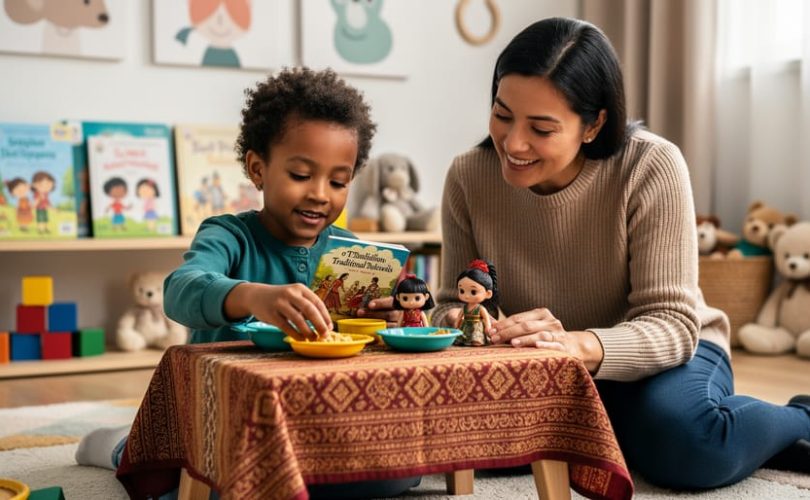
Cultural play is when children incorporate their heritage, traditions, languages, and cultural identity into their everyday play activities. This type of play might look like a child preparing imaginary meals from their family’s country of origin, speaking their home language with dolls, recreating cultural celebrations, or weaving traditional stories into their pretend scenarios.
For parents and educators working with children from diverse backgrounds, understanding cultural play matters deeply. It’s not simply playtime with a cultural twist. Cultural play serves as a bridge between a child’s home life and the wider world, offering a safe space where they can explore who they are, where they come from, and where they fit in. Dr. Maya Patel, a child psychologist specializing in multicultural development, explains: “When we honor cultural play, we’re telling children that every part of their identity has value. We’re giving them permission to be fully themselves.”
This connection to identity carries real weight for children’s mental health. Research shows that children who regularly engage in cultural play demonstrate stronger self-esteem, better emotional regulation, and more resilience when facing discrimination or cultural disconnection. Yet many caregivers feel uncertain about how to support this type of play, especially in settings where a child’s culture differs from the majority.
This article will help you recognize cultural play in action, understand why it strengthens children’s wellbeing, and discover practical ways to nurture it at home, in classrooms, and in care settings.
Understanding Cultural Play: A Plain-Language Definition
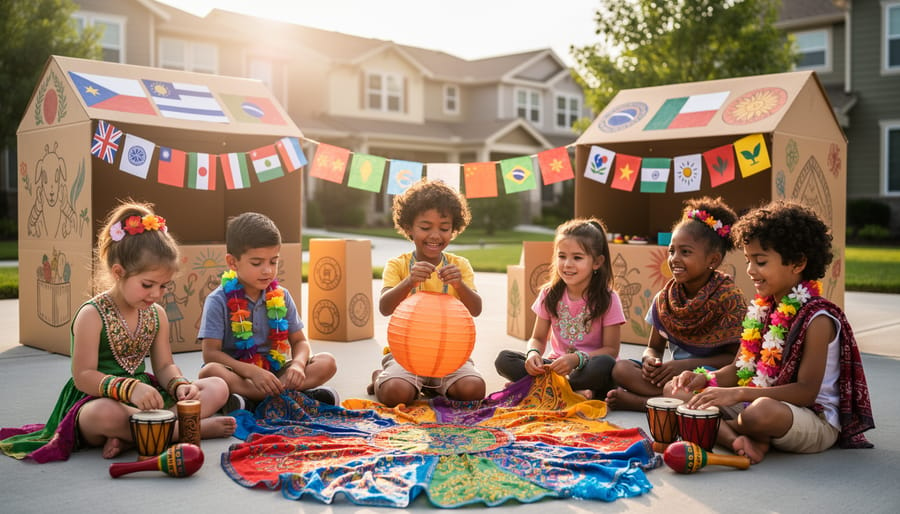
Cultural play is any play activity where a child explores, expresses, or learns about cultural identity through their imaginative and creative activities. This might mean a toddler pretending to cook rice and beans like their grandmother, a group of children reenacting a wedding ceremony they witnessed, or kids creating their own version of a traditional dance they learned at a community celebration. Cultural play happens when children weave the languages, stories, customs, foods, music, dress, and family practices from their heritage into the natural flow of their play.
What makes cultural play distinct from other types of play is the presence of cultural identity markers, those elements that connect a child to their family’s heritage, community traditions, or cultural background. While all children engage in imaginative play, cultural play specifically incorporates these meaningful cultural threads. It can be intentional, like when a parent provides traditional clothing for dress-up play, or completely organic, like when a child spontaneously uses phrases in their home language while playing house.
- Cultural identity
- The sense of belonging to a particular cultural group, shaped by shared traditions, values, language, and experiences that children absorb from their families and communities.
- Cultural traditions
- Practices, customs, celebrations, and ways of doing things passed down through generations that give families a sense of continuity and connection to their heritage.
- Culturally responsive play
- Play environments and activities that recognize, honor, and incorporate the diverse cultural backgrounds of all children, making every child feel seen and valued.
- Heritage practices
- Specific activities, skills, crafts, songs, games, or rituals that carry cultural significance and connect children to their ancestral roots.
Cultural play looks different in every household. One child might set up a pretend shop selling items they’ve seen at the local market, using gestures and phrases from their community. Another might build elaborate structures mimicking architecture from their family’s country of origin. The key is that children are drawing from their lived cultural experience, making play both personally meaningful and a bridge to their broader identity.
How Cultural Play Works in Children’s Lives
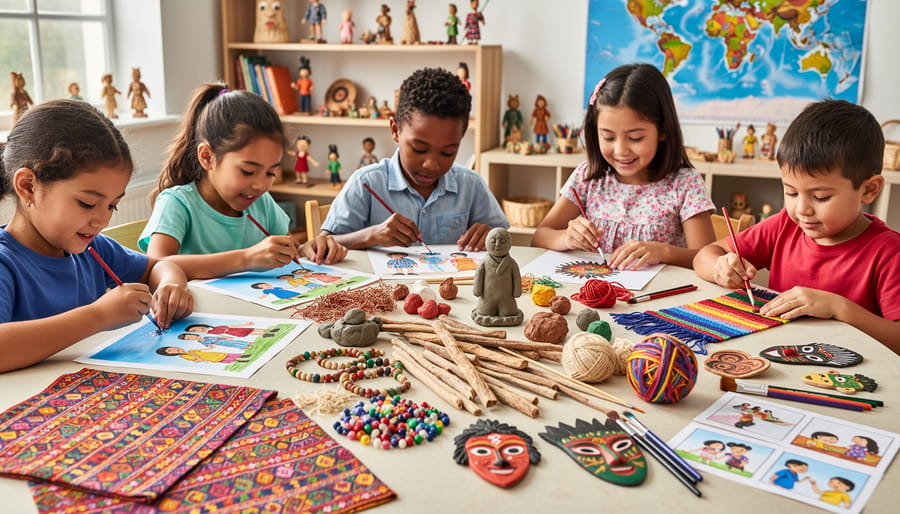
Children don’t sit down and decide to engage in cultural play, it happens organically as they absorb the world around them and weave what they see, hear, and experience into their daily activities. This process starts early, often before children can articulate what culture means, as they naturally mimic the gestures, sounds, and rituals they encounter at home and in their communities.
The foundation of cultural play lies in observation and imitation. A toddler watches grandma prepare dumplings and later presses playdough into similar shapes, naming them the same word she heard. A preschooler attends a temple ceremony and later arranges stuffed animals in rows, chanting fragments of prayers. These aren’t staged learning moments but spontaneous integrations of cultural experiences into the fabric of play.
Children draw cultural material from multiple sources. Home life provides the richest reservoir: the languages spoken at the dinner table, the music playing during cleanup, the stories told before bed, the way adults greet visitors or celebrate milestones. Community events like festivals, religious gatherings, neighborhood celebrations, and cultural performances offer vivid, sensory experiences that children revisit in their imaginative play for weeks afterward. Extended family members, grandparents, aunts, uncles, cousins, often serve as cultural bridges, sharing traditions, teaching phrases, and modeling practices that children then incorporate into their play scenarios.
Children engage in cultural play through various everyday actions:
- Mimicking cultural rituals like prayer gestures, greeting customs, or ceremonial movements
- Retelling family stories, folk tales, or cultural legends during pretend play
- Using traditional objects or their substitutes, a scarf becomes a sari, a stick becomes a ceremonial drum
- Recreating cultural celebrations like weddings, holidays, or harvest festivals with dolls and toys
- Incorporating phrases, songs, and rhymes from heritage languages into their play dialogue
Media also shapes cultural play, though more effectively when balanced with real-world experiences. Books featuring diverse characters, shows that represent cultural practices authentically, and music from various traditions all provide raw material for children’s creative integration.
Adults play a crucial supporting role, not by directing cultural play but by creating conditions where it can flourish. This means keeping culturally meaningful objects accessible, traditional clothing in the dress-up box, kitchen tools from different cultures in the play kitchen, books and music that reflect the child’s heritage and others. It means modeling cultural practices naturally in daily life, speaking heritage languages without self-consciousness, celebrating cultural holidays with genuine enthusiasm, and talking about cultural identity as something valuable and normal. Perhaps most importantly, it means giving children unstructured time and space to explore, experiment, and make cultural elements their own through play.
Forms and Expressions of Cultural Play
Traditional Games and Activities
Traditional games carry stories, values, and wisdom from one generation to the next. When children play hand-clapping rhymes like Nigeria’s “Who Stole the Cookie?” variations or Mexico’s “A la víbora de la mar,” they’re not just having fun, they’re connecting to cultural memory through rhythm, language, and coordinated movement. Indigenous communities worldwide maintain outdoor play practices tied to land and seasons: Inuit children’s string games that teach patience and dexterity, Aboriginal Australian tracking games that develop observation skills, or Native American stick games that combine strategy with storytelling.
These activities often happen in communal spaces where adults and elders participate, demonstrating techniques and sharing the cultural significance behind each game. A Korean child learning jegichagi (shuttlecock kicking) or a Scottish child mastering shinty connects physical skill with heritage. Many traditional games adapt beautifully to modern settings, Caribbean ring games work in schoolyards, while Japanese kendama (cup-and-ball) fits in a pocket. Some cultures integrate traditional play into a nature outdoor classroom where children learn ancestral skills like weaving, tracking, or seasonal gathering through playful exploration rather than formal instruction.
Storytelling and Narrative Play
Children transform cultural stories, myths, legends, and family histories into living experiences through storytelling play and imaginative scenarios. A child might reenact a grandmother’s immigration story using dolls, recreate a traditional folktale with friends in the backyard, or invent characters based on cultural heroes and legends they’ve heard at home.
This narrative play helps children process and internalize cultural values, understand their heritage, and make sense of their place in a larger cultural story. When children retell family histories through play, they’re not just memorizing facts, they’re building emotional connections to their ancestry and cultural identity. A child acting out a traditional creation myth or a historical family event is actively constructing meaning about where they come from and who they are.
Parents and caregivers strengthen this form of cultural play by sharing stories regularly, providing props that connect to cultural narratives, and showing genuine interest when children adapt these stories into their own imaginative scenarios.
Creative Arts and Crafts
Children express their cultural heritage powerfully through traditional art forms, music, dance, and hands-on crafts. A child painting rangoli patterns during Diwali, weaving friendship bracelets using techniques taught by a grandmother, or drumming to West African rhythms all engage in cultural play that connects them to their roots while building creative skills.
Traditional art forms like origami, beadwork, pottery, calligraphy, or textile arts carry centuries of cultural knowledge. When children learn these crafts, they’re not just making objects, they’re embodying stories, values, and aesthetics passed through generations. A five-year-old decorating cascarones or creating papel picado learns patience, precision, and the significance of celebration in Mexican culture.
Music and dance offer especially rich avenues for cultural expression. Children naturally move to traditional rhythms, sing folk songs in heritage languages, and create their own variations of cultural dances they’ve witnessed at family gatherings. This kinesthetic learning reinforces cultural memory in ways that verbal instruction alone cannot.
The beauty of art integration in cultural play is its accessibility, children need few materials to start. A simple drum, some fabric scraps, or basic drawing supplies become vehicles for exploring identity and heritage while developing fine motor skills, rhythm, spatial awareness, and creative confidence.
Celebration and Ritual Play
Children love to recreate the special moments and traditions they experience with their families. When a child sets up an elaborate pretend wedding with dolls, complete with specific clothing and ceremonial gestures they’ve observed, they’re doing more than playing dress-up. They’re processing cultural rituals and making them their own.
This type of play shows up in kitchens where children pretend to prepare foods for Lunar New Year celebrations, in living rooms transformed into makeshift temples or churches, and in backyards hosting imaginary Diwali festivals or Eid gatherings. Children might reenact quinceañeras, bar mitzvahs, or naming ceremonies they’ve attended. They create birthday celebrations that mirror family traditions, from singing specific songs to preparing symbolic foods.
The beauty of celebration and ritual play lies in how children internalize what matters to their communities. A child lighting pretend candles during Hanukkah play isn’t just mimicking actions, they’re connecting to heritage and meaning. When siblings stage a mock graduation ceremony mirroring family traditions, they’re exploring values around achievement and family pride.
This play often involves detailed preparation: gathering specific props, assigning roles to family members or friends, and insisting on “doing it right” according to their understanding of the ritual. These moments reflect deep learning about what their culture celebrates, honors, and holds sacred.
The Mental Health and Developmental Benefits of Cultural Play
Cultural play strengthens children’s mental health by giving them a concrete, joyful way to explore who they are and where they come from. When children incorporate their family’s traditions, languages, and customs into their play, they build a stronger sense of identity and self-worth. This connection to cultural roots provides stability and confidence, particularly during times of change or stress.
Children who engage in cultural play develop greater emotional regulation skills. Recreating familiar rituals, celebrations, or family routines helps them process complex feelings and find comfort in predictability. A child who plays out a grandparent’s cooking traditions or recreates a cultural festival gains tools for managing anxiety and navigating emotional challenges. These repeated patterns become touchstones they can return to when overwhelmed.
The cognitive benefits extend beyond memory and language development. Cultural play demands cognitive flexibility as children shift between different cultural contexts, switch languages, adapt stories, and navigate multiple perspectives. This mental agility transfers to problem-solving and creativity in other areas of development.
Socially, cultural play builds essential skills for a diverse world. Children learn empathy by stepping into cultural roles and narratives different from their daily experience. When they participate in cooperative games from various traditions, they practice collaboration, respect for different approaches, and appreciation for diverse ways of thinking and being. Research on remote pretend play benefits demonstrates how structured imaginative activities improve social-emotional skills and behavioral regulation.
For children from marginalized or minority backgrounds, cultural play becomes protective against discrimination and isolation. It validates their lived experience, counters negative stereotypes, and builds resilience. Children develop pride in their heritage and confidence to assert their identity, reducing the mental health toll of feeling othered or invisible in mainstream settings.
Supporting Cultural Play at Home and in Care Settings
You can create meaningful opportunities for cultural play without expensive materials or elaborate setups. Start by observing what cultural elements your child naturally gravitates toward, then build on those interests with intentional support and authentic representation.
The most powerful step is making cultural materials part of everyday play spaces. Stock dress-up areas with clothing from different cultures, including pieces that reflect your family’s heritage. Choose dolls, action figures, and play food that represent diverse ethnic backgrounds. Include musical instruments, art supplies, and building materials that allow children to recreate cultural symbols and structures. Rotate these items regularly to keep exploration fresh and to introduce new cultural elements over time.
Practical ways to support cultural play:
- Provide multicultural toys, dolls, play food, musical instruments, and dress-up items that reflect diverse cultures
- Share family stories, traditions, recipes, and histories through conversation and demonstration
- Celebrate diverse cultural events and holidays, explaining their significance and inviting children to participate
- Invite grandparents, extended family, and community members to share cultural knowledge and join in play
- Use books, videos, and media that authentically represent various cultures and avoid stereotypes
- Create culturally responsive play spaces with symbols, languages, and artifacts from children’s backgrounds
Family participation transforms cultural play from surface-level exposure into lived experience. Invite grandparents to teach traditional games or cooking methods. Let children observe and help prepare cultural foods, then incorporate those activities into their pretend play. Share stories from your childhood about cultural celebrations, explain why certain traditions matter to your family, and make space for children to ask questions and adapt practices in their own way.
For children exploring multiple cultural identities, validation matters enormously. Acknowledge all aspects of their heritage as equally valuable. Provide materials and stories representing each culture, and let children decide which elements they want to explore in their play on any given day. Avoid pressuring children to perform their culture or to choose between identities.
In group care settings, representation becomes everyone’s responsibility. Teachers should audit their materials for authentic diversity, not tokenism. Partner with families to understand their cultural practices accurately. Create opportunities for families to share traditions directly with the group. Most importantly, treat every child’s cultural background as a resource that enriches the entire community, not as something exotic or separate from “regular” activities.
Navigating Common Questions and Challenges
Parents and educators often feel uncertain about cultural play, especially when navigating the line between appreciation and appropriation. The key distinction lies in intention and context: when children explore their own heritage or learn respectfully about other cultures with guidance, they’re building understanding. Problems arise when cultural elements are reduced to costumes or stereotypes without connection to real people and traditions. For children exploring cultures different from their own, the focus should be on meaningful learning, reading authentic stories, meeting people from that culture, understanding context, rather than surface-level “trying on” of cultural markers.
Balancing assimilation pressures with cultural preservation presents another common challenge. Many families worry their children will reject cultural traditions in favor of fitting in with peers. This tension is real, particularly for immigrant families or those from marginalized communities. Rather than forcing participation, create low-pressure opportunities for cultural connection. Let children see adults joyfully engaging with cultural practices, make cultural elements readily available without pressure, and validate both their cultural identity and their need to belong in their broader community.
What if my child shows no interest in our cultural traditions?
Rejection often reflects developmental stages or social pressures rather than permanent disinterest. Keep traditions visible and accessible without forcing participation, model your own genuine connection to cultural practices, and trust that children often return to their heritage with new appreciation as they mature.
How do I support cultural play in diverse classrooms?
Invite families to share traditions directly, provide materials representing multiple cultures authentically, and treat all cultures with equal respect and depth. Avoid the “tourist approach” where cultures appear only during designated months or as exotic novelties.
Is it okay for children to explore cultures different from their own?
Yes, when done respectfully with proper context. Children should learn about cultures through authentic stories, relationships, and understanding, not through superficial dress-up or stereotyped play scenarios.
How do I avoid cultural stereotypes in play materials?
Choose materials created by people from that culture, look for contemporary alongside traditional representations, and avoid items that reduce cultures to single images or outdated depictions. Consult families and cultural consultants when uncertain.
Creating inclusive environments for multicultural groups requires intentionality. Ensure that no single culture dominates the play space while others appear as occasional additions. Rotate cultural materials regularly, celebrate the everyday alongside special occasions, and help children see cultural diversity as normal rather than exotic. When conflicts arise, a child mocking another’s cultural practice or questions about “weird” foods, address them as teachable moments about respect and curiosity rather than judgment.
Cultural play is far more than entertainment, it’s how children build their sense of who they are and where they come from. When children weave their family traditions, languages, stories, and customs into their everyday play, they’re strengthening their identity, developing emotional resilience, and learning to navigate a diverse world with confidence and empathy.
As parents and caregivers, you have a unique opportunity to honor the cultural richness your children bring to their play. Whether they’re recreating a family celebration, singing songs in their heritage language, or cooking imaginary meals from cherished recipes, these moments deserve recognition and support. Creating space for cultural expression doesn’t require elaborate planning, it happens when you provide diverse materials, share your own cultural experiences, and simply notice and value what your children are already doing.
Every child benefits when cultural play is welcomed and celebrated. By encouraging these natural explorations, you’re helping children develop strong identities, build cross-cultural understanding, and grow into adults who appreciate both their own heritage and the diverse traditions of others. Trust that when you make room for cultural expression in play, you’re giving children tools they’ll carry throughout their lives.